
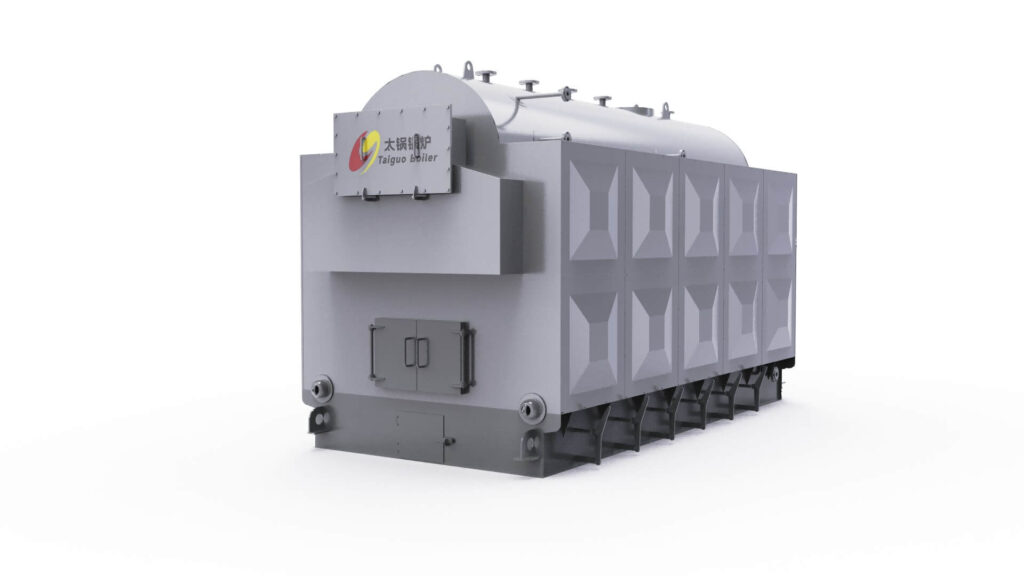
Smart Industrial Heating Solutions from CNMIRACLE & Taiguo Boiler
CNMIRACLE provides industrial hot water boiler systems for commercial heating, district heating, greenhouse heating and industrial process applications. Our hot water boiler range includes gas and oil fired, biomass and coal fired, and electric hot water boilers, with capacities from small commercial systems to large industrial heating installations.
Depending on fuel availability, heating load, operating temperature and site conditions, customers can select WNS, DZL, SZL or WDR hot water boiler systems. Complete solutions can include circulation pumps, expansion and pressurization equipment, water treatment, heat exchangers, control systems and flue gas heat recovery.
Each system is engineered according to the required thermal capacity, water temperature, operating pressure, fuel characteristics and heating network configuration.
What Is a Hot Water Boiler?
A hot water boiler is a closed vessel engineered to heat water without necessarily converting it into steam. The heated water is circulated through a closed-loop or open-loop distribution piping network to supply thermal energy to heat exchangers, radiators, air handlers, or direct processing units.
Unlike steam boilers, hot water boilers operate continuously under liquid hydraulic pressure. This closed circulation design offers distinct advantages:
- High Thermal Efficiency: Minimal latent heat losses because water remains in a liquid phase throughout the cycle.
- Precise Temperature Control: Steady supply water temperatures tailored for exact HVAC or process parameters.
- Lower System Maintenance: Closed-loop systems minimize makeup water requirements, reducing scale formation and oxygen corrosion inside the pressure vessel.
Hot Water Boiler Series & Models
Our hot water boiler lineup covers four distinct equipment series engineered for specific fuel availability, space requirements, and operational capacities.
| Boiler Series | Firing / Fuel Type | Typical Capacity Range | Primary Application | Key Operational Advantage |
|---|---|---|---|---|
| WNS Series | Natural Gas, Diesel, LPG | 0.7 MW – 14 MW | Hotels, hospitals, commercial complexes, light industry | Fully automated, low-NOx combustion, compact footprint |
| DZL Series | Biomass, Pellets, Coal | 0.7 MW – 7 MW | Agricultural greenhouses, regional processing, rural heating | Single-drum stoker design, flexible solid-fuel combustion |
| SZL Series | Biomass, Agricultural Residue, Coal | 4.2 MW – 14 MW | Medium-to-large industrial heating, district heating | Double-drum water-tube layout, high thermal load capacity |
| WDR Series | Electric Resistance | 0.35 MW – 2.8 MW | Urban clean zones, commercial HVAC, precise industrial heat | Zero local emissions, quiet operation |
WNS Gas & Oil Fired Hot Water Boiler
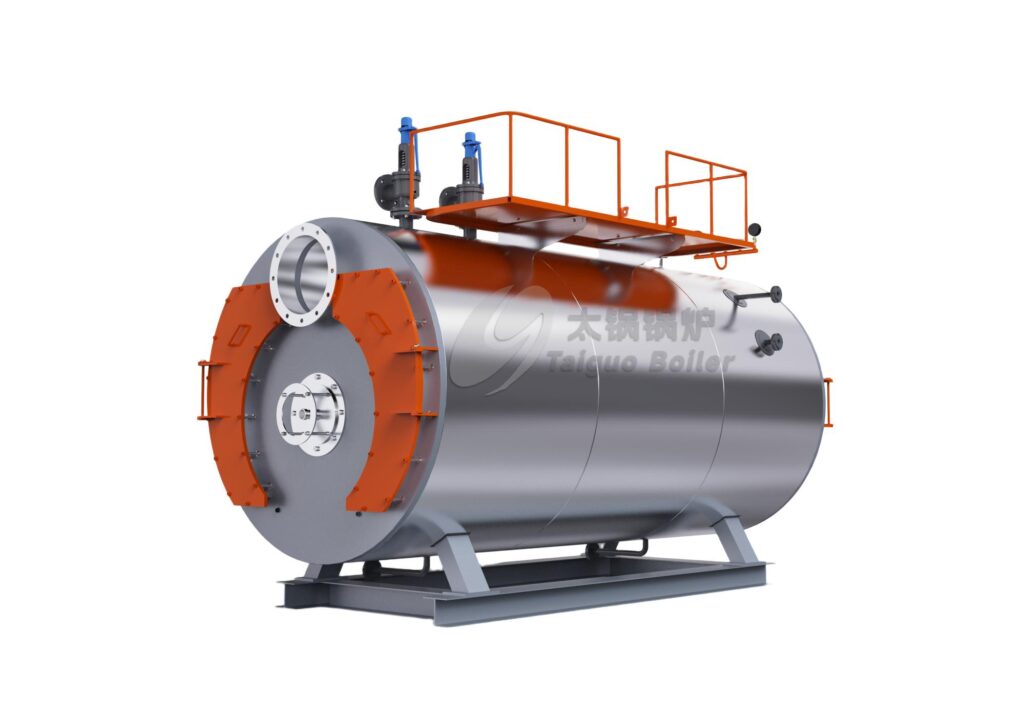
The WNS series is a horizontal, three-pass, wet-back firetube hot water boiler. It utilizes an corrugated furnace tube and threaded firetubes to maximize heat transfer area. Equipped with fully automated burners, the WNS series delivers rapid load response and quiet operation, making it a primary choice for urban commercial buildings and light industrial facilities.
DZL Biomass & Coal Fired Hot Water Boiler
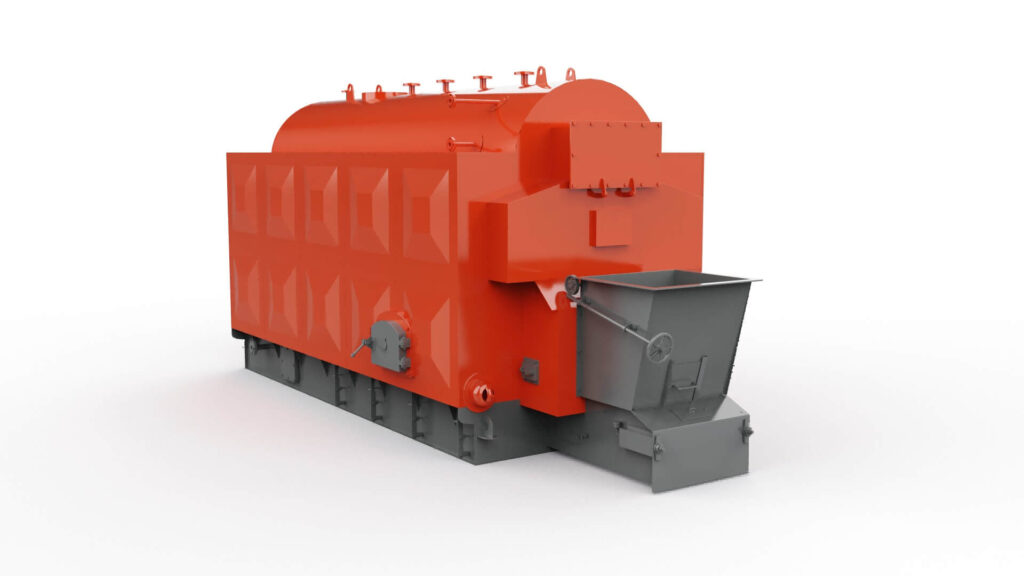
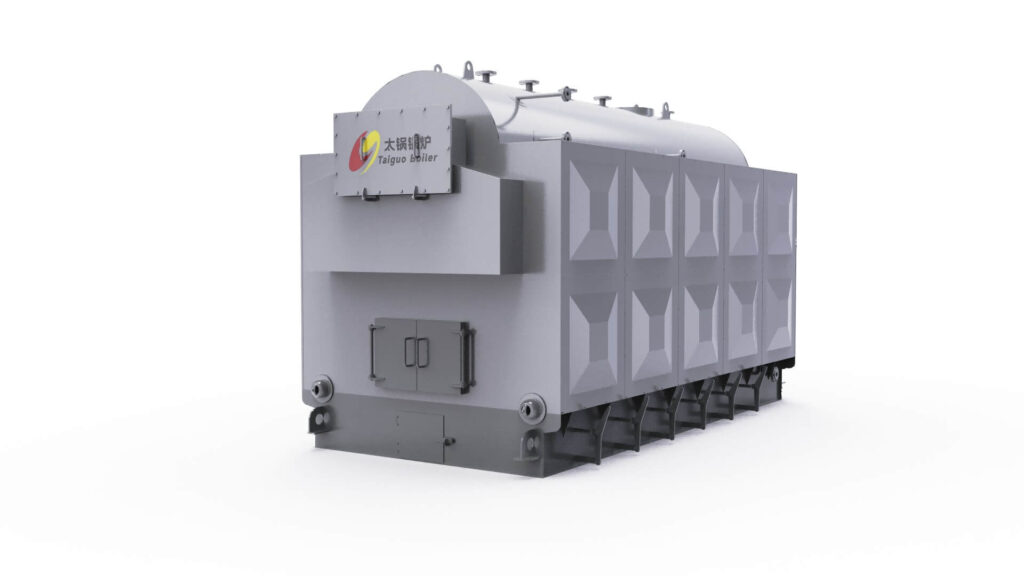
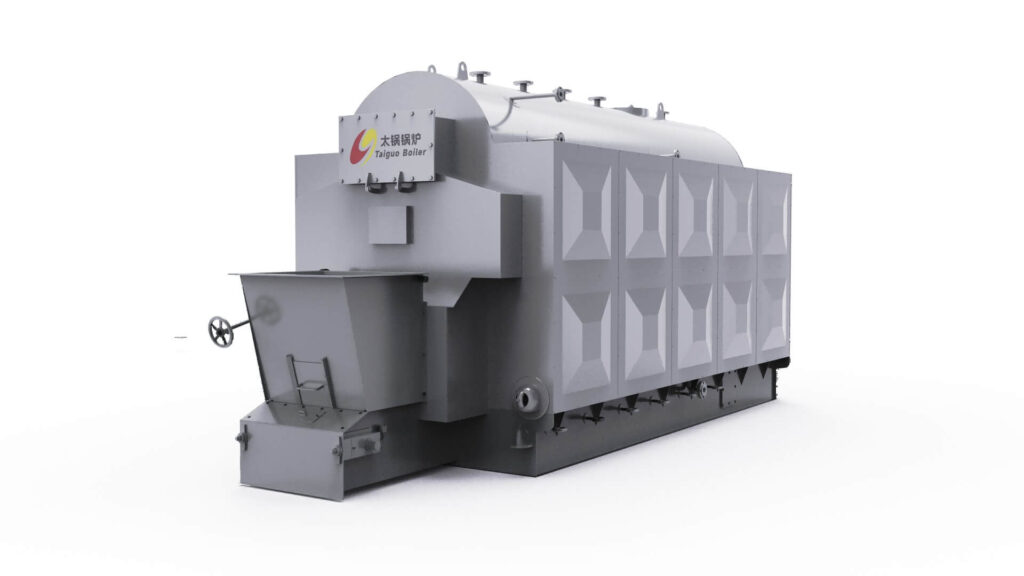
The DZL series features a horizontal single-drum package design with a chain-grate stoker. Engineered to burn wood pellets, biomass briquettes, agricultural waste, or coal, this series integrates firetubes and side water-wall tubes to optimize radiative and convective heat transfer in solid-fuel processing zones.
SZL Biomass & Coal Fired Hot Water Boiler
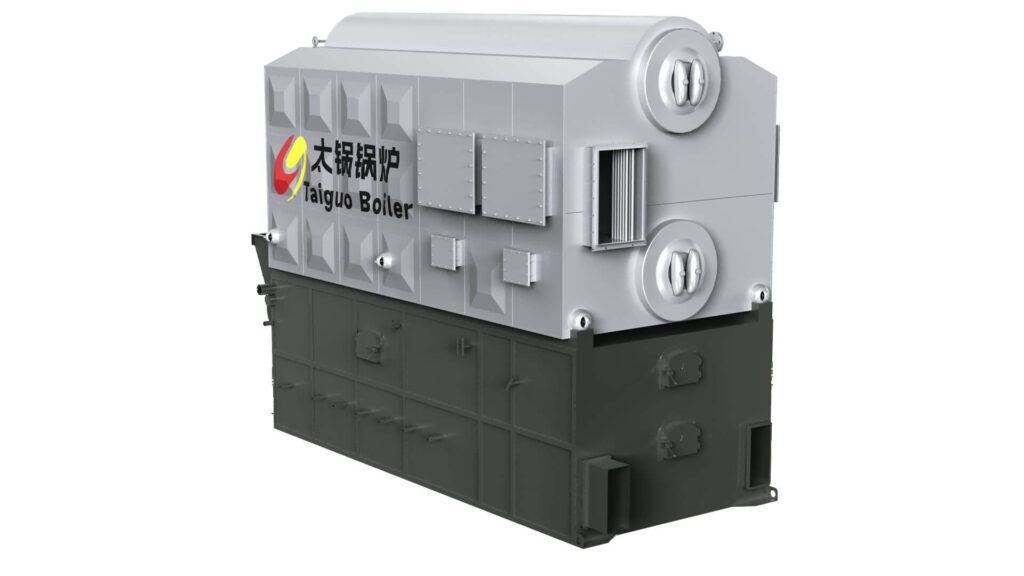
The SZL series uses a shop-assembled double-drum water-tube arrangement with a chain grate. Designed for larger thermal demands, the SZL series provides a spacious combustion chamber to ensure complete fuel burnout and low fly-ash carbon content, serving heavy industrial processing and regional district heating.
WDR Electric Hot Water Boiler
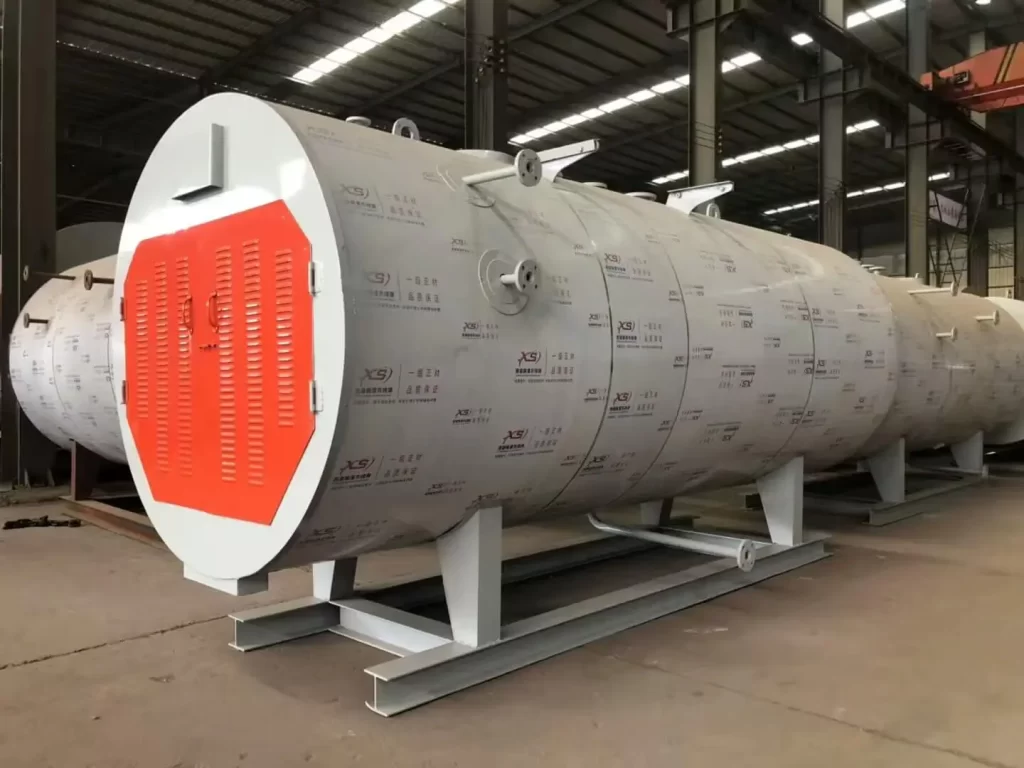
The WDR series utilizes high-performance electric heating elements submersed within the pressure vessel. Operating with zero onsite combustion emissions, it eliminates the need for a fuel supply line, gas train, or chimney stack, offering a flexible solution for urban areas with strict atmospheric emission regulations.
Hot Water Boiler Technical Specifications
Evaluating technical parameters ensures the equipment matches the hydraulic and thermal profile of your facility.
Thermal Capacity Range
Available capacities cover a wide operational spectrum matching process heat demands.
Networks: Custom multi-boiler combinations engineered for peak load matching.
Operating Pressure Ratings
Rated for distinct hydraulic head requirements in high-rise or long-distance circuits.
Safety: Accommodates high static water pressure and district heating loops.
Water Temperature Profiles
Engineered for standard heating loop or high-temperature industrial heat transfer.
Multi-Fuel Compatibility
Flexible combustion options tailored to local fuel availability and project OPEX.
Thermal Efficiency & Heat Recovery
High-efficiency designs reduce annual fuel consumption and operational expenditure.
| Technical Parameter | Specification Detail |
|---|---|
| Thermal Capacity | 0.35 MW – 70 MW (Customizable) |
| Rated Pressure | 0 MPa (Atmospheric) / 0.7 MPa / 1.0 MPa |
| Outlet Water Temp | 60°C / 85°C / 95°C / 115°C |
| Thermal Efficiency | ≥ 96% – 98% (With Condensing Technology) |
| Applicable Fuel | Natural Gas, Diesel, LPG, Biogas |
WNS Series Gas/Oil Fired Hot Water Boiler Technical Parameters
| Model | Capacity (MW) | Capacity (10⁴kcal/h) | Pressure (MPa) | Water Temp (°C) | Gas Cons. (Nm³/h) | Dim. L×W×H (mm) | Weight (kg) |
|---|---|---|---|---|---|---|---|
| WNS0.35-0.7/1.0-Y(Q) | 0.35 | 30 | 0.7 / 1.0 | 95 / 70 (85 / 65) | 37 | 2900 × 1650 × 1760 | 3200 |
| WNS0.7-0.7/1.0-Y(Q) | 0.7 | 60 | 0.7 / 1.0 | 95 / 70 (85 / 65) | 74 | 3300 × 1850 × 2040 | 5800 |
| WNS1.4-0.7/1.0-Y(Q) | 1.4 | 120 | 0.7 / 1.0 | 95 / 70 (85 / 65) | 148 | 4100 × 2050 × 2260 | 8100 |
| WNS2.8-1.0/1.25-Y(Q) | 2.8 | 240 | 1.0 / 1.25 | 95 / 70 (85 / 65) | 296 | 5300 × 2300 × 2660 | 12600 |
| WNS4.2-1.0/1.25-Y(Q) | 4.2 | 360 | 1.0 / 1.25 | 95 / 70 (85 / 65) | 444 | 6100 × 2650 × 2960 | 16800 |
| WNS5.6-1.0/1.25-Y(Q) | 5.6 | 480 | 1.0 / 1.25 | 95 / 70 (85 / 65) | 592 | 6700 × 2850 × 3160 | 20500 |
| WNS7.0-1.0/1.25-Y(Q) | 7.0 | 600 | 1.0 / 1.25 | 95 / 70 (85 / 65) | 740 | 7300 × 3100 × 3460 | 25300 |
| WNS10.5-1.0/1.25-Y(Q) | 10.5 | 900 | 1.0 / 1.25 | 95 / 70 (85 / 65) | 1110 | 8400 × 3300 × 3680 | 37000 |
| WNS14.0-1.0/1.25-Y(Q) | 14.0 | 1200 | 1.0 / 1.25 | 95 / 70 (85 / 65) | 1480 | 9300 × 3350 × 3760 | 46500 |
Note: Suitable fuel options include Natural Gas, LPG, LNG, City Gas, Biogas, Diesel, and Heavy Oil.
DZL Series Biomass/Coal Fired Single-Drum Hot Water Boiler Technical Parameters
| Model | Thermal Power (MW) | Pressure (MPa) | Water Temp (°C) | Fuel Cons. (kg/h) | Dim. L×W×H (m) | Weight (t) |
|---|---|---|---|---|---|---|
| DZL0.7-0.7/1.0/1.25-T | 0.7 (1t) | 0.7 / 1.0 / 1.25 | 95 / 70 (85 / 65) | 200 | 5.1 × 2.2 × 3.0 | 17 |
| DZL1.4-0.7/1.0/1.25-T | 1.4 (2t) | 0.7 / 1.0 / 1.25 | 95 / 70 (85 / 65) | 400 | 5.5 × 2.3 × 3.3 | 23 |
| DZL2.8-1.0/1.25-T | 2.8 (4t) | 1.0 / 1.25 | 95 / 70 (85 / 65) | 800 | 6.6 × 2.6 × 3.6 | 25 |
| DZL4.2-1.0/1.25-T | 4.2 (6t) | 1.0 / 1.25 | 95 / 70 (85 / 65) | 1200 | 8.2 × 2.9 × 3.8 | 40 |
| DZL7.0-1.0/1.25-T | 7.0 (10t) | 1.0 / 1.25 | 95 / 70 (85 / 65) | 2010 | Upper: 7.7 × 3.2 × 3.6 Lower: 8.6 × 3.2 × 6.735 |
72 |
SZL Series Biomass/Coal Fired Chain Grate Hot Water Boiler Technical Parameters
| Model | Thermal Power (MW) | Pressure (MPa) | Water Temp (°C) | Efficiency | Dim. L×W×H (m) | Weight (t) |
|---|---|---|---|---|---|---|
| SZL1.4-0.7/95/70 | 1.4 | 0.7 | 95 / 70 | 80% | 5.8 × 2.4 × 3.5 | 25 |
| SZL2.8-0.7/95/70 | 2.8 | 0.7 | 95 / 70 | 80% | 7.8 × 2.4 × 3.6 | 32 |
| SZL4.2-1.0/95/70 | 4.2 | 1.0 | 95 / 70 | 80% | 8.0 × 3.0 × 4.87 | 43 |
| SZL5.6-1.0/95/70 | 5.6 | 1.0 | 95 / 70 | 80% | 8.1 × 3.2 × 5.7 | 63 |
| SZL7.0-1.0/95/70 | 7.0 | 1.0 | 95 / 70 | 80% | 8.2 × 3.5 × 5.7 | 87 |
| SZL10.5-1.0/115/70 | 10.5 | 1.0 | 115 / 70 | 80% | 10.6 × 3.6 × 5.7 | 100 |
| SZL14-1.0/115/70 | 14.0 | 1.0 | 115 / 70 | 80% | 12.5 × 3.7 × 5.8 | 105 |
Note:
- Parameters are for reference only; any specific updates or modifications should follow the official factory technical data.
- Customized boiler designs are available based on specific customer requirements and different biomass fuel types.
WDR Series Full-Automatic Electric Hot Water Boiler Technical Parameters
| Model | Power (MW / kW) | Pressure (MPa) | Water Temp. (°C) | Thermal Eff. | Weight (t) | Dim. L×W×H (m) |
|---|---|---|---|---|---|---|
| WDR0.24-0.7/95/70 | 0.24 MW / 240 kW | 0.7 | 95 / 70 | ≥ 98% | 0.95 | 2.2 × 1.3 × 1.4 |
| WDR0.35-0.7/95/70 | 0.35 MW / 360 kW | 0.7 | 95 / 70 | ≥ 98% | 1.50 | 2.4 × 1.4 × 1.6 |
| WDR0.48-0.7/95/70 | 0.48 MW / 480 kW | 0.7 | 95 / 70 | ≥ 98% | 1.70 | 2.5 × 1.5 × 1.6 |
| WDR0.70-0.7/95/70 | 0.70 MW / 720 kW | 0.7 | 95 / 70 | ≥ 98% | 1.85 | 2.6 × 1.5 × 1.9 |
| WDR1.05-0.7/95/70 | 1.05 MW / 1080 kW | 0.7 | 95 / 70 | ≥ 98% | 2.55 | 2.8 × 1.6 × 2.0 |
| WDR1.4-0.7/95/70 | 1.40 MW / 1440 kW | 0.7 | 95 / 70 | ≥ 98% | 3.10 | 3.1 × 1.7 × 2.3 |
| WDR2.8-0.7/95/70 | 2.80 MW / 2880 kW | 0.7 | 95 / 70 | ≥ 98% | 6.80 | 4.2 × 2.0 × 2.3 |
Atmospheric vs. Pressurized Hot Water Boilers
Selecting between atmospheric and pressurized hot water system designs depends on operating temperature requirements, building heights, and hydraulic loop conditions.
Atmospheric Hot Water Boiler
An atmospheric hot water boiler operates with its pressure vessel vented directly to the atmosphere. The open-vent design maintains atmospheric pressure inside the boiler body while circulating pump systems transfer heat through the external load loop.
- Primary Application: Low-rise commercial buildings, localized agricultural greenhouses, low-pressure process loops, and localized heating.
- Key Consideration: Supply water temperatures remain below 90°C to prevent localized boiling within the vessel.
Pressurized Hot Water Boiler
A pressurized hot water boiler operates as a sealed pressure vessel under controlled system pressure. Maintaining internal pressure allows the water to be heated to higher supply temperatures without boiling.
- Primary Application: Multi-story commercial complexes, district heating networks, high-temperature industrial heat exchangers, and long-distance distribution pipelines.
- Key Consideration: Requires expansion tanks, nitrogen pressurization, and pressure safety relief valves to maintain stable hydraulic balance.
Hot Water Boiler System Configuration
A complete hot water heating system integrates several key auxiliary components to maintain smooth water circulation, water quality, and precise control.
Closed-Loop Hot Water Boiler System Architecture
Hot Water Boiler
(Main Pressure Vessel)Water Softener / RO Treatment
Primary Heat Exchanger
(or Direct Heating Loop)Circulation Pumps & Expansion System
Circulation Pump Group
Frequency-controlled primary & secondary pumps maintain required water flow velocity.
Expansion & Pressurization System
Diaphragm tanks or nitrogen units absorb volumetric expansion as water heats.
Water Treatment System
Dedicated water softeners and chemical dosing units condition makeup water.
Heat Exchanger Integration
Plate (PHE) or shell-and-tube exchangers isolate primary and secondary loops.
Controls & Automation
Integrated PLC panels continuously monitor temperatures, pressures & flow rates.
Heat Recovery Equipment
Flue gas economizers extract waste heat from boiler exhaust gases.
Taiguo Boiler delivers complete turnkey hot water energy solutions. We do not just sell a bare boiler block. Our team configures fully integrated, highly efficient thermal loops for global B2B heating and industry buyers.
Hot Water Boiler Fuel Options
Choosing the appropriate fuel source impacts upfront equipment selection, site storage infrastructure, and long-term heating costs.
FUEL 01Gas & Oil Fired Systems
Features automated burners, low maintenance needs, and quiet operation with minimal footprint.
Best Application: Urban commercial complexes & clean industrial plants.FUEL 02Biomass Fired Systems
Utilizes wood pellets, agro-pellets, or crop waste for low-carbon, economical heating.
Best Application: Rural manufacturing, timber drying & agro-processing.FUEL 03Coal Fired Systems
Chain-grate design provides reliable, continuous base-load thermal energy for heavy plants.
Best Application: Large industrial facilities with established solid-fuel supply.FUEL 04Electric Resistance Systems
Requires no fuel tanks, gas lines, or chimneys. Offers precise temperature regulation.
Best Application: Zero-combustion zones & severe site space limitations.
Fuel Comparison & Selection Guide For Hot Water Boiler
| Fuel Type Choice | Key Technical Benefit | Best Application Environment | Necessity Level of Dust Collector |
|---|---|---|---|
| Gas / Oil Fired | Fully automatic, compact footprint, high thermal efficiency. | Urban areas, factories with stable gas pipe access. | No |
| Biomass / Coal | Saves up to 30% to 50% fuel costs compared to gas/electricity. | Regions with cheap agricultural or wood waste resources. | 100% Mandatory |
| Electric Heated | 100% Eco-friendly, silent operation, zero smoke emissions. | Areas with strict eco-regulations or cheap nighttime electricity. | No |
Diverse Fuel Solutions: Tailored to Your Local Energy Costs
We engineer our hot water boilers to utilize the most economical fuels in your region. Every model maximizes heat transfer while minimizing emissions.
1. Gas & Oil Fired Hot Water Boiler (WNS/SZS Series)
This is our primary recommendation for the Uzbekistan market due to abundant natural gas.
- Performance: These boilers feature a three-pass wet-back design for 98% thermal efficiency.
- Advantages: They offer fully automated operation and a compact footprint for urban heating centers.
- Certifications: We provide EAC certification for seamless integration into Central Asian projects.
2. Biomass & Coal Fired Hot Water Boiler (DZL/SZL Series)
Ideal for Southeast Asia, these systems leverage local agricultural waste to lower ROI.
- Performance: The robust chain grate design handles biomass pellets or coal with high combustion efficiency.
- Advantages: You utilize low-cost fuels to achieve stable, long-cycle heating for large industrial facilities.
3. Electric Heating Hot Water Boiler
Best for high-density urban areas with strict emission regulations.
- Performance: These boilers provide clean energy with nearly 100% efficiency and zero local emissions.
- Advantages: They operate silently and require minimal maintenance, making them perfect for luxury hotels or hospitals.
Industry Applications: Where Efficiency Meets Comfort
Hot water boiler systems supply steady thermal energy across various commercial, regional, and industrial sectors.
| Application | Heating Target | Key Benefit |
|---|---|---|
| District Heating | Large residential communities | Stable, uniform warmth for thousands of residents. |
| Hotels & Resorts | Centralized hot water & HVAC | 24/7 reliability for guest comfort and low OpEx. |
| Greenhouse Farming | Controlled climate environments | Precise temperature management to maximize crop yields. |
| Industrial Processing | Textile washing & chemical heating | Constant high-temperature water for stable production. |
At the 2-ton to 20-ton (1.4MW to 14MW) capacity range, our hot water boilers are no longer just “heaters”—they are critical infrastructure for high-precision thermal energy distribution. In 2026, we are powering the following key sectors across Central Asia and the Middle East:
1.Hot Water Boiler For Municipal District Heating: Powering Cities in Winter
In the freezing winters of Uzbekistan and Kazakhstan, a single 14MW (20-ton equivalent) hot water boiler can provide heat for an entire residential district or over 200,000 square meters of commercial space.
- The Taiguo Advantage: Our boilers are engineered for High-Flow Circulation. By utilizing advanced flue gas economizers, we achieve a thermal efficiency of 98%, helping municipal providers reduce natural gas consumption per Gigacalorie (Gcal) produced. This ensures stable heating for the public even during extreme sub-zero “Peak Load” events.
2. Hot Water Boiler For Large-Scale Greenhouse & Agriculture Clusters
Modern agriculture in 2026 relies on strict climate control to maximize yields in roses, tomatoes, and medicinal herbs.
- Process Detail: Our boilers provide the constant Low-Temperature Hot Water (LTHW) required for hydronic heating rails and CO2 enrichment systems.
- The Taiguo Advantage: We integrate Weather-Compensated Controls that automatically adjust the boiler’s firing rate based on ambient outside temperatures. This precision prevents “Thermal Shock” to sensitive crops, ensuring optimal growth cycles while slashing fuel costs by up to 20% compared to legacy systems.
3.Hot Water Boiler For Industrial Food Processing: Pasteurization & Cleaning
In the dairy and beverage industries of Southeast Asia, hot water is the primary medium for safety and sterilization.
- Process Detail: Critical for Pasteurization units, juice heating, and CIP (Cleaning-in-Place) systems that require massive volumes of 85°C – 95°C water.
- The Taiguo Advantage: Our pressurized hot water series maintains a constant supply without the “flash steam” issues associated with sub-par systems. This provides a stable thermal profile for food safety, ensuring every batch meets international hygiene standards (HACCP).
4. Hot Water Boiler For Hospitality & Large-Scale Medical Complexes
For five-star hotels and 500-bed hospitals, hot water is a 24/7 non-negotiable utility for both comfort and hygiene.
- Process Detail: Supplying centralized domestic hot water (DHW) and secondary loops for HVAC air handling units.
- The Taiguo Advantage: To protect the boiler from the high-mineral water common in cities like Samarkand or Jakarta, we recommend an Indirect Heating Loop via high-efficiency Plate Heat Exchangers (PHE). This isolates the boiler from the building’s scale-heavy pipes, extending the system’s lifespan to over 20 years.
5. Hot Water Boiler For Textile Dyeing & Chemical Bath Heating
While steam is king in textiles, many modern low-temperature dyeing processes (like wool or delicate synthetics) prefer hot water for its gentle heat transfer.
- Process Detail: Maintaining precise temperatures in chemical baths to ensure dye absorption without damaging delicate fibers.
- The Taiguo Advantage: Our Frequency Conversion (VFD) pumps and O2-trimming burners allow for micro-adjustments in heat output, providing the stable ±1°C accuracy that premium textile brands demand for high-end fashion exports.
Selection Guide: How to Choose the Right Hot Water Boiler
| Project Requirement | Recommended Boiler |
|---|---|
| Natural gas available | WNS Gas Fired Hot Water Boiler |
| Low-cost biomass available | DZL / SZL Biomass Hot Water Boiler |
| Large district heating load | SZL / large WNS |
| Strict emission requirements | WDR Electric Hot Water Boiler |
| Hotel or hospital heating | WNS / WDR |
| Greenhouse heating | WNS / DZL / SZL |
| Food processing | WNS / WDR |
| Textile process heating | WNS / biomass |
| Large industrial heating | WNS / SZL |
Choosing the correct boiler is a strategic financial decision. Follow this professional checklist to select the ideal system.
1. Atmospheric vs. Pressurized Of Hot Water Boiler
- Atmospheric Boilers: Choose these for standard residential heating where safety and simple installation are priorities.
- Pressurized Boilers: Use these for high-rise buildings or industrial processes requiring water temperatures above 90℃.
2. Capacity Calculation Of Hot Water Boiler
- Formula: Determine the total heat load of your building or process in MW or kcal/h.
- Taiguo Support: We help you calculate the precise capacity to avoid over-investment while ensuring peak demand is met.
3. Regional Fuel Availability Of Hot Water Boiler
- Gas/Oil: Best for Uzbekistan or urban centers with gas pipelines.
- Biomass: Best for Indonesia or Vietnam where wood waste is abundant.
4.Reliable Thermal Power for Modern District Heating Networks
District heating demands extreme reliability during peak winter months. Taiguo’s hot water series is engineered to handle large-volume water circulation with minimal pressure drops. By integrating O2-trimming burners and high-capacity flue gas economizers, our boilers achieve a thermal efficiency of up to 98%. This high efficiency is critical for municipal heating providers in Central Asia, where minimizing gas consumption per gigacalorie (Gcal) of heat produced is the key to maintaining stable heating tariffs for the public.
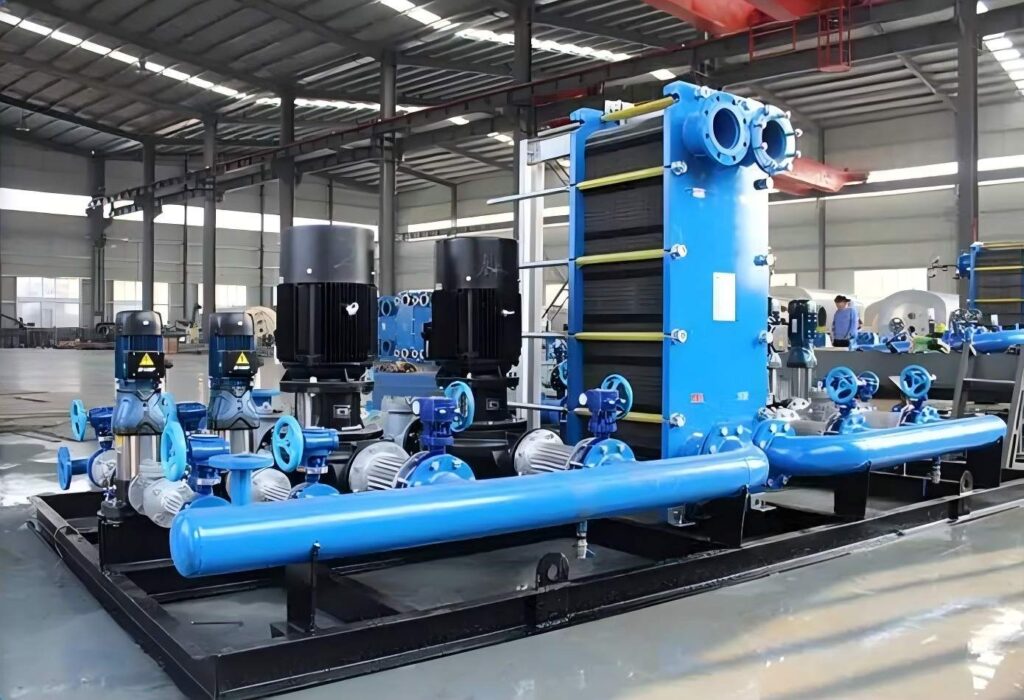
5.Protecting Your Investment: Indirect Heating via Plate Heat Exchangers (PHE)
One of the major causes of hot water boiler failure is ‘oxygen corrosion’ from fresh makeup water. Our R&D team recommends an Indirect Heating Loop using high-efficiency Plate Heat Exchangers. This design isolates the boiler’s internal water circuit from the building’s heating pipes. It ensures that the boiler operates in a closed, treated water environment, preventing scale and corrosion. This setup is particularly effective in regions with high-mineral water profiles, extending the boiler’s lifespan to over 20 years while maintaining constant heat transfer performance.
6.Sustainable Heating with Agricultural Waste
We offer SZL and DZL series hot water boilers specifically optimized for biomass pellets, wood, and rice husks. Consequently, these systems allow you to achieve zero-carbon heating while significantly reducing fuel expenditures. We integrate large-volume furnaces to ensure the complete combustion of solid fuels. Therefore, Taiguo biomass hot water boilers are the ideal choice for greenhouses and remote industrial sites.
| Biomass Feature | Specification Detail |
|---|---|
| Compatible Fuel | Wood chips, Pellets, Straw, Rice husks, Coal |
| Grate Type | Specialized chain grate or fixed grate for biomass |
| Feeding System | Automatic screw feeder or hydraulic feeder options |
| Ash Removal | Automatic ash extraction for continuous operation |
Multi-Fuel Hot Water Boiler Selection Matrix
Industrial and district heating projects require distinct thermal configurations based on available local energy infrastructure. Use the comprehensive fuel and technology matrix below to evaluate the optimal heating infrastructure for your facility.
| Boiler Series & Fuel Type | Thermal Capacity Range | Max Effluent Temp. (°C) | Primary Operational Advantage | Best Suited Regional Markets |
|---|---|---|---|---|
| WNS Gas / Oil Fired | 0.7 MW – 14.0 MW | 85 / 95 / 117 | Full-automatic low-NOx combustion, clean operation, small footprint. | Cities with mature natural gas pipelines or LNG terminal access. |
| SZL / DZL Biomass & Coal | 0.7 MW – 14.0 MW | 95 / 115 | Lowest daily fuel cost, utilizes abundant agricultural and forestry waste. | Regions lacking gas grids but rich in coal mines or agricultural processing. |
| WDR Fully Automatic Electric | 0.24 MW – 2.8 MW | 95 | Zero local carbon emissions, 99% thermal efficiency, no chimney required. | High-end commercial buildings, hotels, and strict zero-emission eco-zones. |
Unsure Which Fuel Delivers the Highest Return in Your Region
Fuel costs vary wildly between Central Asia, Southeast Asia, and the Americas. Tell our engineers your local energy tariffs, and we will calculate a 5-year operating cost projection for your project.
How to Choose Your Biomass Boiler: A Practical Example
Instead of complex math, let’s look at a typical heating project. Choosing the right capacity ensures you don’t overspend on fuel or undersize your heating.
The Project Scenario:
Imagine you are the owner of a 20,000m³ greenhouse or a large textile dormitory in a cold region.
- Step 1: Determine Total Heat Need. For a space this size, you typically need about 1.4 MW (2 Tons) of heat capacity to stay warm during peak winter.
- Step 2: Account for Heat Loss. We add a “Safety Buffer” of 20%. This accounts for heat lost through pipes and extreme cold snaps.
- Step 3: Final Selection. Based on this, we would recommend our DZL 1.4-0.7 Biomass Hot Water Boiler. It provides exactly the right volume of water without wasting energy.
ROI Analysis: The “Gas vs. Biomass” Business Case
For factory founders, the most important question is: “How fast will this pay for itself?” Let’s compare the annual costs for a 1.4 MW boiler operating 10 hours a day.
1. Annual Fuel Cost Comparison
- Option A: Natural Gas. In many regions, running this boiler on gas would cost approximately $120,000 per year.
- Option B: Wood Pellets (Biomass). Using local agricultural waste or pellets, the same heating output costs roughly $65,000 per year.
- The Saving: You save $55,000 every single year just by switching fuel.
2. The Payback Period (ROI)
Long-Term Profit: After the second year, that $55,000 goes directly into your net profit.
Initial Investment: Let’s assume the total cost for the boiler, installation, and dust collectors is $80,000.
Return Timeline: With $55,000 in annual savings, the equipment pays for itself in just 14 to 18 months.
Solving Critical Regional Heating Challenges
Global heating projects face unique localized operational hazards, from grid vulnerability to extreme freezing conditions. Our factory implements advanced hardware configurations to solve these real-world problems.
Challenge 1: Heavy Internal Pipe Corrosion and Oxygen Scaling
- The Problem: Continuous hot water circulation loops constantly introduce fresh dissolved oxygen and minerals. This creates aggressive oxidation scaling along the boiler interior, thinning the tube walls and shortening equipment life.
- Our Solution: We integrate heavy-duty automated vacuum or thermal deaerators alongside an industrial water softening plant. This multi-stage conditioning setup keeps dissolved oxygen levels below 0.1 mg/L, fully protecting the internal pressure vessel surfaces from rust.
Challenge 2: Severe Return-Water Thermal Shock Risks
- The Problem: In large district heating loops, the return water coming back from the city can drop to extremely low temperatures suddenly. When this cold water hits a hot boiler shell, the extreme temperature difference creates immense thermal stress, causing structural welds to crack.
- Our Solution: Our internal boiler design features specialized internal water distribution tubes and blending loops. This engineering setup pre-mixes the cold return-water with hot internal water before it touches high-temperature furnace walls, completely eliminating thermal shock risks.
Challenge 3: Unreliable Grid Utilities in Remote Production Zones
- The Problem: Factories operating in rural or newly developing industrial parks frequently experience sudden electrical grid voltage drops or blackouts, which can freeze automated boiler safety control systems instantly.
- Our Solution: All control cabinets feature integrated uninterruptible power supplies (UPS) to protect the PLC memory during grid failures. Additionally, our mechanical safety loops include spring-loaded emergency pressure-release mechanisms that operate without electricity, ensuring absolute site safety.
Manufacturing Authority & Brand Structure
CNMIRACLE operates as the international engineering and export brand of Taiguo Boiler Group, providing complete hot water boiler solutions for global commercial and industrial heating projects.
All hot water boiler systems are manufactured at the Henan Taiguo Boiler production base, where strict quality control, pressure testing, and thermal performance verification ensure stable and efficient long-term operation.
Taiguo Boiler Group is responsible for engineering design, manufacturing, and factory-level inspection of all hot water boiler systems, ensuring structural safety and thermal efficiency under continuous operation conditions.
CNMIRACLE is responsible for international project development, system configuration, logistics coordination, and overseas technical support, enabling seamless delivery and deployment of heating systems worldwide.
This integrated dual-brand structure combines manufacturing strength with global engineering capability, ensuring reliable heating solutions for international markets.
Global Engineering & Heating System Support
To ensure stable performance in diverse climate and application environments, CNMIRACLE and Taiguo Boiler provide a complete engineering support system for industrial and commercial hot water boiler projects.
1. System Design & Heating Load Engineering
We provide professional engineering support based on real project conditions:
- Heating load calculation for buildings and industrial facilities
- Hot water system configuration based on regional climate conditions
- Boiler capacity selection for continuous or seasonal operation
- Integration design for district heating and centralized heating systems
This ensures each system is correctly sized for stable and efficient operation.
2. Boiler Room Layout & System Integration
Our engineering team provides complete technical design support for installation planning:
- Boiler room spatial layout optimization
- Piping system and circulation design
- Water treatment system integration
- Safety distance and ventilation design
This ensures safe installation, efficient operation, and compliance with industrial standards.
3. Automation Control & Energy Efficiency Optimization
All hot water boiler systems can be equipped with intelligent control systems:
- Automatic temperature control and load adjustment
- Fuel consumption optimization systems
- Safety monitoring for pressure, temperature, and water level
- PLC-based operation for stable and efficient performance
This improves energy efficiency while reducing operational costs.
4. Installation Guidance & Lifecycle Technical Support
CNMIRACLE provides full lifecycle engineering support for global projects:
- On-site installation supervision by technical engineers
- Remote commissioning and system debugging
- Operator training for safe and efficient operation
- Long-term technical consultation and maintenance support
This ensures stable operation throughout the full service life of the equipment.
5.Heavy-Duty Export Package for Global Projects For Hot Water Boiler
We understand the logistics and operational challenges of overseas heating projects. Taiguo Factory provides an exclusive export support package to guarantee zero-risk deployment:
- Hydronic Maintenance Kit: Includes premium replacement pump seals, temperature probes, valve gaskets, and control fuses for two years.
- English Operational Interface: All digital controller screens, temperature tracking software, and safety warnings feature fluent English terminology.
- Complete Engineering Layouts: We supply detailed foundation loading diagrams, complete P&ID piping schematics, and electrical connection drawings.
- Remote Video Commissioning Support: Senior thermal engineers guide your local plumbing and electrical teams through initial loop flushing and startup.
- International Standards Compliance: We provide fully validated GOST/EAC certificates to ensure fast customs clearance in Central Asian markets, including Uzbekistan.
Hot Water Boiler System Selection Checklist (2026)
Check 1: Thermal Shock Protection (Minimum Return Water Temperature)
- Action: Ensure your system includes a “Shunt Pump” or a 3-way mixing valve.
- Technical Why: Cold return water hitting a hot boiler can cause “Thermal Shock,” leading to cracked welds or tube failure. Taiguo’s control logic maintains the return water above 55°C to prevent condensation and thermal stress.
Check 2: Scalability for Peak Load (Modular vs. Single Large Unit)
- Action: Evaluate if two 2MW boilers are better than one 4MW unit for your project.
- Technical Why: Modular setups allow for higher “Turn-Down” efficiency during shoulder seasons (spring/autumn), ensuring you aren’t running a massive boiler at 20% capacity, which wastes fuel.
Check 3: Integration with Building Management Systems (BMS)
- Action: Confirm the boiler’s controller supports Modbus or BACnet protocols.
- Technical Why: Modern 2026 heating projects require the boiler to “talk” to the building’s smart thermostats, allowing for automated weather-compensated heating that slashes energy waste.
As the overseas business director, I recommend reviewing these factors before finalizing your order:
- Fuel Versatility: We customize the grate design for wood chips, pellets, or loose agricultural waste.
- Atmospheric vs. Pressurized: We offer atmospheric models for simple heating and pressurized models for high-rise buildings.
- Emission Compliance: We provide high-efficiency bag filters to meet strict local environmental regulations.
- Energy Intelligence: Our integrated economizers capture waste heat to increase overall efficiency by 3% to 5%.
Frequently Asked Questions (FAQ)
What is the difference between an atmospheric and a pressurized hot water boiler?
Atmospheric boilers operate at zero pressure, making them exceptionally safe for urban buildings. Consequently, they do not require a specialized boiler room operator in many regions.
Can Taiguo hot water boilers provide both heating and domestic hot water?
Yes, we can equip the boiler with an internal copper coil heat exchanger. Therefore, you can provide clean hot water for showers while simultaneously heating the building.
How do you achieve 98% thermal efficiency?
We integrate a condenser at the flue gas outlet to recover latent heat from water vapor. As a result, this significantly reduces your monthly gas bill.
Is the operation loud enough to disturb hotel guests?
No, we use premium low-noise burners and high-density insulation materials. Consequently, the boiler operates quietly, making it ideal for noise-sensitive environments like hospitals.
What is the lead time for delivery to Central Asia?
Standard models are typically ready within 25 days. Moreover, we providefast road transport via Khorgos for our clients in Uzbekistan and Kazakhstan.
Can your biomass hot water boilers handle high-moisture fuels like fresh wood chips?
Yes, we customize the furnace arch and combustion air distribution to dry the fuel before ignition. Consequently, our boilers maintain high thermal output even with fluctuating fuel quality. This flexibility is essential for timber processing plants and agricultural projects in Africa and Central Asia.
What is an industrial hot water boiler?
An industrial hot water boiler is a pressure vessel designed to heat water without boiling it. It transfers thermal energy from fuel combustion or electrical elements directly into circulating water. The closed-loop system delivers hot water through insulated pipes to industrial processes, commercial HVAC, and large-scale heating networks.
What is the difference between a hot water boiler and a steam boiler?
The core difference lies in the working medium’s phase state and operating pressure dynamics.
Hot Water Boiler: Operates as a closed liquid loop. Water remains in liquid phase throughout the heating cycle. It offers higher thermal inertia, simpler water treatment, and lower maintenance costs.
Steam Boiler: Heats water until it vaporizes into steam. It delivers latent heat at higher temperatures and pressures, making it suitable for sterilization, power generation, and heavy chemical reactions.
What fuel can be used in a hot water boiler?
Industrial hot water boilers accommodate diverse fuel types based on regional availability and emissions regulations:
Gas & Liquid Fuels: Natural gas, LNG, LPG, diesel, heavy oil, and biogas.
Biomass & Solid Fuels: Wood chips, biomass pellets, rice husks, straw, and coal.
Clean Electricity: Electric heating elements (zero on-site exhaust).
What temperature can a hot water boiler provide?
Hot water boilers are classified by output temperature ranges:
Low-Temperature Hot Water (LTHW): Supplies water below 95°C (commonly 85/65°C or 95/70°C supply/return). Ideal for commercial HVAC, hotels, and greenhouse heating.
High-Temperature Hot Water (HTHW): Supplies water up to 115°C – 150°C+ under high system pressure. Primarily used for municipal district heating and heavy industrial process heating.
Which hot water boiler is best for district heating?
For municipal and large community networks, SZL / WNS series boilers are the top choices:
SZL Double-Drum Water Tube Boilers (Biomass/Coal): Best for high thermal load demands (4.2 MW – 29 MW+) in regions prioritizing low fuel costs.
WNS Horizontal Fire Tube Boilers (Gas/Oil): Best for urban networks requiring low NOx emissions, automated load tracking, and compact footprint.
Which hot water boiler is suitable for biomass fuel?
The DZL (single-drum fire/water tube) and SZL (double-drum water tube) series are optimized for biomass:
Feeding & Grate: Equipped with automated chain grates or reciprocating grates paired with screw/hydraulic feeders.
Anti-Coking Design: Feature enlarged furnace chambers, optimized secondary air distribution, and automated soot blowers to prevent slagging and tube abrasion.
How much does an industrial hot water boiler cost?
The final capital expenditure (CapEx) spans several cost tiers depending on capacity, pressure rating, fuel type, and auxiliary scope:
Capacity & Pressure Rating: Higher megawatt (MW) ratings and high-pressure ASME/CE-certified steel vessels increase material costs.
Burner & Combustion System: Low-NOx gas burners (<30mg/Nm3) or automated biomass grate systems cost significantly more than standard setups.
Auxiliaries & Environmental Equipment: Deaerators, circulation pumps, economizers, bag filters, and PLC control cabinets can account for 30% – 45% of the total turnkey equipment cost.
Request Your Portfolio Now
Request a customized project drawing from our Engineering Team.
Besides hot water solutions, we also provide Thermal Oil Heaters for asphalt heating applications
Need steam instead of hot water? Compare our WNS gas steam series
Central district heating networks demand massive and continuous thermal energy. Evaluate our customized Heavy-Duty Hot Water Boiler systems for global winter supply.