
Horizontal Pressure Coal-Fired Hot Water Boiler: Reliable Large-Scale Heating
Contents Hide 1 Understanding Horizontal Coal Fired Hot Water Boilers 2 What Is a Horizontal Coal Fired Hot Water Boiler? 3 Working Principle of Coal Fired Hot Water Boilers 3.1 1. Coal Combustion 3.2 2. Heat Transfer 3.3 3. Hot Water Circulation 3.4 4. Temperature Control 4 Mastering Large-Scale District Heating in Extreme Continental Climates […]
Get Instant Quote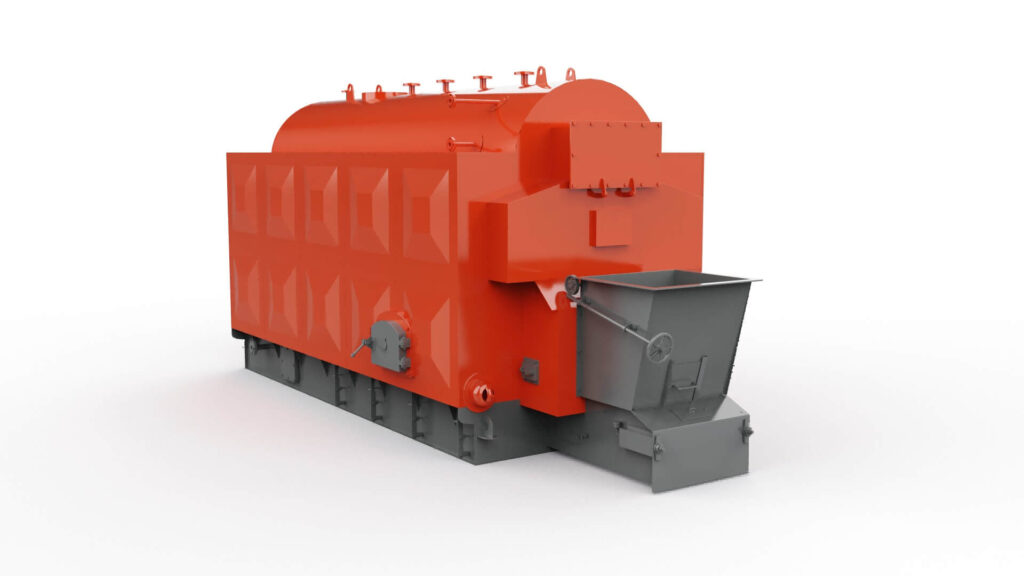
Technical Specifications
Understanding Horizontal Coal Fired Hot Water Boilers
Horizontal coal fired hot water boilers are highly efficient industrial heating systems. They are designed to provide stable hot water for manufacturing facilities, district heating networks, and various industrial process applications.
Featuring a robust horizontal furnace structure and a heavy-duty coal combustion system, these boilers ensure stable operation. They deliver efficient heat transfer and reliable long-term heating performance under heavy loads.
Although many global industries are moving toward cleaner energy solutions, coal fired systems remain practical. They are still widely used in regions where coal resources are highly available and fuel cost advantages remain important.
Proper boiler selection, combustion optimization, and strict emission control are essential factors. They ensure modern industrial heating systems operate efficiently and responsibly.
What Is a Horizontal Coal Fired Hot Water Boiler?
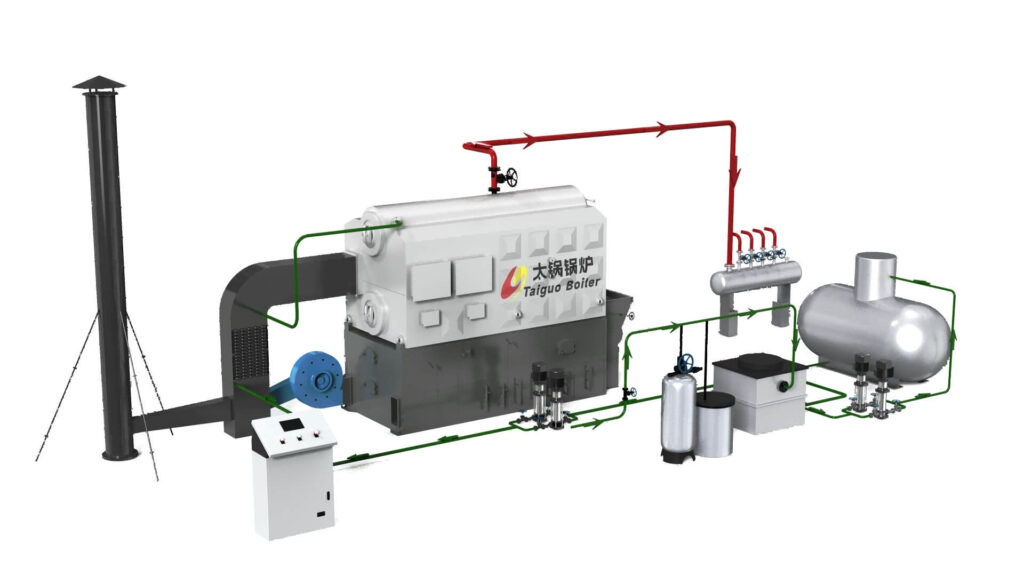
A horizontal coal fired hot water boiler is a specialized thermal system. It uses coal as fuel to heat water for large-scale industrial heating purposes. The main technical components usually include:
- Horizontal boiler body and shell
- Internal combustion chamber
- Automatic chain grate or combustion system
- High-efficiency heat exchange tube surfaces
- Forced water circulation system
- Integrated safety and PLC control equipment
The continuously heated water circulates through insulated pipelines. It delivers reliable thermal energy for production processes, facility buildings, or centralized district heating systems.
Working Principle of Coal Fired Hot Water Boilers
The operating process of a horizontal coal fired hot water boiler includes four critical technical phases:
1. Coal Combustion
Operators load coal onto the traveling grate. The fuel burns evenly inside the furnace to release maximum thermal energy.
2. Heat Transfer
The intense heat generated from combustion transfers to the boiler water. It passes efficiently through the radiant and convective heating surfaces.
3. Hot Water Circulation
Heavy-duty circulation pumps move the heated water through the external heating system. This continuous loop safely delivers thermal energy to end-users.
4. Temperature Control
Advanced control systems constantly monitor operating pressures and water temperatures. They adjust parameters automatically to maintain stable heating performance.
Mastering Large-Scale District Heating in Extreme Continental Climates
For large-scale industrial parks, residential districts, and greenhouse complexes in Central Asia, steam is often overkill, but stable, high-volume hot water is critical. Our Horizontal Coal Fired Hot Water Boiler are engineered to provide consistent thermal baseloads even when outdoor temperatures drop to -30 degree. By optimizing the Three-Pass fire-tube structure for solid fuel, Taiguo Boiler delivers a system that balances brute heating power with modern automated control.
Coal fired hot water boiler–High Thermal Inertia – The Anti-Freezing Shield
- The Challenge: In extreme cold, a sudden boiler shutdown can lead to frozen municipal pipes within hours, causing millions in damages.
- The Taiguo Solution: Our horizontal design features a Large Water Volume (Large Thermal Inertia).
- The Benefit: Unlike flash-heating systems, our boilers act as a thermal battery. If the fuel feed is interrupted, the massive volume of heated water continues to circulate, providing a critical buffer of time for maintenance without the risk of pipe bursts in the distribution network.
Coal fired hot water boiler-Solving the “Coal Quality” Variable – Advanced Grate Logic
- The Issue: Central Asian coal varies significantly in calorific value and ash content. Sensitive burners often clog.
- The Engineering Edge: We equip these boilers with Large-Scale Chain Grates
- The Logic: The grate speed and under-grate air distribution are controlled via VFD (Variable Frequency Drives). This allows the operator to maintain a perfect combustion bed whether they are firing high-grade anthracite or lower-quality local lignite, ensuring 98% complete combustion and minimal carbon in the ash .
Coal fired hot water boiler–ROI through Durability – The 20-Year Asset Logic
- Corrosion Resistance: Hot water systems are prone to “Oxygen Corrosion.” We integrate Built-in Deaeration Technology and specialized internal coatings.
- Structural Integrity: Using Threaded Smoke Tubes we increase the heat transfer coefficient by 1.8 times compared to plain tubes, while the “threaded” profile allows for natural thermal expansion, reducing stress on the tube plates and extending the boiler’s service life to over 25 years.
Coal fired hot water boiler-Safety & Compliance
- Safety Protocols: Every hot water boiler is equipped with Over-Temperature and Over-Pressure Interlocks. If the circulation pump fails, the grate stops and the fan shuts down instantly.
- Documentation: Fully certified with EAC (TR CU) Passports, ensuring a smooth customs process and legal operation in the EAEU region. We provide full technical support in Russian, simplifying the local operator’s training curve.
Core Technical Specifications of coal fired hot water boiler
We offer DZL and SZL configurations for our coal-fired pressure hot water systems. Furthermore, our pressurized design allows for heat distribution over long distances without secondary pumps.
| Technical Parameter | Specification Detail |
| Thermal Capacity | 0.7 MW – 70 MW (Customizable) |
| Operating Pressure | 0.7 MPa / 1.0 MPa / 1.25 MPa |
| Grate Type | Specialized chain grate for steady coal combustion |
| Thermal Efficiency | ≥ 85% – 88% (With economizer) |
| Target Markets | Uzbekistan, Kazakhstan, Mongolia, Africa |
Key Technological Advantages of coal fired hot water boiler
Installing a professionally engineered horizontal coal fired hot water boiler delivers multiple practical advantages:
- Suitable for Areas with Coal Availability: These boilers offer a highly practical choice where coal supplies are stable and economical.
- Stable Heating Output: They provide a continuous, reliable hot water supply for demanding industrial heating requirements.
- Strong Fuel Adaptability: The combustion system handles different coal types easily according to specific boiler design options.
- Reliable Industrial Operation: Correctly designed boilers feature a long service life for heavy-duty industrial heating applications.
- Suitable for Large Heating Demands: They ideally serve large factories and community facilities requiring continuous, high-volume thermal energy.
Standard industrial configurations typically cover 1.4–7 MW heating capacity, 0.7–1.25 MPa working pressure, and 95/70°C or 115/70°C outlet/return temperatures.
It is widely used for:
- industrial plant heating
- hotel central heating
- school campuses
- hospitals
- greenhouse heating
- district residential heating
- cement curing systems
1) High-Pressure Stable Heating Performance Of Coal fired hot water boiler
The pressure hot water design allows the system to maintain stable circulation and long-distance heat transport, making it ideal for:
- multi-building campuses
- industrial parks
- large workshops
- district pipelines
- municipal utility heating
This ensures consistent room temperature and process water heating during winter peak loads.
2) Horizontal Three-Pass Heat Exchange Structure of Coal fired hot water boiler
The horizontal shell structure adopts:
- large furnace chamber
- threaded smoke tubes
- water-cooled furnace walls
- three-pass flue gas path
- rear smoke chamber
This design improves heat absorption and reduces exhaust temperature, helping increase overall efficiency. Similar DZL horizontal systems are widely recognized for easy maintenance and broad industrial applicability.
3) Chain Grate Coal Combustion System of Coal fired hot water boiler
The chain grate stoker provides:
- continuous coal feeding
- stable combustion bed
- better fuel adaptability
- lower labor intensity
- long unattended operation
Compatible fuels include:
- bituminous coal
- anthracite
- lean coal
- mixed industrial coal
This is especially suitable for coal-rich markets such as Uzbekistan, Kazakhstan, Mongolia, and Russia.
4) Easy Maintenance for Long-Term Projects of Coal fired hot water boiler
The boiler body is equipped with:
- top manholes
- front inspection doors
- rear smoke chamber access
- ash cleaning ports
- chain grate maintenance windows
This simplifies:
- seasonal shutdown inspection
- tube cleaning
- scale removal
- grate repair
- annual maintenance
which is critical for large heating projects.
5)Optimized Combustion: The Cyclone Burnout Chamber Advantage of Coal fired hot water boiler
The primary engineering challenge in a horizontal coal-fired boiler is ensuring the complete combustion of coal volatiles before they hit the convection tubes. Taiguo’s 2026 series utilizes an Extended furnace with a Cyclone Burnout Chamber. This geometry forces the flue gas into a turbulent, swirling path, increasing the residence time of carbon particles. This ensures that even lower-grade coals reach a 97%+ burnout rate, significantly reducing soot accumulation and preventing the ‘Black Smoke’ typically associated with legacy coal units. The result is a clean, steady 90-95℃ hot water output for large-scale district heating or industrial washing.”
6)Hydraulic Reliability: Forced Circulation & Thermal Buffer Zones of Coal fired hot water boiler
To prevent localized boiling and ‘Water Hammer’ in the horizontal shell, we employ a Strategic Forced Circulation layout. By optimizing the water inlet manifold, we ensure that cold return water is directed precisely to the highest-heat flux zones above the furnace arch. This maintains a uniform temperature gradient across the pressure vessel, eliminating ‘Dead Zones’ where scale could accumulate. This hydraulic precision is what allows Taiguo boilers to handle rapid load changes in commercial heating applications without the risk of thermal stress-induced cracking.
7)Compliance Engineering: Multi-Stage Flue Gas Purification of Coal fired hot water boiler
In 2026, operating a coal-fired boiler requires strict adherence to particulate matter (PM) and SOx limits. Taiguo’s horizontal coal systems are designed to be integrated with a Hybrid Filtration Suite. This typically includes a High-Efficiency Cyclone Collector for heavy ash removal, followed by a Ceramic Multi-Tube Dust Collector or a Venturi Scrubber. This multi-stage approach ensures that the stack emissions meet the <50 mg/Nm3 limit required in many developing industrial zones, providing a cost-effective heating solution that doesn’t compromise local air quality standards.
Emission Control and Environmental Considerations
Modern coal fired hot water boiler projects must evaluate strict environmental requirements and emission control technologies. Important engineering measures include:
- Combustion Optimization: Improved combustion technology increases thermal efficiency. It successfully reduces raw fuel consumption and waste.
- Dust Removal Systems: High-efficiency multi-cyclone dust collectors or bag filters effectively control particulate emissions to meet local laws.
- Fuel Quality Management: Selecting suitable coal quality significantly improves combustion performance and reduces ash buildup.
- Boiler Upgrade Solutions: Existing factory heating plants can achieve better performance through technical efficiency upgrades and auxiliary system optimization.
Efficiency Tips: Discover practical upgrade methods to reduce fuel costs via our Boiler System Optimization framework.
Precision Engineering for High-Pressure Safety of coal fired hot water boiler
We apply National Class-A manufacturing standards to ensure structural integrity under pressure. As a result, our boilers provide stable heat for decades in extreme environments.
- Reinforced Boiler Shell: We use high-tensile steel plates to withstand constant thermal and pressure cycles.
- Arch Optimization: The customized furnace arch improves the radiation heat transfer for coal ignition.
- Automatic Chain Grate: Our heavy-duty grates reduce coal leakage and ensure uniform fuel distribution.
- Threaded Fire Tubes: We install threaded tubes to increase the heating surface and thermal efficiency.
- 100% NDT Testing: Every pressure seam undergoes mandatory radiographic testing to ensure zero defects.
- Independent Air Plenums: Multiple air compartments allow for precise control of the combustion zones.
- Hydraulic System Test: Each unit passes a pressure test at 1.5 times the design limit.
- Professional Insulation: Thick aluminum silicate fiber layers minimize heat loss to the ambient air.
- Intelligent Control System: The PLC system monitors water temperature and pressure in real-time.
- Pre-Shipment Calibration: We calibrate all safety valves and gauges before shipping via Khorgos.
Typical Applications of Coal fired hot water boiler for Large-Scale Heating
District Heating
- residential communities
- worker dormitories
- municipal heating stations
Industrial Facilities
- workshops
- warehouse heating
- production area comfort heating
Building Materials
- concrete curing
- AAC blocks
- precast yard hot water loops
Agriculture
Systems deliver consistent thermal energy for large-scale commercial greenhouses and specialized livestock farm heating networks.
- greenhouse heating
- livestock farm water heating
- winter crop temperature control
Commercial Buildings
- hotels
- schools
- hospitals
- sports centers
Manufacturing Plants
Boilers provide reliable process heating for manufacturing lines and large-scale facility space heating during winter.
Textile Industry
Systems supply abundant hot water for high-temperature fabric washing, scouring, and textile production processes. Discover our custom Textile Boiler Solution.
Food Processing Industry
Hot water supports essential industrial washing, raw material heating, and facility cleanup operations. Explore our specialized Food Processing Boiler Solution.
Why Overseas Buyers Choose Horizontal Coal Hot Water Boiler
For many developing markets, coal remains the most cost-effective heat source for large projects.
This Coal fired hot water boiler helps solve:
- unstable gas pipeline access
- expensive diesel costs
- winter district heating demand
- large building hot water circulation
- centralized energy station design
Key buyer advantages of Coal fired hot water boiler:
- lower fuel cost
- mature maintenance system
- easy spare parts sourcing
- simple operator training
- strong cold-climate adaptability
This makes it highly suitable for Central Asia and Eastern Europe heating projects.
Heating Capacity vs Coverage Area
| Boiler Capacity | Recommended Heating Area | Suitable Projects |
|---|---|---|
| 0.7 MW | 6,000–8,000 ㎡ | small school / hotel |
| 1.4 MW | 10,000–12,000 ㎡ | campus / factory dormitory |
| 2.8 MW | 20,000–25,000 ㎡ | industrial workshops |
| 4.2 MW | 30,000–35,000 ㎡ | hospital / industrial park |
| 5.6 MW | 40,000–45,000 ㎡ | district heating station |
| 7 MW | 50,000–60,000 ㎡ | municipal heating |
| 10.5 MW | 75,000–90,000 ㎡ | large residential community |
| 14 MW | 100,000–120,000 ㎡ | city central heating |
Winter Heating Area Calculator
How to Calculate the Required MW of Coal fired hot water boiler for Your Heating Project
Step 1 — Confirm Building Area
Example:
- workshop: 20,000㎡
- dormitory: 8,000㎡
- office: 2,000㎡
Total = 30,000㎡
Step 2 — Choose Heating Load Index
Typical winter design values:
| Building Type | Heat Load |
|---|---|
| Well-insulated office | 60–80 W/㎡ |
| Standard hotel | 80–100 W/㎡ |
| Factory workshop | 100–120 W/㎡ |
| Cold climate warehouse | 120–150 W/㎡ |
Step 3 — Apply Formula
For example:
30,000㎡ × 100W/㎡ = 3,000,000W = 3MW
So the recommended model should be:
4.2 MW Horizontal Pressure Coal-Fired Hot Water Boiler
Quick Rule of Thumb for Buyers
1 MW ≈ 8,000–10,000㎡ standard winter heating area
10,000㎡ → 1.4MW
20,000㎡ → 2.8MW
50,000㎡ → 7MW
100,000㎡ → 14MW
How to Select a Horizontal Coal Fired Hot Water Boiler?
When selecting a horizontal coal fired hot water boiler, factory procurement teams must analyze several core parameters:
- Heating Capacity: The rated boiler thermal output must match your actual factory peak heating requirements precisely.
- Water Temperature Requirements: Engineers must evaluate your specific supply and return water temperature differences accurately.
- Fuel Characteristics: Local coal quality, calorific value, and ash content directly affect your long-term operating costs.
- Boiler Efficiency: Higher thermal efficiency designs drastically reduce daily fuel consumption and lower annual operating expenses.
- Environmental Requirements: Project teams must consider local environmental emission standards during the initial system design phase.
Engineering Design Considerations for Hot Water Boiler Systems
A successful industrial hot water project requires comprehensive engineering planning. Complete boiler room layout integration must evaluate:
- Optimized boiler room layout arrangement and ventilation positioning
- Safe water circulation loops and pipeline thermal expansion design
- Precise circulation pump selection based on head and flow rates
- Proper expansion tank configuration to handle water volume changes
- High-efficiency heat distribution network and insulation design
- Multi-layered safety protection valves and automatic interlocks
Proper engineering design significantly improves complete system reliability. It maximizes the overall operating efficiency of your factory heating grid.
Engineering Resources: Plan your industrial layout with expert technical guidance via our Engineering Hub.
Choosing Between Coal, Gas and Biomass Hot Water Boilers
Different fuel types provide distinct economic and operational advantages depending on your specific project conditions.
Coal Fired Boiler
- Best Suited For: Regions where coal resources are highly abundant and local fuel prices are exceptionally competitive.
Gas Fired Boiler
- Best Suited For: Projects requiring cleaner combustion, lower emissions, automated operation, and small boiler room footprints.
Biomass Boiler
- Best Suited For: Factories with direct, affordable access to renewable biomass pellet fuels or wood waste.
The final optimal choice depends heavily on local fuel availability, environmental regulations, and long-term operating cost calculations.
Technical Checklist: Coal-Fired Hot Water Boiler Audit (2026)
Grate Material & Cooling Architecture
- Action: Confirm the use of Heat-Resistant Cast Iron (RTCr) for the grate bars and check for the ‘Independent Air Chamber’ cooling design.
- Technical Why: Poorly cooled grates will warp and ‘burn through’ within one season. Taiguo’s design uses the incoming primary air to cool the grate bars, extending their life by 300%.
Soot Blowing Accessibility
- Action: Ensure the boiler shell features strategically placed Soot Blower Ports.
- Technical Why: Coal ash is inevitable. Without the ability to blow soot during operation, the convection tubes will develop an ‘insulation layer’ of ash, causing your coal consumption to spike by 15-20% within weeks.
Explosion Door & Safety Venting
- Action: Verify the inclusion of Spring-loaded Explosion Doors on the rear smoke box.
- Technical Why: Coal dust and volatiles can cause minor pressure surges in the furnace. A certified explosion door is the primary safety device that protects the boiler structure and the operators from backfire events.
Frequently Asked Questions (FAQ)
What is the advantage of a pressurized hot water boiler?
Pressurized systems can reach higher water temperatures (up to 115°C) without boiling. Consequently, they are more efficient for heating large residential districts or remote mining camps.
an this boiler burn low-quality coal?
es, we customize the grate and furnace volume to handle different coal grades. Therefore, you can utilize cost-effective local fuel sources in Central Asia or Africa.
Is it difficult to transport these oversized horizontal boilers?
We have extensive experience in OOG (Out of Gauge) rail and road logistics. Consequently, we ensure safe delivery through the Khorgos border to your project site.
How does the boiler handle winter temperatures below -40°C?
We use high-grade refractory materials and thickened insulation layers. As a result, the boiler maintains stable thermal output even in the harshest climates.
Why is the Horizontal Pressure Coal-Fired Boiler the Strategic choice for 2026?
Even as gas markets fluctuate, coal remains a Reliable and cost-effective fuel for large-scale baseload heating. By utilizing Superior 2026 emission-control technologies, facilities can achieve Essential heating goals while remaining fully compliant with environmental audits.
How does the “Pressurized” system improve long-distance heating efficiency?
By operating under pressure, the water can be heated up to 130°C without boiling. This allows for a much higher energy density per cubic meter of water, making it Validated to reduce pumping costs and heat loss over large district heating radii.
What is the maintenance expectation for these large-scale units?
Our 2026 models are equipped with Critical AI-Link sensors that monitor tube wear and ash accumulation. By moving to a Predictive Maintenance model, facilities can extend the Reliable lifespan of the boiler to over 20 years.
What is a horizontal coal fired hot water boiler?
It is an industrial boiler system that burns coal to heat water. It provides continuous thermal energy for factories, heating networks, and process applications.
Can coal fired hot water boilers meet environmental standards?
Yes. Modern systems integrate advanced dust removal equipment and optimized combustion chambers. These features significantly reduce particulate emissions to satisfy regional standards.
How do I choose a hot water boiler capacity?
Selection depends on your total facility space heating area, production process heat loads, and local winter design temperatures.
What industries commonly use coal fired hot water boilers?
They are widely used in manufacturing plants, textile mills, food processing facilities, agricultural greenhouses, and large-scale district heating networks.
Henan Taiguo SZL/DZL series coal fired boiler: The ultimate “fuel eater” for coal, wood, rice husk, and straw. National Class-A certified with 1-40 t/h capacity. Save up to 60% on fuel costs in Uzbekistan & Africa.
Need a Reliable Large-Scale Heating Boiler?
If your project requires district heating, factory winter heating, or industrial process hot water, our engineering team can recommend the best horizontal coal-fired hot water boiler configuration.
We Support
- heating load calculation
- pipeline loss analysis
- coal fuel matching
- boiler room layout
- chimney + dust collector design
- export customs support
- installation guidance
Contact us now for a customized large-scale heating solution.
Not Sure How Many MW Your Project Needs?
Send us these 3 parameters:
- total heating area
- local winter temperature
- building insulation condition
Our engineers will provide:
- free MW sizing
- boiler room layout
- coal consumption estimate
- pipeline loss calculation
- chimney & dust collector design
Get your heating capacity recommendation within 24 hours.
Align heavy mining municipal utilities with correct parameters via boiler technology insights.
Switch seamlessly to automated renewable wood pellets using DZL Series Fully Automatic Biomass Pellet Fuel Steam Boiler.
Evaluate cleaner exhaust gas emission variations through High-Efficiency Oil/Gas Fired Hot Water Boiler: Smart Heating Solutions.