Industrial Boiler Engineering Knowledge Base Overview
This Industrial boiler engineering knowledge base is a structured industrial boiler engineering system developed for technical decision-making across the full lifecycle of boiler systems, including design, installation, commissioning, operation, and long-term optimization.
Industrial boiler systems are complex thermal energy systems that integrate combustion engineering, heat transfer mechanics, fluid dynamics, automation control, and safety protection into a unified industrial energy platform.
In practical engineering applications, these systems are typically implemented through core product series such as gas-fired steam boilers (WNS series), water-tube steam boilers (SZS series)and biomass boiler systems (SZL series)
Unlike general equipment documentation, this Industrial boiler engineering knowledge base is built on engineering-level logic used in real industrial projects and EPC environments.
It is designed to support:
- Industrial plant engineers
- EPC contractors
- Energy system designers
- Procurement and technical decision teams
The Industrial Boiler Engineering Knowledge Base focus is not only on boiler equipment, but on system-level engineering performance and lifecycle optimization.
Industrial Boiler Design & Scientific Foundations
Industrial Boiler Engineering Knowledge Base is built upon established principles of thermal and mechanical engineering. Engineering decisions in boiler systems are not arbitrary—they derive from measurable physical laws governing energy conversion and fluid dynamics.
Core Scientific & Engineering Principles
Our engineering methodologies integrate five fundamental technical disciplines:
- Thermodynamic Energy Conversion: Governs heat transfer efficiency and steam enthalpy calculations.
- Combustion Efficiency Theory: Dictates air-to-fuel ratios, low-NOx burner selection, and flame geometry.
- Heat Transfer Mechanisms: Optimizes radiant heat absorption in furnace walls and convective heat recovery in tubes.
- Fluid Dynamics & Circulation: Ensures natural or forced water circulation to prevent tube overheating and dryouts.
- Automation & Control Integration: Regulates drum water levels, steam pressure, and safety interlocks automatically.
Key Engineering Parameters & System Evaluation
Proper engineering design converts thermodynamic laws into long-term operational stability and low fuel consumption. Our engineers evaluate four critical parameters before manufacturing any industrial boiler.
| Design Parameter | Key Calculation Factors | Operational Impact |
|---|---|---|
| Boiler Capacity | Steam demand, peak production loads | Prevents pressure drops during load spikes |
| Operating Pressure | Process pressure requirements, pipe friction | Guarantees required thermal delivery quality |
| Fuel Selection | Gas, biomass, oil, or coal properties | Controls long-term operating and fuel costs |
| Thermal Efficiency | Economizer, condenser, air preheater integration | Minimizes stack gas heat losses past 95% |
Boiler Capacity Calculation
Accurate capacity calculation prevents thermal overload and fuel waste. Engineers must analyze total hourly steam consumption, peak load durations, and future plant expansions.
Boiler Pressure Selection
Operating pressure directly affects steam density and heat transfer rates. Process engineers select boiler pressure based on total piping friction losses and terminal equipment needs.
Fuel Selection Engineering
Fuel availability and price volatility dictate total annual operating costs. We engineer custom combustion chambers tailored for natural gas, fuel oil, biomass pellets, or coal.
Boiler Selection & System Planning Guide-Industrial Boiler Engineering Knowledge Base
Selecting the right boiler system requires systematic evaluation of technical, financial, and site conditions.
- Assess Steam Demand: Calculate average steam flow rates alongside immediate peak demand surges.
- Evaluate Fuel Options: Analyze local fuel availability, environmental regulations, and delivered fuel costs.
- Determine Site Layout: Measure plant headroom, boiler room footprint, and maintenance clearance access.
- Plan Boiler Automation: Select PLC control systems, automatic blowdown, and remote monitoring options.
Explore our comprehensive guide: Industrial Boiler Selection Guide & Capacity Planning System
System-Level Engineering Architecture
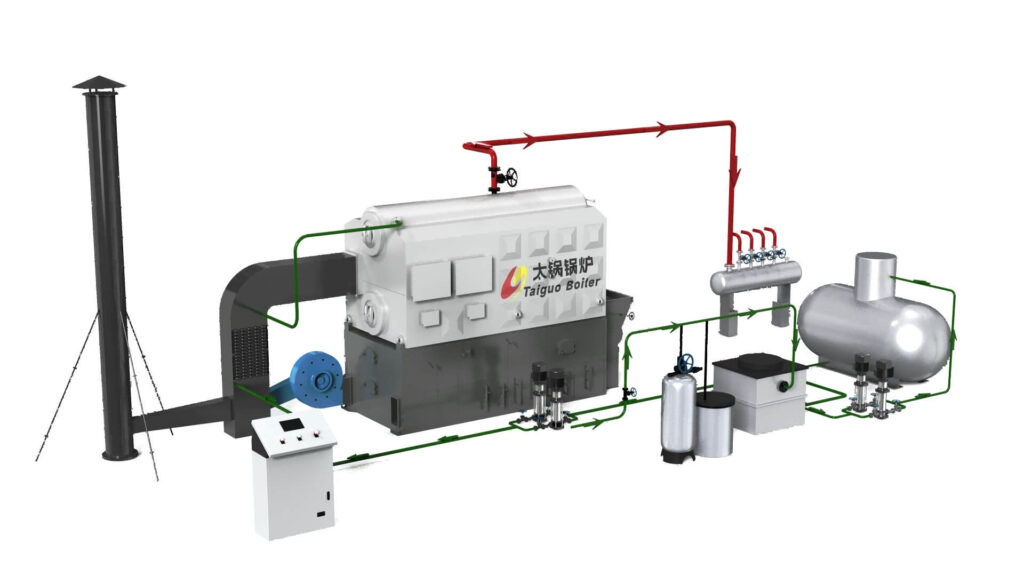
Industrial boiler systems must be understood as integrated energy systems rather than isolated equipment.
A complete boiler engineering system consists of five interconnected subsystems:
Combustion System
Each subsystem directly influences overall performance. This unit drives efficiency through steady energy conversion.
- •Converting fuel into thermal energy
- •Maintaining controlled flame stability
- •Executing strict emission management
Heat Transfer System
Excellent structural thermal designs maximize system efficiency while preventing operational energy waste.
- •Transferring combustion energy into water and steam
- •Optimizing furnace walls, tubes, and economizers
Water & Steam System
The water circuit securely regulates basic flow dynamics to provide high quality stable outputs.
- •Manages circulation and phase changes
- •Secures continuous pressure stabilization
- •Maintains rigorous steam quality control
Control & Automation System
Smart configurations replace manual operational risks through continuous tracking and parameter regulation loops.
- •Ensures real-time regulation of combustion
- •Monitors pressure and temperature variations
- •Stabilizes critical active safety loops
Safety Protection System
Multi-layered protective shields shield properties and personnel from dangerous plant overpressure failure events.
- •Includes mechanical pressure safety valves
- •Deploys flame detection and water level protection
- •Triggers automated emergency shutdown mechanisms
Engineering Lifecycle Framework Overview
Industrial boiler systems operate through a complete engineering lifecycle rather than a single installation process. Each stage of the lifecycle has a direct impact on system efficiency, safety, and long-term operational cost.
From system design to long-term maintenance, every engineering phase is interconnected. A decision made in the early design stage will influence installation quality, commissioning performance, and ultimately the long-term efficiency of the boiler system.
For example:
- A poorly designed steam load calculation can lead to unstable operation during commissioning
- Incorrect installation of piping systems can permanently reduce heat transfer efficiency
- Inadequate water treatment during operation can accelerate scaling and reduce thermal performance
Therefore, industrial boiler engineering must be understood as a continuous system optimization process across the full lifecycle, rather than isolated technical steps.
The following sections explain each engineering stage in detail, including its technical purpose, key factors, and its impact on overall system performance.
Proper boiler system design establishes the foundation of industrial performance and secures permanent lifecycle operational efficiency.
- •Steam load profiling calculations
- •Fuel selection and combustion strategy
- •Furnace geometry and surface design
- •Stable output under variable loads
- •Reduced factory fuel consumption
- •Extended thermal equipment lifespan
Expert installation engineering successfully converts theoretical thermal designs into real-world plant operational performance.
- •Boiler room layout and airflow design
- •Piping stress and expansion control
- •Condensate return loop integration
- •Up to 15% system efficiency loss
- •Severe steam pressure instability
- •Increased mechanical maintenance loops
The commissioning phase thoroughly tests and validates system performance boundaries under actual field operating conditions.
- •Burner ignition and combustion calibration
- •Load testing under dynamic demands
- •Pressure and temperature stabilization tuning
- •Safety system verification checks
- •Automated safety interlock testing
- •Water quality and circulation validation
Operational engineering strictly maintains system baseline stability under continuously changing load behaviors and factory production profiles.
- •Load fluctuation response delays
- •Fuel-air imbalance under partial loads
- •Low-load thermal heat recovery losses
- •Precise boiler fuel input rates
- •Dynamic combustion air supply ratios
- •Automated water feed valve loops
Energy efficiency remains the critical performance metric throughout the plant lifecycle to fully control fuel expenses.
- •Mineral scale scaling layer build-up
- •Internal tube surface electrochemical corrosion
- •Continuous mechanical and thermal stresses
- •Preventive maintenance scheduling audits
- •Regular burner recalibration and tuning
- •Advanced water treatment optimization
Boiler Operation, Maintenance & Optimization
Proactive maintenance prolongs boiler lifespan and maintains peak fuel efficiency throughout the thermal system lifecycle.
Efficiency Optimization
Regular combustion tuning prevents incomplete combustion and carbon soot buildup on tubes. Flue gas economizers lower stack temperatures and increase thermal efficiency past 95%.
Preventive Maintenance
Technicians inspect water tubes, clean burner heads, and test safety cutoffs regularly. Scheduled blowdown prevents sludge accumulation and controls water TDS levels effectively.
Engineering Decision Support Framework
This Industrial boiler engineering knowledge base is designed to support engineering-level decision making across all industrial boiler projects.
It helps evaluate:
- Boiler system selection based on load requirements
- Fuel strategy optimization based on regional conditions
- Efficiency improvement opportunities
- Control system configuration planning
- Lifecycle cost optimization
Engineering decisions must balance:
- Technical performance
- Operational reliability
- Economic lifecycle cost
Real-World Industrial Application Context
Industrial boiler systems operate in complex production environments with continuous or semi-continuous demand cycles.
Typical applications include:
- Textile and dyeing plants
- Food processing facilities
- Chemical production plants
- Paper manufacturing industries
- Industrial laundry and hotel systems
- Construction material production plants
Each application requires specific engineering adaptation in:
- Pressure level configuration
- Steam stability requirements
- Fuel selection strategy
- Automation complexity level
Engineering Knowledge Integration Framework
This engineering knowledge base integrates all core domains of boiler system engineering into a unified lifecycle structure:
- Design engineering defines system architecture
- Installation engineering ensures physical accuracy
- Commissioning engineering validates performance
- Operational engineering maintains stability
- Lifecycle engineering ensures long-term efficiency
Together, they form a complete industrial boiler engineering lifecycle system that supports both technical performance and economic efficiency.
Our Industrial Boiler Engineering Process
We execute every project through a structured 5-step engineering workflow to ensure safety, efficiency, and seamless operation.
- Requirement Analysis: Our engineers review your process steam load, fuel preference, site layout, and local environmental codes.
- Boiler System Design: We design a tailored boiler plant layout, piping schematics, and complete auxiliary lists.
- Manufacturing & Quality Control: Plant technicians fabricate pressure vessels according to strict international boiler standards.
- Installation & Commissioning: Senior field engineers supervise equipment positioning, piping connection, and system firing.
- Lifecycle Optimization: We deliver operator training, original spare parts, and continuous remote technical support.
Our engineering support is designed for EPC contractors, industrial plant engineers, and procurement teams requiring reliable technical decision support.
📋 Related Engineering Concepts & Technical Education Links
As part of our central Industrial Boiler Insights platform, basic concepts guide your procurement safety.
Industrial Boiler Engineering Knowledge Base FAQ
What is industrial boiler engineering?
It is the design, installation, and operation of boiler systems.
It covers the full lifecycle of thermal energy systems including combustion, heat transfer, water circulation, and automation control systems.
What are the stages of boiler engineering?
Design, installation, commissioning, operation, lifecycle maintenance.
Each stage directly influences the next stage. Errors in design or installation will propagate into long-term inefficiency
Why is installation engineering critical?
Because it determines real system performance.
Even correctly designed systems can lose 5–15% efficiency due to improper piping, alignment, or thermal expansion control
What affects boiler efficiency?
Combustion, heat transfer, and water quality.
Efficiency depends on system-level balance between energy input, transfer, and loss mechanisms.
What is the purpose of an Industrial Boiler Engineering Knowledge Base?
An Industrial Boiler Engineering Knowledge Base provides comprehensive technical guidance on boiler selection, thermal system design, installation procedures, and energy-saving optimization strategies for industrial plant managers and project engineers.
How do engineers calculate industrial boiler capacity?
Engineers calculate boiler capacity by totaling peak hourly process steam consumption, accounting for piping heat losses, and adding a safety margin for future plant expansion.
Why are auxiliary systems critical for industrial boilers?
Auxiliary systems—such as feedwater pumps, water softeners, economizers, and deaerators—protect the pressure vessel from scale and corrosion while maximizing total plant energy efficiency.
Need Professional Boiler Engineering Support?
If you require engineering-level guidance for industrial boiler system design, installation, or optimization, our technical team can provide tailored solutions based on your project requirements.