
Marine Thermal Oil Heating System & Framo System Integration Guide
Contents Hide 1 Understanding Marine Thermal Oil Heating Systems 2 Why Are Thermal Oil Systems Used in Marine Applications? 2.1 High Temperature Performance 2.2 Reliable Continuous Operation 2.3 Low Pressure Operation 2.4 Compact System Design 3 How Does a Marine Thermal Oil Heating System Work? 3.1 1. Heating Source 3.2 2. Thermal Oil Heating 3.3 […]
Get Instant QuoteTechnical Specifications
Understanding Marine Thermal Oil Heating Systems
A marine thermal oil heating system is a specialized engineering solution. It provides stable high-temperature heat for modern ships and offshore facilities.
Unlike traditional steam boilers, these systems utilize special heat transfer oil. Consequently, a marine thermal oil heater delivers thermal energy without maintaining high operating pressures.
In the maritime industry, this setup serves as a reliable ship heating system. It performs crucial tasks, such as cargo heating, fuel preheating, and other onboard utility operations.
Furthermore, shipyards regularly install a marine auxiliary heating system to improve overall vessel fuel efficiency.
Why Are Thermal Oil Systems Used in Marine Applications?
Harsh marine environments demand highly reliable equipment. Therefore, ship designers prefer thermal fluid systems over standard steam loops.
High Temperature Performance
First, thermal fluid provides stable, high-temperature heating. This capability is essential for heavy maritime fuel handling.
Reliable Continuous Operation
Additionally, the closed-loop design ensures consistent thermal transfer. This setup guarantees long, trouble-free voyages across global shipping routes.
Low Pressure Operation
Because thermal oil operates at low pressure, it eliminates major safety risks. This feature greatly simplifies onboard safety management.
Compact System Design
Furthermore, marine engine rooms have strictly limited space. Fortunately, our compact heaters fit easily into tight machinery layouts.
How Does a Marine Thermal Oil Heating System Work?
A thermal oil heating system for ships operates through a simple, closed circulation loop.
The main heating process includes four key stages:
1. Heating Source
Initially, the marine burner burns diesel or heavy fuel oil to generate thermal energy.
2. Thermal Oil Heating
Next, this energy transfers directly to the fluid circulating inside the heater coils.
3. Heat Distribution
Subsequently, high-temperature pumps push the heated oil through the ship’s insulated pipelines.
4. Heat Recovery
Finally, the oil releases heat to the onboard equipment. It then returns to the heater for continuous reheating.
Advanced Engineering: Why Our Marine Thermal Oil Heating System Uses Spiral Coil Technology
Unlike standard heating solutions, Taiguo’s Marine Thermal Oil Heating System is engineered based on Grade-A manufacturing excellence established since 1976. The core of our system features a unique multi-head, small-diameter spiral coil design.
This architectural choice is critical for maritime safety; it ensures superior thermal expansion performance and minimizes structural stress. By utilizing ND high-quality steel and professional argon arc welding (compliant with D1/D2 pressure vessel standards), we achieve a heat utilization rate exceeding 98%. The three-pass flue gas process ensures that the medium flow velocity is uniform, preventing localized overheating even under the rigorous conditions of 2026 global shipping routes.
Marine Applications of Thermal Oil Heating Systems
A modern thermal fluid heater marine application covers several critical shipboard operations.
Our advanced engineering solutions reliably support these vital systems:
Cargo Heating
First, vessels must maintain specific cargo temperatures during transit. This system is perfect for cargo like:
- Heavy fuel oils.
- Industrial bitumen.
- Specialized chemical liquids.
Fuel Oil Heating
Second, ships use heavy fuel oil (HFO). The heating system lowers HFO viscosity before injection into the main engine.
Tank Heating
Additionally, the system prevents fuel solidification in the storage and settling tanks.
Offshore Platforms
On offshore drilling units, an offshore thermal heating system supports high-capacity process operations in extreme weather.
Marine Industrial Equipment
Lastly, the system provides clean, controlled heat to onboard fresh water generators and auxiliary systems.
Marine Thermal Oil Heater vs Steam Boiler
When choosing a marine boiler system, shipbuilders often compare thermal oil heaters and steam boilers.
Feature Marine Thermal Oil Heater Marine Steam Boiler Operating Pressure Low pressure High pressure Risk of Corrosion Very low (Oil protects pipes) High (Water causes rust and scale) Freezing Risk None (Oil does not freeze) High (Water freezes in cold seas) Maintenance Need Minimal maintenance Frequent water testing required Marine Thermal Oil Heaters
This system is highly suitable for:
- High-temperature cargo heating.
- Safe, low-pressure heating loops.
- Unattended operation during long international voyages.
Marine Steam Boilers
In contrast, steam systems are suitable for:
- Direct steam injection processes.
- Auxiliary steam turbine operations.
- Ships with existing steam-driven machinery.
Key Components of a Marine Thermal Oil Heating System
A complete marine heating package consists of several heavy-duty components:
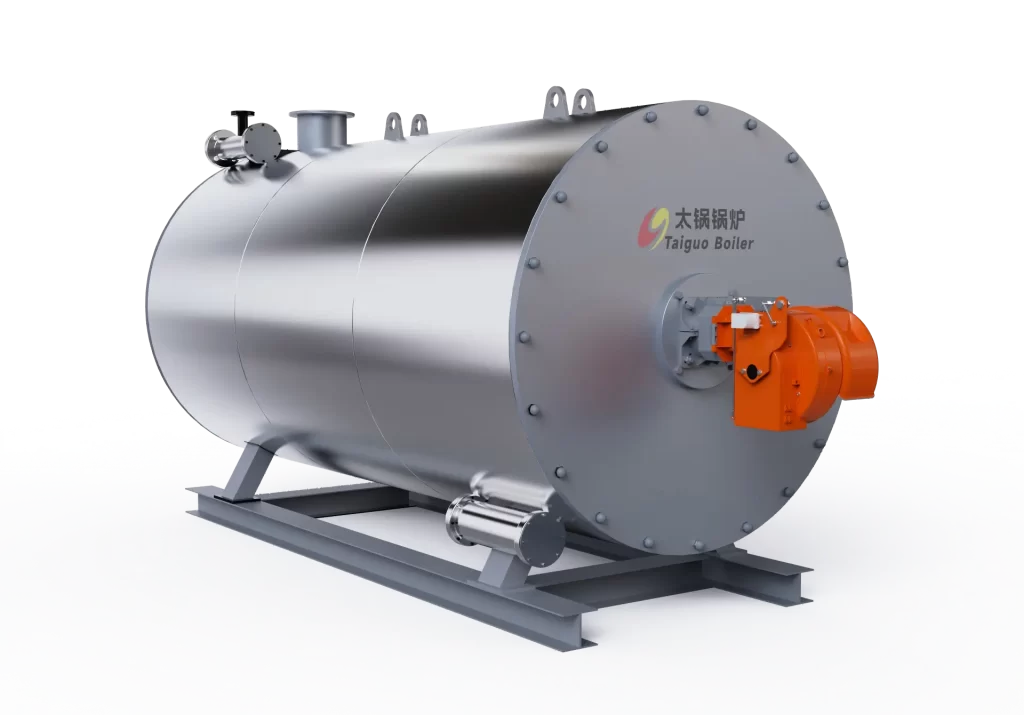
Thermal Oil Heater
This unit serves as the core heat source, featuring robust marine-grade combustion controls.
Circulation Pump
High-efficiency, twin-pump setups ensure continuous oil flow with 100% redundancy.
Expansion Tank
This tank safely handles oil volume changes during temperature fluctuations.
Control System
Automated panels monitor system temperature, oil flow, and pressure levels.
Piping System
Insulated, marine-certified pipes safely distribute heat throughout the vessel.
How to Select a Marine Thermal Oil Heating System?
Selecting a ship thermal oil boiler requires careful planning. You must evaluate several technical criteria:
Heating Capacity
First, the heater capacity must match the maximum calculated thermal load of the vessel.
Operating Temperature
Next, the design must safely reach the required processing temperature of your specific cargo.
Space Limitations
Furthermore, you should choose a compact vertical design to save valuable engine room deck space.
Fuel Availability
We can configure burners to run on Marine Gas Oil (MGO), Heavy Fuel Oil (HFO), or natural gas.
Safety Requirements
Finally, the equipment must comply with major marine classification society standards.
Marine Thermal Oil System Engineering Support
Every maritime project requires professional engineering to ensure safety at sea. Consequently, our factory provides comprehensive technical support.
Our specialized marine engineering services include:
- Precision heat loss calculations.
- Custom thermal system integration.
- Fuel-saving heat recovery designs.
- Marine classification certification support.
- On-site system commissioning.
Proper engineering ensures high reliability, fuel efficiency, and complete safety for your vessel.
- Explore our Engineering Hub for marine standards.
- Discover our customized Thermal System Optimization services.
Related Thermal Oil Heating Solutions
We design versatile maritime heating configurations to match your specific vessel class and route.
Explore our professional heating solutions:
- Industrial Thermal Oil Heaters: Highly efficient designs for shipyard manufacturing plants.
- Gas Fired Thermal Oil Heaters: Clean, eco-friendly heating for LNG-fueled vessels.
- Customized Thermal Heating Systems: Tailored layouts for complex offshore platforms.
Contact our marine engineering team today to discuss your project requirements.
- Detailed Guide: Industrial Thermal Oil Heaters Ultimate Guide
- Featured Product: 2.5 Million kcal Gas Fired Thermal Oil Heater
Real-world Applications & Global Track Record
Taiguo’s Marine Thermal Oil Heating System has been rigorously tested across diverse industrial landscapes. Our project portfolio includes successful deployments such as the 5 million kcal thermal oil furnace for the Jinda Coal Mine and high-capacity units for chemical giants like Yisen Chemical Co., Ltd. Whether it’s providing stable heat for textile factories in Shandong or supporting large-scale steam production in Xinjiang, our systems are built to withstand extreme operational demands while maintaining peak thermal efficiency.
Q: Why is a Marine Thermal Oil Heating System better than steam?
A: Thermal oil systems operate at low pressure even at 300°C, reducing maintenance costs and the risk of boiler explosions compared to high-pressure steam systems.
Q:Can the Framo system handle high-viscosity oil?
A: Yes, when integrated with a Taiguo submerged heat exchanger, the viscosity is reduced through uniform heating, allowing Framo pumps to operate at peak efficiency.
Q: Is this system compliant with 2026 maritime regulations?
A: Absolutely. Our Marine Thermal Oil Heating System is designed for maximum ROI and compliance with the latest global environmental targets.
Q:Why is the spiral coil design better for marine boilers?
A:Taiguo’s multi-head spiral coil design reduces thermal stress and prevents tube bursting, which is essential for the long-term reliability of a Marine Thermal Oil Heating System in high-vibration ship environments.
Q: What materials are used to ensure the longevity of the Marine Thermal Oil Heating System?
A: We utilize high-grade ND steel and precision argon arc welding. Combined with our A-class manufacturing standards, this prevents corrosion and thermal fatigue, common issues in maritime heating.
Q: Does the system support remote monitoring?
A: Yes, our systems feature advanced man-machine dialogue interfaces and Siemens PLC control for real-time remote operation and safety monitoring
What is a marine thermal oil heating system?
It is a heating system using thermal oil as the heat transfer medium for
ships and offshore applications.
Why use thermal oil heating on ships?
Thermal oil systems provide stable high-temperature heating with good
temperature control and flexible operation.
What are marine thermal oil systems used for?
They are commonly used for cargo heating, fuel oil heating, tank heating and
offshore process applications.
What is the difference between marine thermal oil heaters and boilers?
Thermal oil heaters use heat transfer oil, while boilers generate steam.
The choice depends on process requirements.
Conclusion: Optimize Your Vessel Today
Implementing Taiguo Boiler’s integrated technology enhances vessel performance and meets 2026 environmental ROI targets. For a customized technical proposal regarding your Marine Thermal Oil Heating System, please contact our engineering department.
Research offshore thermal fluid engineering standards by reading our industrial boiler engineering knowledge base.
Optimize vessel waste heat recovery loops via Best Ways to Maximize Efficiency: Marine Thermal Oil Boilers and Framo Systems Synergy.
Evaluate heavy fuel oil tanker unloading parameters inside Integrated Cargo Heating: Thermal Oil Boilers, Framo Systems & Submerged.