
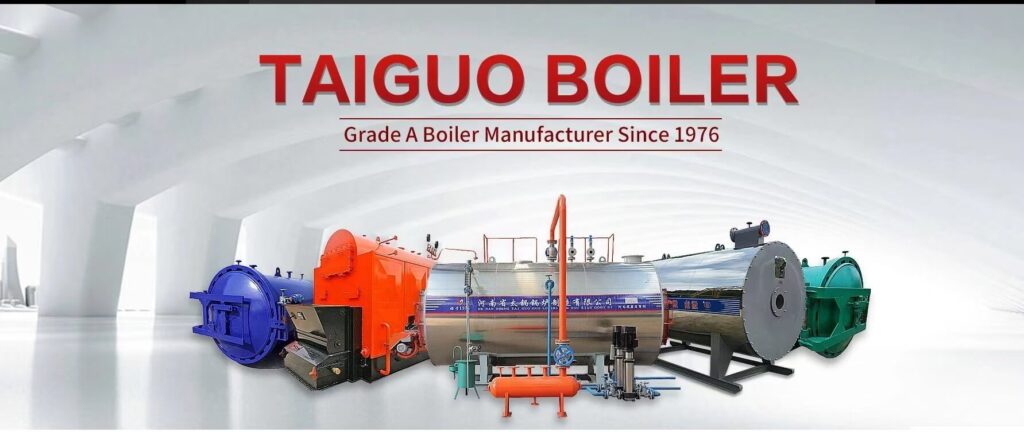
What Is a Textile Industry Boiler?
A Textile Industry Boiler is an industrial steam generation system designed to provide stable thermal energy for textile manufacturing processes including dyeing, drying, printing, finishing, and garment production.
Unlike general industrial boilers, a textile factory steam boiler requires precise steam pressure control, high steam quality, and continuous operation stability because temperature fluctuations directly affect fabric color consistency and overall production quality.
Steam Applications of Textile Industry Boiler
A reliable steam boiler for textile factory operations serves multiple critical units across the production line. Standard applications and operational parameters include:
| Textile Process | Steam Application | Steam Temperature | Standard Pressure |
|---|---|---|---|
| Dyeing | Heating dye baths and maintaining precise process temperature | 130°C – 165°C | 0.3 – 0.7 MPa |
| Printing | High-temperature fabric setting, printing, and moisture drying | 140°C – 180°C | 0.4 – 0.8 MPa |
| Finishing | Stenter machine thermal heating and cloth stabilization | 150°C – 200°C | 0.6 – 1.25 MPa |
| Washing | Hot water production and intensive chemical scouring | 80°C – 100°C | 0.2 – 0.4 MPa |
| Ironing | Continuous steam supply for commercial garment pressing | 130°C – 150°C | 0.3 – 0.5 MPa |
Specialized Textile Industry Boiler Selection for Global Textile Clusters
We supply complete boiler systems tailored for textile mills, fabric printing facilities, and integrated garment production hubs worldwide.
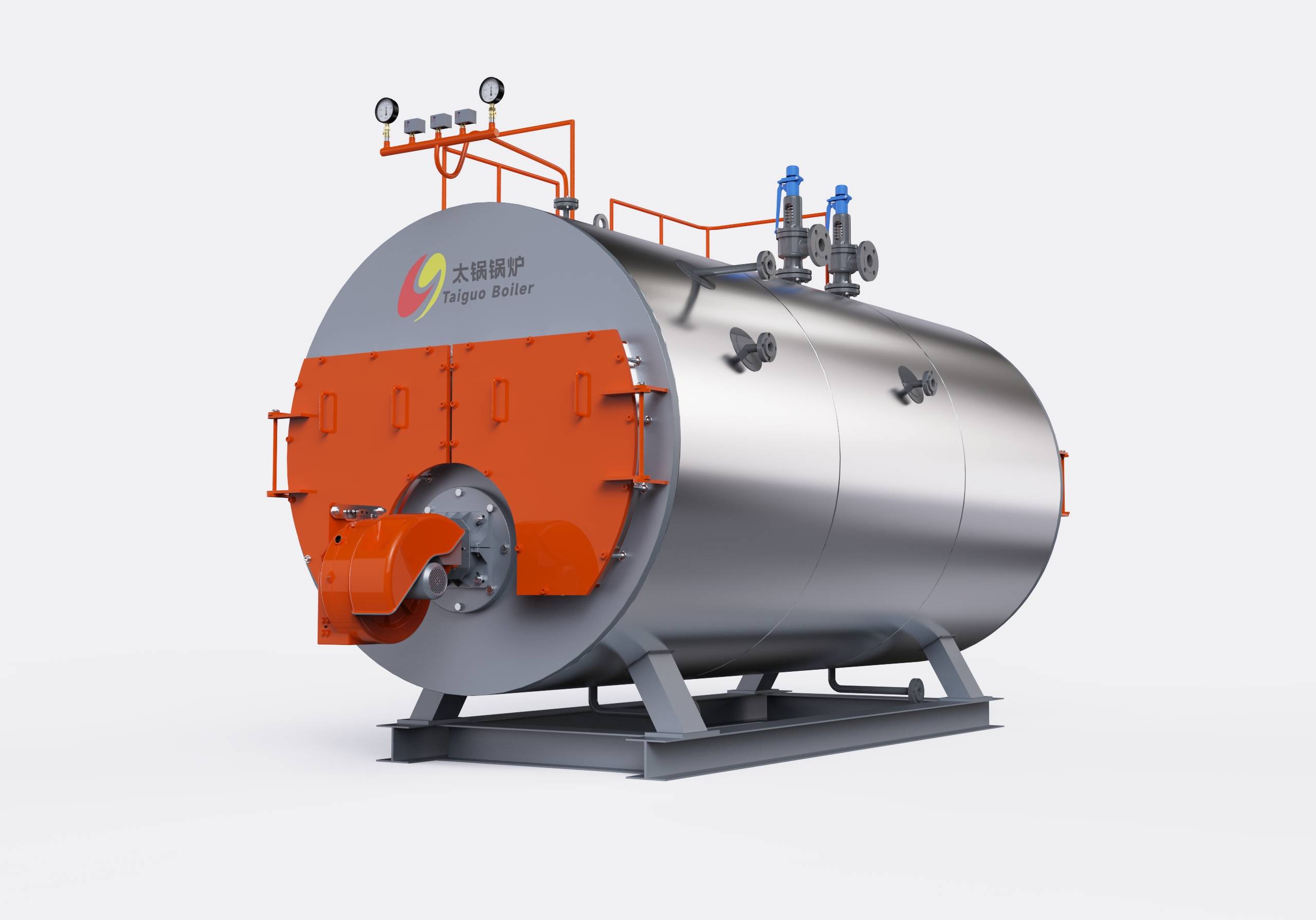
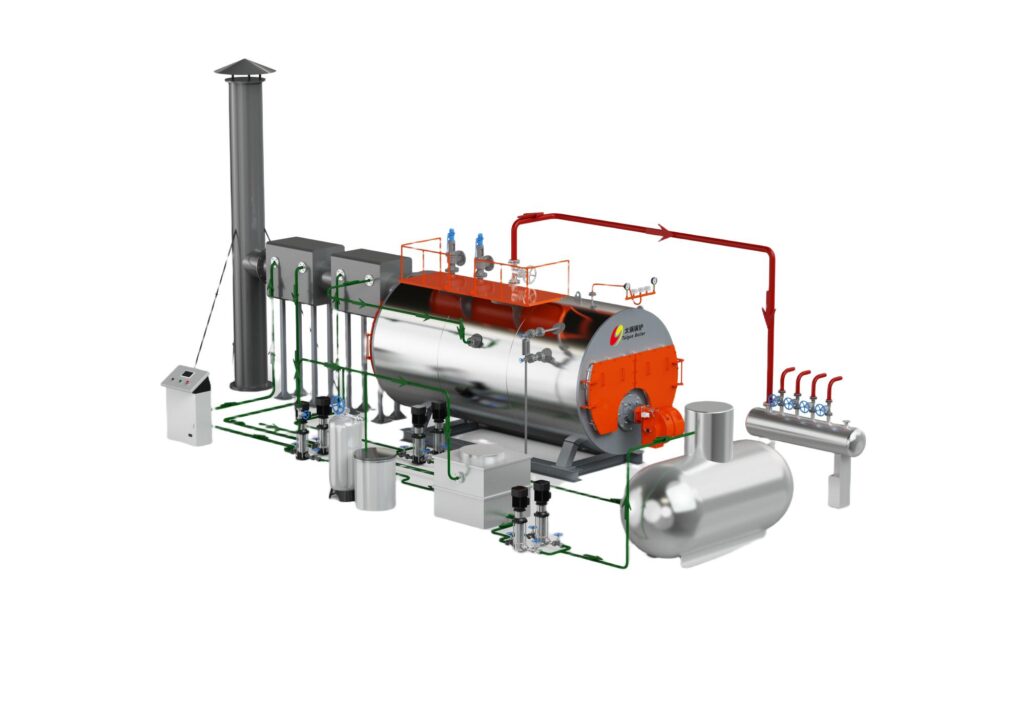
WNS Series Gas/Oil Fired Steam Boilers-Textile Industry Boiler
✅ Capacity: 1 – 20 Ton/hr
✅ Fuel: Natural Gas / LPG / Diesel
✅ Feature: Low-NOx Burner (<30mg/m³)
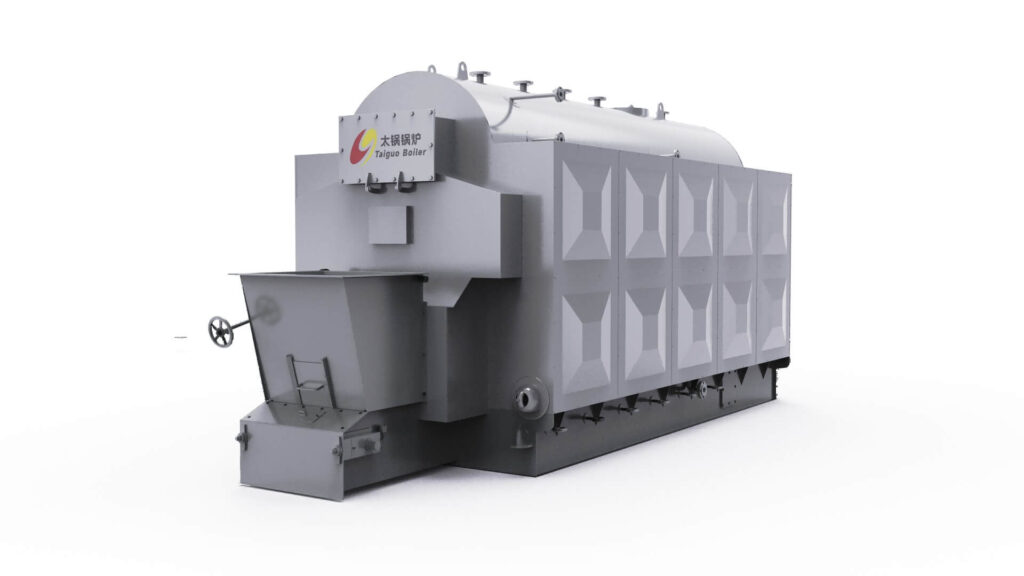
SZL & DZH Biomass/Solid Fuel Boilers -Textile Industry Boiler
✅Capacity: 4 – 35 Ton/hr
✅Fuel: Biomass / Coal / Waste
✅Feature: Tiered Air Supply
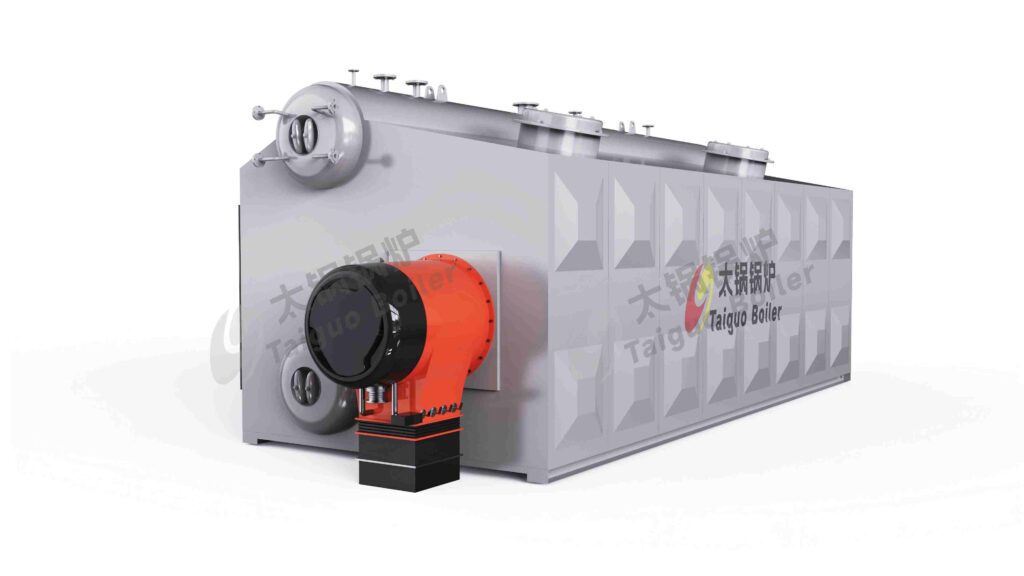
SZS Gas/Oil Steam Boiler – Textile Industry Boiler
✅ Capacity: 2 – 110 Ton/hr
✅ Fuel: Gas / LPG / Diesel / Heavy Oil
✅ Feature: High Thermal Efficiency & Stable Continuous Steam Supply
1. WNS Series Gas Steam Boiler for Textile Factory
- Capacity: 1 – 20Ton/hr
- Fuel: Natural gas, LPG, diesel, city gas
- Key Features: Wet-back three-pass design, thermal efficiency up to 98%, low NOx emissions (< 30mg/m3). Excellent response time for rapid pressure adjustments required in dyeing operations.
- Target Search Solutions: Gas steam boiler for textile industry, natural gas boiler for textile mill.
2. SZL / DZL Series Biomass Boiler for Textile Industry
- Capacity: 2 – 25Ton/hr
- Fuel: Wood chips, pellet fuel, palm shell, agricultural waste
- Key Features: Double-drum chain grate structure, optimized air distribution, low operating fuel costs. Ideal for industrial zones with strict fuel cost constraints or abundant local biomass resources.
- Target Search Solutions: Biomass boiler for textile mill, wood pellet steam boiler for dyeing plant.
3. LSS / LHS Electric Steam Generator & Oil Gas Boilers
- Capacity: 0.5 – 2Ton/hr
- Fuel: Electricity, light oil, natural gas
- Key Features: Compact footprint, rapid steam generation within 5 minutes, fully automatic operation. Highly suitable for smaller garment factories, sample testing lines, or standalone washing facilities.
Textile Industry Boiler Price Guide
Investing in a textile industry boiler involves multiple equipment parameters. The overall cost varies based on thermal capacity, fuel type, working pressure, auxiliary configurations, and regional transport.
Reference Pricing Structure
- 1–2 Ton/hr Textile Steam Boiler: USD 8,500 -18,000(Ideal for localized garment processing, small dye houses, or garment pressing setups)
- 4–10 Ton/hr Industrial Textile Boiler: USD 22,000 – 65,000(Designed for mid-sized dyeing plants, fabric finishing lines, and integrated mills)
- 10 Ton/hr+ Heavy Textile Industry Boiler: Custom quotation required(For large-scale textile manufacturing parks, continuous printing operations, and centralized thermal energy hubs)
Primary Factors Influencing Boiler Price
- Boiler Capacity: Higher steam output per hour scales steel tonnage and burner specifications.
- Fuel Choice & Burner Brand: Premium low NOx burner systems (e.g., Baltur, Riello) increase initial equipment outlay but cut emissions.
- Steam Pressure Rating: Higher operating pressures (1.25MPa to 1.MPa) require thicker shell plates and upgraded piping valves.
- Automation Level: PLC control panels with touch-screen human-machine interfaces (HMI) optimize labor costs and runtime stability.
- Shipment & On-site Installation: Import tariffs, ocean freight rates, and engineering support services affect the total turn-key cost.
Gas vs Biomass Boiler for Textile Industry: Which One Is Better?
Choosing between a gas steam boiler and a biomass steam boiler is one of the most critical procurement decisions for a textile or dyeing factory. Both boiler systems deliver the high-quality steam required for dyeing vats, printing units, and stenter machines, but their suitability depends on local fuel infrastructure, operating budget, and environmental regulations.
- Pipeline Gas Available
- Strict Low-NOx Limits
- Automated Operation
- High Biomass Supply
- Fuel Cost Reduction
- Long Daily Running Time
Gas Steam Boiler
Uses natural gas, LPG, or LNG to deliver rapid thermal response and clean steam output.
Biomass Steam Boiler
Burns wood chips, biomass pellets, agricultural waste, or palm shells to produce industrial process steam.
- Industrial Parks with Pipeline Gas: Facilities located in urban manufacturing hubs or zones with direct natural gas connections.
- Strict Eco-Compliance Zones: Regions with tight air emission mandates requiring low NOx (< 30 mg/m³) and minimal particulate matter.
- High-Automation Plants: Dyeing and finishing operations that require precise temperature modulation with minimal labor overhead.
- Biomass-Rich Regions: Textile mills located in areas with abundant forestry residue, agricultural waste, or wood processing industries.
- Fuel Cost-Sensitive Markets: Processing plants running 24/7 where fuel expenditure makes up over 70% of total boiler life-cycle costs.
- Off-Grid & Rural Industrial Zones: Dyeing facilities situated where natural gas infrastructure is absent or natural gas prices remain high.
- High Combustion Efficiency: Reaches up to 98% efficiency when equipped with flue gas economizers and condensers.
- Stable Steam Quality: Rapid firing and modulating burners absorb sudden steam demand spikes during peak dye bath heating.
- Low Maintenance Requirements: Clean-burning gas leaves no ash residue, reducing cleaning downtime and boiler wear.
- Compact Footprint: Requires no fuel storage yards or complex fuel handling conveyors.
- Lower Fuel Cost Potential: Reduces daily fuel expenses by up to 30% – 50% compared to gas or oil-fired equipment in biomass-rich regions.
- Renewable & Carbon-Neutral: Uses agricultural waste streams, helping textile mills align with international eco-textile sustainability standards.
- High Regional Suitability: Pairs effectively with agricultural supply chains across Southeast Asia and Latin America.
Comparison: Gas Boiler vs. Biomass Boiler for Textile Plants
| Selection Criteria | WNS Series Gas Steam Boiler | SZL / DZL Biomass Steam Boiler |
|---|---|---|
| Initial Equipment Investment | Lower base equipment costs | Higher (requires fuel feeder & ash handling) |
| Daily Fuel Operating Cost | Medium to High (varies by gas tariff) | Significantly lower in biomass supply regions |
| Thermal Efficiency | 96% – 98% | 83% – 88% |
| Automation & Control | Fully automated PLC / Burner system | Semi-automated (automated feeding, manual ash management) |
| Maintenance Frequency | Low routine maintenance | Regular ash cleaning and grate inspection |
| Emissions & Compliance | Ultra-low NOx, zero dust emission | Requires baghouse dust collectors & cyclone scrubbers |
| Primary Target Regions | Pipeline areas (e.g., Uzbekistan, city industrial parks) | Agriculture/Forestry regions (e.g., Indonesia, Philippines) |
Regional Alignment & Matching Products
1. Gas Boiler Solution for Pipeline Regions
For markets like Uzbekistan or urban industrial centers in Central Asia, natural gas infrastructure is readily available and cost-effective. For these setups, our WNS Series Gas Steam Boiler provides accurate pressure regulation for cotton dyeing and finishing lines.
- Explore Product: WNS Series Gas Steam Boiler Solution
2. Biomass Boiler Solution for Agricultural & Forestry Markets
For textile manufacturing hubs in Indonesia, the Philippines, and Southeast Asia, abundant palm kernel shells, wood chips, and agricultural waste offer ideal cheap fuel. Our SZL Double-Drum Chain Grate Biomass Boiler and DZL Single-Drum Biomass Boiler provide continuous thermal power while cutting operating overhead.
- Explore Product: SZL Series Biomass Steam Boiler Solution
How to Select the Right Textile Industry Boiler
Selecting an optimal boiler system requires balancing thermal demand, local fuel availability, and continuous production scheduling.
Handles small batch dyeing vats, sample lines, and steam ironing units.
Supports multiple continuous dyeing lines, stenter machines, and high-pressure washers.
Powers centralized steam supply systems across multiple production workshops.
Highest automation, clean combustion, rapid thermal output, low maintenance. Best with pipeline gas access.
Substantially lower fuel costs than gas. Ideal for rural industrial parks with regional forestry/agri supply chains.
Excellent backup option or primary solution in locations lacking reliable natural gas infrastructure.
Standard working pressure requirement for general heating and scouring processes.
Saturated or superheated steam requirements for high-temperature setting and cloth stabilization.
Textile Industry Boiler Projects & Case Studies
10 Ton SZS Gas Steam Boiler for Textile Mill
- Location: Fergana, Uzbekistan
- Boiler Model: SZS10-1.25-Q (Water Tube Boiler)
- Capacity: 10 Ton/hr
- Fuel: Natural Gas
- Application: High-pressure thermal supply for weaving & dyeing.
- Result: 24/7 continuous steam with 98%+ thermal efficiency.
12 Ton Gas Steam Boiler for Cotton Dyeing Factory
- Location: Namangan, Uzbekistan
- Boiler Model: WNS12-1.25-Q (Gas Fired Boiler)
- Capacity: 12 Ton/hr
- Fuel: Natural Gas
- Application: Cotton dyeing, finishing & stenter operation.
- Result: Automated load tracking reduced fuel overhead.
10 Ton WNS Gas Steam Boiler for Textile Mill
- Location: Tashkent, Uzbekistan
- Boiler Model: WNS10-1.25-Q (Gas Fired Boiler)
- Capacity: 10 Ton/hr
- Fuel: Natural Gas
- Application: Steam supply for dye vats and fabric drying.
- Result: Cut fuel usage by 10% via economizer integration.
4 Ton WNS Gas Boiler for Garment Factory
- Location: Bandung, Indonesia
- Boiler Model: WNS4-1.0-Q (Gas Fired Boiler)
- Capacity: 4 Ton/hr
- Fuel: Natural Gas / LPG
- Application: Fabric washing, garment steaming & ironing.
- Result: Rapid steam delivery with fully automated control.
Related Textile Industry Boiler Solutions by Application
Textile manufacturing requires a reliable and continuous steam supply throughout different production stages, including dyeing, garment production, denim washing, fabric finishing, and industrial processing.
CN MIRACLE provides customized Textile Industry Boiler solutions based on factory production capacity, fuel availability, steam requirements, and local operating conditions. From individual textile workshops to large-scale textile manufacturing plants, our boiler systems are designed to deliver stable steam performance, improve energy efficiency, and support long-term production reliability.
Explore our textile boiler solutions for different manufacturing applications:
Boiler for Textile Dyeing Factory
Textile dyeing processes require precise temperature control and stable steam pressure to ensure consistent fabric color, quality, and production efficiency. A properly selected boiler for textile dyeing factory provides reliable steam supply for dyeing machines, washing systems, drying equipment, and finishing lines. CNMIRACLE offers gas-fired, oil-fired, biomass-fired, and customized steam boiler solutions according to factory requirements.
For textile factories requiring continuous steam production and stable operating conditions, selecting the right boiler capacity and fuel type is essential.
Textile Industry Boiler Solution in Philippines
The Philippines has a growing textile and garment manufacturing sector where reliable steam systems are required for fabric processing, garment production, and industrial heating applications. CNMIRACLE provides Textile Industry Boiler solutions in the Philippines with consideration of local fuel availability, operating costs, and factory production requirements.
From small garment factories to large textile processing plants, customized boiler systems can be designed based on actual steam demand.
Textile Boiler Projects in Uzbekistan
Uzbekistan has become an important textile manufacturing hub in Central Asia, with increasing demand for efficient industrial steam systems for cotton processing, spinning, weaving, dyeing, and garment production. CNMIRACLE supplies textile boiler solutions in Uzbekistan designed for local industrial conditions, including natural gas and biomass fuel options.
Through proper boiler selection, fuel optimization, and engineering support, textile factories can reduce operating costs while maintaining stable steam production.
Textile Boiler Fuel Cost & Steam Cost Analysis
Fuel cost is one of the most important factors when selecting a Textile Industry Boiler. Different regions and factory conditions may require different energy solutions. Gas-fired boilers are commonly selected where natural gas infrastructure is available because of their high automation level, clean combustion, and easy operation. Biomass boilers can provide a cost-effective alternative in areas with abundant agricultural residues or renewable fuel resources.
CNMIRACLE provides fuel comparison analysis and boiler selection recommendations to help customers identify the most suitable steam generation solution.
Boiler for Garment Manufacturing Factory
Garment factories mainly use steam for ironing, pressing, drying, and finishing processes. A compact and efficient boiler system helps maintain stable production quality and improve workplace efficiency. A suitable boiler for garment factory applications should provide fast steam generation, stable pressure control, high operational reliability, and easy maintenance.
For garment manufacturers requiring reliable steam supply with limited installation space, customized boiler solutions can provide an efficient option.
Boiler Solution for Denim Washing Plant
Denim washing and finishing processes require high-temperature steam for washing, drying, and fabric treatment operations. A properly designed textile boiler system for denim washing plants helps maintain stable processing temperatures and improves product consistency.
CNMIRACLE provides industrial boiler systems suitable for denim and textile processing factories requiring continuous thermal energy.
Containerized Boiler System for Textile Plants
For overseas textile projects requiring rapid installation and simplified construction, containerized and skid-mounted boiler systems provide a flexible solution. These packaged boiler systems integrate major components into a compact structure, reducing installation time and improving project efficiency.
Containerized boiler solutions are suitable for textile factories, industrial parks, and remote production facilities.
Typical Textile Markets We Serve
We provide tailored steam boiler solutions for textile factories across Central Asia, Southeast Asia, and the Middle East, ensuring stable steam, energy efficiency, and reliable performance for every production line.
Philippines Textile & Garment Factories
Steam boiler solutions for Manila, Cebu & Davao textile and garment factories.
Uzbekistan Textile Clusters
Steam boiler solutions for Tashkent & Fergana textile factories.
Indonesia Textile Processing
Continuous steam supply for Jakarta & Bandung textile factories.
Technical Sovereignty: Engineering for the Textile Environment
Anti-Fluctuation Steam Header Design
Textile loads change rapidly, especially during the startup of dyeing vats. Our custom Steam Headers are integrated with redundant pressure-regulating valves, ensuring fluctuations stay within ±0.02MPa. This precision eliminates the risk of color shading and fabric defects.
Cold-Weather Redundancy (Winter-Proof)
To handle extreme Central Asian winters, our pump houses and control systems feature an Automatic Anti-Freeze Circulation System. Even at -25°C, the PLC-controlled “Hibernation Mode” prevents pipe freezing and ensures zero-second startup the following morning.
Integrated Water Treatment (Scale Protection)
Scale buildup is the primary cause of efficiency loss in high-consumption textile mills. We provide automated Reverse Osmosis (RO) Water Treatment Systems that reduce blowdown rates by 3%. For a 10-ton boiler, this saves approximately $5,000 annually in salt and fuel costs.
Uzbekistan & Regional Logistics Expertise For Textile Industry Boiler
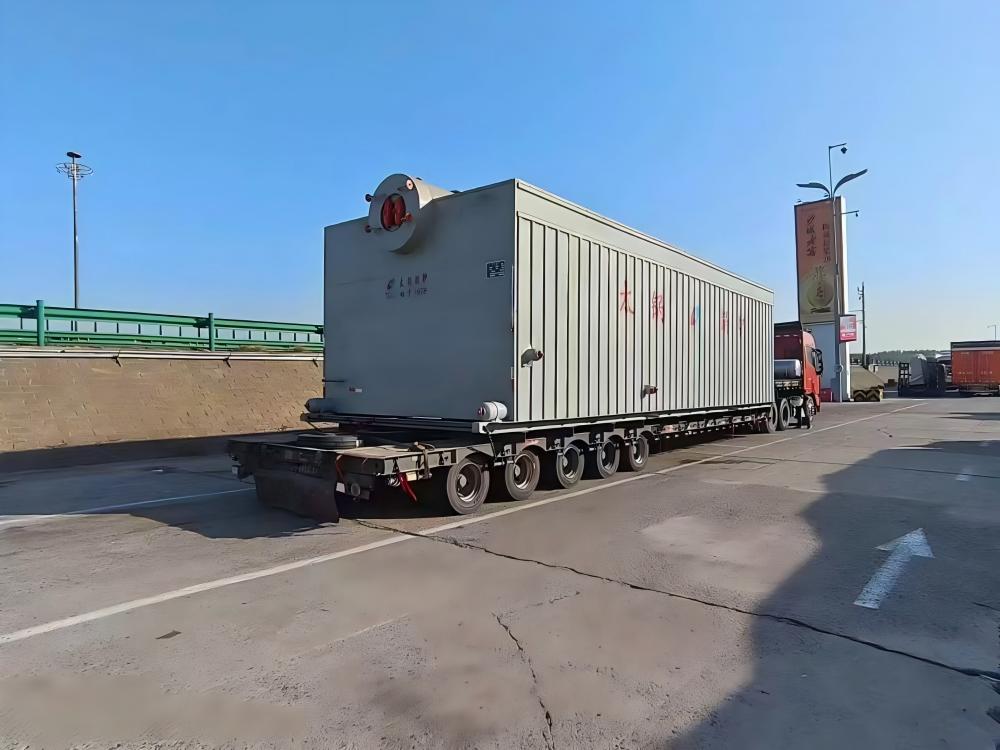
As a direct manufacturer, we understand that delivery and customs clearance are as vital as the equipment itself. Our service covers:
🚚 Strategic Routes
Rail & Truck transport from Horgos to Tashkent (18-25 days)
📄 Legal Compliance
Full technical dossiers for Gozgortekhnadzor registration
🔧 On-site Engineering
Local commissioning teams available in Fergana & Tashkent
Technical Knowledge Hub & Case Studies
Learn more about Steam Boiler Sizing for Textile Dyeing Plants
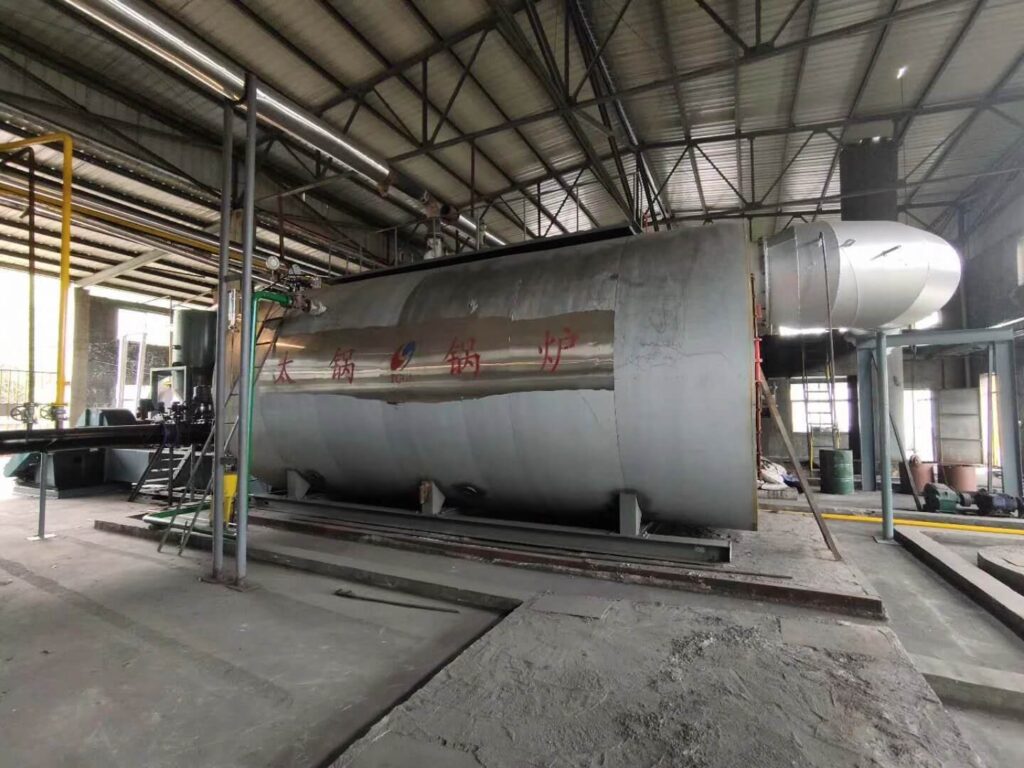
Success Story: 20-Ton WNS Gas Boiler Project for a Samarkand Textile Park.
Frequently Asked Questions (FAQ)
Does the Textile Industry Boiler support low gas pressure supply in winter?
Yes. We equip our boilers with specialized large-diameter gas trains and high-sensitivity burners that stabilize output even when inlet pressure drops to 5kPa.
Can we burn cotton stalks directly?
Our SZL series features a large-volume furnace and specialized chain grate specifically designed for agricultural waste like cotton stalks, ensuring complete combustion without slagging.
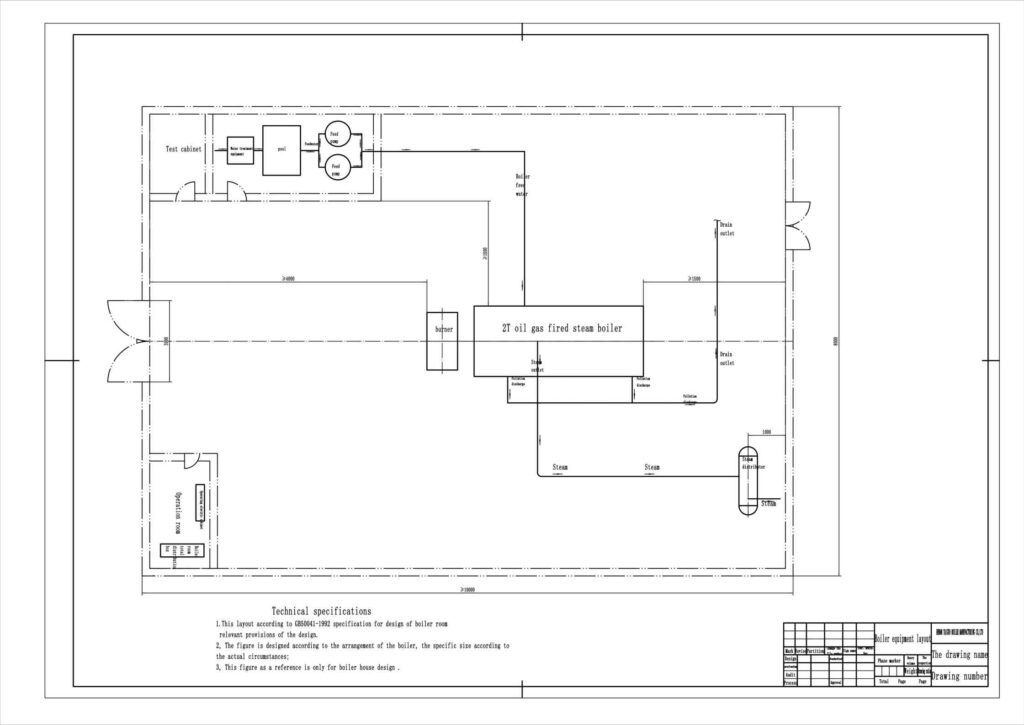
Do you provide boiler room layout drawings (CAD)?
Once the project is confirmed, our engineering department provides detailed P&ID and civil foundation drawings to assist your local construction team in site preparation.
What size of Textile Industry Boiler is typically required for a medium-scale dyeing plant?
For most medium textile dyeing plants in Uzbekistan and Southeast Asia, a 6 to 10-ton steam boiler is standard. However, the exact sizing depends on the number of stenters and dyeing vats. At Taiguo, we provide customized sizing calculations to ensure stable pressure and zero color shading.
Can cotton stalks and agricultural waste be used as fuel for textile boilers?
Yes. Our SZL series Textile Industry Boiler are specifically designed to burn cotton stalks, rice husks, and wood pellets. Using local agricultural waste in Uzbekistan can reduce your fuel costs by up to 45% compared to diesel or inefficient coal systems.
Does Taiguo Boiler provide installation and Gozgortekhnadzor certification support in Uzbekistan?
Absolutely. We provide the complete technical dossier required for Gozgortekhnadzor registration. Additionally, we have local commissioning teams in Tashkent and the Fergana Valley to handle on-site installation, pressure testing, and operator training.
What size boiler is required for a textile factory?
Boiler sizing depends on total thermal consumption across all active machinery. A small dye house requires 1 – 3 Ton/hr, mid-scale textile mills typically operate 4 – 10 Ton/hr units, and comprehensive printing/dyeing complexes utilize 10 – 20+ Ton/hr steam boiler configurations.
Which boiler is better for textile production: gas or biomass?
Gas boilers provide higher combustion efficiency, rapid steam generation, compact sizing, and automated continuous control. Biomass boilers deliver lower operating costs in regions where wood chips, palm shells, or agricultural waste are abundantly sourced at low prices.
How much does a textile industry boiler cost?
Base equipment prices range from USD 8,500 – 18,000 for 1-2 Ton/hr units, USD 22,000 – 65,000 for 4-10 Ton/hr industrial units, and higher for custom multi-ton factory setups. Auxiliary configurations, shipping, and installation services affect final pricing.
What steam pressure does a textile dyeing factory need?
Standard textile dyeing processes require saturated steam between 0.8 MPa and 1.0 MPa (8 – 10 bar). High-temperature stenter machinery or specialized finishing equipment may require pressures up to 1.25 – 1.6 MPa.
Secure Your Textile Production with Taiguo Boiler
Request a 2-hour technical proposal including a customized fuel consumption estimate and project layout.
Trusted by 50+ textile factories across Uzbekistan, Bangladesh, Philippines, Indonesia, and the Middle East.
Our integrated thermal systems utilize industrial steam technology. Review our full Industrial Steam Boiler line to select your ideal output.