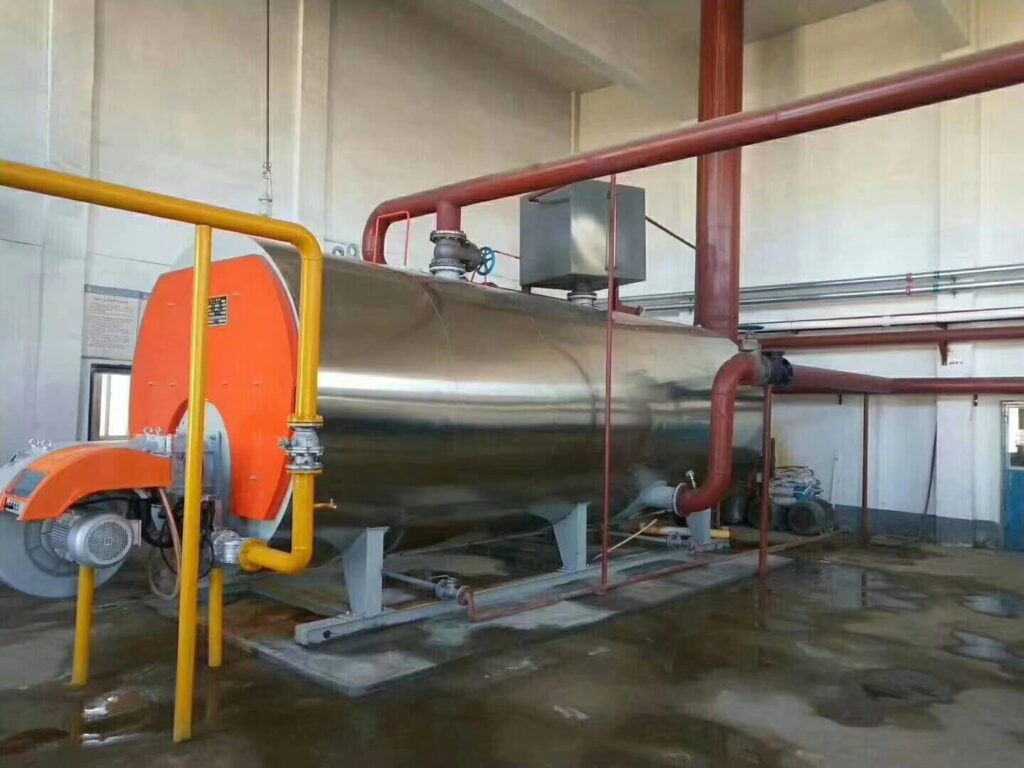
The food and beverage industry in the Philippines relies on stable and efficient steam systems for essential production processes, including cooking, sterilization, pasteurization, cleaning, heating, and processing. From seafood processing facilities in General Santos to beverage production plants in Cebu and food manufacturing factories in Luzon, reliable steam supply plays an important role in maintaining product quality, production efficiency, and operational stability.
CN MIRACLE provides customized Steam Boiler for food and beverage Industry in Philippines in cooperation with Henan Taiguo Boiler Manufacturing Co., Ltd., a professional industrial boiler manufacturer with extensive experience in steam generation systems and thermal energy solutions.
Through this partnership, CN MIRACLE combines international project consulting, export coordination, and customer support with Taiguo Boiler’s manufacturing expertise, engineering capabilities, and boiler technology. We provide complete steam solutions covering boiler selection, steam demand analysis, system configuration, installation guidance, commissioning support, and lifecycle optimization.
For Philippine food processing companies, selecting the right steam boiler system requires careful consideration of fuel efficiency, steam quality, operating reliability, maintenance requirements, and long-term energy costs. Modern industrial boiler solutions help factories improve energy utilization while ensuring continuous steam availability for critical production processes.
This Steam Boiler for food and beverage Industry in Philippines guide explains steam boiler requirements across different food and beverage applications in the Philippines, including seafood processing, beverage production, meat processing, and general food manufacturing, while providing practical guidance for selecting an efficient and reliable industrial steam solution.
1. Industry-Specific Process Matching: Thermodynamic Precision
In the 2026 Philippine food economy, a boiler is no longer a utility—it is a Compliance and Profit Engine. We have mapped the “Thermodynamic DNA” of each sector to ensure zero-waste thermal delivery.
A. Steam Boiler for food and beverage Industry in Philippines:Tuna & Seafood Canning (General Santos & Zamboanga)
- The Process: High-Pressure Retort Sterilization (121 – 135 degree).
- Thermodynamic Pain Point: Sudden load spikes when retorts are initialized cause “Steam Priming” (water droplets entering the steam line), which can contaminate the tuna with boiler chemicals and lead to batch rejection.
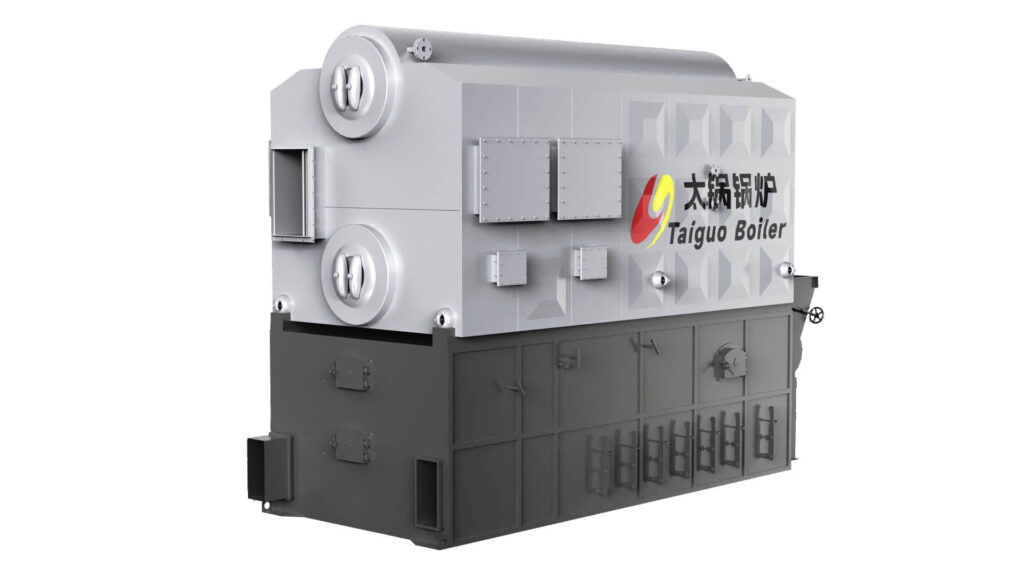
- The Taiguo Match: We utilize our WNS Series with an Integrated Steam Scrubber.
- The Result: Guaranteed 99.5% Dry Saturated Steam. This ensures your tuna meets HACCP and EU Export-Grade Standards, preventing the $50,000-per-batch loss common in legacy systems.
- Fuel Logic: For GenSan factories, we integrate the SZL Biomass series optimized for Coconut Shells. This creates a “Circular Economy” where your production waste fuels your production heat.
B. Steam Boiler for food and beverage Industry in Philippines:Beverage & Brewery (Manila & Cebu Industrial Clusters)
- The Process: Flash Pasteurization & Clean-In-Place (CIP).
- Thermodynamic Pain Point: Frequent cycling (on/off) leads to “Thermal Shock” and fuel wastage during low-load sanitization.
- The Taiguo Match: We standardize Siemens LMV52 Electronic Linkage Controls with a 1:10 Turndown Ratio.
- The Result: The boiler adjusts its firing rate to the exact requirement of the CIP cycle, reducing fuel consumption by 18% compared to traditional mechanical-linkage boilers.
- Compliance: Meets the 2026 DOE Energy Monitoring Mandate (MC No. 114) for a 20% reduction in institutional fuel usage.
C. Steam Boiler for food and beverage Industry in Philippines:Poultry & Meat Processing (Bulacan & Pampanga)
- The Process: Scalding, De-feathering, and Rendering.
- Thermodynamic Pain Point: High water demand leads to extreme scale buildup due to the high Silica content in Central Luzon groundwater.
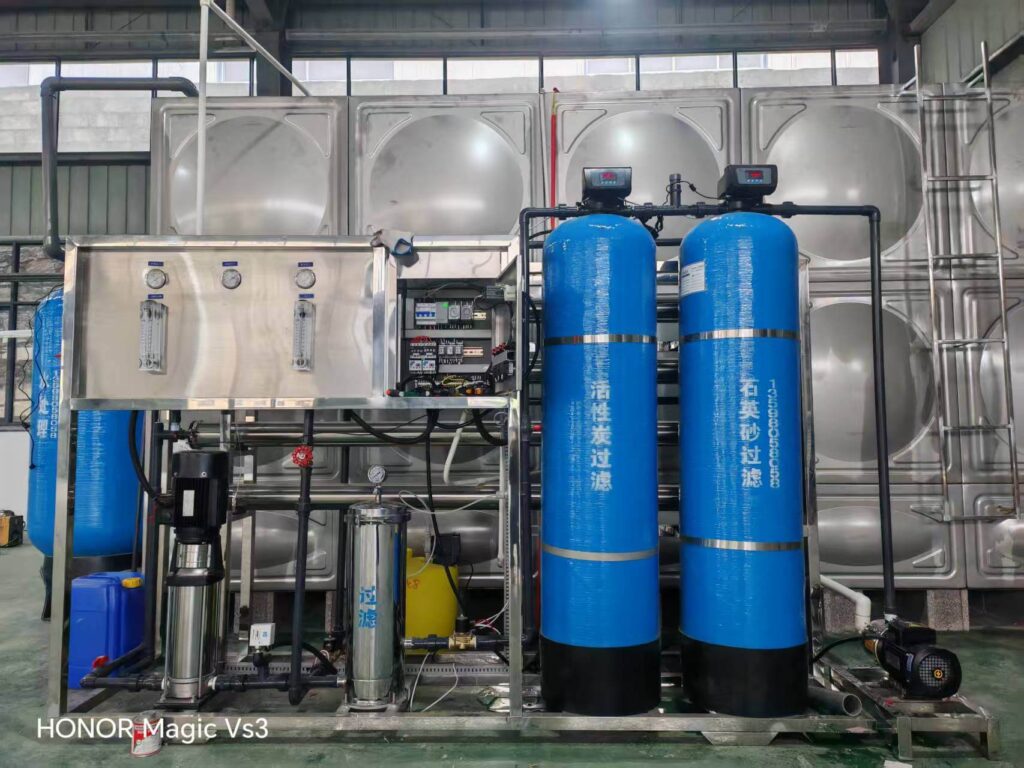
- The Taiguo Match: Every poultry project includes an Automatic Reverse Osmosis (RO) + Continuous Blowdown System.
- The Result: Prevents the “Scale Tax”—a 1mm scale buildup that otherwise causes a 10% jump in fuel costs.
2. 2026 Product Matrix: Tonnage & Application Guide
In the 2026 Philippine market, tonnage selection is a balance between Initial CAPEX and Regulatory Exemptions (DOLE Rule 1160).
A. 1 – 4 Ton/hr: The “Urban Compliance” Series (WNS & LSS) Of Steam Boiler for food and beverage Industry in Philippines
- Target: Makati Central Kitchens, BGC Labs, and Boutique Beverage Startups.
- The Strategy: These “Micro-Volume” units (specifically our Gas-Fired Steam Generators) often qualify for DOLE Staffing Exemptions.
- Financial Impact: By eliminating the need for a 24/7 certified boiler attendant (under the 2026 DOLE Revision), you save approximately ₱540,000 annually in specialized labor costs.
- Technology: 104% Condensing Efficiency with ND-Steel (09CrCuSb) corrosion protection.
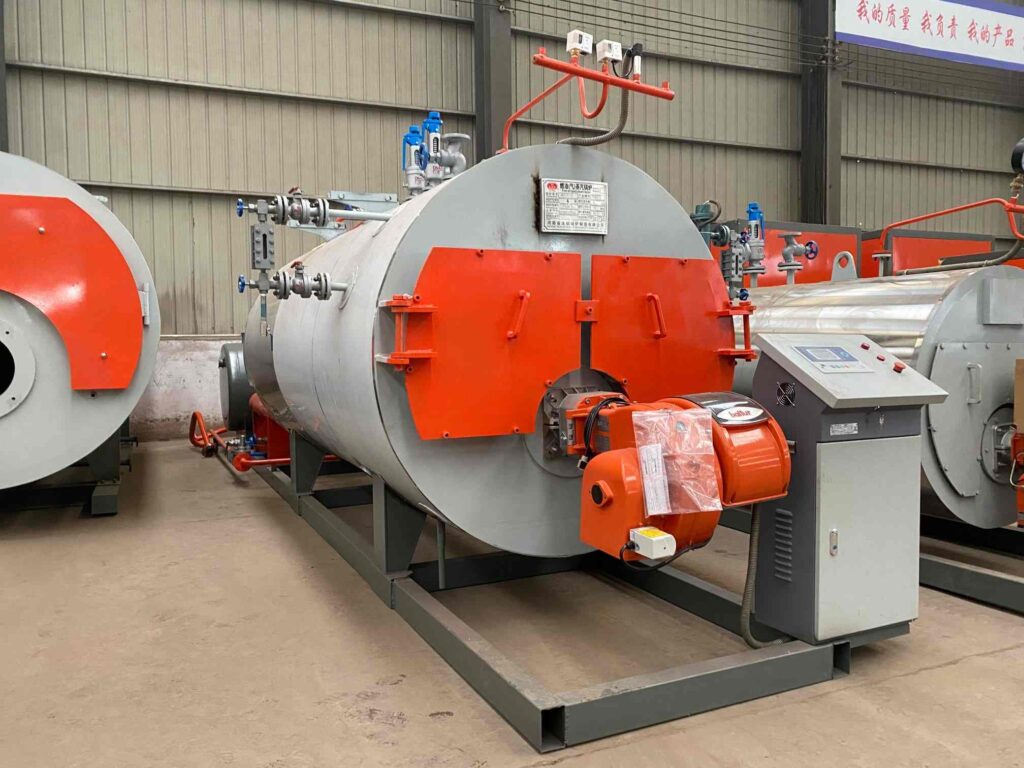
B. 6 – 15 Ton/hr: The “Mainstream Workhorse” (WNS & SZL) Of Steam Boiler for food and beverage Industry in Philippines
- Target: Mid-sized fruit processors and regional dairy plants.
- The Strategy: Focused on Modularity. For Philippine factories with restricted road access, we provide Skid-Mounted Modular Units.
- Benefit: Reduces on-site installation time by 60%, allowing you to commission the plant and start generating ROI two months earlier than with traditional field-erected units.
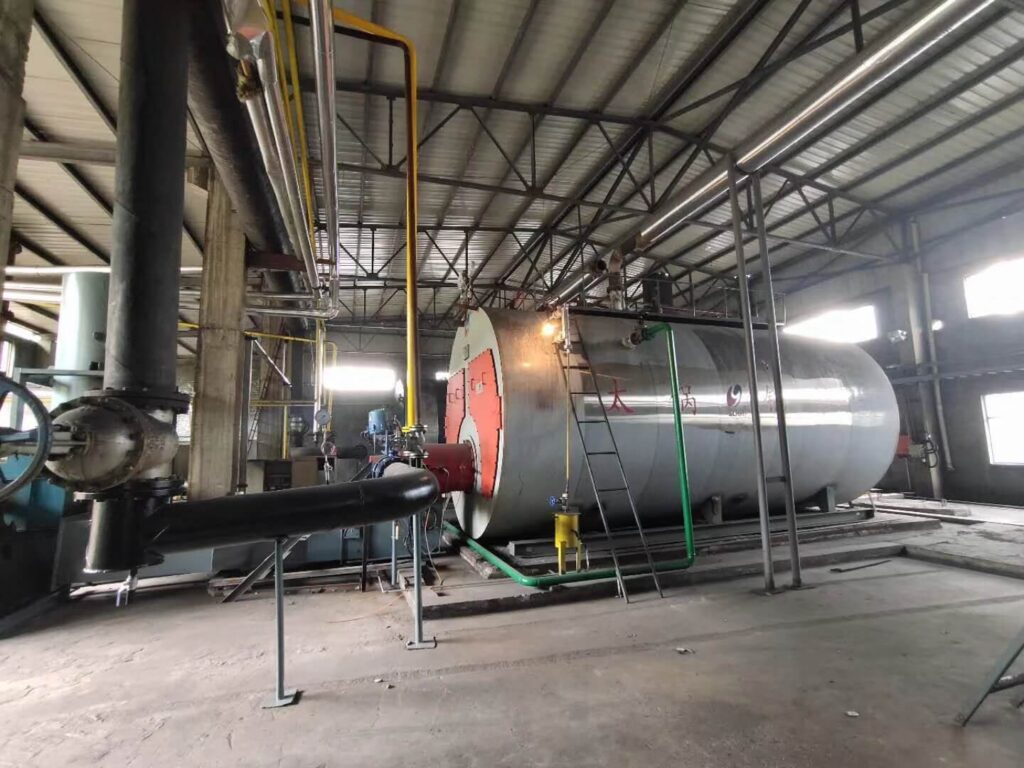
C. 20 Ton/hr+: The “Heavy Industrial Giant” (SZL Double-Drum) Of Steam Boiler for food and beverage Industry in Philippines
- Target: Large-scale Sugar Refineries in Negros and Tuna Giants in Mindanao.
- The Strategy: High-pressure (up to 2.5 MPa) water-tube or hybrid designs.
- Key Upgrade: Integrated 5G Industrial IoT Gateways.
- Financial Impact: Enables Predictive Maintenance. Our engineers in China can spot a pump bearing vibration before it causes a $100,000-per-day production halt, ensuring your facility maintains 99.9% uptime in the competitive 2026 market.
3. Engineering for the Archipelago: The “Island-Spec” Advantage
The Philippine environment—high humidity and high-TDS water—is a “boiler killer.”
- Coastal Armor: Every unit for the Philippines includes Epoxy-Zinc Rich Primers and IP65-rated Stainless Steel enclosures for all electronics. This prevents the high-salinity air of Davao and Cebu from causing premature electrical or metallurgical failure.
- Water Chemistry Shield: Groundwater in Batangas and Cebu often has TDS levels exceeding 16,000 mg/L. We provide Automatic Dual-Stage Reverse Osmosis (RO) systems as standard for our food industry clients to prevent 1mm of scale, which would otherwise cause a 10% jump in fuel consumption.
Fuel Efficiency and Operating Cost Analysis
Fuel efficiency is one of the most important considerations for Philippine food factories when selecting an industrial steam boiler system. A well-designed boiler system can help reduce operating costs through improved combustion efficiency, heat recovery, and optimized steam generation.
Modern industrial steam boilers can utilize energy-saving technologies such as economizers, improved burner systems, and enhanced insulation to recover heat losses and improve overall thermal efficiency.
For food processing plants operating continuously, selecting the right boiler capacity, fuel type, and system configuration can significantly influence long-term energy consumption and production costs.
Food Industry Boiler Selection Factors
Food processors need to evaluate several technical factors before selecting a steam boiler system.
Steam Quality
Food production processes require stable and suitable steam quality to support heating, cooking, sterilization, and cleaning operations. The boiler system should be designed according to the specific process requirements and steam application conditions.
Load Flexibility
Food factories often experience changes in steam demand during different production stages. A properly sized boiler system should maintain stable operation under both normal and peak load conditions.
Automation Level
Advanced PLC-based control systems help monitor operating parameters, improve efficiency, and reduce the need for continuous manual adjustment.
Safety and Compliance
Industrial boiler systems must comply with applicable safety requirements and operational standards in the Philippines, including proper installation, inspection, and maintenance procedures.
Engineering Support
CN MIRACLE provides engineering support throughout the industrial boiler project lifecycle, from initial system planning to installation guidance and commissioning coordination.
Our technical team supports customers with:
- Boiler capacity selection
- Boiler room layout planning
- Steam piping design considerations
- Water treatment system recommendations
- Installation and commissioning guidance
By combining engineering analysis with practical operating requirements, we help food processing companies develop reliable steam systems designed for stable long-term operation.
FAQ: Strategic Compliance for Food Processors
How does the April 2026 Meralco rate hike (₱14.35/kWh) affect my Of Steam Boiler for food and beverage Industry in Philippines selection?
With Meralco rates rising to ₱14.3496 per kWh this April due to higher generation charges, the “Efficiency Gap” has become a “Profit Gap.”
The Impact: For food plants in Laguna and Bulacan, a legacy 85% efficiency boiler(Steam Boiler for food and beverage Industry in Philippines)is now a liability.
The Taiguo Solution for Steam Boiler for food and beverage Industry in Philippines: Our 104% Condensing Technology utilizes ND-Steel heat exchangers to recover latent heat. By switching to Taiguo, a typical 10-ton food processing line saves approximately ₱4.8 Million per year in fuel-equivalent costs compared to standard units.
What are the specific DOLE Rule 1160 requirements for my new boiler(Steam Boiler for food and beverage Industry in Philippines) room?
According to the latest Occupational Safety and Health Standards (Rule 1160), the Philippine Department of Labor enforces strict physical and safety protocols:
Physical Clearance: You must maintain at least 100 cm (3.28 ft.) of clearance around the Steam Boiler for food and beverage Industry in Philippines.
The “Two-Exit” Rule: Boiler rooms must have two independent doors for easy access and emergency egress.
Testing Mandate: Before being placed into service, your boiler must pass a Hydrostatic Test at 1.5 times the design pressure. Taiguo provides all pre-shipment test reports and coordinates with local DOLE-accredited inspectors to ensure your Permit to Operate (PTO) is issued without delay.
How do we handle “Scale Tax” in high-hardness zones like Batangas?
Groundwater in Batangas and Cebu often contains high levels of Silica (SiO2).
The Math of Failure: 1mm of scale buildup causes a 10% increase in fuel consumption and can lead to tube rupture.
The Engineering: For our Philippine food industry clients, we provide Integrated Dual-Stage RO (Reverse Osmosis) systems. This ensures “Food-Grade” steam purity and protects your ₱3M – ₱10M asset from the corrosive groundwater of the archipelago.
Is the RCEP 0% Duty still valid for Steam Boiler for food and beverage Industry in Philippines imported from China in 2026?
Yes. Under HS Code 8402, industrial boilers like Steam Boiler for food and beverage Industry in Philippinesqualify for 0% Import Duty under the RCEP framework.
The “Form E” Protocol: Taiguo manages the entire digital documentation process. We synchronize your Form E (Certificate of Origin) with the Bureau of Customs (BOC) e-CP system, saving you an average of 7% in MFN tariffs—that’s an immediate cash saving of ₱250,000 to ₱700,000 on your project CAPEX.
CTA: Secure Your 2026 Thermal Strategy
The 2026 Philippine food market rewards efficiency and punishes waste. In an era of ₱14/kWh electricity and aggressive DENR drone audits, your choice of boiler is a choice between expansion or stagnation.
Take the Next Strategic Step Today:
We’ll calculate your specific fuel savings using current Meralco and LPG indices vs. our 104% condensing tech.
Schedule a site visit or a technical briefing to discuss your specific steam load and water chemistry.
To understand the long-term operational savings, especially considering the local fuel landscape, please refer to our 2026 Philippine Boiler Price and ROI Analysis , which details the advantages of our latest condensing heat recovery systems.