
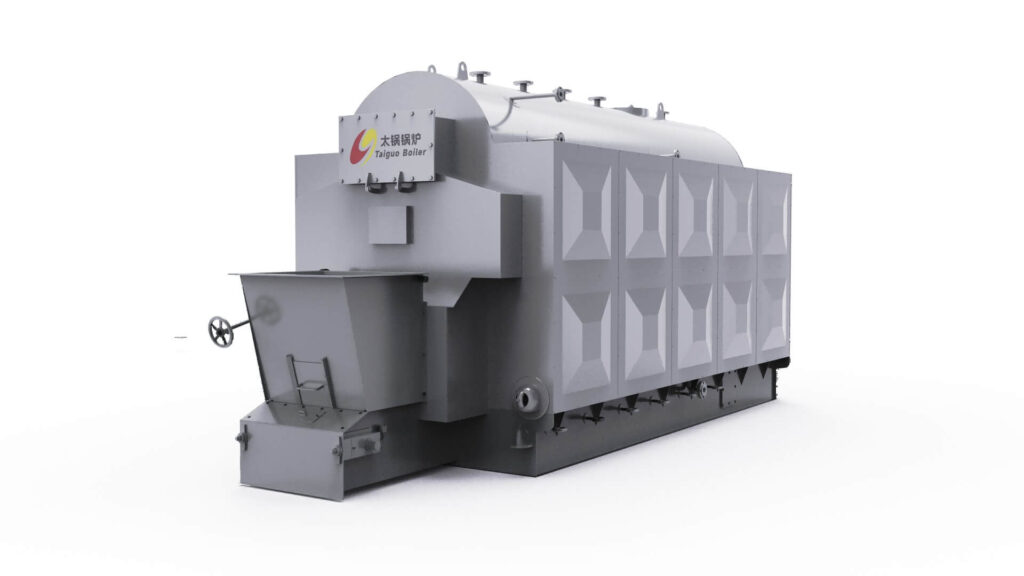
Evaluating the total Steam Boiler Price in Philippines requires analyzing more than just the initial equipment price tag. Plant owners, project managers, and thermal engineers across Luzon, Visayas, and Mindanao must balance initial capital expenditure with local fuel economics, import logistics, installation requirements, and long-term operating costs.
As a dedicated overseas industrial boiler manufacturer, we provide this comprehensive 2026 pricing and ROI guide to help Philippine industrial businesses evaluate equipment costs, total cost of ownership (TCO), and return on investment (ROI) for commercial decision-making.
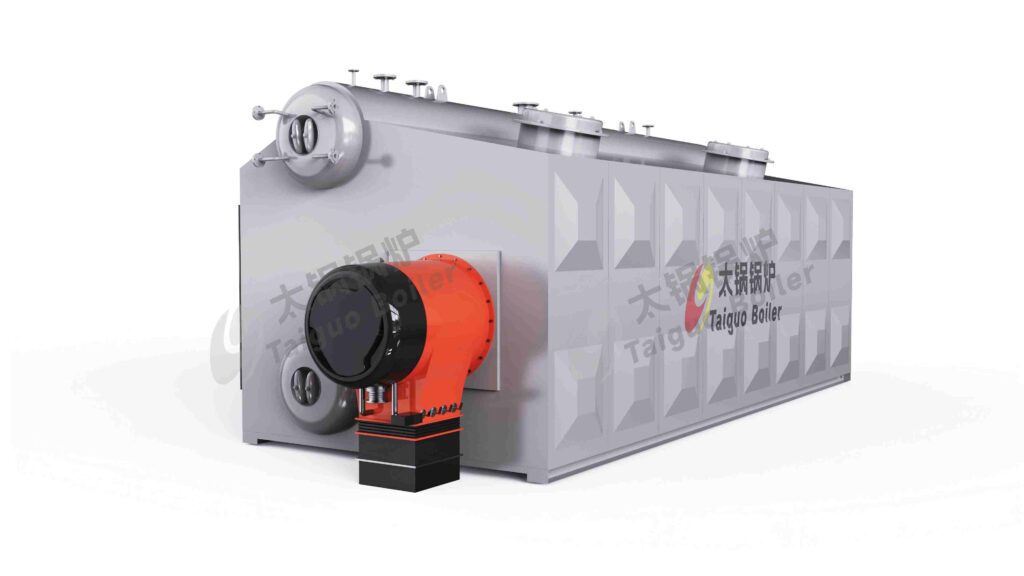
How Much Does a Steam Boiler Cost in the Philippines?
The Steam Boiler Price in Philippines depends primarily on boiler capacity, fuel type, working steam pressure, automation level, auxiliary equipment, shipping terms, and local installation requirements.
For preliminary budget estimates, equipment supply costs generally follow these indicative tiers:
- Small Commercial Steam Boilers (0.5–2 TPH): $12,000 to $35,000 USD
- Medium Industrial Steam Boilers (4–8 TPH): $38,000 to $95,000 USD
- Heavy Duty Industrial Steam Boilers (10–20 TPH): $90,000 to $220,000 USD
- High-Capacity Package Boilers (20 TPH+): Custom engineering required; pricing scales based on pressure parameters and site conditions.
Note: Indicative budget ranges cover standard equipment supply. Final project costs depend on technical specifications and local project conditions.
Steam Boiler Price in Philippines by Capacity
Matching boiler capacity to actual plant steam demand prevents fuel wastage and reduces unnecessary capital costs.
1–2 TPH Steam Boilers
Ideal for: Commercial laundries, hotels, small food processing & pharma plants.
Compact firetube units for rapid installation, fast steam response, and full automation.
4–6 TPH Steam Boilers
Ideal for: Medium food processing, textile dyeing, animal feed & chemical batching.
Standard PH light industry choice. Skid-mounted gas/oil or packaged biomass options.
10–20 TPH Steam Boilers
Ideal for: Coconut processing, rice mills, paper plants & agro-complexes.
Water-tube or combined structures maintaining high thermal efficiency under heavy continuous duty.
20 TPH+ High-Capacity Boilers
Ideal for: Major industrial parks, central steam plants & cogeneration systems.
Custom plant engineering for multi-shift operation with heat recovery and flue gas treatment.
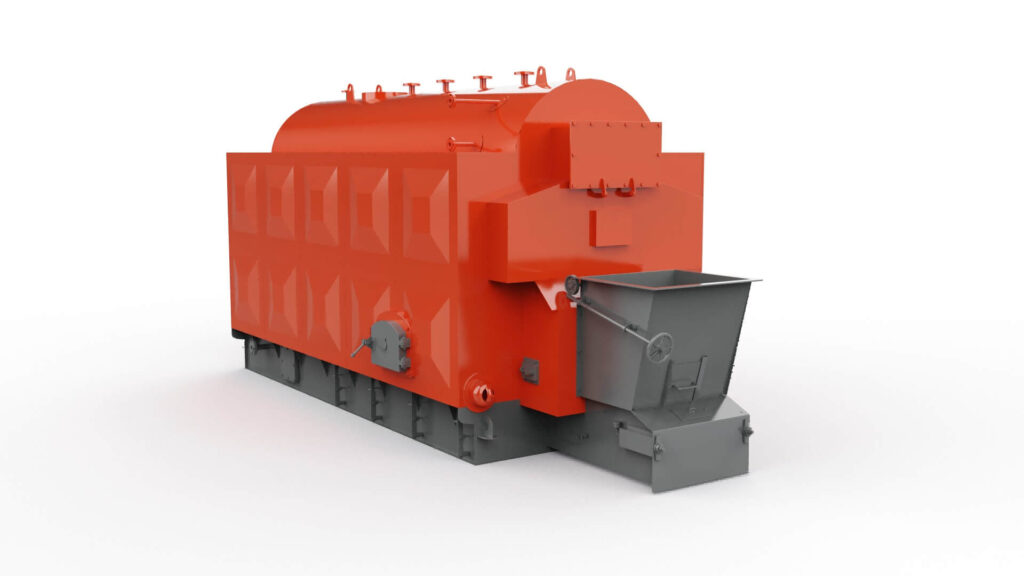
Steam Boiler Price in Philippines by Fuel Type
Fuel type choice impacts both initial equipment purchase costs and ongoing operating expenses.
| Fuel Category | Initial Capital Cost | Key Cost Drivers | Typical PH Application |
|---|---|---|---|
| Gas Steam Boiler | Moderate | Burner brand, gas train automation, economizer | Urban plants, industrial parks |
| Biomass Steam Boiler | Higher | Fuel feeding, grate type, dust collector | Agro-processing, coconut/rice mills |
| Coal Steam Boiler | Higher | Stoker system, flue gas treatment, ash handling | Heavy manufacturing facilities |
| Diesel / Oil Boiler | Lower | Dual-fuel burner, fuel storage tank | Backup units, off-grid locations |
| Electric Steam Boiler | Lowest | High-voltage components, heating elements | Cleanrooms, specialized small units |
What Is Included in a Steam Boiler Price in Philippines?
Understanding a technical quotation requires looking past the pressure vessel itself. Complete industrial boiler supply packages typically comprise ten main equipment modules:
Boiler Main Unit
Certified pressure vessel, furnace, firetubes/watertubes, and thermal insulation jacket.
Combustion / Firing System
Gas/oil burner assemblies, or grate stokers and feeding systems for solid fuels.
Feedwater System
Multistage high-pressure feed pumps, check valves, and water piping manifolds.
Water Treatment System
Water softeners, reverse osmosis (RO) plants, and deaeration equipment.
Control System
PLC touch-screen cabinets, automatic safety interlocks, and water level controllers.
Chimney / Flue Gas System
Exhaust ducting, stack, induced draft (ID) fans, and forced draft (FD) fans.
Fuel Storage & Delivery
Day tanks, fuel oil preheaters, or biomass hoppers and screw conveyors.
Steam Distribution Headers
Main steam valves, safety relief valves, and distribution steam manifolds.
Electrical & Instrumentation
Field sensors, pressure transmitters, temperature probes, and wiring interfaces.
Emissions Control Equipment
Multicyclone dust collectors, baghouses, or wet scrubbers for local emission compliance.
Steam Boiler Price in Philippines: 2026 CAPEX Breakdown
The purchase price of an industrial steam boiler in the Philippines is only one part of the total project investment. The final CAPEX can vary significantly depending on boiler capacity, fuel type, pressure rating, combustion system, automation level, heat-recovery equipment, emission-control requirements, and the scope of auxiliary systems.
For this reason, a useful Steam Boiler Price in Philippines comparison should evaluate not only the boiler body, but also the major engineering modules included in the quotation.
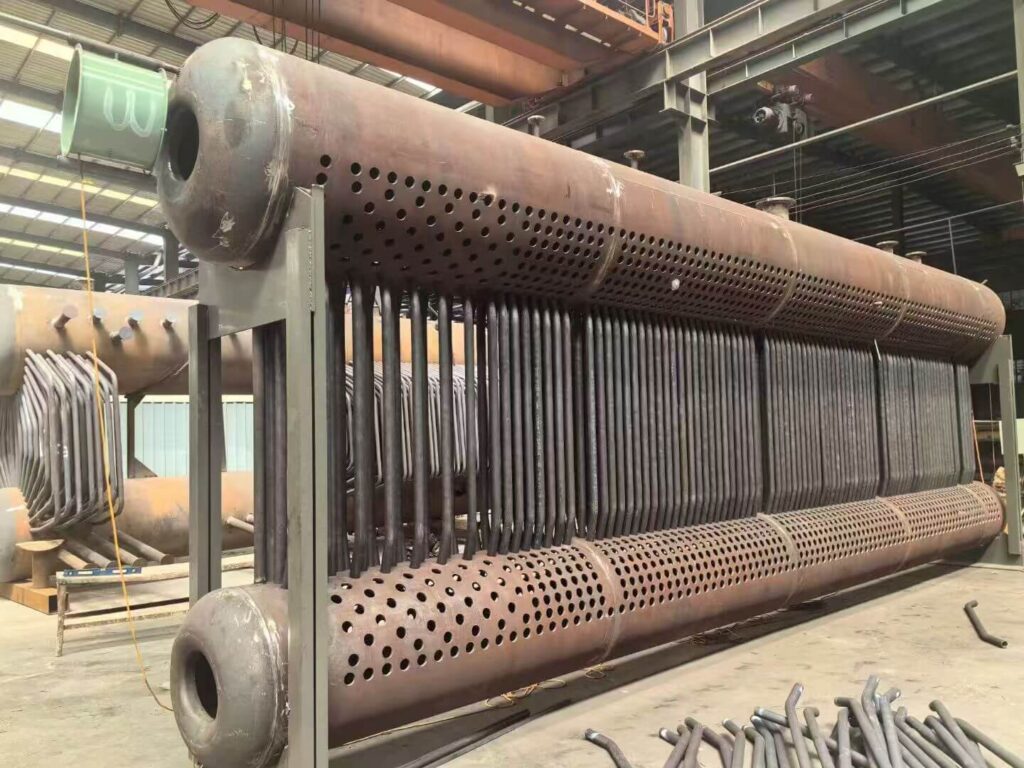
Pressure Vessel & Boiler Core
Capacity, steam pressure, steel specs, tube design & welding standards.
Note: In Cebu/Davao coastal sites, material selection affects lifecycle cost.
Combustion & Control System
Burner/BMS, PLC control, flame monitoring, fuel-air ratio & safety interlocks.
Advanced PLC increases initial CAPEX but lowers labor & fuel usage.
Heat Recovery & Energy Efficiency
Economizers, air preheaters, condensing systems & flue-gas exchangers.
Environmental & Emission Control
Multicyclones, bag filters, wet scrubbers, ID fans & CEMS monitoring.
Biomass requires extra ash/fuel handling under PH eco-standards.
Why the Lowest Boiler Price Is Not Always the Lowest Project Cost
When comparing Steam Boiler Price in Philippines, buyers should evaluate the complete system rather than comparing the boiler body price alone.
A realistic project budget may include:
Boiler + Burner + Feedwater System + Water Treatment + Fuel System + Emission Control + Electrical & Controls + Shipping + Installation + Commissioning
Two boilers with similar purchase prices can therefore have significantly different total project costs.
For Philippine industrial buyers, the better comparison is not simply “Which boiler is cheapest?” but:
“Which boiler provides the most competitive total cost of ownership for the required steam output?”
This CAPEX approach provides the starting point for evaluating the next stage of the investment: fuel consumption, operating cost, total cost of steam, and long-term ROI.
Steam Boiler Purchase Price vs Total Project Cost
Boiler purchase price represents only one component of total project investment. A realistic project budget accounts for all stages from factory floor to full operation:
Total Steam Boiler Project Cost Evaluation (CAPEX)
Two boilers with similar nameplate prices may yield significantly different total project costs once auxiliary equipment, sea logistics, civil foundations, and installation requirements are factored in.
Steam Boiler Installation Cost in the Philippines
Local installation costs typically account for 15% to 35% of the total equipment purchase price in the Philippines, depending on scope and location. Primary installation expense factors include:
- Civil Foundations: Boiler house flooring, concrete pads, and equipment anchoring.
- Piping & Valve Interconnection: Steam lines, feedwater piping, blowdown connections, and fuel lines.
- Electrical Wiring: Main panel cabling, sensor wiring, and motor control connections.
- Insulation & Cladding: Thermal lagging for steam pipes and headers to minimize heat loss.
- Testing & Local Compliance: Pressure testing, safety valve settings, and local engineering sign-offs.
Steam Boiler Price in Philippines Granular CAPEX Breakdown Table (4-Ton SZL Biomass Project)
For a professional CFO in the Philippines, here is how the $60,000 (₱3.36M) investment is allocated:
| Modular Component | Specification (2026 Std) | Estimated Cost (USD) | PHP Equivalent |
|---|---|---|---|
| Boiler Host | Q245R Steel, 14mm Shell | $27,000 | ₱1,512,000 |
| Grate & Feeding | Reciprocating Grate + VFD | $9,000 | ₱504,000 |
| Combustion Control | Siemens PLC + IoT Gateway | $6,000 | ₱336,000 |
| Emission Suite | Cyclone + Wet Scrubber | $8,500 | ₱476,000 |
| Water Treatment | Dual-Stage RO System | $7,500 | ₱420,000 |
| Customs & Form E | RCEP 0% Duty Compliance | Included | ₱350k Saved |
| TOTAL CAPEX | Class-A Industrial Grade | $58,000 – $65,000 | ₱3.2M – ₱3.6M |
The Capital Expenditure (CAPEX) for a steam boiler in the Philippines must include the equipment, international logistics, and the 2026 DOLE/DENR compliance integration.
2026 Estimated Steam Boiler Price in Philippines Matrix (Ex-Works & Landed)
| Boiler Capacity | Model Type | Equipment Price (USD) | Est. Landed & Installed (PHP) | Best Application |
|---|---|---|---|---|
| 1 Ton/hr | WNS Gas/Oil | $12,000 – $18,000 | ₱750,000 – ₱1.2M | Urban Laundries (Manila) |
| 4 Ton/hr | SZL Biomass | $45,000 – $60,000 | ₱3.2M – ₱4.8M | Food Processing (Mindanao) |
| 10 Ton/hr | SZL Biomass | $85,000 – $115,000 | ₱6.5M – ₱9.5M | Textile/Tuna Canning |
| 2 Ton/hr | WDR Electric | $15,000 – $22,000 | ₱950,000 – ₱1.5M | Makati/BGC Pharma Labs |
Gas vs Biomass vs Coal: Which Steam Boiler Has the Lowest TCO?
Evaluating Total Cost of Ownership (TCO) across a 10-to-15-year lifecycle provides clarity when choosing among fuel systems.
| Evaluation Factor | Natural Gas / LPG | Biomass (Coconut Shell / Wood) | Coal |
|---|---|---|---|
| Initial Investment | Moderate | Higher (requires mechanical feeders) | Higher (requires emissions controls) |
| Fuel Handling Cost | Minimal (piped/tank supply) | Moderate (storage & conveying) | Moderate to High |
| Operating Automation | Fully automated | Semi-automated to Automated | Automated stoker systems |
| Emissions Compliance | Very straightforward | Requires mechanical dust collectors | Requires multi-stage gas cleaning |
| 10-Year TCO Profile | Stable, tied to gas tariffs | Extremely competitive near agro-zones | Low fuel cost, higher maintenance |
The cheapest boiler on initial quote is not always the lowest-cost boiler over its operating life.
Steam Boiler Operating Cost in the Philippines
Estimating annual operating expenditure involves summing all continuous operational inputs:
Annual Boiler Operating Cost Evaluation (OPEX)
Optimizing combustion efficiency by 2% to 3% through continuous O2 monitoring or adding a economizer can save tens of thousands of dollars annually on fuel expenditure.
The purchase price is only the beginning of the investment.
For a boiler operating thousands of hours per year, fuel, water, electricity, maintenance, and downtime can have a much greater impact on total ownership cost than the original equipment price.
The major OPEX categories are:
- Fuel
- Water treatment
- Electricity
- Maintenance
- Downtime
A. Fuel Cost & Steam Price
Fuel forms the largest ongoing OPEX. Evaluate cost per ton of steam rather than initial price.
Rule: Fuel moisture affects biomass usage; local gas tariffs drive gas boiler economics.
B. Water Treatment & Quality
Feedwater quality prevents scale, corrosion, excessive blowdown, and tube burnout.
Action: System design must be based on raw water analysis for each PH site.
C. Electrical Auxiliary Loads
Auxiliary equipment consumes significant power during continuous boiler operation.
Note: Biomass systems require more electrical power for fuel handling & dust collectors.
D. Routine Maintenance Scope
Preserving reliability requires regular tube, valve, pump, and refractory inspections.
Warning: Low initial price may lead to higher lifecycle cost if maintenance needs are high.
E. Unplanned Downtime & Redundancy Risk
Boiler outages halt factory production, sterilization, and chemical/food processing. Production losses far outweigh repair costs.
Steam Boiler Import Costs in the Philippines: RCEP, Taxes & Logistics
The equipment quotation from the manufacturer is not necessarily the final landed cost of a steam boiler in the Philippines.
For imported industrial boilers, the total project budget may also include:
- Import duties
- VAT and applicable taxes
- Customs-related charges
- Port charges
- Documentation
- Brokerage
- Storage or demurrage where applicable
- Ocean freight
- Inland transportation
- Heavy-haul delivery
- Site unloading and installation
For this reason, buyers should compare landed project cost, rather than comparing the factory equipment price alone.
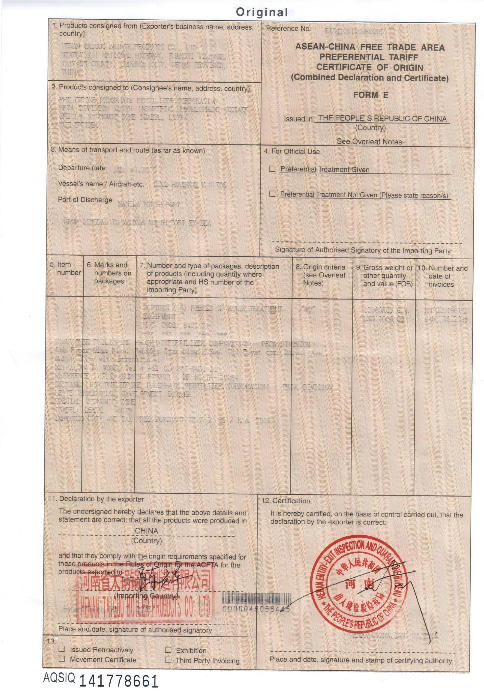
RCEP & Import Duty Verification
Zero-duty under HS 8402 depends on strict Rules of Origin and Form E compliance.
Rule: Verify tariff treatment with customs brokers before shipment to confirm true landed cost.
Philippine VAT & Customs Charges
Total CAPEX extends beyond duty to include import VAT, brokerage, and port fees.
PEZA Zones: Tax incentives depend on specific entity registration—verify before ordering.
Shipping & Ocean Port Costs
Heavy pressure vessels require Flat-Rack or Breakbulk shipping arrangements.
Safety: Export packaging, moisture protection & lifting plans prevent transit damage.
Inland Road Transport & Site Handling
Delivering from port to factory requires heavy-haul trucks, permits, and cranes.
Incoterms: Always clarify whether quote is FOB, CFR, CIF, or DDP to avoid hidden costs.
2026 Philippines Boiler Investment Summary (Year 1)
| Benefit Category | 2026 Algorithm | Cash Gain (PHP) |
|---|---|---|
| RCEP 0% Duty | HS 8402 / Form E Compliance | ₱350,000 Saved |
| Fuel OPEX Gain | Biomass vs. Diesel (60% Save) | ₱4,500,000 /year |
| Staffing Efficiency | DOLE 200 sqm Rule (SIL-2) | ₱540,000 /year |
| TOTAL ROI (Year 1) | Combined Duty & Operational Savings | ₱5,390,000+ |
Factors Affecting Steam Boiler Price in Philippines
Once import and logistics costs are separated from equipment CAPEX, the next question is:
Why can two steam boilers with similar capacities have significantly different prices?
The answer lies in the technical specification.
A. Boiler Capacity Demand
Matching actual steam demand, peak loads, and expansion prevents low-load inefficiency.
B. Operating Pressure Specs
Higher working pressures dictate vessel steel grade, safety valves, and piping thickness.
C. Fuel Type & OPEX Profile
Fuel selection drives initial CAPEX and long-term operating economics significantly.
D. Automation Level
Advanced PLC automation reduces manual labor and stabilizes continuous production.
E. Efficiency & Heat Recovery
Higher thermal efficiency increases upfront CAPEX but slashes annual fuel expenditure.
F. Auxiliary Scope of Supply
Compare full boiler-room package scope rather than simple headline equipment prices.
G. Materials & Fabrication
Engineering specs, NDT testing, and manufacturing standards dictate long-term safety.
H. Site Conditions & Layout
Boiler room space, crane access, and retrofitting existing piping alter final budgets.
Total Cost of Steam and ROI
The most useful way to evaluate an industrial steam boiler is to move beyond the initial purchase price and calculate the Total Cost of Ownership (TCO).
A simplified lifecycle model can be expressed as:
Total Cost of Ownership (Lifecycle Cost Model)
The final calculation should also account for expected operating hours, boiler load, fuel price changes, maintenance requirements, and equipment replacement or refurbishment.
A. Total Cost of Steam Formula
Evaluates boiler technologies on an equal basis by measuring actual steam production cost.
Logic: Higher CAPEX for biomass or automated gas boilers is justified if cost per ton of steam is lower.
B. Energy Efficiency Payback Period
Measures the financial return of economizers, heat recovery, and high-efficiency upgrades.
C. Four-Level Boiler Investment Comparison Matrix
| Evaluation Level | Key Evaluation Question | Scope Covered |
|---|---|---|
| Level 1: Purchase Price | How much does the boiler equipment cost? | Headline Equipment Only |
| Level 2: Landed CAPEX | How much will it cost after shipping, import, and installation? | Ocean Freight, Customs, Local Duties, Crane & Site Work |
| Level 3: Operating Cost | How much will the boiler cost to run each year? | Fuel Consumption, Electricity, Water Treatment & Maintenance |
| Level 4: TCO & ROI | Which system provides the best long-term economic result? | 10-Year Total Lifecycle Value |
D. Mandatory Quotation Scope for Philippine Buyers
Ensure your supplier quotation explicitly specifies all 16 technical and commercial terms before issuing a purchase order:
A transparent quotation makes it easier to compare suppliers on a true total project cost basis.
For a specific factory, the most accurate steam boiler price can only be determined after reviewing the required steam capacity, operating pressure, fuel availability, annual operating hours, site conditions, and required auxiliary systems.
The goal is not simply to find the cheapest steam boiler in the Philippines. It is to identify the boiler system that delivers the required steam reliably at the most competitive lifecycle cost.
How to Compare Steam Boiler Quotations
When evaluating proposals from different suppliers, ensure all quotes compare identical baseline parameters:
- Check Net Steam Output: Confirm whether capacity is rated “from and at 100°C” or at actual operating feedwater temperatures.
- Verify Efficiency Guarantees: Check whether thermal efficiency ratings are based on Lower Heating Value (LHV) or Higher Heating Value (HHV).
- Review Scope of Supply: Confirm whether safety valves, feed pumps, water treatment units, draft fans, and chimneys are included.
- Examine Pressure Vessel Certification: Ensure boiler designs meet recognized international manufacturing standards.
2026 Steam Boiler Buying Guide for Philippine Industries
Targeted boiler configurations vary across specific local manufacturing sectors:
Food & Beverage Processing
Requires high steam purity, automated load response, and stainless steel feedwater contacts.
Textile & Dyeing Industry
Demands rapid load-following capability to handle sudden load changes during dyeing cycles.
Paper & Packaging Plants
Requires continuous high-pressure steam for drying rolls with low fuel costs per ton.
Chemical Processing
Demands precise temperature control, high safety margins, and consistent heat transfer.
Favors compact footprints, minimal operating noise, and fast cold startup times.
Leverages local agro-waste (husks, shell residues) to produce low-cost energy.
Related Philippines Boiler Resources
- Industrial Boiler Solutions in the Philippines
- Gas Steam Boiler Systems
- Biomass Steam Boiler Solutions
- Industrial Boiler Capacity Selection Guide
- Industrial Boiler Projects in the Philippines
- Industrial Boiler Engineering & Installation Services
FAQ: Strategic Financial Questions for Philippine Investors
How does the new BOC e-CP System (CMO 03-2026) affect my boiler import timeline?
As of March 9, 2026, the Philippines Bureau of Customs (BOC) fully migrated to the Electronic Certificate of Payment (e-CP) System.
The Digital Shift: Paper-based origin verification is no longer accepted for RCEP benefits.
Taiguo Protocol: We synchronize your Form E (Certificate of Origin) data directly into the e-CP portal 72 hours before the vessel berths at the Port of Manila or Cebu. This digital pre-clearance prevents the common 10-15 day “Bureaucratic Stagnation,” saving your enterprise an estimated ₱150,000 to ₱300,000 in potential demurrage and port storage fees.
Our facility in Batangas uses deep-well water with TDS levels of 16,000+ mg/L. Can your boilers handle this?
Standard ion-exchange softeners will fail under these “quasi-brine” conditions, leading to catastrophic tube rupture within 12 months.
The Silica Challenge: High TDS in the Philippines is often accompanied by high Reactive Silica (SiO2). When heated, this forms a glass-like scale that is impervious to standard chemical cleaning.
Taiguo Engineering: For coastal Philippine zones, we move beyond “softening” and implement Dual-Stage Reverse Osmosis (RO) combined with Automatic Continuous Blowdown (ACBD) controlled by real-time conductivity sensors.
ROI Impact: By preventing just 1mm of scale buildup, we eliminate a 10% fuel efficiency penalty, saving a 4-ton boiler operation approximately ₱1.8 Million annually in wasted fuel.
How do we comply with the DOE 2026 Biodiesel (CME) Mandate?
Under Department Circular No. 2024-05-0014, the Philippines has increased the Coconut Methyl Ester (CME) blend in industrial diesel to 5% (B5).
Material Compatibility: High CME blends can degrade standard rubber seals in older burners.
Taiguo Spec: Every 2026 Taiguo burner for the Philippines is fitted with Viton-grade fluoropolymer seals and upgraded fuel pre-heaters. Our systems are “B5-Ready,” ensuring that the increased viscosity of coconut-blended diesel does not cause atomizer clogging or combustion instability.
Is the DOLE “Two-Exit” Rule (Rule 1163.01) mandatory for our new installation?
Yes. The February 2026 Revision of DOLE Rule 1160 strictly enforces that any boiler room housing high-pressure vessels must have at least two (2) unobstructed exits located at opposite ends of the facility.
Layout Design: Our CAPEX includes a Professional Site Layout Consultation. We ensure your boiler foundation is placed to provide the mandatory 100cm clearance from walls and that the steam piping architecture does not obstruct emergency egress, ensuring you pass the Occupational Safety and Health (OSH) audit on the first inspection.
How much does a steam boiler cost in the Philippines?
Industrial steam boiler prices range from 12,000 to 35,000 USD for small commercial units (0.5–2 TPH) up to 90,000 to 220,000+ USD for larger industrial systems (10–20 TPH), depending on fuel type, pressure ratings, and auxiliary scope.
What is the price of a 1 ton steam boiler in the Philippines?
A standard 1 TPH package steam boiler supply generally ranges between 12,000 and 25,000 USD for the base equipment, depending on whether it is a gas/oil or biomass configuration.
How much does a 5 ton steam boiler cost?
A 5 TPH industrial steam boiler package typically ranges from 45,000 to 85,000 USD for the main equipment and core auxiliaries, variable by fuel selection and automation scope.
Is a gas or biomass boiler cheaper in the Philippines?
Gas boilers generally have a lower initial purchase price and simpler installation. However, in regions with abundant agricultural residues, biomass boilers offer significantly lower fuel costs, resulting in a lower long-term total cost of ownership.
What is included in a complete steam boiler quotation?
A comprehensive quotation covers the boiler pressure vessel, burner/grate firing system, water pumps, water softener, control panel, safety valves, draft fans, chimney stack, and basic interconnecting piping.
How much does boiler installation cost?
Installation costs typically add 15% to 35% to the base equipment purchase price, covering civil foundations, pipework, electrical wiring, insulation, and initial commissioning.
How do I calculate steam boiler ROI?
Divide the total initial investment (equipment plus installation) by the annual operational savings generated (such as fuel cost reductions achieved through higher boiler efficiency).
CTA: Secure Your Philippines Industrial Lead (Direct Response)
Don’t buy a legacy boiler for a 2026 market. Invest in a thermal asset engineered for the Archipelago’s future.
In an era of ₱13.82/kWh electricity and tightening DENR drone surveillance, your choice of boiler supplier is a choice between industrial growth or stagnant overhead. Taiguo Boiler is the only partner providing the “Triple-Zero” Advantage: 0% RCEP Duty, 0% Compliance Friction, and 0% Scale-Driven Fuel Waste.
Take the Next Strategic Step:
- Receive a customized 5-year financial projection including RCEP duty savings and fuel-switching arbitrage (Biomass vs. Diesel).
- Schedule a 15-minute technical briefing to discuss your specific steam load and local water chemistry challenges.
Henan Taiguo Boiler: Powering the Pearl of the Orient with 104% Efficiency.