
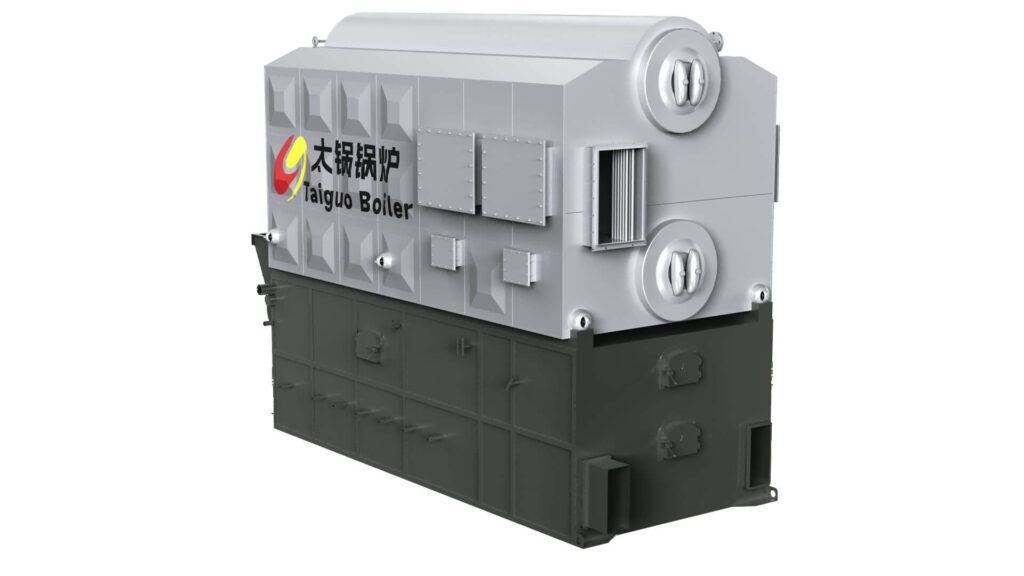
Engineered for the Textile Renaissance: Why Taiguo is the Strategic Energy Partner for the Philippines’ Garment Export Sector
As of April 10, 2026, the Philippine textile and garment industry is leveraging the 0% RCEP Tariff to recapture global market share. However, with thermal energy accounting for over 35% of total production costs in dyeing and finishing, legacy boilers have become the primary bottleneck.
At Henan Taiguo Boiler, as global leader in textile thermal engineering we provide Industrial Boiler for Textile Industry in Philippines “Textile-Spec” steam and thermal oil systems designed to meet the rigorous demands of AATCC and ISO standards. Whether you are operating a high-speed stenter in Bulacan or a large-scale dye house in Cavite, Taiguo’s 2026 thermal matrix is engineered to neutralize Meralco’s high rates and provide the precision heat required for export-grade fabrics.
1. Industry-Specific Process Matching: Thermodynamic Precision
In the textile manufacturing clusters of Bulacan, Cavite, and Laguna, thermal energy is the primary catalyst for chemical bonding and fabric setting. Taiguo’s 2026 “Textile-Spec”Industrial Boiler for Textile Industry in Philippines engineering focuses on three critical pillars: Saturation Purity, Temperature Linearity, and Pressure Stability.
A. Industrial Boiler for Textile Industry in Philippines For Dyeing & Bleaching (High-Precision Wet Processing)
- The Process Logic: Modern dye houses in the Philippines use high-liquor-ratio jet dyeing machines or atmospheric jigs. These require rapid heating of the dye bath to specific “Holding Temperatures” (typically 98 degree to 135 degree) to allow disperse or reactive dyes to penetrate the fiber polymer.
- The Thermodynamic Challenge: The Philippine textile sector often suffers from “Color Variance” between batches. This is frequently caused by Steam Priming—where liquid water and dissolved minerals from the Industrial Boiler for Textile Industry in Philippines enter the dye vat. These minerals alter the pH of the dye liquor and create “Hot Spots,” resulting in uneven shading (Crocking).
- The Taiguo Match: We utilize the WNS Series with an Integrated Centrifugal Steam Separator.
- Engineering Edge: By achieving a Steam Dryness Fraction of >99.5%, we ensure that only pure thermal energy enters the dye bath.
- The Result: Absolute pH stability and color uniformity. For a dye house in Cavite, this precision reduces “re-dyeing” rates by 18%, directly saving thousands of pesos in expensive imported dyestuffs and chemical auxiliaries.
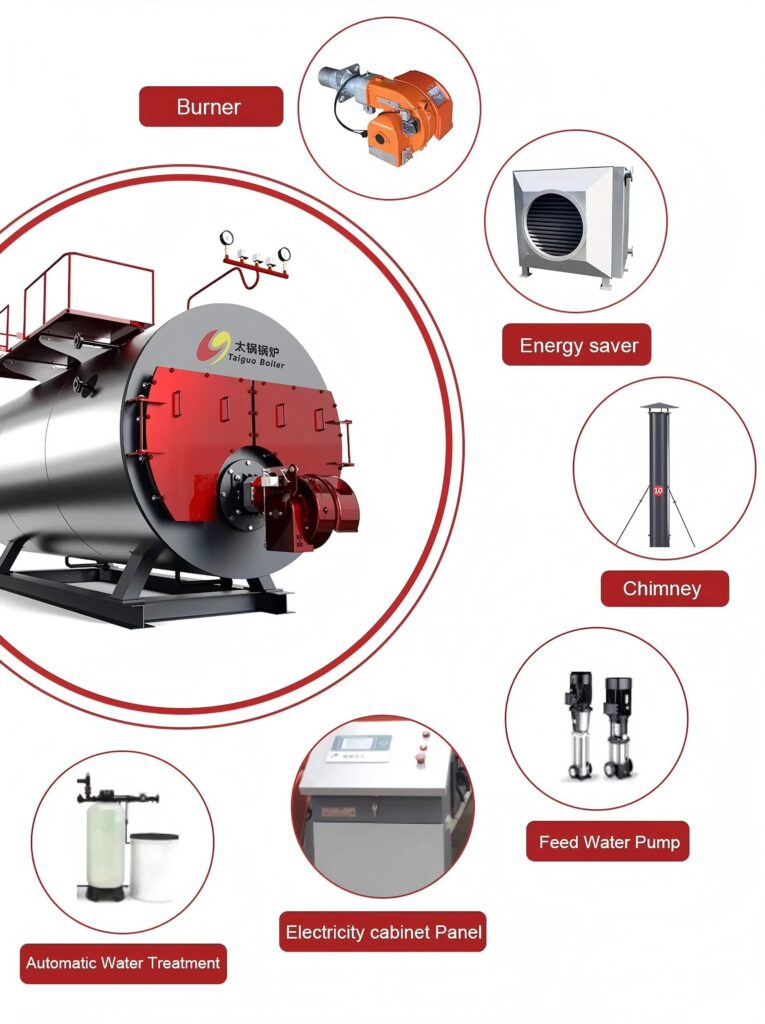
B.Industrial Boiler for Textile Industry in Philippines For Stentering & Heat Setting (The Finishing Frontier)
- The Process Logic: The stenter is the heart of the finishing line, used for drying, heat-setting, and chemical coating. It requires massive, constant heat at temperatures between 180 degree and 220 degree.
- The Thermodynamic Challenge: Using steam for these temperatures would require pressures exceeding 2.5 MPa (360 psi), necessitating extremely expensive high-pressure vessels and intensive DOLE regulatory oversight. Furthermore, steam heat exchangers in stenters are prone to “Condensate Water Hammer” in the high-humidity Philippine climate.
- The Taiguo Match:YY(Q)W Series Gas-Fired Thermal Oil Boilers.
- Engineering Edge: Our thermal oil systems deliver 320 degree at pressures below 0.8 MPa.
- Thermodynamic Precision: We utilize a Three-Pass Coiled Pipe Design that provides a temperature stability of 1 degree. This prevents “Fabric Yellowing” and ensures consistent “Dimensional Stability” (shrinkage control). In the 2026 export market, this precision is the key to passing the rigorous AATCC 135 laundering tests required by global fashion houses.
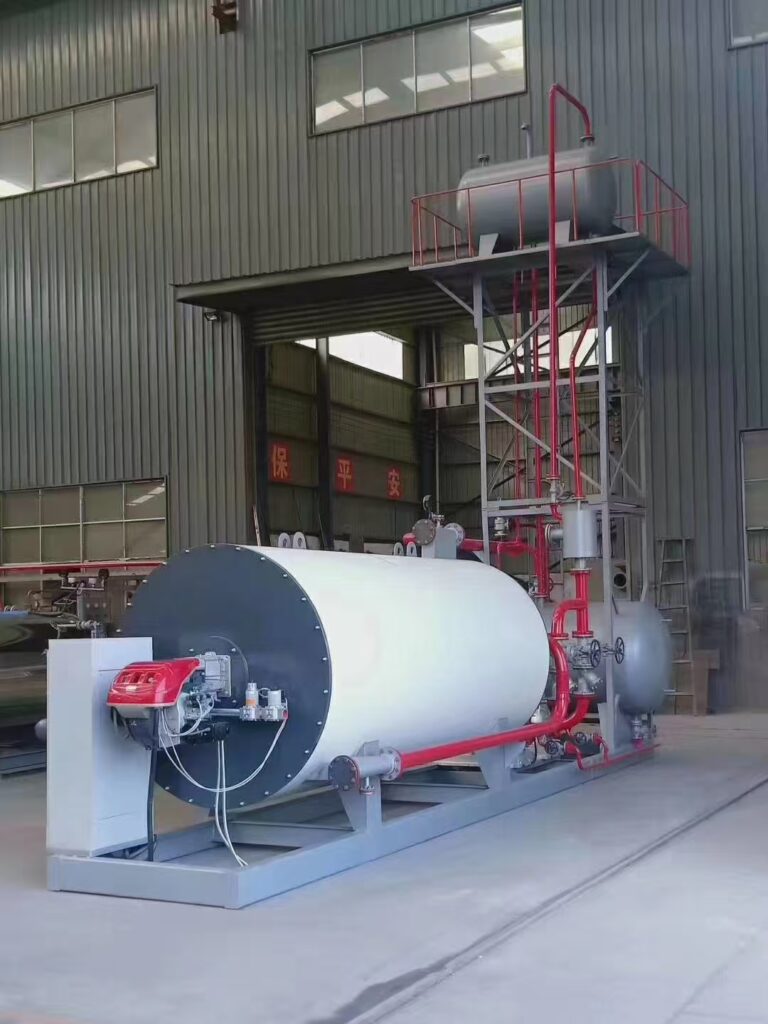
C.Industrial Boiler for Textile Industry in Philippines For Denim Stone-Washing & Enzyme Treatment
- The Process Logic: This involves high-volume water heating and abrasive cycles to achieve specific aesthetic fades and textures.
- The Thermodynamic Challenge: Denim processing is the most energy-intensive sub-sector. In regions like Mindanao or Tarlac, the cost of imported diesel or LPG can make denim exports uncompetitive.
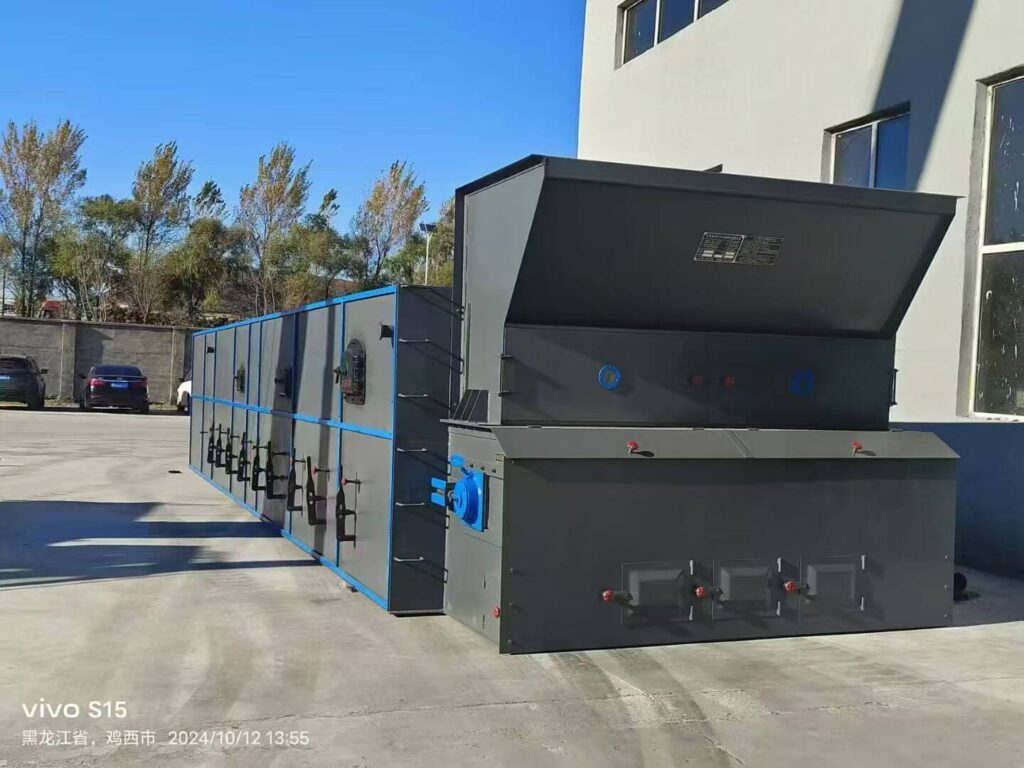
- The Taiguo Match:SZL Double-Drum Biomass Boilers.
- Engineering Edge: These units are engineered with a Reciprocating Grate specifically for Coconut Shells and Rice Husks.
- The Financial Arbitrage: By utilizing local agricultural waste, a denim facility can reduce its “Thermal Cost per Garment” by 60-70%.
- Compliance Advantage: Our biomass systems include Secondary Air Injection and Multi-Stage Wet Scrubbers, ensuring the heavy particulate matter from biomass combustion is neutralized before it hits the Philippine sky, keeping you 100% compliant with DENR 2026-05 Drone Audits.
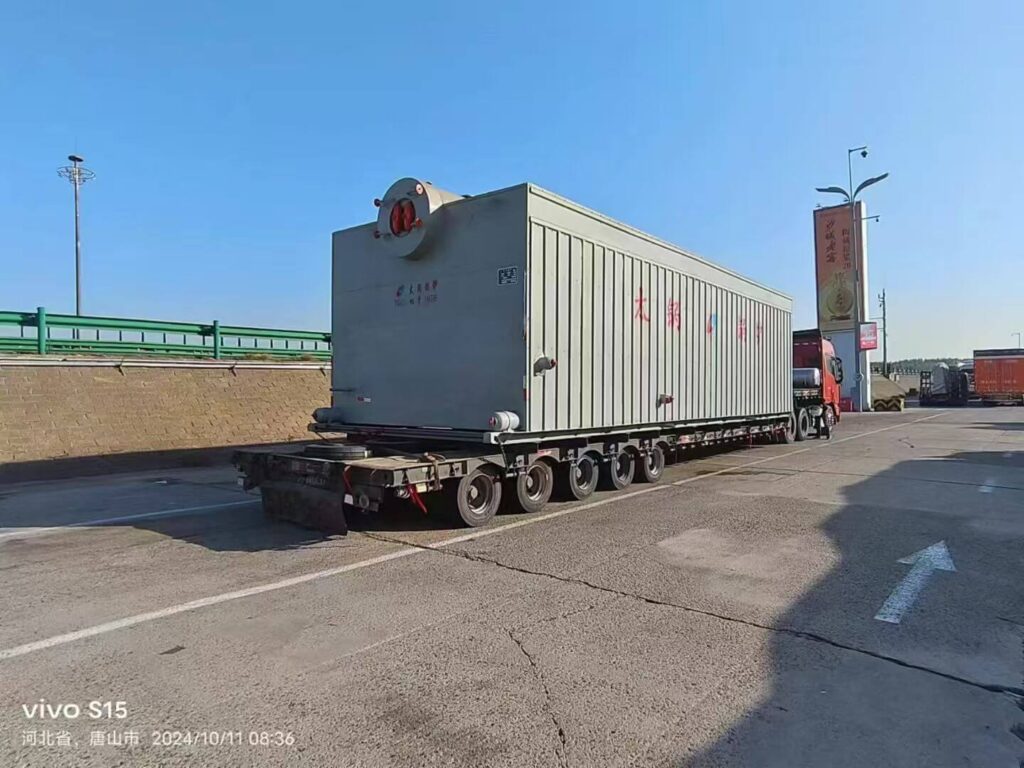
D.Industrial Boiler for Textile Industry in Philippines For High-Purity Garment Steaming & Finishing
- The Process Logic: The final stage where garments are steamed to remove wrinkles and enhance hand-feel before packaging.
- The Thermodynamic Challenge: In urban hubs like Metro Manila, centralized boiler piping often leads to “Condensate Staining”—where rusty water from old pipes leaves permanent marks on finished white or light-colored garments.
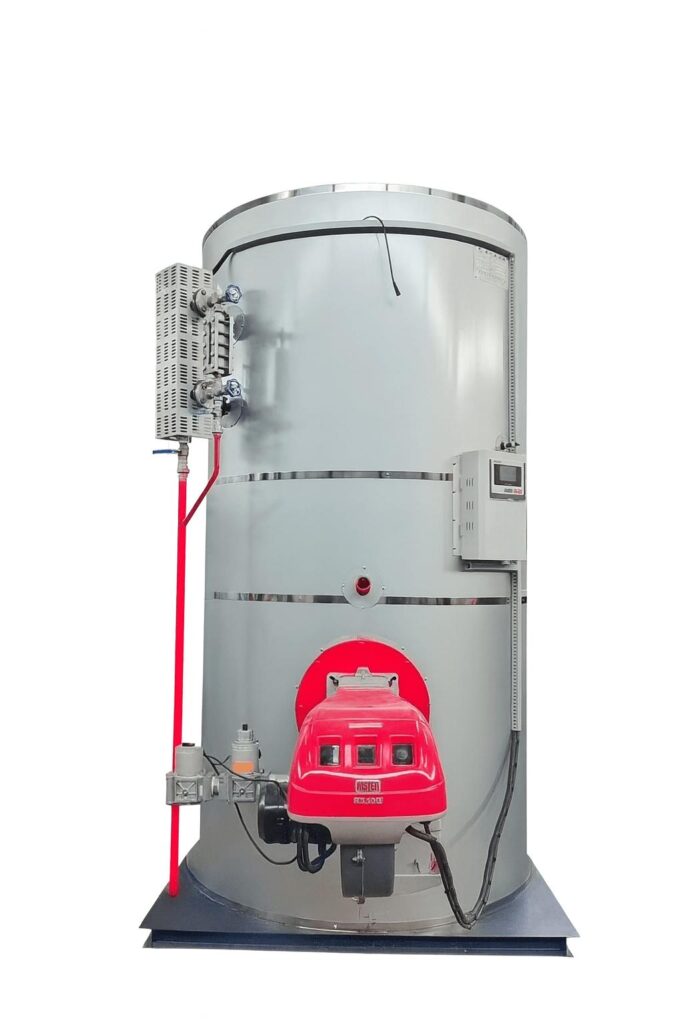
- The Taiguo Match:LSS/WSS Series Modular Steam Generators with Stainless Steel (SS316L) Interiors.
- Engineering Edge: These units provide Instant Steam in 180 seconds.
- Purity Logic: By using corrosion-resistant internals, the steam remains chemically pure and free of metallic oxides. This is the “Gold Standard” for high-end Philippine garment exporters who cannot afford the risk of “Iron Stains” on luxury silk or cotton exports.
2. 2026 Product Matrix: Tonnage & Application Guide
Selecting the correct thermal architecture for a Philippine textile mill is a strategic decision that balances Instantaneous Peak Steam Demand (IPSD) against Long-term Operational Compliance. For 2026, Taiguo has engineered a multi-tier matrix that aligns with the specific production scales and fiscal incentives of the archipelago.
A. Industrial Boiler for Textile Industry in Philippines 2 – 6 Ton/hr: The “PEZA Specialist” (WNS Condensing Gas Series)
- Target Segments: Medium-scale dyeing houses, circular knitting mills, and specialized printing facilities in Laguna and Cavite.
- The “Efficiency Hedge”: In an environment of ₱14.35/kWh electricity, our WNS series focuses on maximizing fuel-to-steam conversion.
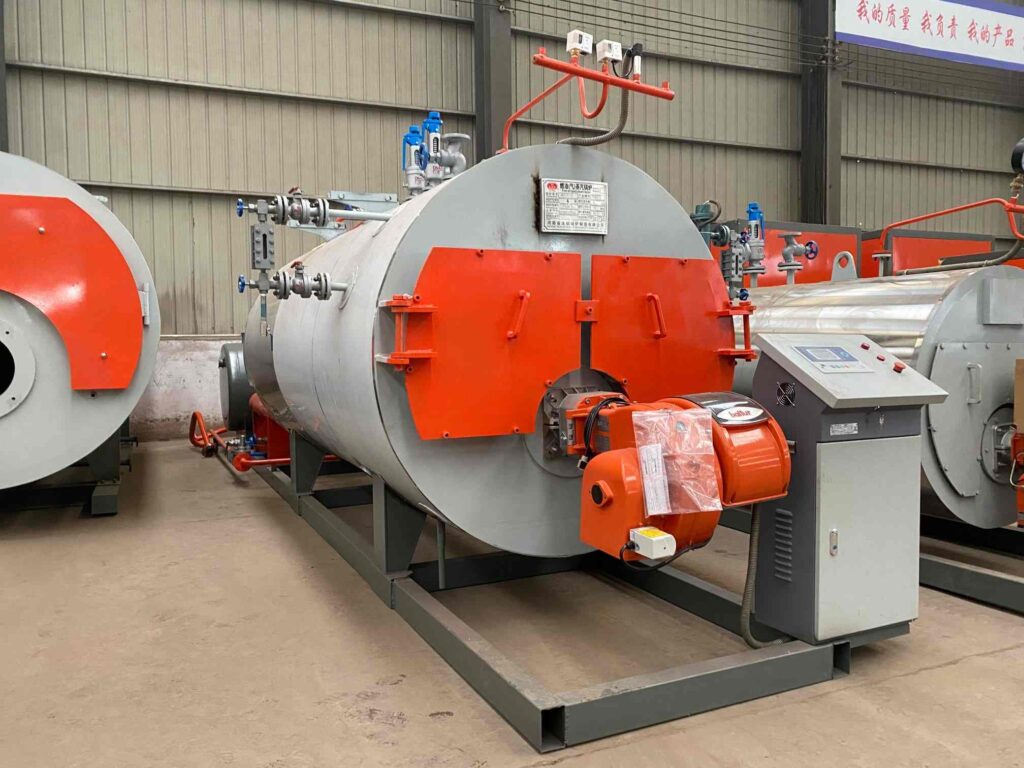
- Technological Core: We utilize Two-Stage ND-Steel (09CrCuSb) Condensers. This allows the boiler to achieve a 104% Thermal Efficiency by recovering the latent heat from flue gas.
- Landed ROI: While the initial CAPEX for a condensing unit is 15% higher, the 12-16% reduction in gas consumption means the price premium is recovered in just 6.8 months at current Philippine gas rates.
- Compliance: Features Low-NOx Burner Technology (<30 mg/Nm³), ensuring these units are “Future-Proof” against the 2026-2030 DENR air quality roadmap.
B. Industrial Boiler for Textile Industry in Philippines 10 – 20 Ton/hr: The “Industrial Powerhouse” (SZL Double-Drum Water-Tube Series)
- Target Segments: Integrated spinning, weaving, and heavy-duty denim finishing mills in Bulacan and Tarlac.
- The “Fuel-Switching” Arbitrage: As the Philippine government implements the 2026 Carbon Tax Pilot, reliance on imported fossil fuels carries a rising financial penalty.
- The Biomass Advantage: These units are specifically engineered with a Reciprocating Grate to handle the high volatile matter of Coconut Shells and the high silica content of Rice Husks.
- The Engineering: We utilize Secondary Air Injection above the grate to create a “Cyclonic Combustion” zone. This eliminates the “Black Smoke” common in legacy biomass units, allowing you to operate a coal-equivalent capacity at zero carbon tax liability.
- Structural Edge: The double-drum water-tube design provides a massive water volume, allowing for Extreme Load Flexibility—essential when multiple high-volume dye vats are activated simultaneously.
C. Industrial Boiler for Textile Industry in Philippines YY(Q)W Series: The “Zero-Water” Thermal Oil Specialist
- Target Segments: Fabric heat-setting (Stentering), Plywood/Laminate bonding, and specialized coating lines.
- The Logic of Water-Avoidance: In regions like Cebu or Zamboanga, where groundwater TDS exceeds 16,000 mg/L, generating steam is a constant battle against scale.
- The Strategy: Thermal oil is a closed-loop system. There is Zero Water Consumption and Zero Scaling.
- Thermodynamic Superiority: It provides temperatures up to 320 degree at pressures below 0.8 MPa. This provides a safer working environment and eliminates the need for the high-pressure steam certifications required by DOLE Rule 1160 for boilers exceeding 1.0 MPa.
2026 Tonnage & Application Selection Matrix (Industrial Boiler for Textile Industry in Philippines )
| Production Scale (Lbs/day) | Recommended Tonnage | Recommended Tech | Primary ROI Driver |
| 5,000 – 15,000 lbs | 2 – 4 Ton/hr | WNS Condensing | Gas Efficiency & Low NOx |
| 15,000 – 50,000 lbs | 6 – 10 Ton/hr | WNS Dual-Fuel | Fuel Security (Gas/Oil) |
| 50,000 – 150,000 lbs | 10 – 20 Ton/hr | SZL Biomass | Biomass Arbitrage (Coconut Shell) |
| High-Temp Finishing | 1M – 5M kcal/hr | YY(Q)W Thermal Oil | Zero-Scale & Precision Set |
The 2026 “Future-Proof” Integration: 5G & RCEP
Every Industrial Boiler for Textile Industry in Philippines For in our 2026 Textile Matrix is equipped with the “Archipelago Digital Shield”:
- Integrated 5G IoT Gateway: For a mill in Davao, a sudden pressure drop can ruin 20 tons of fabric. Our system provides Real-Time Steam Quality Monitoring. If the dryness fraction drops below 99.5%, the system alerts the operator instantly via smartphone.
- RCEP Customs Optimization: Taiguo is a pre-verified exporter in the BOC e-CP (Electronic Certificate of Payment) system.
- Financial Gain: By providing the verified Form E (Certificate of Origin), we eliminate the 7% import duty. On a 10-ton project ($85,000+), this is a direct cash saving of ₱335,000 at the Bureau of Customs.
3. Engineering for the Archipelago: The “Island-Spec” Advantage
The Philippine geography presents a “Triple-Threat” to industrial thermal assets: Extreme Salt-Mist Corrosion, Volatile Power Grids, and High-Silica Groundwater. Taiguo’s 2026 “Island-Spec” is a re-engineering of the Industrial Boiler for Textile Industry in Philippines ’s DNA to survive the archipelago.
A. Anti-Corrosion Metallurgy: The “Salt-Mist Armor”
In coastal textile hubs like Manila Bay, Cebu, and Zamboanga, the air is saturated with chloride ions. In legacy Industrial Boiler for Textile Industry in Philippines , this leads to “Pitting Corrosion” on the boiler shell and rapid oxidation of the electrical control panels.
- The Taiguo Solution for Industrial Boiler for Textile Industry in Philippines :
- Epoxy-Zinc Rich Primers: We apply a multi-layer coating system featuring a high-density zinc primer that provides Sacrificial Cathodic Protection. This ensures the steel remains pristine even if the topcoat is scratched during maritime transit.
- IP65-rated Stainless Steel Enclosures: Unlike standard carbon steel control boxes that rust through in 2 years, our Siemens-integrated control centers are housed in 304/316 Grade Stainless Steel. This protects the “Brain” of your Industrial Boiler for Textile Industry in Philippines from the corrosive sea breeze.
- Copper-Nickel Heat Exchanger Fins: For our condensing units, we offer optional Cu-Ni fins that are exponentially more resistant to salt-air than standard aluminum fins.
B. Grid-Resilience Engineering: The “Volatile-Power” Shield
The Philippine power grid (Meralco and regional cooperatives) is prone to Voltage Fluctuations and Harmonic Distortion, which often fry sensitive PLC boards and burner motors.
- The Taiguo Solution for Industrial Boiler for Textile Industry in Philippines:
- Integrated Voltage Stabilizers & Surge Protection: Every 2026 “Island-Spec” Industrial Boiler for Textile Industry in Philippines features built-in heavy-duty industrial voltage regulators and Type 2 Surge Arresters.
- 5G Industrial Gateway with Battery Backup: Our IoT system includes a small LiFePO4 backup battery. In the event of a sudden blackout (common during the Philippine typhoon season), the boiler can perform an “Orderly Shutdown”, purging the furnace and recording critical data before going offline, preventing thermal stress on the vessel.
- Low-Inrush Current Starters: We utilize VFDs (Variable Frequency Drives) on all major motors (fans/pumps) to prevent “Grid Sag” when the boiler starts, which is a major concern for factories located in rural Mindanao or Palawan.
C. Advanced Water Chemistry: The “Silica & TDS” Neutralizer For Industrial Boiler for Textile Industry in Philippines
Groundwater in the Philippines is notoriously difficult. In areas like Batangas, TDS levels can exceed 16,000 mg/L, and Silica levels are among the highest in Southeast Asia.
- The Risk: Silica forms a glass-like scale that is thermally insulating and chemical-resistant. A 1.5mm scale layer leads to a 12.5% jump in fuel consumption and eventual tube rupture due to localized overheating.
- The Taiguo Solution Industrial Boiler for Textile Industry in Philippines :
- Integrated Dual-Stage RO (Reverse Osmosis): For the 2026 “Island-Spec,” we moved beyond simple resin softeners. We integrate a dual-stage RO system that strips 99% of dissolved minerals and Silica before the water ever touches the boiler.
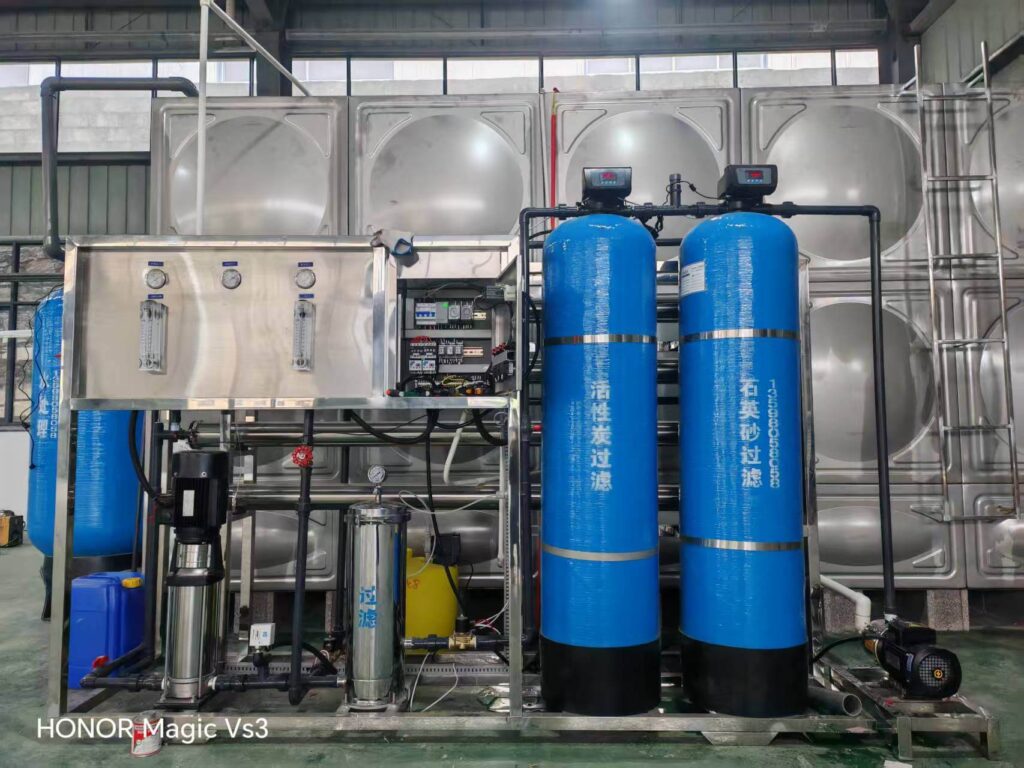
- Real-Time Conductivity-Driven Blowdown: Our PLC monitors the concentration of the boiler water in real-time. Instead of manual blowdown (which wastes heat), the system performs a Precision Blowdown only when the TDS threshold is reached, maintaining the 104% efficiency baseline.
D. Logistics & “Last-Mile” Archipelago Delivery Of Industrial Boiler for Textile Industry in Philippines
The Philippines’ 7,107 islands make delivery a technical challenge.
- The Taiguo Solution for Industrial Boiler for Textile Industry in Philippines:
- Modular Skid-Mounting: We design our Industrial Boiler for Textile Industry in Philippines as “Plug-and-Play” skids. This allows the entire system to be moved by smaller inter-island barges and loaded onto standard trailers in remote ports like Puerto Princesa or Dumaguete.
- Tropicalized Packaging: We utilize vacuum-sealed VCI (Vapor Corrosion Inhibitor) packaging during shipping, ensuring that the boiler arrives on your foundation in factory-fresh condition, despite weeks on the ocean.
2026 “Island-Spec” Financial Impact For Industrial Boiler for Textile Industry in Philippines (Year 1-5)
| Feature | Standard Boiler (Legacy) | Taiguo “Island-Spec” | 5-Year Financial Gain (PHP) |
| Service Life | 5-8 Years (Coastal) | 20+ Years | ₱15.5M (Asset Value) |
| Fuel Waste (Scale) | 10% – 15% Increase | 0% (Pure Water RO) | ₱9.2M (Fuel Savings) |
| Electronics Repair | ₱85k/year (Power Surges) | Included Protection | ₱425,000 Saved |
| Total ROI Contribution | ₱25.1M+ Advantage |
For the garment and knitting clusters in Manila and CALABARZON , maintaining constant steam pressure is essential for flawless dyeing and finishing. As a global industrial boiler manufacturer , we provide SZL double-drum boilers that offer the high enthalpy needed to handle load surges in heavy-duty textile mills. Given the high energy costs in the archipelago, we recommend reviewing our 2026 Philippine Textile Boiler Price Analysis , which details how our high-efficiency gas systems can shorten your capital recovery time while ensuring compliance with international safety standards.
FAQ: Strategic Compliance for Textile Operators
Does the boiler help us meet ESG (Environmental, Social, and Governance) targets for global buyers?
Yes. Our 2026 series is designed for the Carbon-Neutral supply chain. By using our 104% efficient gas Industrial Boiler for Textile Industry in Philippines or carbon-neutral biomass systems, you can lower your Product Carbon Footprint (PCF), a critical requirement for securing long-term contracts with European and North American fashion brands under the 2026 CBAM Pilot.
How does the RCEP 0% Duty benefit our dye house upgrade?
Under HS Code 8402, Industrial Boiler for Textile Industry in Philippines from China to the Philippines are Duty-Free. Taiguo manages the Form E documentation to save you approximately ₱300,000 to ₱1,000,000 in customs fees immediately.
CTA: Secure Your 2026 Textile Thermal Lead
The 2026 Philippine textile market rewards efficiency and punishes legacy waste.
Calculate your savings with 104% efficiency or biomass fuel-switching.
Schedule a site visit for water chemistry analysis today.
Henan Taiguo Boiler: Powering the Pearl of the Orient with 104% Thermodynamic Precision.