
Hybrid Boiler Cost & ROI Analysis for Uzbekistan: Is It Worth the Investment?
Evaluating specialized alternative energy investments across high-capacity Central Asian manufacturing grids requires rigorous full-lifecycle cash flow modeling. Conducting an exhaustive Hybrid boiler cost Uzbekistan evaluation dictates your facility’s long-term financial survival parameters during deep winter freeze seasons. Taiguo engineers high-end hybrid thermal industrial architectures to shield heavy processing plants from experiencing unexpected infrastructure supply failures […]
Get Instant QuoteTechnical Specifications
Evaluating specialized alternative energy investments across high-capacity Central Asian manufacturing grids requires rigorous full-lifecycle cash flow modeling. Conducting an exhaustive Hybrid boiler cost Uzbekistan evaluation dictates your facility’s long-term financial survival parameters during deep winter freeze seasons. Taiguo engineers high-end hybrid thermal industrial architectures to shield heavy processing plants from experiencing unexpected infrastructure supply failures worldwide.
Uzbek industrial manufacturing enterprises lose millions of corporate capitals annually due to experiencing regular municipal natural gas pressure drops. Shifting weather patterns drop incoming pipeline pressures below critical operational thresholds to freeze massive textile and food production lines entirely. A single week of forced factory shutdown destroys delicate client supply commitments and inflates fixed operational overhead losses drastically. Deploying an advanced hybrid solid-gas thermal distribution matrix decouples your daily manufacturing revenues from unstable centralized utility distribution pipelines completely.
- Zero-Interruption Thermal Redundancy : > Our hybrid configuration integrates a high-efficiency WNS gas packaged boiler alongside a heavy-duty SZL solid-fuel biomass chain grate system smoothly. This dual-engine setup allows your utility crew to cycle active heat loads dynamically matching daily fuel availability metrics.
- Instant Automatic Hot Standby Sequences: > Centralized PLC microcomputers monitor incoming gas pipeline pressures and distribution header steam flows around the clock proactively. The automated management logic fires up the standby gas burner instantly if solid-fuel stoking maintenance cycles create pressure variations.
- Protection of High-Value Curing Cycles : > Sustaining uniform saturated vapor volumes prevents brittle structural block cracks inside expensive horizontal autoclaves or fabric tunnels perfectly. Eliminating sudden temperature drops safeguards finished product dryness fractions to drive down your annual industrial material reject ratios safely.
Introduction: Why Cost & ROI Matter More Than Hybrid boiler cost Uzbekistan
When Uzbekistan factories consider a Gas & Biomass Hybrid Boiler System, the first concern is often:
“The system looks good — but is it really worth the investment?”how about Hybrid boiler cost Uzbekistan?
The truth is:
- Hybrid systems usually cost more upfront
- But they often deliver much lower long-term operating costs
- ROI depends heavily on fuel structure and production hours
This article breaks down:
- Initial investment cost
- Operating cost comparison
- Payback period (ROI)
- Real decision scenarios for Uzbekistan factories
The 2026 Energy Landscape: Why Hybrid?
The Gas-to-Electricity Transition
In early 2026, Uzbekistan reported a 2.4% drop in natural gas output, leading to increased reliance on gas imports. Simultaneously, the nation is on track to hit its 25% renewable energy target by the end of this year. For an industrialist, a Hybrid Boiler offers a Superior hedge against fuel volatility. When gas prices spike or supply is restricted, the system switches to Validated clean electricity, ensuring Seamless production.
New 2026 Tariff Structures
Effective May 1, 2026, industrial energy tariffs in Uzbekistan will adjust annually based on inflation (capped at 10%). Currently, industrial electricity is priced at approximately 900 UZS/kWh ($0.074), while gas remains subsidized but subject to “social norms” and seasonal quotas. A Hybrid Boiler allows you to optimize your Critical energy spend by utilizing electricity during off-peak hours or when solar output is at its Superior peak.
What Makes a Hybrid Boiler System More Expensive Initially?
A hybrid system typically includes:
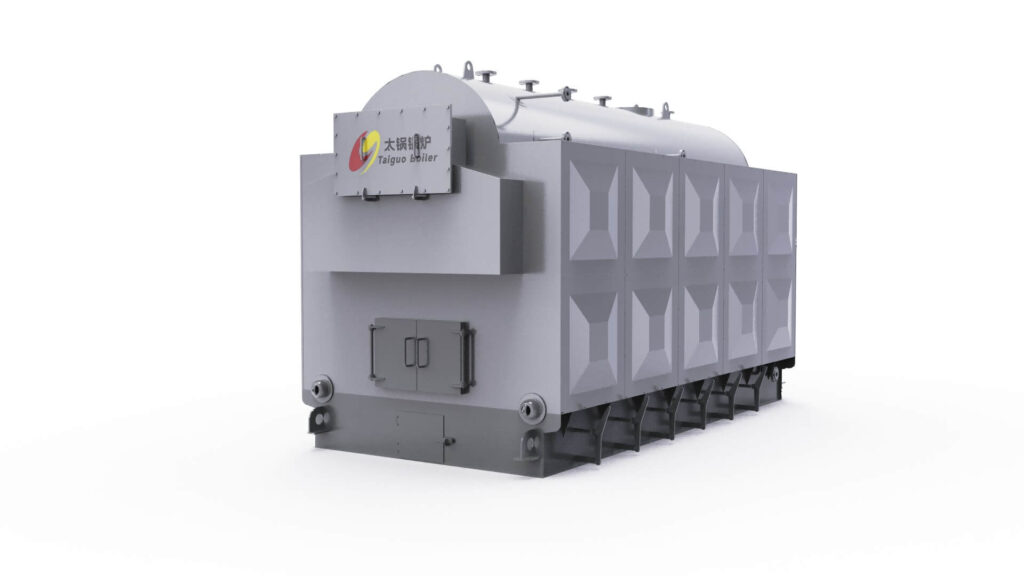
- 1 biomass steam boiler
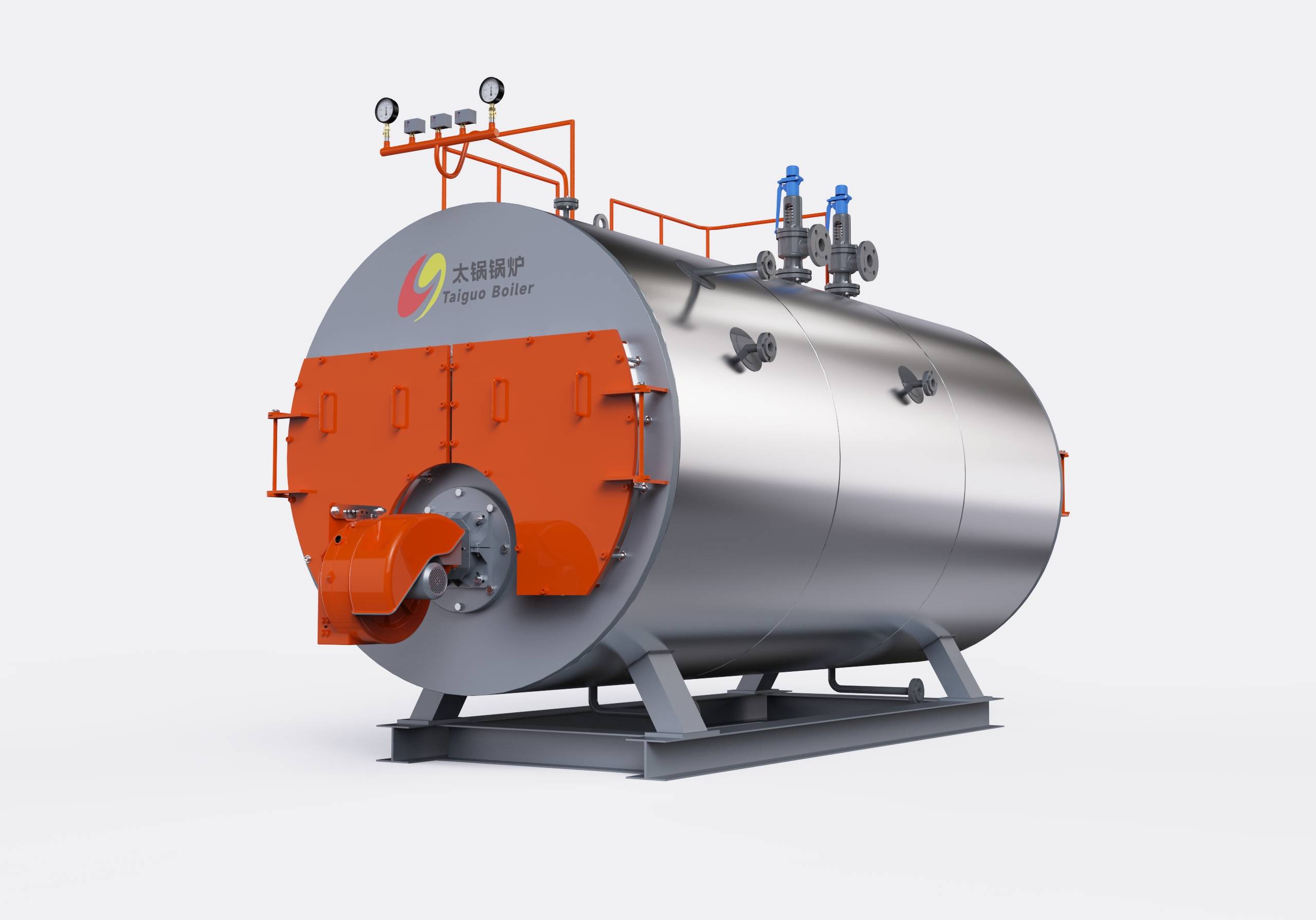
- 1 gas steam boiler
- Fuel feeding & ash handling system
- Integrated control & piping system
This means higher initial CAPEX than a single gas boiler.
Typical Initial Investment Comparison (Indicative)
| System Type | Initial Investment |
|---|---|
| Single Gas Boiler | ⭐⭐⭐ Lowest |
| Single Biomass Boiler-Hybrid boiler cost Uzbekistan | ⭐⭐⭐⭐ Medium |
| Gas + Biomass Hybrid-Hybrid boiler cost Uzbekistan | ⭐⭐⭐⭐⭐ Highest |
However, initial cost alone does not determine profitability.
Operating Cost Breakdown: Where the Hybrid System Wins
Fuel Cost Structure in Uzbekistan
- Natural Gas
- Stable but regulated
- Subject to quota & seasonal pressure
- Biomass Fuel
- Cotton waste, rice husk, wood waste
- Often locally sourced
- Sometimes factory-owned (near-zero cost)
Typical Fuel Cost Comparison (Relative)
| Fuel Type | Relative Fuel Cost |
|---|---|
| Natural Gas | ⭐⭐⭐ |
| Biomass (Purchased) | ⭐⭐ |
| Biomass (Own Waste) | ⭐ |
When a biomass boiler covers base load (60–80%), total fuel cost drops sharply.
Capital Expenditure (CAPEX) vs. Operational Savings (OPEX): The Uzbek Hard Currency Ledger
Procuring a multi-fuel hybrid infrastructure system requires evaluating the upfront capital expenditures alongside your projected monthly operating bills carefully. While custom dual-system configurations demand higher initial machinery capital assets, they slash variable fuel procurement outlays over multi-decade spans completely. Review our verified Central Asian field engineering cost balance metrics below to guide your corporate development planning safely:
- The Initial CAPEX Breakdown : > Installing a hybrid plant demands constructing independent covered solid fuel warehouses and deploying automated multi-cyclone baghouse particulate filtration clusters. This extensive machinery footprint raises your initial capital asset procurement investments by approximately 45% compared to standard gas-only boiler houses.
- The Dynamic Winter OPEX Compression : > A hybrid thermal setup exploits loose locally available regional rice husks or cotton stalks during standard manufacturing operational hours. Shifting your base load to free agricultural wastes drops daily steam ton generation costs by over 70% flawlessly. This operational savings profile rapidly offsets the initial electrical and auxiliary labor payroll overheads required to operate solid-fuel grates.
- The Financial Protection Payback Matrix : > Most global processing enterprise installations calculate complete equipment procurement capital payback returns within 12 to 18 months of active operation. Factoring in the complete avoidance of winter facility shutdown penalties highlights the true economic viability of this heavy infrastructure configuration.
Structural Synergy: Integrating WNS Gas Fire-Tube & SZL Heavy Chain Grate Networks
Achieving high thermodynamic efficiencies requires balancing available workshop square-meter space variables against dynamic manufacturing load drawing profiles perfectly. Taiguo constructs integrated multi-vessel thermal complexes that connect gaseous and solid alternative firing configurations to a single centralized distribution header pipe seamlessly:
| System Performance Metrics | Taiguo Heavy SZL Biomass Element | Taiguo Packaged WNS Gas Element |
| Primary Base-Load Fuel Target | Rice Husk, Cotton Stalk, Wood | Natural Gas, LNG, Light Diesel |
| Operational Thermal Efficiency | Exceeds 88% with Tail Economizers | Exceeds 98% with Condensing Tubes |
| Cold-Start Thermal Ramp Speeds | Gradual Solid Bed Heating Cycles | Instant Firing, Full Steam < 20min |
| Primary Role in Hybrid Network | Continuous Base Load Peak Shaver | Rapid Modulating Hot Backup Asset |
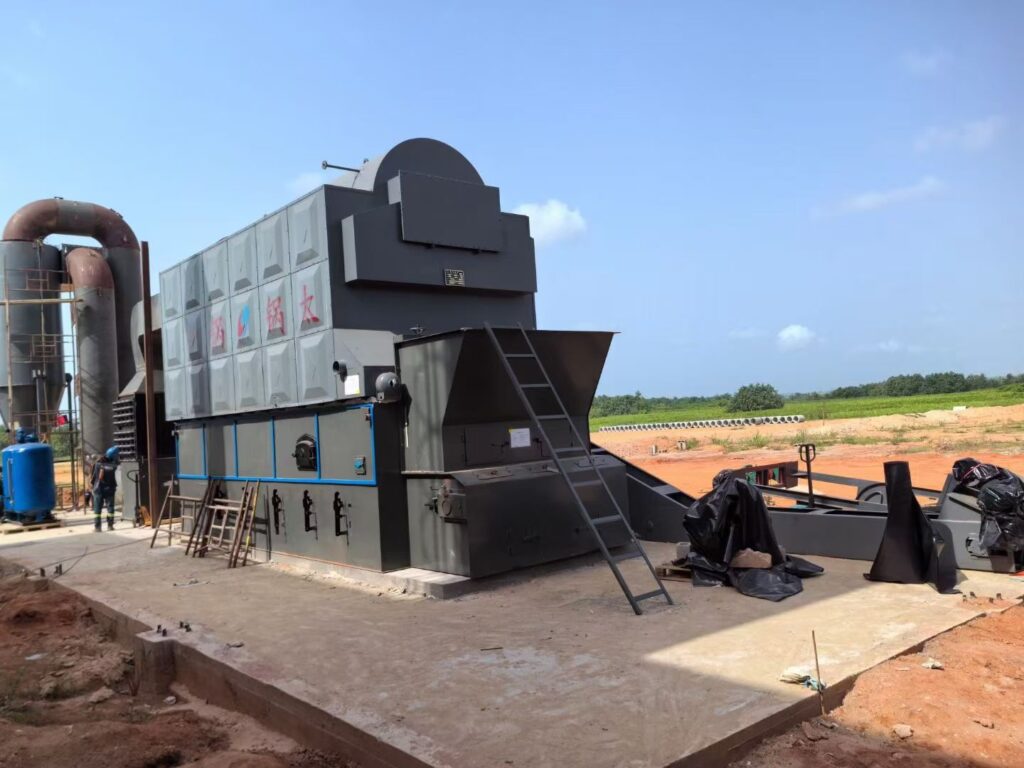
The SZL Biomass Base Load Core : This longitudinal double-drum water-tube stoker acts as a massive thermal battery accumulator to counter large base processing demands. The extra-large water capacity balances internal pressure drops perfectly whenever downstream factory production lines execute sudden heavy drawing cycles.
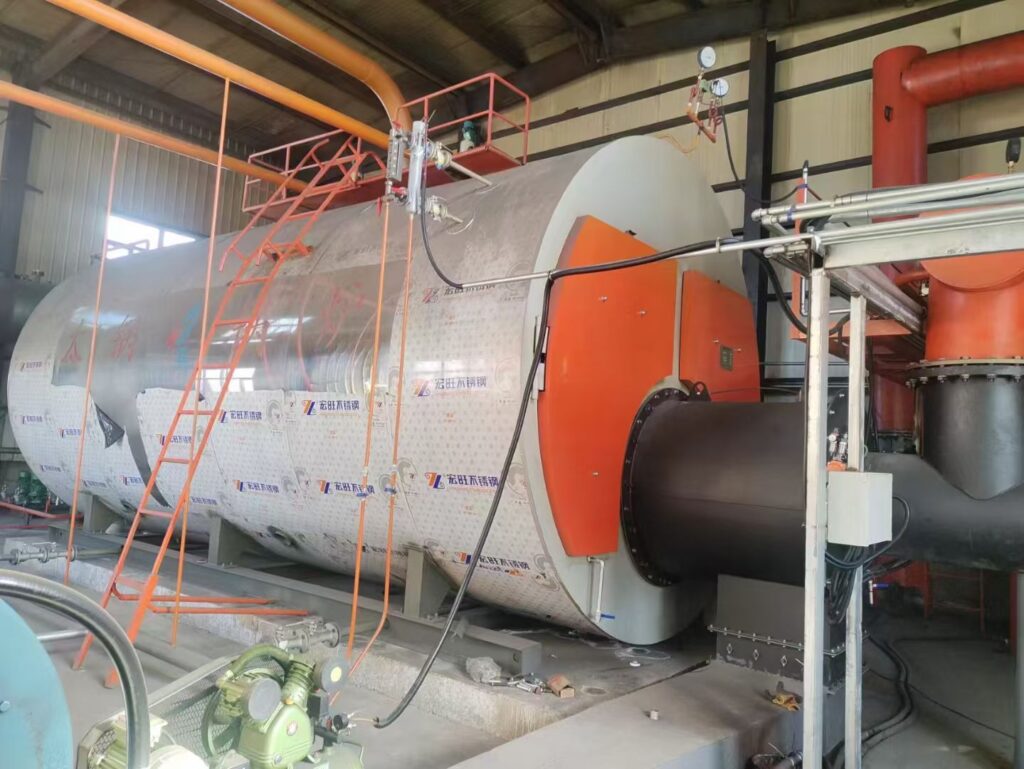
The WNS Gas Modulating Hot Standby: This horizontal three-pass wet-back assembly handles sudden peak load variations and manages thermal supply lines during solid-fuel grate de-ashing cycles. The internal corrugated furnace vault absorbs extreme burner flame radiations efficiently without transmitting destructive stresses to boiler tube sheet welds.
Mitigating Administrative Hurdles: Clearing Ecology Committee Audits with Ease
Navigating modern Central Asian environmental and pressure vessel safety legislation requires installing active emissions control sub-systems proactively. Sourcing an advanced hybrid boiler cost roi uzbekistan solution determines your long-term factory operational licensing safety margins systematically. Taiguo builds premium flue gas treatment and automated control architectures to guarantee flawless regulatory clearance audits across both combustion formats smoothly.
Our specialized solid-fuel units deploy high-capacity multi-cyclone inertial particle separators paired with automated pulse-jet baghouse filtration housings seamlessly. This heavy environmental array traps 99.9% of flying carbon soot particles, slashing stack particulate concentrations safely beneath 30mg/Nm³. Concurrently、our companion gas boilers utilize advanced flue gas recirculation (FGR) burner loops to suppress toxic nitrogen oxide emissions, satisfying strict regional air quality laws easily.
Example ROI Scenario: Medium Textile Factory in Uzbekistan
Factory Profile
- Industry: Textile dyeing
- Steam demand: 8 TPH
- Operating time: 20–22 hours/day
- Available fuel: Cotton waste
Option A: Gas Boiler Only
- Fuel cost: High
- Gas supply risk: Medium
- Annual energy expense: High
Option B: Hybrid System
- 6 TPH biomass boiler (base load)
- 4 TPH gas boiler (peak & backup)
Result (Typical Outcome)
- Fuel cost reduction: 35–55%
- Production stability: Improved
- Gas dependency: Reduced
Estimated Payback Period:
👉 18–30 months (depending on biomass cost)
ROI Comparison: Gas vs Biomass vs Hybrid-Hybrid boiler cost Uzbekistan
| Factor | Gas Only | Biomass Only | Hybrid System |
|---|---|---|---|
| Initial Cost | ⭐⭐⭐⭐⭐ Low | ⭐⭐⭐ Medium | ⭐⭐ Higher |
| Fuel Cost (Long Term) | ⭐⭐ | ⭐⭐⭐⭐⭐ | ⭐⭐⭐⭐⭐ |
| Operational Risk | ⭐⭐ | ⭐⭐⭐ | ⭐⭐⭐⭐⭐ |
| Flexibility | ⭐⭐ | ⭐⭐ | ⭐⭐⭐⭐⭐ |
| ROI Stability | ⭐⭐ | ⭐⭐⭐ | ⭐⭐⭐⭐⭐ |
Key insight:
Hybrid systems offer the most stable and predictable ROI.
What Shortens ROI Time for Hybrid Systems?
ROI becomes faster when:
- Biomass fuel is cheap or self-produced
- Factory runs long daily hours
- Steam demand is high and continuous
- Gas tariffs increase over time
Many Uzbekistan factories underestimate how fast fuel savings accumulate.
Hidden Cost Savings Often Ignored for Hybrid boiler cost Uzbekistan
Hybrid systems also reduce:
- Production downtime losses
- Gas supply interruption risks
- Emergency fuel switching costs
These indirect savings do not appear on invoices, but strongly affect profitability.
When a Hybrid System May NOT Be Worth It
Hybrid systems may not be ideal if:
- Steam demand is very small
- Production is intermittent
- No reliable biomass supply
- Factory space is limited
- Management wants ultra-simple operation
In such cases, a gas boiler alone may be more economical.
How to Evaluate Hybrid Boiler ROI for Your Factory (Step-by-Step)
- Confirm daily steam demand
- Identify available biomass type & cost
- Calculate base load vs peak load
- Estimate annual operating hours
- Compare 5-year total cost, not just boiler price
A professional supplier can simulate this clearly.
Conclusion: Is a Hybrid Boiler Worth the Investment in Uzbekistan?how about Hybrid boiler cost Uzbekistan?
For medium to large factories with access to biomass fuel, the answer is often:
👉 Yes — the hybrid system delivers the best long-term ROI.
It offers:
✔ Lower fuel cost
✔ Better energy security
✔ Stable production
✔ Predictable payback
Hybrid systems are not the cheapest option —
they are the smartest financial strategy for many Uzbekistan factories.
Strategic Advantages for Uzbek Enterprises
Eligibility for Green Financing
Under the 2026 Energy Efficiency Program, the Uzbek government and international partners (EBRD, ADB) have allocated $264 million for modernization. Investing in a Hybrid Boiler Cost Uzbekistan project makes your facility a Superior candidate for these Essential low-interest loans. This Authoritative financial support effectively reduces the “Initial Capital Gap,” making the hybrid option more Validated than a standalone gas unit.
Bypassing the “Winter Gas Quota”
Every winter, Uzbek factories face Critical gas pressure drops. A hybrid system provides Essential energy security. By switching to the electric heating element during the peak heating season (November–February), your factory maintains Superior steam output, avoiding the devastating production halts that cost un-modernized textile and food plants millions in lost revenue.
Full Lifecycle Financial Feasibility Checklist for Uzbek Enterprise Directors
Manufacturing group executive boards must analyze regional resource logistics and utility infrastructure realities before signing heavy machinery procurement contracts. Utilize our technical engineering division’s verified investment audit checklist to evaluate your site parameters safely:
- Audit Annual Factory Gas Curtailment Records: Measure the historical duration of winter pipeline pressure drops across your specific industrial economic zone.
- Map Biomass Sourcing Logistics Radii: Confirm steady regional cotton stalk or timber scrap sourcing avenues exist within a 50-kilometer radius.
- Evaluate Workshop Real-Estate Spatial Footprints: Ensure your facility layout accommodates both compact packaged skids and expanded solid fuel storage yards.
- Calculate Total Downtime Financial Liabilities: Estimate your factory’s net hourly monetary loss if utility grid failures freeze active processing lines.
- Verify Local Grid Power Availability Factor: Confirm your local transformer station provides stable electrical currents to run high-capacity baghouse blowers.
FAQ: Is the Hybrid Investment Validated?
Does a Hybrid boiler cost Uzbekistan more to maintain?
Actually, it is more Reliable. By alternating between gas and electric, you reduce the thermal stress on the gas burner and heat exchanger. This leads to Superior equipment longevity and Essential reductions in long-term repair costs.
How do the 2026 Carbon Trading rules affect my ROI?
Effective January 1, 2026, Uzbekistan launched its carbon trading mechanism. Hybrid boilers generate Validated carbon offsets when running on renewable electricity, which can be sold or used to bypass Critical new environmental taxes.
What is the typical “Break-Even” point in Uzbekistan?
For a standard textile factory in the Tashkent region, the Hybrid Boiler Cost Uzbekistan typically reaches a Validated break-even point in 2.5 years through combined fuel savings and avoided downtime.
Why should an Uzbek textile conglomerate invest in a hybrid boiler plant despite the higher initial CAPEX?
While single-fuel gas or biomass boiler installations features lower initial machinery asset outlays, they expose your production lines to severe supply chain hazards. A gas-only plant face sudden winter production halts when regional pipelines suffer pressure drops, resulting in catastrophic daily manufacturing revenue losses. A biomass-only plant requires extended preheating times and periodic grate cleaning shutdowns that interrupt active manufacturing cycles. Investing in an elite [hybrid boiler cost roi uzbekistan] framework eliminates both bottlenecks by delivering absolute thermal utility redundancy, yielding complete financial payback within 12 to 18 months.
How does the centralized control network manage the transition between gas and solid fuel burn cycles?
We build our centralized microcomputer PLC automation loops utilizing advanced industrial Modbus digital communication interfaces seamlessly. The smart system tracks your primary distribution steam header pressure gradients and downstream consumption drawing velocities in real-time. If alternative biomass fuel moisture variations cause the solid-fuel boiler’s output parameters to dip, the PLC commands the hot-standby gas boiler to ignite instantly. This automated fuel balancing maintains uncompromised steam line pressures without requiring manual human intervention inside the control room.
What space saving advantages do factories achieve by deploying Taiguo’s packaged hybrid layout designs?
Traditional hybrid installations require erecting completely separate boiler houses that duplicate water softener loops and multiply installation civilian engineering expenditures significantly. Taiguo optimizes space capital by constructing a highly compact, unified thermal distribution platform on a shared structural factory blueprint frame. We design custom multi-channel steam headers that allow both boilers to feed identical processing equipment lines using a single integrated pipeline layout. This pre-engineered integration compresses your onsite installation labor schedules while shrinking your building footprint requirements by over 35%.
What certified validation dossiers does Taiguo supply to secure immediate operational permits inside Uzbekistan?
Local safety inspection bureaus like Gospromtekhnadzor enforce exceptionally strict compliance parameters on high-pressure dual-fuel machinery setups operating near urban industrial hubs. Taiguo eliminates administrative clearance delays by delivering full international CE/ASME manufacturing quality credentials alongside fully translated translated structural blueprint dossiers. We bundle our heavy equipment packages with factory-certified hydraulic pressure test reports and x-ray weld seam path verification sheets systematically. This complete technical package guarantees rapid administrative operational approvals from local environmental and pressure inspectors smoothly.
Bulletproof Your Factory Processing Lines with Taiguo Hybrid Systems
Are you ready to insulate your factory from volatile winter gas grid shortages and achieve total fuel cost autonomy utilizing advanced hybrid thermal networks? Contact premium Central Asian equipment author Taiguo today to secure customized plant layout blueprints and highly competitive factory-direct quotes rapidly.
Contact us to get:
- Fuel cost comparison
- ROI & payback simulation
- Hybrid boiler configuration plan
- Investment budget estimate
Explore Our Complete Range of Gas-Fired, Biomass & Specialized Hybrid Industrial Boilers
Choose correct equipment configurations using our online industrial boiler selection guide.
Review specific automated multi-burner accessories inside the gas biomass hybrid boiler system for uzbekistan.
We weigh competitive fuel overheads clearly inside gas boiler vs biomass boiler in uzbekistan.