Engineered for the Paper Cycle: High-Enthalpy Steam Solutions for Indonesian Mills
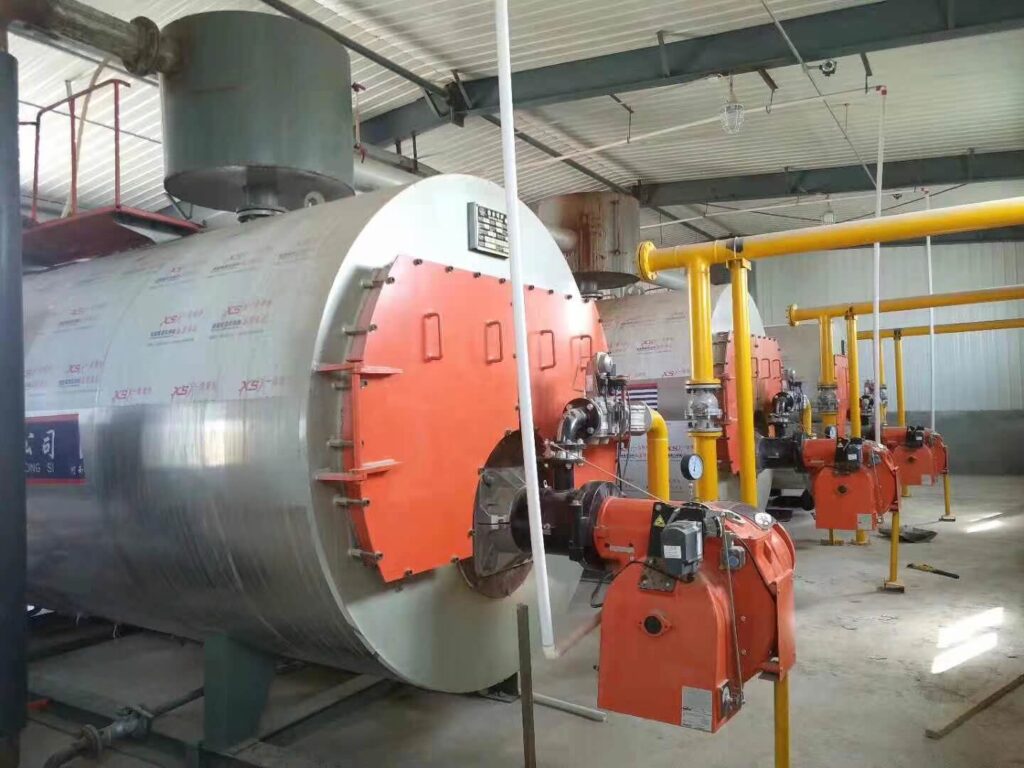
In the 2026 Indonesian industrial landscape, paper mills—from the packaging hubs in Sidoarjo to the massive pulp complexes in Riau—operate on a razor-thin margin dictated by energy efficiency. A paper machine is a thermal giant; it requires a massive, unwavering supply of Saturated Dry Steam to maintain the precise surface temperature of drying cylinders.
At Henan Taiguo Boiler, as leading manufacturer of high-capacity industrial boilers we understand that in the paper industry, a 0.5 bar pressure drop isn’t just a technical glitch—it’s a cause for paper web breakage and hours of lost production. Our “Java-Spec” Boiler for Paper Industry in Indonesia are designed to be the stabilizing heart of your mill’s thermal ecosystem.
1. Physical Engineering Of Boiler for Paper Industry in Indonesia: Mastering Steam Quality & Pressure Compensation
In the high-speed paper manufacturing environments of East Java and Riau, the boiler’s performance is measured by two critical physical metrics: the Dryness Fraction of the steam and its Pressure Stability during load swings. A “Java-Spec” Taiguo boiler is engineered to dominate these variables, ensuring that your drying cylinders operate at peak heat-transfer coefficients.
A. The Double-Drum “Thermal Battery” Logic
- The Physics of the Surge: Standard single-drum boilers have limited water volume. When demand spikes, the pressure in the drum drops rapidly, causing the water to boil violently. This leads to “Priming”—where liquid water droplets are sucked into the steam line.
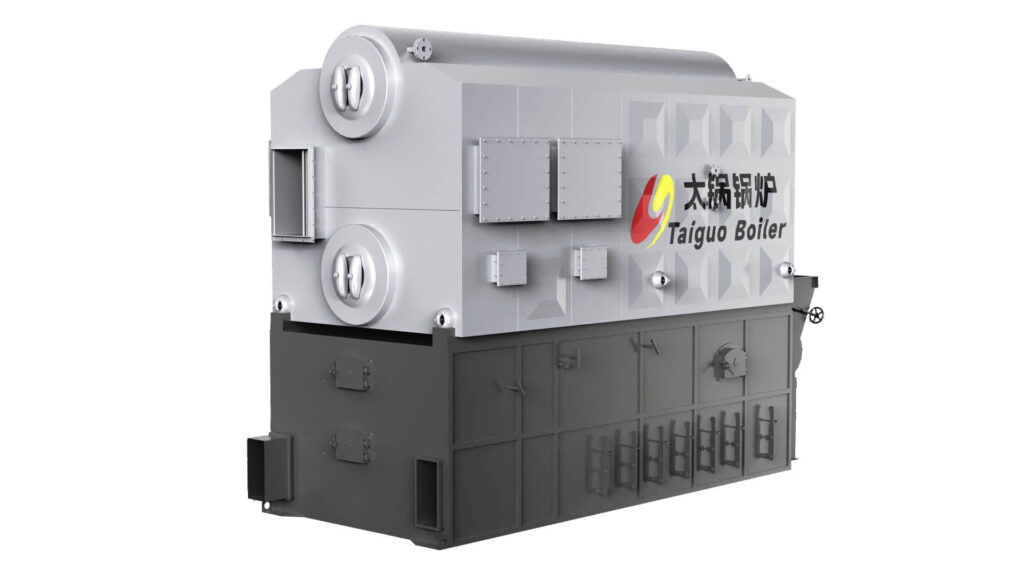
- The Taiguo Solution: Our SZL Double-Drum Water-Tube design features an enlarged upper drum and a massive lower water drum.
- Thermal Inertia: This configuration acts as a “Thermal Battery.” The large water mass stores an immense amount of sensible heat. When your paper machine ramps up, the system releases flash steam from this massive reservoir, maintaining a constant pressure line.
- Impact on Production: This prevents “Pressure Sags” that cause paper web sagging or breakage, allowing your mill to maintain higher machine speeds safely.
B. Multi-Stage Steam Purification Of Boiler for Paper Industry in Indonesia: Achieving 98%+ Dryness
Wet steam is a papermaker’s enemy. If steam contains 5% water, that water acts as an insulating film inside the drying cylinder, drastically reducing the heat transfer rate.
- The Engineering: We utilize a Triple-Stage Separation System inside the upper drum:
- Primary Cyclone Separators: These use centrifugal force to spin out the bulk of the water droplets.
- Secondary Chevron Mist Eliminators: A zigzag path that forces remaining micro-droplets to collide and coalesce.
- Tertiary Steam Screen: A final polishing stage to ensure the steam is “Bone Dry.”
- The Result: We guarantee a Steam Dryness Fraction of 0.98. For the mill, this means more “Latent Heat” per kilogram of steam, faster drying times, and lower energy consumption per ton of paper produced.
C. Intelligent Pressure Compensation & VFD Integration
Paper mills often alternate between different paper grades, each requiring a specific steam enthalpy.
- The Engineering: Our control system utilizes Variable Frequency Drives (VFD) on both the forced draft fans and the feed water pumps, synchronized via a high-speed PID loop.
- The Logic: Instead of a simple “On/Off” response, the boiler’s firing rate “anticipates” the load change from the paper machine. This Predictive Pressure Compensation keeps steam headers within a ± 0.1 bar tolerance.
- The Result: Consistent temperature profiles across all drying cylinders, ensuring that the moisture content of the final paper reel is perfectly uniform from core to edge.
Technical Performance Matrix: Taiguo vs. Standard Market Units
| Physics Metric | Standard Boiler | Taiguo “Java-Spec” | Impact on Paper Quality |
| Steam Dryness | 0.90 – 0.92 | ≥0.98 | Faster drying & Zero “Water Hammer” |
| Pressure Tolerance | ± 0.5 Bar | ± 0.1 Bar | No web breakage during speed ramps |
| Response Time | Slow / Lagging | Instant (VFD Enabled) | Perfect for multi-grade production |
| Thermal Buffer | Low (Single Drum) | High (Double Drum) | Stability during peak “Flash” demand |
2. Strategic Matrix Of Boiler for Paper Industry in Indonesia: Tonnage & Fuel Synergy for Indonesia
Selecting a boiler for an Indonesian paper mill requires a dual-lens approach: matching the Process Enthalpy (Tonnage) with the Regional Fuel Index (Synergy). At Taiguo, our 2026 matrix is engineered to give mill owners “Fuel Flexibility,” allowing you to hedge against market price fluctuations across the archipelago.
A. Tonnage Mapping: Aligning Capacity with Paper Grades
In the paper industry, “under-sizing” leads to production bottlenecks, while “over-sizing” leads to massive heat loss.
- Tissue & Specialty Paper (2 – 10 Ton/hr): These mills often require frequent grade changes and rapid thermal response. Our WNS Condensing Series is the strategic choice here, offering a high turn-down ratio (1:4) to maintain efficiency even during low-load periods.
- Corrugated & Board Mills (10 – 25 Ton/hr): These are the industrial workhorses of Sidoarjo and Tangerang. They require massive, steady-state steam. Our SZL Double-Drum Water-Tube units provide the necessary thermal mass to handle 24/7 continuous runs.
- Integrated Pulp & Large-Scale Mills (35 Ton/hr +): For giants in Riau or Jambi, we provide custom-modular SZL systems that can be scaled to meet the multi-megawatt thermal demands of black liquor recovery and large-scale fiber digestion.
B. Fuel Synergy Of Boiler for Paper Industry in Indonesia: The Indonesian Energy Arbitrage
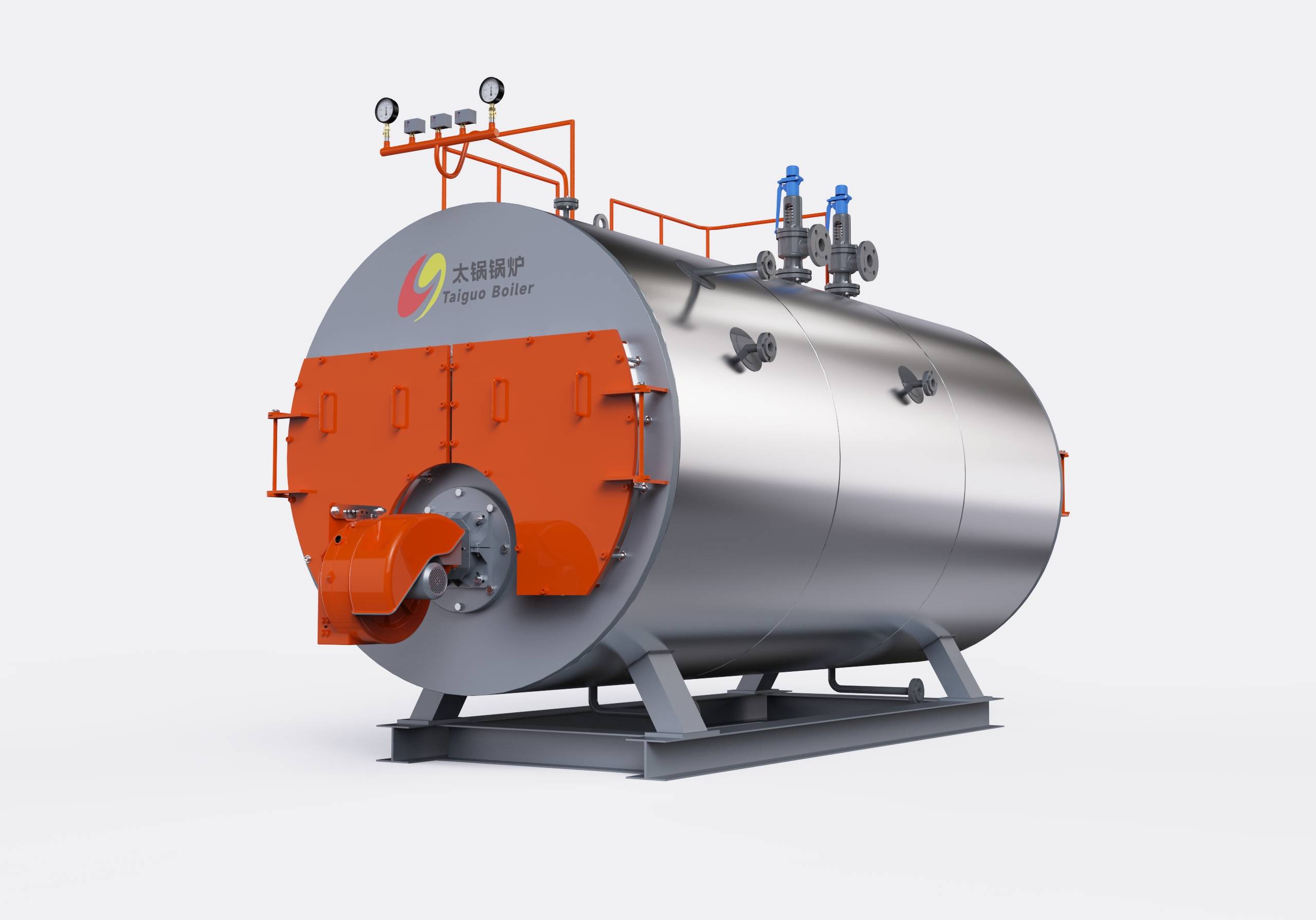
We don’t just build burners; we engineer combustion chambers for Indonesia’s specific energy geography.
The Taiguo Edge: We utilize Reciprocating Grates with a pre-heating arch. This allows the boiler to incinerate high-moisture Indonesian coal without flame-out, turning low-cost “Young Coal” into high-value high-pressure steam.
The Java Natural Gas Synergy (PGN/CNG):
- Application: Ideal for urban-adjacent mills in Jabodetabek.
- The Taiguo Edge: Our gas-fired units feature Ultra-Low NOx burners and integrated economizers. By capturing latent heat from exhaust gases, we hit 104% efficiency, effectively giving you “free steam” for every 10 tons produced compared to standard local units.
The Sumatra/Kalimantan Biomass Synergy (PKS & Pellets):
- Application: Ideal for mills located near timber and palm plantations.
- The Taiguo Edge: Our “Poly-Fuel” SZL furnaces are designed with a high-volume combustion chamber. You can seamlessly switch between Palm Kernel Shells (PKS), wood chips, and biomass pellets depending on the monthly spot price in the local market.
The Low-Rank Coal (LRC) Synergy:
- Application: Strategic for mills in South Sumatra with access to cheap sub-bituminous coal.
- The Taiguo Edge: We utilize Reciprocating Grates with a pre-heating arch. This allows the boiler to incinerate high-moisture Indonesian coal without flame-out, turning low-cost “Young Coal” into high-value high-pressure steam.
2026 Paper Industry Strategic Matrix
| Paper Product | Steam Load | Taiguo Recommended Asset | Regional Fuel Advantage | ROI Target |
| Premium Tissue | 2-6 Ton/hr | WNS Condensing (Gas) | PGN Pipeline (West Java) | < 18 Months |
| Packaging Board | 10-20 Ton/hr | SZL Double-Drum (Biomass) | PKS / Wood Pellets | < 24 Months |
| Test Liner | 15-25 Ton/hr | SZL Dual-Fuel (Coal/Bio) | Local Sub-bituminous Coal | < 22 Months |
| Pulp Digestion | 35+ Ton/hr | Custom Water-Tube | Multi-Residue Incineration | Strategic |
3. The Financial Logic Of Boiler for Paper Industry in Indonesia: Protecting the Mill’s Balance Sheet
In the 2026 Indonesian paper industry, a boiler is not just a utility; it is a primary industrial asset that dictates your Cost of Goods Sold (COGS). At Taiguo, we apply “Fiscal Engineering” to ensure your thermal investment enhances your balance sheet through tax optimization, high asset residual value, and operational cost suppression.
A. CAPEX Optimization: The 0% RCEP Duty Advantage Of Boiler for Paper Industry in Indonesia
For a paper mill, the initial capital expenditure (CAPEX) can be significantly inflated by import friction.
- The Fiscal Leak: Standard industrial equipment under MFN (Most Favored Nation) tariffs can incur a 10% duty, which on a large-scale project represents a massive immediate cash outflow.
- The Taiguo Advantage: Under the RCEP (Regional Comprehensive Economic Partnership) agreement, our boilers qualify for 0% Import Duty under HS Code 8402.
- Strategic Impact: We provide a pre-verified Form E (Certificate of Origin) synchronized with the Indonesian e-CP system. For a 20-ton paper mill project, this fiscal precision reclaims approximately $35,000 – $50,000 (Rp 550 Million – Rp 800 Million). This is “Found Capital” that can be redirected to your mill’s finishing or coating automation.
B. OPEX Control: The “Fuel Arbitrage” Flexibility Of Boiler for Paper Industry in Indonesia
Fuel accounts for over 50% of a paper mill’s operating expenses. A boiler that is locked into a single fuel source is a financial risk.
- The Economic Vulnerability: If you invest in a coal-only boiler and Indonesian coal prices spike or environmental taxes (Carbon Tax) are implemented, your margins evaporate.
- The Taiguo Advantage: Our “Poly-Fuel” SZL Design allows for seamless switching between Sub-bituminous Coal, Wood Pellets, and PKS (Palm Kernel Shells).
- Strategic Impact: This creates an “Energy Arbitrage” opportunity. Your procurement team can switch to the lowest-cost BTU source in the local market without needing technical modifications to the boiler, ensuring your COGS remains stable despite market volatility.
C. Asset Preservation: Mitigating “Scale Tax” and Premature Depreciation Of Boiler for Paper Industry in Indonesia
In Java and Sumatra, the “Hidden Tax” on paper mills is Silica Scaling.
- The Balance Sheet Erosion: A 1.5mm scale layer on boiler tubes forces you to burn 12% more fuel to achieve the same drying cylinder temperature. Furthermore, scaling leads to tube overheating and premature asset failure, forcing an early (and expensive) capital replacement cycle.
- The Taiguo Advantage: We integrate Triple-Stage Reverse Osmosis (RO) and 5G IoT predictive monitoring as a baseline.
- Strategic Impact: By maintaining a “Zero-Scale” environment, we protect the Residual Value of the asset. A Taiguo boiler after 10 years of operation retains a significantly higher appraisal value than a scaled-off competitor, effectively lowering your annual Depreciation Expense.
D. Risk Mitigation: Eliminating the “Downtime Liability”Of Boiler for Paper Industry in Indonesia
For a 24/7 paper mill, 48 hours of unplanned downtime can cost upwards of Rp 1.5 Billion in lost output and labor overhead.
- The Taiguo Advantage: Our Java-Spec Redundancy (IP65 electronics, Seismic Zone 4 structural reinforcement, and 5G remote diagnostics) is designed to eliminate the most common causes of catastrophic failure.
- Strategic Impact: This shifts your financial model from Reactive Crisis Management to Predictive Reliability. In the eyes of your insurers and stakeholders, a Taiguo-equipped mill represents a lower operational risk, potentially lowering your industrial insurance premiums.
Financial Impact Matrix: Taiguo vs. Conventional Importer Of Boiler for Paper Industry in Indonesia
| Financial Driver | Conventional Boiler | Taiguo Fiscal Engineering | 3-Year Bottom Line Gain |
| Import Tax | 10% (MFN) | 0% (RCEP Optimized) | Rp 600,000,000+ |
| Fuel Efficiency | 85% (Declining) | 104% (Condensing/Clean) | Rp 4,500,000,000+ |
| Maintenance | Reactive / High | Predictive / 5G IoT | Rp 350,000,000+ |
| Asset Lifespan | 10 – 12 Years | 20+ Years (Java-Spec) | Lower Amortization |
4. Overcoming Compliance Barriers in the Archipelago: Beyond the Boiler Plate
In the Indonesian pulp and paper sector, compliance is a multi-layered fortress. From the stringent safety audits of DEPNAKER to the environmental mandates of KLHK, a failure in compliance can lead to forced shutdowns and heavy legal liabilities. Taiguo’s “Java-Spec” strategy is engineered to dismantle these barriers through proactive compliance and geological hardening.
A. DEPNAKER (K3) Synchronization: Accelerating the “Izin Operasi”
The Department of Manpower (DEPNAKER) enforces the K3 (Safety, Health, and Environment) standards. For many foreign boilers, the documentation gap leads to months of operational delays.
- The Compliance Leak: Inconsistent welding reports or non-standard material certifications often trigger a “Re-inspection” order.
- The Taiguo Advantage Of Boiler for Paper Industry in Indonesia: We provide a “Ready-to-Submit” Technical Dossier for every Indonesian installation. This includes AS-BUILT drawings, X-ray NDT reports, and hydro-test certificates pre-verified by international bodies.
- The Result: We synchronize with local accredited PME (Professional Mechanical Engineers) to ensure your Izin Operasi is issued within 14 days of site testing, moving your paper mill from “Construction” to “Revenue” faster than any local or generic competitor.
B. Seismic Zone 4 Engineering: Tectonic Compliance in the Ring of Fire
Indonesia is one of the most seismically active regions on Earth. A standard boiler foundation that meets mainland standards may fail during a Java-based tremor.
- The Compliance Risk: Building Code compliance isn’t just a legal check; it’s an insurance requirement.
- The Taiguo Advantage Of Boiler for Paper Industry in Indonesia: Every 2026 paper mill boiler is built to Seismic Zone 4 Standards. We provide Reinforced Seismic Saddles and flexible steam-line connection blueprints.
- The Result: We provide the Structural Calculation Reports required by Indonesian civil authorities. This ensures that in the event of a Magnitude 6.5 earthquake, your thermal heart remains upright and your pressure vessel intact, protecting your multi-million dollar asset and your workforce.
C. KLHK “Blue Sky” Integration: The 2026 Environmental Standard
The Ministry of Environment and Forestry (KLHK) has intensified its 24/7 monitoring of industrial stacks. Paper mills, with their high steam loads, are primary targets for particulate and NOx audits.
- The Compliance Barrier: Legacy boilers produce black smoke during load changes, triggering automatic fines and potentially suspension of the NIB (Business Identification Number).
- The Taiguo Advantage Of Boiler for Paper Industry in Indonesia: Our biomass units utilize Secondary Air Injection (SAI) Logic to ensure volatiles are burnt in suspension. For gas units, we utilize Ultra-Low NOx burners that stay well below the 150mg/Nm³ particulate limit.
- The Result: Your stack remains “invisible” to KLHK’s drone audits. We also integrate CEMS (Continuous Emission Monitoring Systems) ready-links, allowing your mill to feed data directly to government servers, securing your PROPER (Environmental Performance Rating) status.
D. RCEP Fiscal Compliance: Navigating the Customs “Green Lane”
The final barrier is the port. Tanjung Priok and Tanjung Perak are notorious for “Red Lane” inspections that drain time and capital.
- The Compliance Barrier: Errors in the Form E or HS Code 8402 description can lead to 10% duty penalties and weeks of demurrage.
- The Taiguo Advantage Of Boiler for Paper Industry in Indonesia: Our export documentation team is specialized in the RCEP e-CP (Electronic Certificate of Origin) synchronization.
- The Result: By ensuring zero-error documentation, we facilitate the “Jalur Hijau” (Green Lane) process. This minimizes port handling time and ensures your boiler enters Indonesia with 0% Import Duty, legally reclaimed through trade diplomacy.
Taiguo Compliance Matrix: Indonesia 2026
| Regulatory Body | Key Requirement | Taiguo Compliance Response | Strategic Benefit |
| DEPNAKER (K3) | Safety Certification | Submission-Ready Dossier | Fast-Tracked Izin Operasi |
| KLHK (Environment) | Emission Limits | SAI & Low-NOx Burners | Zero-Fine Performance |
| Customs (BOC) | Trade Tariffs | RCEP / Form E Mastery | 0% Duty & Green Lane Entry |
| Civil Authority | Seismic Safety | Zone 4 Structural Design | Asset Protection (EQ Resilience) |
FAQ: Thermal Resilience for Indonesian Papermakers
How do you prevent silica scale in Java-based paper mills?
Java’s water is notorious for silica. We integrate Triple-Stage Reverse Osmosis (RO) to ensure makeup water conductivity is near zero. This prevents the 1mm scale layer that would otherwise force your mill to burn 10% more fuel to achieve the same drying temperature.
Can your Boiler handle the high humidity of a paper mill environment?
Yes. We utilize IP65-rated Stainless Steel control cabinets and Triple-Layer Marine Grade Coating on the Boiler for Paper Industry in Indonesia boiler body to resist the 90%+ humidity and corrosive chemical vapors common in pulp and paper facilities.
How does Taiguo ensure “Dry Steam” to prevent paper web breakage of Boiler for Paper Industry in Indonesia?
In high-speed paper machines, wet steam causes uneven drying and “Water Hammer” in the cylinders.
The Taiguo Solution: Our Boiler for Paper Industry in Indonesia utilize a Triple-Stage Steam Separator (Cyclone + Chevron + Screen) within the upper drum. We guarantee a Steam Dryness Fraction of x ≥0.98. This ensures maximum latent heat transfer, preventing the pressure sags that lead to costly paper breakage and downtime.
Can your boilers handle the 24/7 “Peak Load” surges of a board mill?
Yes. Paper mills have highly volatile steam profiles.
The Taiguo Solution: Our SZL Double-Drum design Boiler for Paper Industry in Indonesia provides a massive water-to-steam ratio, acting as a “Thermal Battery.” When your drying section ramps up, the boiler responds instantly without “Priming” or dropping pressure below your critical threshold, maintaining the exact enthalpy required for consistent paper grammage.
What is the specific protocol for DEPNAKER (K3) and KLHK compliance?
We manage the “Compliance Friction” so you don’t have to.
For Safety: We provide a pre-verified Technical Dossier (NDT, X-Ray, Material Certs) to expedite your Izin Operasi within 14 days.
For Environment: Our Low-NOx burners and Secondary Air Injection (SAI) ensure you stay well below the 150mg/Nm³ particulate limit, securing your PROPER rating and avoiding KLHK fines.
How do we mitigate the “Scale Tax” from Java’s silica-heavy water?
ava’s groundwater is notorious for silica, which acts as a thermal insulator.
The Taiguo Shield: We include Integrated Triple-Stage Reverse Osmosis (RO) as standard. This prevents the 1mm scale layer that would otherwise increase your PGN gas or PKS fuel bills by 10-12%. Over 5 years, this saving alone often exceeds the initial cost of the RO system.
Is the 0% Import Duty under RCEP really applicable to the entire system?
Absolutely. By utilizing our expert Form E (Certificate of Origin) synchronization, we classify the boiler and its integrated auxiliaries (water treatment, 5G IoT, economizers) under HS Code 8402. This ensures the entire thermal package enters Indonesia at 0% Duty, reclaiming approximately Rp 500 Million – Rp 800 Million for your mill’s bottom line.
In the energy-intensive world of paper and pulp manufacturing—especially in the industrial clusters of Sumatra and West Java—steam is more than just a utility; it is a critical production asset. As a global industrial boiler manufacturer , we specialize in SZL series double-drum boilers designed to handle the continuous load demands of high-speed paper machines. Given the unique fuel landscape in the region, we provide a comprehensive 2026 Indonesia Boiler Price Guide that compares the ROI of biomass, coal, and gas systems. Our team manages the complex marine logistics for heavy equipment and provides on-site commissioning to ensure your palm oil industry lines achieve maximum efficiency.
CTA: Secure Your Mill’s Thermal Future
In the 2026 Indonesian paper market, thermal stability is your strongest competitive advantage.
Calculate your specific savings.