
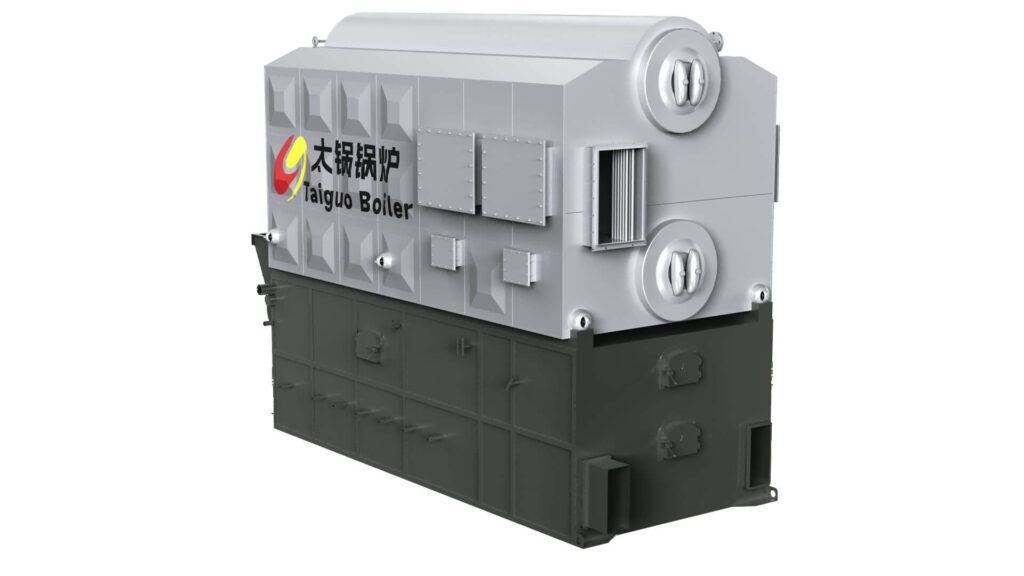
Indonesia’s palm oil industry generates significant amounts of biomass resources during daily processing, including Palm Kernel Shells (PKS), mesocarp fiber, and other agricultural residues. As palm oil mills continue to improve energy efficiency and optimize production costs, utilizing these biomass resources for steam generation has become an effective approach to building a more sustainable thermal energy system.
CN MIRACLE provides customized biomass boiler solutions for palm oil mills in Indonesia in cooperation with Henan Taiguo Boiler Manufacturing Co., Ltd., a professional industrial boiler manufacturer with extensive experience in biomass combustion technology and thermal energy systems.
Through this partnership, CN MIRACLE combines international project consulting, export coordination, and customer support with Taiguo Boiler’s manufacturing expertise, engineering capabilities, and biomass boiler production experience. Together, we provide complete solutions covering biomass fuel evaluation, boiler selection, system configuration, installation guidance, commissioning support, and long-term operation optimization.
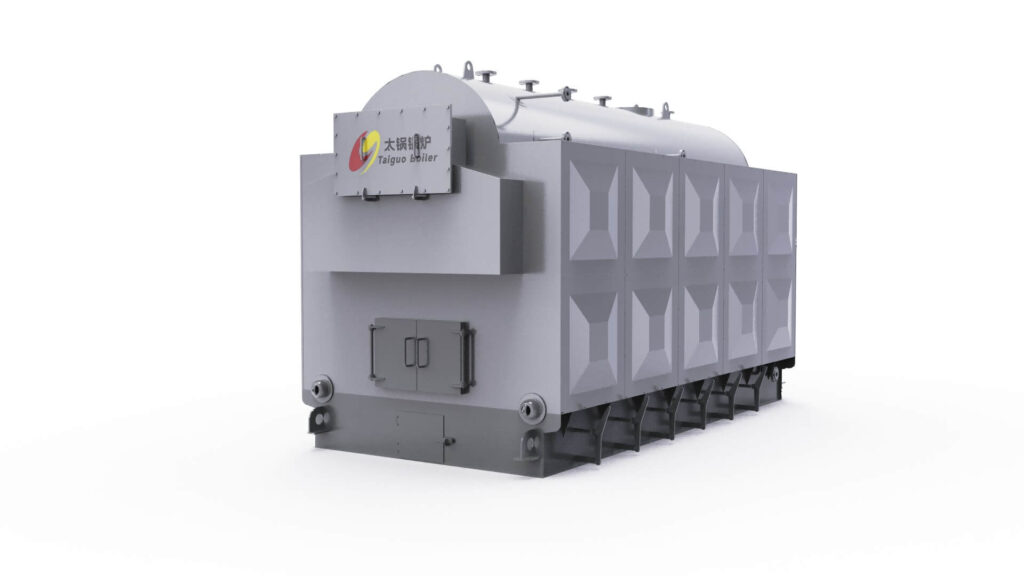
For Indonesian palm oil mills, biomass boiler systems offer a practical way to transform production waste into valuable steam energy. Taiguo’s SZL series biomass boilers are designed to utilize fuels such as palm kernel shells and fiber waste, providing reliable steam for key palm oil processing applications, including sterilization, threshing, and clarification processes.
This Biomass Boiler for Palm Oil Industry Indonesia guide explains how biomass boiler technology helps Indonesian palm oil factories reduce fossil fuel dependence, improve energy utilization, and achieve stable steam supply through optimized renewable biomass energy solutions.
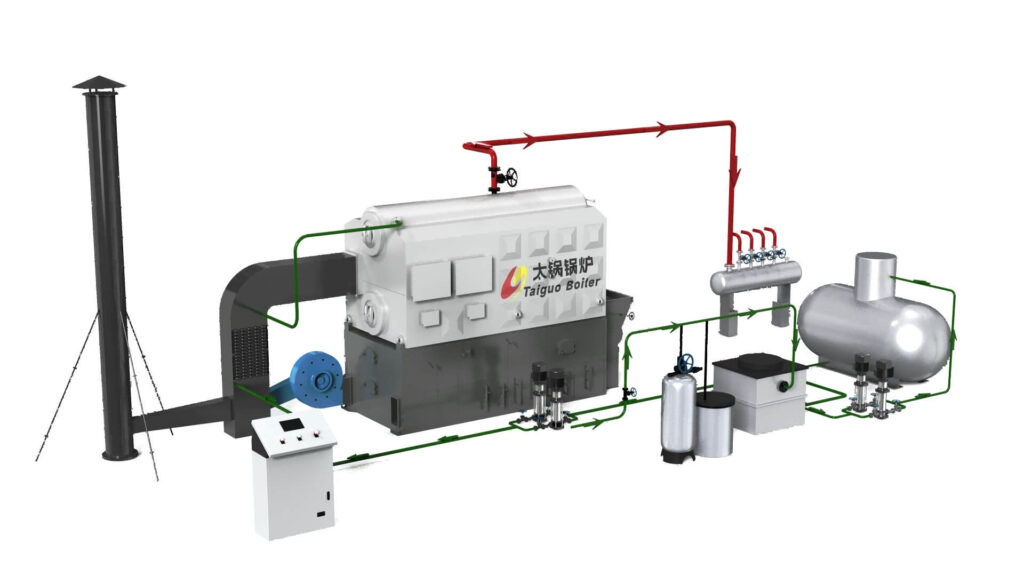
Specific Steam Applications & Biomass Curing in Palm Oil Mills
Modern palm oil milling requires stable and high-volume saturated steam to maximize oil extraction yields and eliminate batch processing delays systematically. Taiguo engineers heavy-duty [Biomass Steam Boilers] to power intensive milling operations across Sumatra and Kalimantan zones safely. We optimize combustion chamber dimensions to burn highly volatile agricultural wastes efficiently without facing dangerous slagging failures.
- Fresh Fruit Bunch (FFB) Sterilization: Pressurized saturated steam injects directly into horizontal sterilizer vessels to deactivate lipolytic enzymes rapidly. Maintaining constant thermal head pressures during this primary phase prevents free fatty acid (FFA) increases perfectly.
- Crude Palm Oil (CPO) Clarification & Dilution: High-temperature steam jackets heat raw oil mixtures to lower liquid viscosities and accelerate oil-water separations smoothly. This reliable thermal delivery secures premium crude oil purities to guarantee maximum factory extraction outputs predictably.
- Localized Biomass Waste Combustion: Our specialized furnace designs utilize extracted palm fibers and empty fruit bunches (EFB) as primary sustainable fuel sources. We configure robust multi-stage reciprocal grates to handle high-moisture palm kernel shells (PKS) with exceptional combustion efficiencies completely.
Optimized Heavy-Duty Boiler Types for Indonesian Palm Oil Giants
Different palm oil production capacities demand distinct solid-fuel structural configurations to sustain continuous manufacturing scaling and heavy energy drawdowns. Taiguo manufactures tailored high-pressure industrial units to match strict thermodynamic criteria across localized agricultural networks flawlessly:”
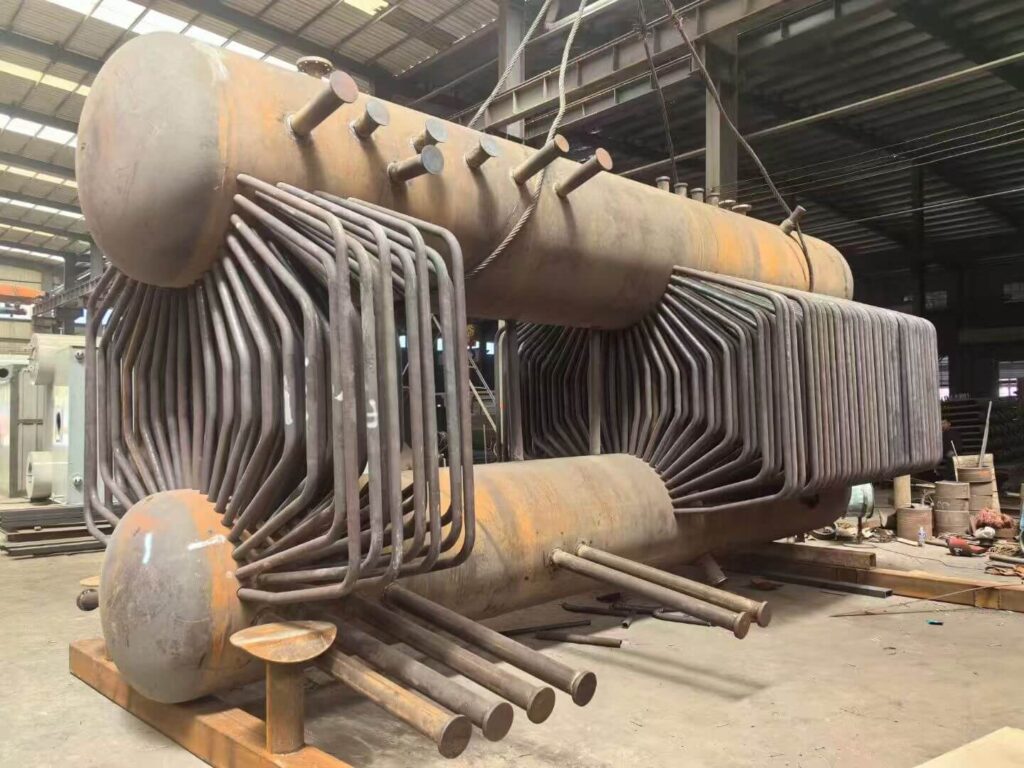
- SZL Series Biomass Water-Tube Boilers (10 t/h to 35 t/h): > Massive, multi-line multinational palm oil conglomerates require continuous, heavy-duty double-drum configurations to drive large extraction groups safely. Our specialized SZL series utilizes an advanced water-tube design to deliver rapid thermal acceleration and generate superior-grade dry saturated steam consistently under heavy loads. The tight membrane wall structure guarantees exceptional sealing integrity to suppress volatile heat radiation losses entirely.
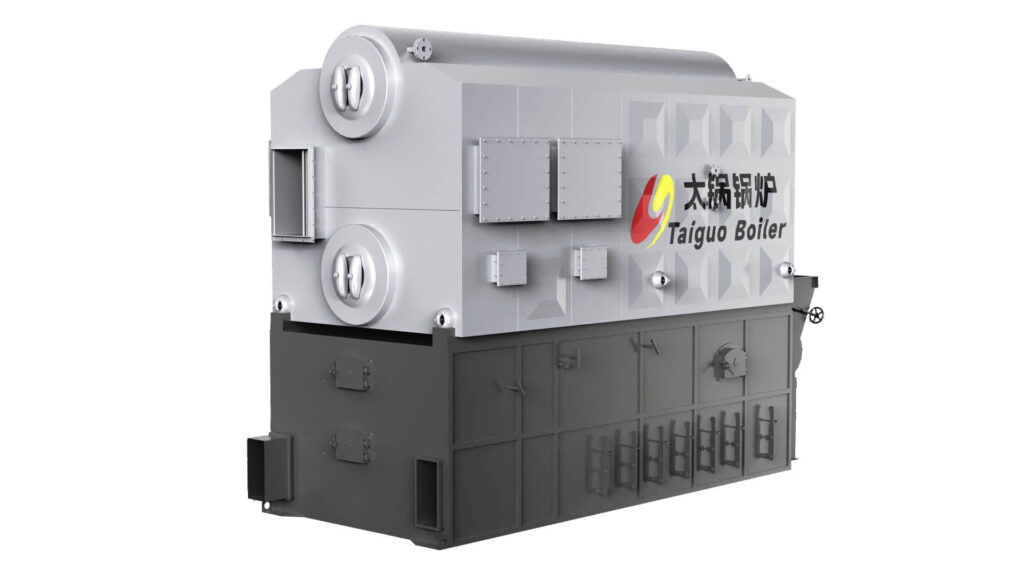
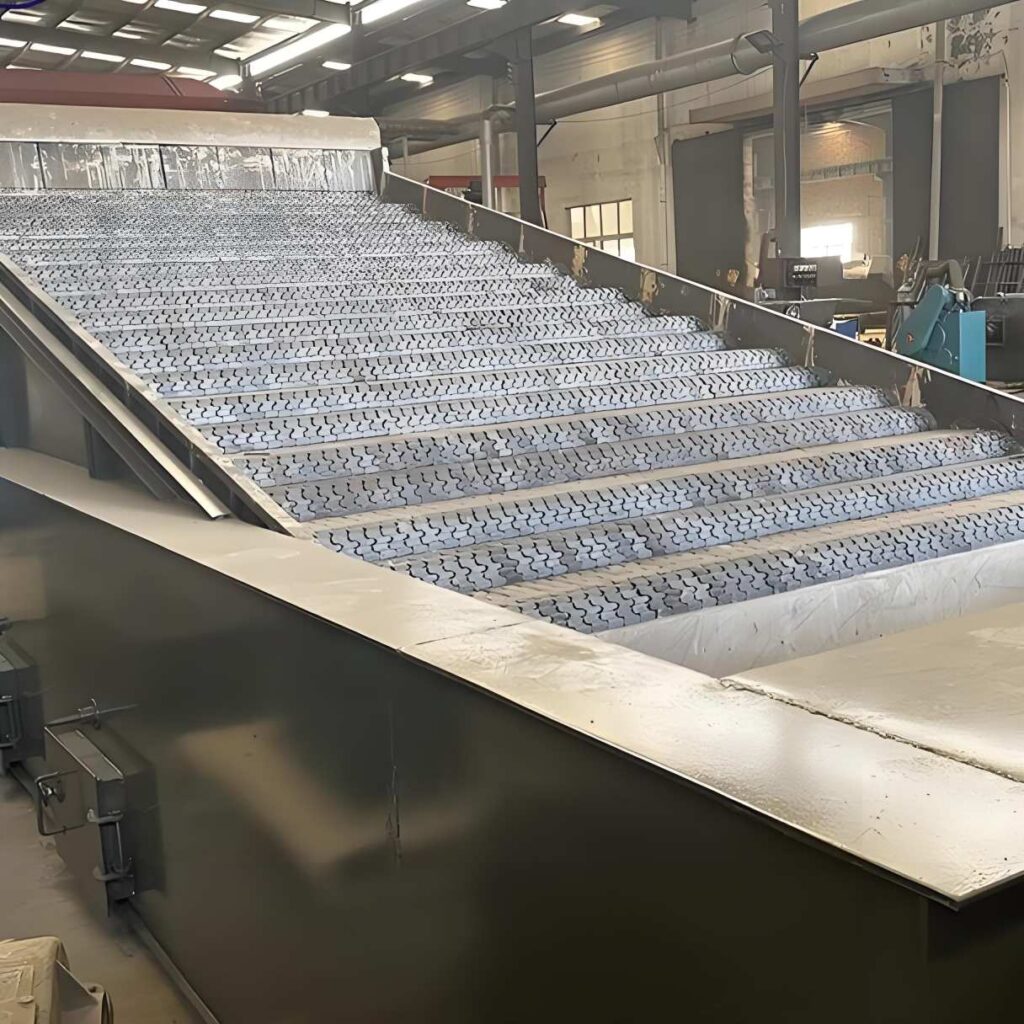
- DZL Series Automatic Chain Grate Boilers (4 t/h to 20 t/h): > This horizontal packaged fire-water tube structure fits independent commercial palm mills and localized refinery plants perfectly. The heavy-duty automatic chain grate system feeds blended palm waste fuels uniformly to maintain steady evaporation profiles predictably. We incorporate advanced soot blower systems to eliminate ash accumulation on heating surfaces and protect your long-term machinery uptimes.
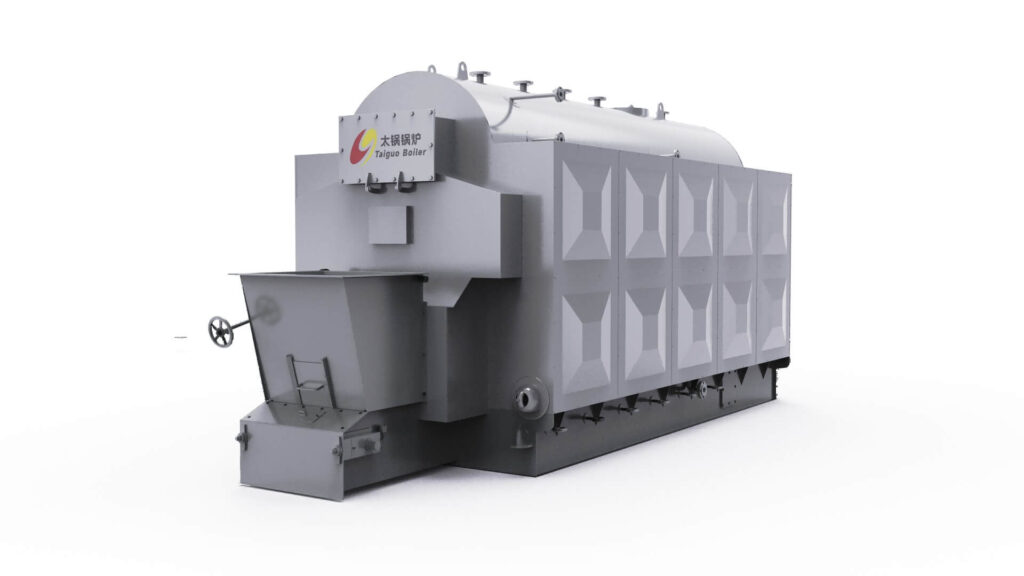
- DZH Series Hand-Fired Solid Fuel Boilers (1 t/h to 6 t/h): > Small-scale agro-industrial extraction workshops or startup factories require highly economical and simple thermal utility configurations. Our robust DZH series integrates a heavy-duty fixed grate design to burn irregular empty fruit bunches and bulky wood wastes manually. This cost-effective execution lowers initial equipment capital investments drastically while providing reliable process steam for localized sterilization vats.
Regional Fuel DNA: Mastering the Volatility of PKS & Fiber
In the Indonesian palm oil sector, fuel is a double-edged sword. While Palm Kernel Shells (PKS) and Mesocarp Fiber offer a “Zero-Cost” energy source, their chemical volatility can lead to catastrophic furnace failure or environmental penalties if the boiler’s “Combustion DNA” is not properly synchronized.
At Henan Taiguo Boiler, our 2026 “Java-Spec” series Biomass Boiler for Palm Oil Industry Indonesia has been engineered to handle the specific molecular behavior of Indonesian biomass.
A. PKS: The “Flash Reaction” Challenge of Biomass Boiler for Palm Oil Industry Indonesia
- The Character: PKS is a high-density fuel with a staggering Volatile Matter (VM) content of ~75% and a calorific value reaching 17,500 kJ/kg.
- The Physics of Failure: In a standard grate boiler, the volatiles are released almost instantly upon entering the furnace. This creates a “Flash Ignition” at the feeding gate.
- The Risk: This localized heat intensity can exceed 1,200 degree at the grate surface, leading to Grate Bar Melting and unstable steam pressure.
- The Taiguo Solution of Biomass Boiler for Palm Oil Industry Indonesia: Secondary Air Injection (SAI) & Cyclonic Combustion.
- We have re-engineered the air-to-fuel ratio. Our SZL series utilizes a 70:30 Split-Air Logic. While 70% of the air (Primary Air) supports the bed combustion, 30% (Secondary Air) is injected at high velocity through nozzles positioned in the upper furnace.
- The Result: This creates a Cyclonic Flame that burns the volatiles in suspension. This prevents the grate from overheating, increases the thermal efficiency to 88.2%, and ensures Zero Black Smoke, making your facility invisible to KLHK drone audits.
B. Mesocarp Fiber: The “Moisture & Bulk” Challenge of Biomass Boiler for Palm Oil Industry Indonesia
- The Character: Fiber is bulky and often arrives at the boiler with moisture levels exceeding 50%, especially during the monsoon season in Riau.
- The Physics of Failure: Wet fiber leads to “Flame Cold-Spots.” If the furnace is too small, the water vapor quenches the fire, leading to massive CO emissions and a loss of steam enthalpy.
- The Taiguo Solution of Biomass Boiler for Palm Oil Industry Indonesia: The Extended Refractory Front Arch.
- The Engineering: We have significantly elongated the Front Refractory Arch of our biomass boilers.
- The Logic: This arch acts as a “Thermal Battery.” It absorbs radiant heat from the primary combustion zone and reflects it back onto the incoming wet fiber. This creates a Pre-Drying Zone that evaporates the moisture before the fiber reaches the ignition point.
- The Result: Your mill maintains steady steam production even during the heaviest rains, ensuring your Sterilization line never slows down.
C. The “Silica & Slag” Mitigation Strategy of Biomass Boiler for Palm Oil Industry Indonesia
- The Character: Indonesian palm waste often contains high levels of silica (SiO2) and alkali metals (K2O, Na2O).
- The Physics of Failure: During combustion, these minerals melt and form “Clinkers” (Slag) on the boiler tubes and grate. Slag acts as a thermal insulator, requiring more fuel to reach the same temperature.
- The Taiguo Solution of Biomass Boiler for Palm Oil Industry Indonesia: Low-Velocity Flue Gas & High-Chrome Alloy Grates.
- We have expanded the furnace volume to reduce the Flue Gas Velocity. By slowing down the gas, we allow the abrasive ash particles to drop into the ash hopper rather than “Sandblasting” your tubes.
- Furthermore, our grate bars are cast from High-Chrome Alloy Steel, which is naturally resistant to slag adhesion, extending your maintenance intervals from weeks to months.
2026 Fuel-to-Asset Matching Matrix (Indonesia)
| Fuel DNA Component | Critical Challenge | Taiguo Engineering Response | Operational Gain |
| High Volatiles (PKS) | Grate Melting / Black Smoke | Secondary Air Injection (SAI) | 88%+ Efficiency / KLHK Compliance |
| High Moisture (Fiber) | Flame Out / Low Steam | Extended Refractory Front Arch | Stable Steam during Monsoon |
| Alkali / Silica Ash | Slagging / Tube Erosion | Low-Velocity Convection Pass | 20-Year Boiler Lifespan |
| Bulk Density | Feeding Jams | Variable Frequency Screw Feeders | Precise Load Control |
2. Engineering for 24/7 Mill Reliability: Defending Your Peak Harvest ROI of Biomass Boiler for Palm Oil Industry Indonesia
In an Indonesian palm oil mill, the boiler is the “Thermal Heart.” During the peak harvest months in Riau or East Kalimantan, these hearts must beat 24/7 without a single hour of unplanned downtime. Taiguo’s 2026 “Java-Spec” biomass series is engineered with industrial-grade redundancies to survive the most punishing operational cycles.
A. Double-Drum Thermal Inertia: Stability Amidst Sterilization Surges of Biomass Boiler for Palm Oil Industry Indonesia
The most volatile steam demand in a mill occurs during the Sterilization phase, where steam consumption can spike by 30-40% in seconds.
- The Physics of Failure: Standard single-drum boilers often suffer from “Priming” (water carryover) or sudden pressure drops during these surges, which can stall the entire production line.
- The Taiguo Advantage: Our SZL series utilizes a Double-Drum, Water-Tube design. This architecture provides a massive water and steam volume.
- The Result: The drums act as a “Thermal Battery,” absorbing the shock of sudden demand without losing pressure. This ensures consistent steam enthalpy for your threshers and digesters, maintaining an uninterrupted flow of Crude Palm Oil (CPO).
B. Anti-Slagging Grate & Ash Engineering: Combating “Clinker” Buildup of Biomass Boiler for Palm Oil Industry Indonesia
Indonesian palm waste is rich in potassium and silica, which can melt at furnace temperatures to form “Clinkers” (Slag).
- The Physics of Failure: Slag buildup on the grate blocks airflow, leading to incomplete combustion and eventually forcing a total shutdown for manual cleaning.
- The Taiguo Advantage: * High-Chrome Alloy Grate Bars: We utilize specialized metallurgy that resists slag adhesion.
- Independent Air-Chamber Logic: The air under the grate is divided into multiple independent zones. This allows the operator to precisely control the oxygen level at different stages of the fuel’s travel, “freezing” the ash before it can fuse into a clinker.
C. Seismic-Resistant Structural Integrity (Zone 4 Compliance) of Biomass Boiler for Palm Oil Industry Indonesia
Indonesia’s “Ring of Fire” location means your boiler must withstand tectonic activity. A Magnitude 6.0 earthquake can buckle the support pillars of a standard boiler.
- The Taiguo Advantage: Every 2026 installation in Indonesia includes Seismic Zone 4 Reinforced Saddles and cross-braced support structures.
- The Result: We provide the structural calculation reports required by your civil engineers. This ensures that even during a seismic event, the boiler remains upright and the high-pressure steam lines remain intact, protecting both your personnel and your asset.
D. 5G IoT Remote Diagnostics: The “Digital Guard” in Your Mill of Biomass Boiler for Palm Oil Industry Indonesia
For mills located in remote areas of Sumatra or Kalimantan, expert technical support can be days away.
- The Taiguo Advantage: We integrate a 5G-enabled Industrial IoT Gateway.
- The Logic: This system transmits real-time data—exhaust temperature, oxygen levels, water conductivity—directly to our 24/7 technical center in China and your manager’s smartphone in Jakarta.
- The Result: We often detect a “Scale Build-up” or “Grate Misalignment” via data anomalies before your onsite team even notices a problem, allowing for scheduled preventive maintenance instead of an emergency shutdown.
Reliability Benchmarks: Taiguo “Java-Spec” vs. Standard Market Units
| Feature | Standard Unit | Taiguo “Java-Spec” | Impact on Mill ROI |
| Annual Uptime | 82% – 85% | 96% – 98.5% | +45 Days of Production |
| Steam Stability | ±1.5 Bar Fluctuation | ±0.2 Bar (Constant) | Faster Sterilization Cycles |
| Grate Maintenance | Every 45 Days | Every 180+ Days | Lower Labor & Parts OPEX |
| Seismic Protection | Basic | Zone 4 Reinforced | Disaster Asset Protection |
3. Fiscal Engineering: The 0% Duty Advantage & Landed Cost Optimization of Biomass Boiler for Palm Oil Industry Indonesia
In the competitive landscape of the 2026 Indonesian Palm Oil industry, the initial quotation is merely the surface of the investment. At Taiguo, we apply Fiscal Engineering to ensure that your capital expenditure (CAPEX) is lean, compliant, and optimized for maximum ROI from the moment the vessel leaves the port.
A. RCEP & Form E Mastery: The 10% Capital Recovery of Biomass Boiler for Palm Oil Industry Indonesia
Indonesia’s membership in the Regional Comprehensive Economic Partnership (RCEP) is a powerful financial lever that many mill owners underutilize.
- The Fiscal Mechanics: Under HS Code 8402 (Steam Boilers), high-efficiency units from China are eligible for 0% Import Duty, provided the documentation is flawless.
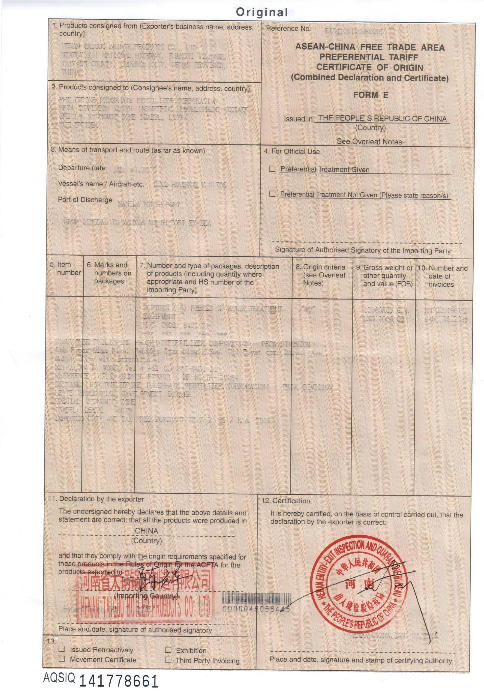
- The Taiguo Advantage: We provide a pre-synchronized Form E (Certificate of Origin) that is pre-verified against the Indonesian Customs’ e-CP (Electronic Certificate of Origin) system.
- The Impact: On a 20-ton SZL biomass project valued at $250,000, our fiscal precision saves you $25,000 (approx. Rp 400 Million) in immediate customs taxes. This “Hidden Saving” effectively covers your entire on-site installation and commissioning costs.
B. Logistics Engineering: Eliminating the “Remote Site” Premium of Biomass Boiler for Palm Oil Industry Indonesia
Shipping a 30-ton boiler drum to a remote mill in West Kalimantan or North Sumatra can be a logistical nightmare involving “Out-of-Gauge” (OOG) surcharges and massive demurrage fees.
- The Fiscal Mechanics: Standard boilers often require expensive Flat Rack containers or specialized breakbulk vessels, which are prone to damage and high insurance premiums.
- The Taiguo Advantage: Modular “LCT-Ready” Design.
- We engineer our large SZL biomass units in modular sections that fit within Standard 40HQ Containers where possible, or on optimized cradles that simplify LCT (Landing Craft Tank) barge transshipment.
- The Impact: By reducing the need for specialized heavy-lift vessels and streamlining the “Last Mile” barge logistics, we reduce your total landed cost by 15-20%, ensuring that your budget stays intact despite the geographical challenges of the archipelago.
C. “Scale Tax” Mitigation: The 10-Year Fuel Arbitrage of Biomass Boiler for Palm Oil Industry Indonesia
Fiscal Engineering also extends into the operational phase (OPEX) by protecting your asset against “Thermal Leakage.”
- The Fiscal Mechanics: In Sumatra, plantation water is often acidic and high in organic silt. This causes rapid tube scaling. A 1.5mm scale layer creates a 12% “Fuel Tax”—money literally disappearing up the chimney in wasted PKS or Fiber.
- The Taiguo Advantage: Every 2026 Palm Oil spec boiler includes Integrated Triple-Stage Reverse Osmosis (RO) and automatic TDS blowdown controls as a baseline.
- The Impact: By maintaining a “Zero-Scale” environment, we prevent an annual loss of approximately Rp 1.8 Billion in wasted fuel energy. Over a 10-year lifespan, this fiscal protection saves your mill more than the original cost of the Biomass Boiler for Palm Oil Industry Indonesia itself.
Fiscal Impact Analysis: Taiguo vs. Conventional Importer
| Financial Driver | Conventional Importer | Taiguo Fiscal Engineering | 5-Year Financial Gain (Rp) |
| Import Duty | 10% (MFN Tariff) | 0% (RCEP / Form E) | Rp 400,000,000+ |
| Logistics Surcharge | High (OOG/Flat Rack) | Modular / Container Fit | Rp 150,000,000+ |
| Annual Fuel Efficiency | 8% Loss (Scaling) | 104% (RO Protected) | Rp 7,500,000,000+ |
| Tax Depreciation | Standard | High-Asset Value Retention | Lower Refurbishment Cost |
In Indonesia’s palm oil sector, fuel independence is the key to maintaining a competitive edge. As a global industrial boiler manufacturer , we provide SZL series double-drum Biomass Boiler for Palm Oil Industry Indonesia specifically optimized to burn Palm Kernel Shells (PKS) and Empty Fruit Bunches (EFB). By utilizing factory waste as fuel, our systems provide a near-zero fuel cost operation for oil refineries in Sumatra and Kalimantan. To understand the capital investment and long-term energy savings, please consult our 2026 Indonesia Biomass Boiler Price Guide, which details the technical ROI for large-scale paper processing projects.
Explore Related Solutions
Explore our related thermal energy solutions to optimize your factory performance:
- Discover Complete Boiler Solutions in Indonesia
- Explore Our Biomass Boiler Products
- Read Our Biomass Engineering Guide
- View Our Global Industrial Boiler Projects
Infrastructure Selection Checklist for Palm Oil Boiler Procurement
Palm oil enterprise managers must evaluate specific localized infrastructure constraints thoroughly before finalizing an industrial boiler purchase contract. Use our verified factory procurement checklist to prepare your milling site for a seamless deployment safely:
- Audit Biomass Fuel Balances: Calculate your daily internal palm fiber and kernel shell outputs to balance your boiler fuel supply lines.
- Verify Local Feed-Water Hardnesses: Evaluate your river water filtration setups to prevent hard scale formations inside high-temperature heating tubes.
- Assess Ash Handling Infrastructure: Plan automated ash disposal zones to managing heavy residues from continuous agricultural waste combustion cycles.
- Measure Destination Port Clearances: Confirm local road weight limitations and bridge clearances from Indonesian arrival harbors to your remote mill site.
- Organize Disnaker Application Papers: Prepare your raw material trace certificates early to secure local government high-pressure operational permissions rapidly.
FAQ: Fiscal & Trade Compliance in Indonesia
Does Taiguo manage the “Jalur Hijau” (Green Lane) customs process?
While the final clearance is handled by your local agent, we provide the “Customs-Ready” documentation pack (Form E, PL, INV, Bill of Lading) with zero-error synchronization. This significantly increases the probability of your cargo hitting the “Green Lane” at Tanjung Priok or Belawan, reducing port storage fees.
Can we include the water treatment and 5G IoT system under the same 0% duty HS code?
Yes. By engineering these as “Integrated Boiler Auxiliaries”, we ensure the entire system benefits from the RCEP duty-free status, maximizing your total fiscal saving.
How do we handle high-moisture (50%+) Mesocarp Fiber during the monsoon season?
In North Sumatra or West Kalimantan, wet fiber is a seasonal reality. Standard boilers often suffer from “Flame Quenching” or massive pressure drops.
The Taiguo Solution: Our 2026 Biomass Boiler for Palm Oil Industry Indonesia units feature an Extended Refractory Front Arch. This acts as a “Radiant Battery,” pre-drying the wet fiber before it reaches the primary ignition zone. Combined with our Variable Frequency Feeders, you can maintain stable 24/7 steam pressure even when the fuel is saturated by tropical rains.
Does the SZL series Biomass Boiler for Palm Oil Industry Indonesia meet the 2026 KLHK (Ministry of Environment) emission standards?
Yes. The Indonesian government has intensified its “Blue Sky” audit. Our Biomass Boiler for Palm Oil Industry Indonesia utilize Secondary Air Injection (SAI) technology to ensure complete combustion of volatiles.
The Result: Particulate matter stays below 150mg/Nm³ without requiring expensive wet scrubbers. We provide the technical certificates required to pass your ISPO (Indonesian Sustainable Palm Oil) and KLHK environmental audits on the first attempt.
What is the specific protocol of Biomass Boiler for Palm Oil Industry Indonesia for passing the DEPNAKER (K3) inspection?
The Izin Operasi (Permit to Operate) from the Department of Manpower is critical.
The Taiguo Protocol: We provide a “Submission-Ready” dossier for every mill project. This includes AS-BUILT drawings, X-Ray welding reports, and NDT certificates pre-verified by international inspection agencies. We synchronize with local Indonesian accredited inspectors to ensure your “Thermal Heart” is legally commissioned within 10-14 days of installation.
How do we prevent scale build-up from acidic plantation water?
Plantation water is often low-pH and high in organic silt, which creates a “Scaling Tax” on your fuel bill. A 1mm scale layer increases PKS consumption by 10%.
The Taiguo Shield: We include Integrated Triple-Stage Reverse Osmosis (RO) as standard. By maintaining “Zero-Scale” operation, we protect your Biomass Boiler for Palm Oil Industry Indonesia tubes from localized overheating and save your mill approximately Rp 1.5 Billion to Rp 2.2 Billion per year in avoided fuel waste.
Is the 0% Import Duty under RCEP guaranteed for the whole of Biomass Boiler for Palm Oil Industry Indonesia system?
Yes, if the documentation is handled with fiscal precision. Under HS Code 8402 Biomass Boiler for Palm Oil Industry Indonesia, and utilizing our verified Form E, we ensure the boiler vessel and its integrated auxiliaries (pumps, controls, RO systems) enter Indonesia with Zero (0%) Import Duty. This “Fiscal Engineering” saves your mill up to Rp 550 Million in immediate customs overhead.
CTA: Secure Your Mill’s Energy Future
The 2026 Indonesian market punishes thermal waste. Don’t let your margins vanish through an inefficient stack.
Calculate your savings vs. legacy systems.
Connect with our Sumatra & Kalimantan Engineering Desk.