Steam Boiler for Food Processing Industry in Uzbekistan: Safe, Stable & Cost-Efficient Steam Solutions
Contents Hide 1 2026 Context: Food Safety and WTO Alignment 1.1 The New Unified Food Safety Law 1.2 Industrial Growth and the Manufacturing Surge 2 Introduction: Why Steam Is the Backbone of Food Processing in Uzbekistan 3 Where Steam Is Used in Food Processing Plants (Real Applications-Steam boiler for food processing) 3.1 1. Sterilization & […]
Get Instant Quote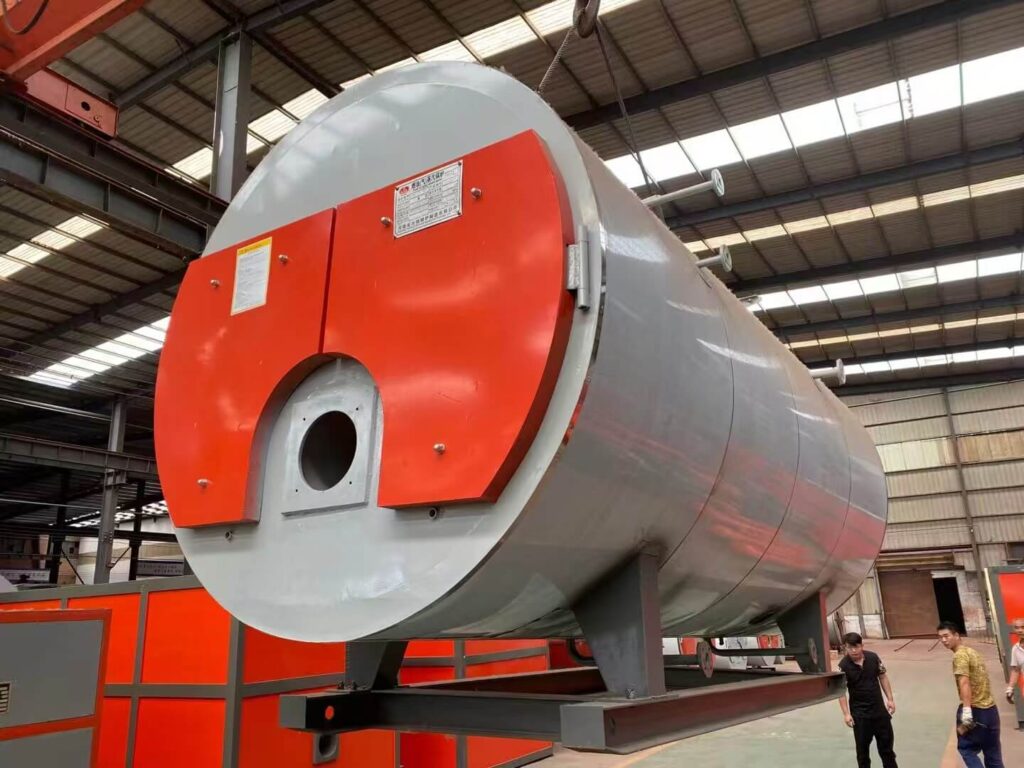
Technical Specifications
2026 Context: Food Safety and WTO Alignment
The New Unified Food Safety Law
In February 2026, the Uzbek Senate approved a landmark Law on Food Safety designed to align national production with international WTO standards. For your facility, this means that steam—which often comes into direct contact with food during blanching or sterilization—must be Validated as clean and free from chemical contaminants. Our Superior Steam boiler for food processing uzbekistan options provide the Essential purity required to meet these new Authoritative sanitary norms.
Industrial Growth and the Manufacturing Surge
As of early 2026, over 12,100 food production enterprises are operating in Uzbekistan, representing over 20% of the nation’s industrial force. With the manufacturing sector now accounting for 83% of total industrial output, the demand for Stable steam is at an all-time high. A Reliable Steam boiler for food processing is Critical for maintaining the 24/7 production cycles needed to meet the government’s target of adding 3.4 million tons of processing capacity.
Introduction: Why Steam Is the Backbone of Food Processing in Uzbekistan
The food processing industry in Uzbekistan is expanding rapidly, driven by:
- Agricultural production
- Domestic consumption growth
- Export demand to Central Asia, Russia, and the Middle East
Across dairy, beverage, flour, meat, oil, and canned food production,
steam is a critical utility for heating, sterilization, cooking, and cleaning.
Steam boiler for food processing is not only an energy system —
it is a food safety and production reliability system.
Where Steam Is Used in Food Processing Plants (Real Applications-Steam boiler for food processing)
1. Sterilization & Pasteurization
- Milk pasteurization
- Beverage sterilization
- Canning and packaging disinfection
Key requirement:
✔ Clean steam
✔ Stable temperature
✔ Zero contamination risk
2. Cooking, Boiling & Blanching
- Meat processing
- Ready meals
- Vegetables and grains
Steam must be:
- Continuous
- Evenly distributed
- Responsive to load changes
3. Drying & Dehydration
- Flour mills
- Fruit & vegetable drying
- Snack processing
Steam stability directly affects:
- Product moisture level
- Shelf life
- Final quality
4. CIP Cleaning & Sanitation
- Clean-in-place systems
- Pipe and tank disinfection
Unstable steam = hygiene risk.
Key Challenges for Food Factories in Uzbekistan
Strict Food Safety Requirements
Food factories require:
- Clean combustion
- No ash or dust contamination
- Stable pressure and temperature
This eliminates many low-quality boiler solutions.
High Energy Cost Sensitivity
Food processing margins are often tight:
- Fuel cost directly impacts profit
- Long operating hours amplify energy expenses
Continuous & Reliable Operation of Steam boiler for food processing
Many food plants operate:
- 16–24 hours/day
- With strict delivery schedules
Steam interruption can cause:
❌ Product waste
❌ Production loss
❌ Hygiene compliance risks
Whether it’s dairy pasteurization, fruit canning, or beverage bottling, the food industry in Uzbekistan demands dry and high-purity steam. Impure steam can contaminate your products and lead to costly production recalls. Taiguo’s WNS series is engineered with large steam-water separation interfaces to ensure 99.9% steam dryness.
Solving Food Factory Pain Points in Central Asia
- Strict Hygiene Standards: We offer Stainless Steel (SUS304) deaerators and steam separators. This prevents pipe corrosion and ensures no heavy metals enter your food processing line.
- Fluctuating Production Loads: Canning and bottling lines have sudden “peak steam” needs. Our boilers feature extra-large water volumes, acting as a thermal buffer to maintain stable pressure during start-stop cycles.
- Compliance & Audits: Fully EAC certified, helping you pass international food safety audits (like ISO/HACCP) with ease.
The ROI of Steam boiler for food processing Clean Steam
In the food industry, energy usually accounts for 20% of total costs.
- Fuel Efficiency: Our integrated finned-tube economizers pre-heat feed water using waste heat. This reduces gas consumption by 10%.
- Budget Guide: A 2T – 4T food-grade steam system for the Uzbekistan market ranges from $9,000 to $32,000 (FOB), depending on the level of automation and stainless steel components.
- Payback: Most Tashkent beverage plants see a full ROI in 14-16 months through fuel and maintenance savings.
Technical Synergy
- Advanced Water Softening: To prevent scale from entering your sensitive heat exchangers, we bundle Dual-Tank Automatic Softeners.
- IoT Remote Monitoring: Monitor your boiler’s pressure and water level from your smartphone in Tashkent. If a sensor drifts, you get an instant alert to prevent batch spoilage.
- Pneumatic Reliability: We include a Screw Air Compressor to ensure your food-grade control valves operate with 100% precision..
Best Steam Boiler Types for Food Processing Industry
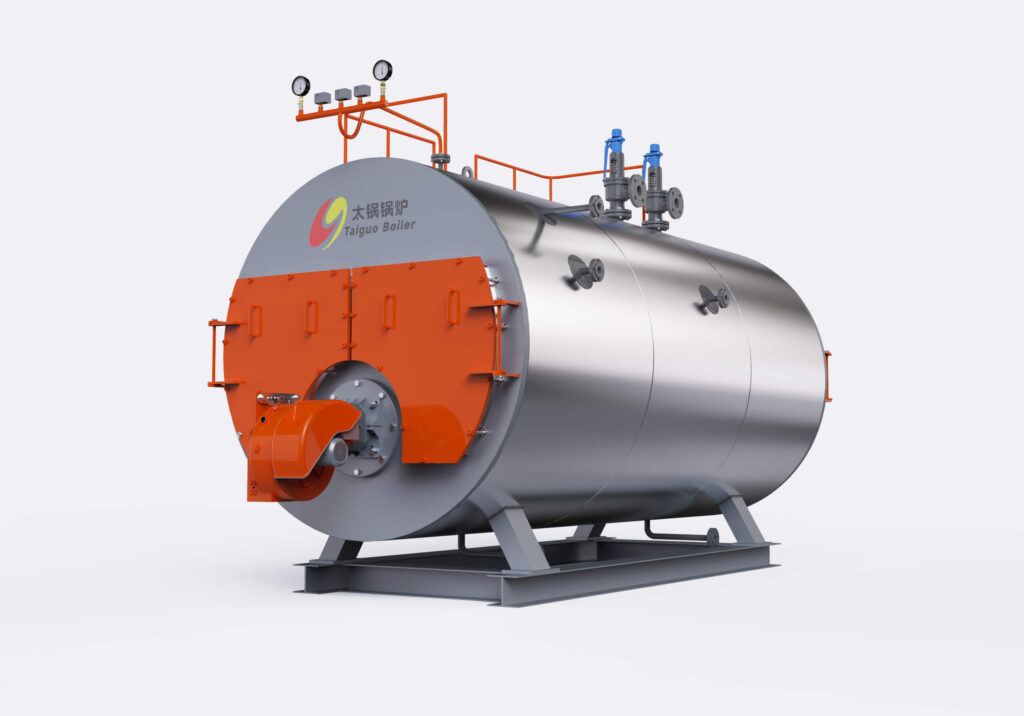
Gas Steam Boiler (Most Common Choice)-Steam boiler for food processing
Best for:
- Dairy
- Beverage
- Meat processing
- Urban food factories
Why food factories prefer gas:
- Clean combustion
- No ash handling
- Fully automatic
- Easy hygiene compliance
Typical capacity:
1–6 TPH
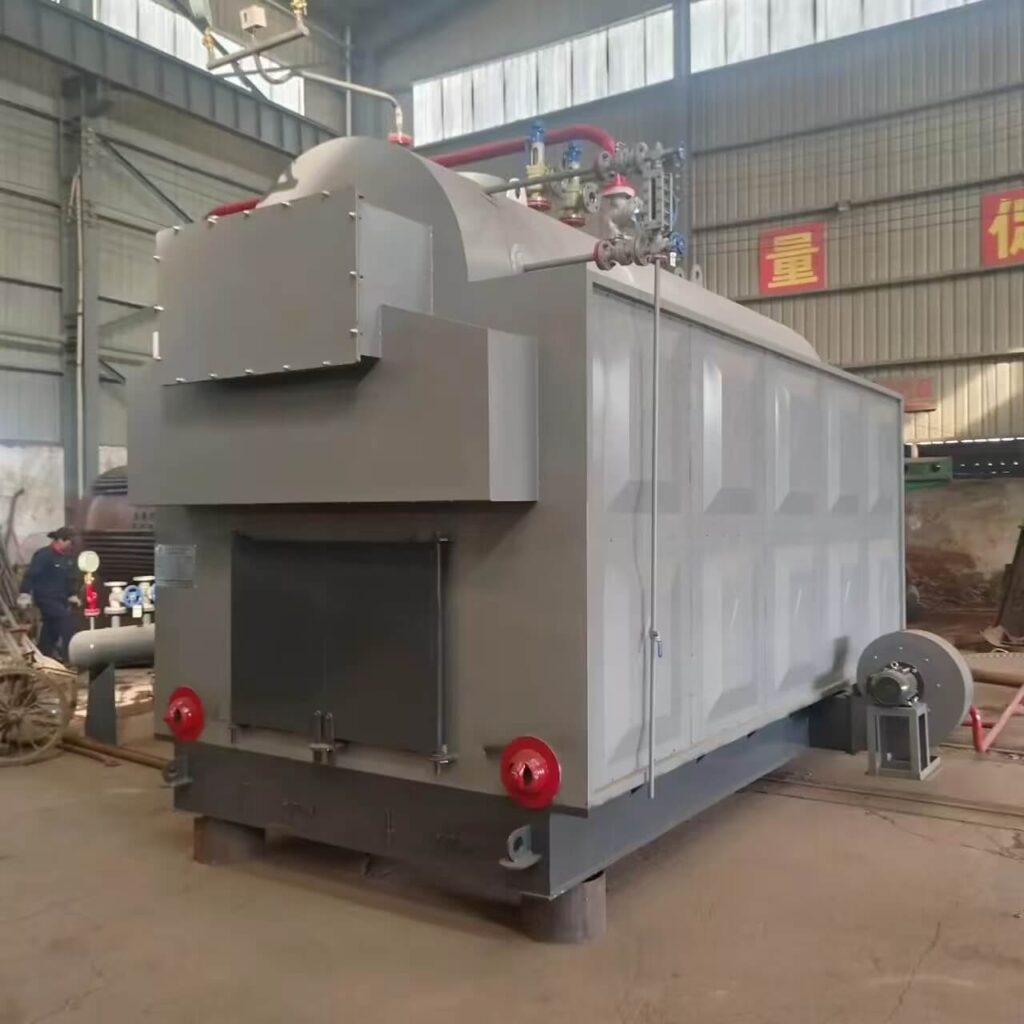
Biomass Steam Boiler (Selective Use)-Steam boiler for food processing
Suitable when:
- Gas supply is unstable
- Factory is in agricultural area
- Biomass fuel is clean and well-managed
Fuel types:
- Wood pellets
- Clean rice husk
⚠️ Not recommended for factories with strict hygiene zones unless well isolated.
Gas + Biomass Hybrid System (For Large Food Plants)-Steam boiler for food processing
Used when:
- Large steam demand
- Cost pressure is high
Strategy:
- Biomass for base load (cost saving)
- Gas for food-grade processes & peak load
Recommended Boiler Capacity for Food Processing Plants
| Food Industry Type | Typical Steam Demand | Recommended Boiler |
|---|---|---|
| Small Dairy / Bakery | 1–2 TPH | Gas Steam Boiler |
| Beverage Factory | 2–4 TPH | Gas Steam Boiler |
| Flour Mill | 4–6 TPH | Gas or Hybrid |
| Large Food Plant | 6–10 TPH | Hybrid System |
What Makes a Steam boiler for food processing “Food-Grade”?
When selecting a boiler for food processing, pay attention to:
Clean Steam Design
- Indirect heating
- No contact between combustion gas and product
Stable Pressure Control
- Essential for pasteurization accuracy
- Prevents overcooking or underheating
Automation & Safety
- PLC control
- Automatic pressure protection
- Flame failure protection
Easy Cleaning & Maintenance
- Hygienic layout
- Minimal dust and ash
Why Uzbekistan Food Factories Choose Chinese Steam Boilers
Chinese Steam boiler for food processing are widely used because they offer:
- Mature food-industry applications
- Competitive investment cost
- Customization for gas pressure & standards
- Reliable export experience to Central Asia
With correct configuration, they fully meet food processing requirements.
Typical Upgrade Scenario: Food Factory in Uzbekistan
A medium beverage factory replaced an old diesel boiler with:
- 4 TPH gas steam boiler
Results:
- Fuel cost reduced by ~30%
- Steam stability improved
- Easier food safety compliance
- ROI within 18–24 months
A food factory in Tashkent upgraded from an old diesel system to a 6 TPH gas fired steam boiler.
Results after installation:
- fuel cost reduced by 28–35%
- faster sterilization cycles
- stable pressure for CIP
- reduced maintenance downtime
- ROI within 18 months
How to Reduce Steam Cost in Food Factories
Food factories are highly sensitive to fuel cost because many lines run 16–24 hours per day.
Recommend adding this buyer-focused section:
1) Economizer Heat Recovery of Steam boiler for food processing
Recover exhaust heat to reduce gas consumption.
2) Condensate Water Recovery of Steam boiler for food processing
Return hot condensate from:
- pasteurizers
- CIP systems
- heating kettles
This can reduce fuel use by 10–20%.
3) Modular Capacity Design
Instead of one oversized boiler, use:
2 × 2 ton modular gas boilers
This improves:
- part-load efficiency
- backup reliability
- maintenance flexibility
Conclusion: Choosing the Right Steam Boiler Protects Food Quality & Profit
For food processing factories in Uzbekistan, the steam boiler must deliver:
✔ Clean steam
✔ Stable operation
✔ Low operating cost
✔ High food safety compliance
In most cases, gas steam boilers remain the best solution,
while hybrid systems provide long-term cost optimization for large plants.
Why Choose Taiguo Boiler for Uzbekistan Food Factories
- CE / ISO certified
- Class A manufacturing license
- gas pressure customization
- EAC / Central Asia export experience
- remote PLC support
- local installation guidance
- spare parts fast delivery
- 24/7 after-sales
Adapting to Rising Natural Gas Imports
In early 2026, Uzbekistan reported a nearly seven-fold surge in natural gas imports to bridge the domestic supply gap. This makes Cost-Efficient steam technology more than a preference—it is a Critical financial strategy. By utilizing our Superior boilers with integrated waste heat recovery, food processors can mitigate the impact of fluctuating import-driven gas prices, ensuring a Validated long-term ROI.
The Launch of the Carbon Trading Mechanism
Effective January 1, 2026, Uzbekistan launched its first Carbon Emissions and Trading Mechanism. High-efficiency steam boilers are now eligible for Essential carbon units that can be traded or used to offset the facility’s carbon footprint. Investing in a Superior low-emission boiler (Low-NOx < 30mg/m³) not only ensures environmental compliance but also provides a Validated financial asset in the new green economy.
FAQ: Industrial Steam in the Food Sector
Does the new 2026 law require food-grade steam for all processing?
A: If the steam has direct contact with food (e.g., steam peeling or injection), it must be Validated as “Clean Steam” under the new Authoritative SanPiN norms. Our Superior stainless steel generators are designed specifically for this Essential hygiene requirement.
How do the new labor laws affect boiler operations in 2026?
Does the new 2026 law require food-grade steam for all processing?
The 2026 Labor Agreement mandates an AI-based national safety program for rapid tracking of industrial conditions. Our Easy-to-Operate boilers feature smart sensors that integrate directly with these Authoritative safety networks, reducing your Critical compliance burden.
Can we use electric boilers to avoid gas price volatility?
While gas remains a primary fuel, 2026 saw a push for Superior electrification. We offer Validated high-capacity electric steam boilers that qualify for Essential “Green Project” tax incentives, providing a Reliable alternative to fossil-fuel-dependent systems.
Which boiler fuel is best for food factories?
Natural gas is usually the best choice because it provides clean combustion and stable automatic control.
What capacity is suitable for a dairy plant?
Small dairy plants usually use 1–2 ton, while medium UHT and milk powder lines often require 4–6 ton.
Can the boiler support CIP and production at the same time?
Yes. We recommend sizing the boiler based on peak production + CIP overlap demand, with 15–20% margin.
👉 Call to Action
Get a Steam Boiler Solution for Your Food Factory
Looking for a safe and cost-efficient steam boiler for food processing in Uzbekistan?
We provide:
- free steam load calculation
- fuel cost comparison
- gas vs biomass ROI analysis
- full quotation within 24 hours
- export documents for Uzbekistan customs
- installation support
Send your production line capacity now and get the right boiler model recommendation.
do you like gas fired or biomass fired steam boiler please ?