
Hybrid Boiler Cost & ROI in Uzbekistan: Payback & TCO Guide
Choosing a boiler system for an industrial plant is never just a mechanical purchase. For factory owners in Uzbekistan, financial viability drives the ultimate engineering choice. Plant directors frequently ask three fundamental questions: A gas-biomass hybrid boiler system merges the economic advantages of two distinct fuel streams. A solid-fuel biomass boiler supplies low-cost, continuous base-load […]
Get Instant Quote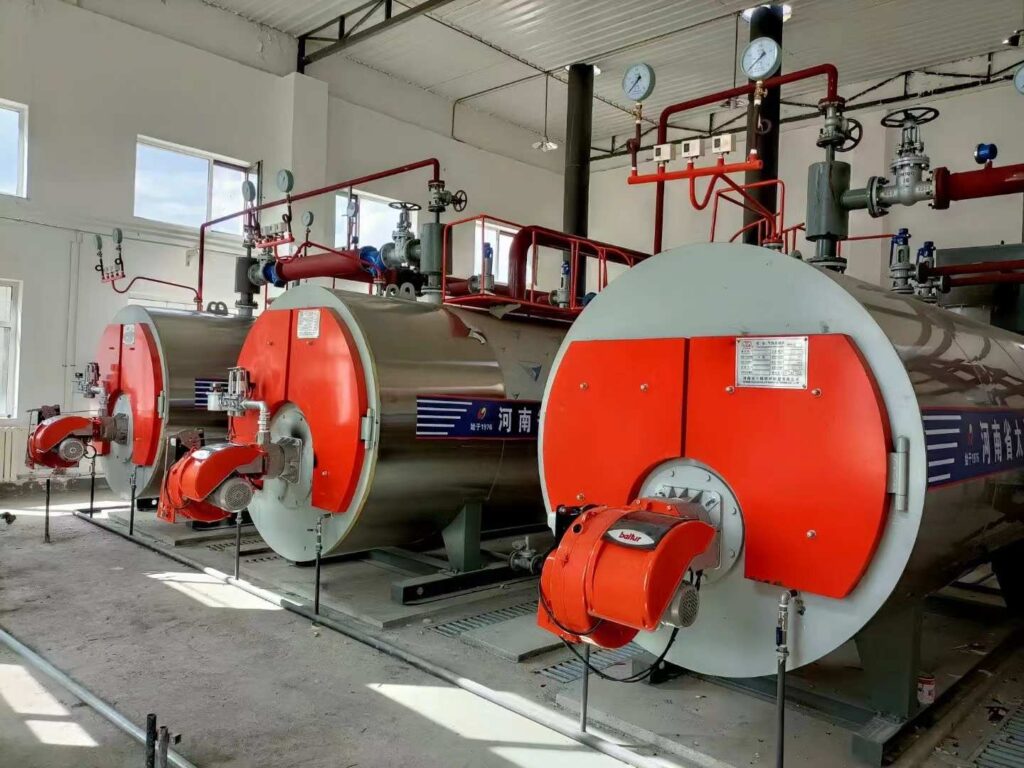
Technical Specifications
Choosing a boiler system for an industrial plant is never just a mechanical purchase. For factory owners in Uzbekistan, financial viability drives the ultimate engineering choice.
Plant directors frequently ask three fundamental questions:
- How much capital expenditure (CAPEX) does a hybrid steam system require?
- What operational expenditure (OPEX) savings can the plant realistically achieve each year?
- How many operating months will it take to recover the additional investment?
A gas-biomass hybrid boiler system merges the economic advantages of two distinct fuel streams. A solid-fuel biomass boiler supplies low-cost, continuous base-load steam. Simultaneously, a fast-firing natural gas boiler handles peak load swings, cold startups, and emergency backup duties.
However, hybrid configurations demand higher upfront capital than single-fuel boiler rooms. Consequently, plant managers must evaluate five-year Total Cost of Ownership (TCO) rather than surface machinery price tags.
This Hybrid Boiler Cost Uzbekistan technical guide outlines the financial models, cost variables, and payback mechanics governing hybrid boiler investments across industrial regions in Uzbekistan.
1. What Does a Hybrid Boiler Cost in Uzbekistan?
There is no universal off-the-shelf price for an industrial hybrid system. Project costs vary significantly because engineers design each facility around custom capacity ratios, site footprints, and local fuel parameters.
A gas-biomass hybrid setup integrates two independent thermal sources into a synchronized distribution network. Therefore, plant developers must evaluate complete plant CAPEX rather than the isolated cost of two boiler vessels.
Typical Scope of a Complete Hybrid System
Hybrid Biomass & Gas Boiler System Cost Structure
Comprehensive breakdown of core thermal assets, environmental systems, and plant automation budget.
| Equipment System | Primary Engineering Function | Cost Impact on Total CAPEX |
|---|---|---|
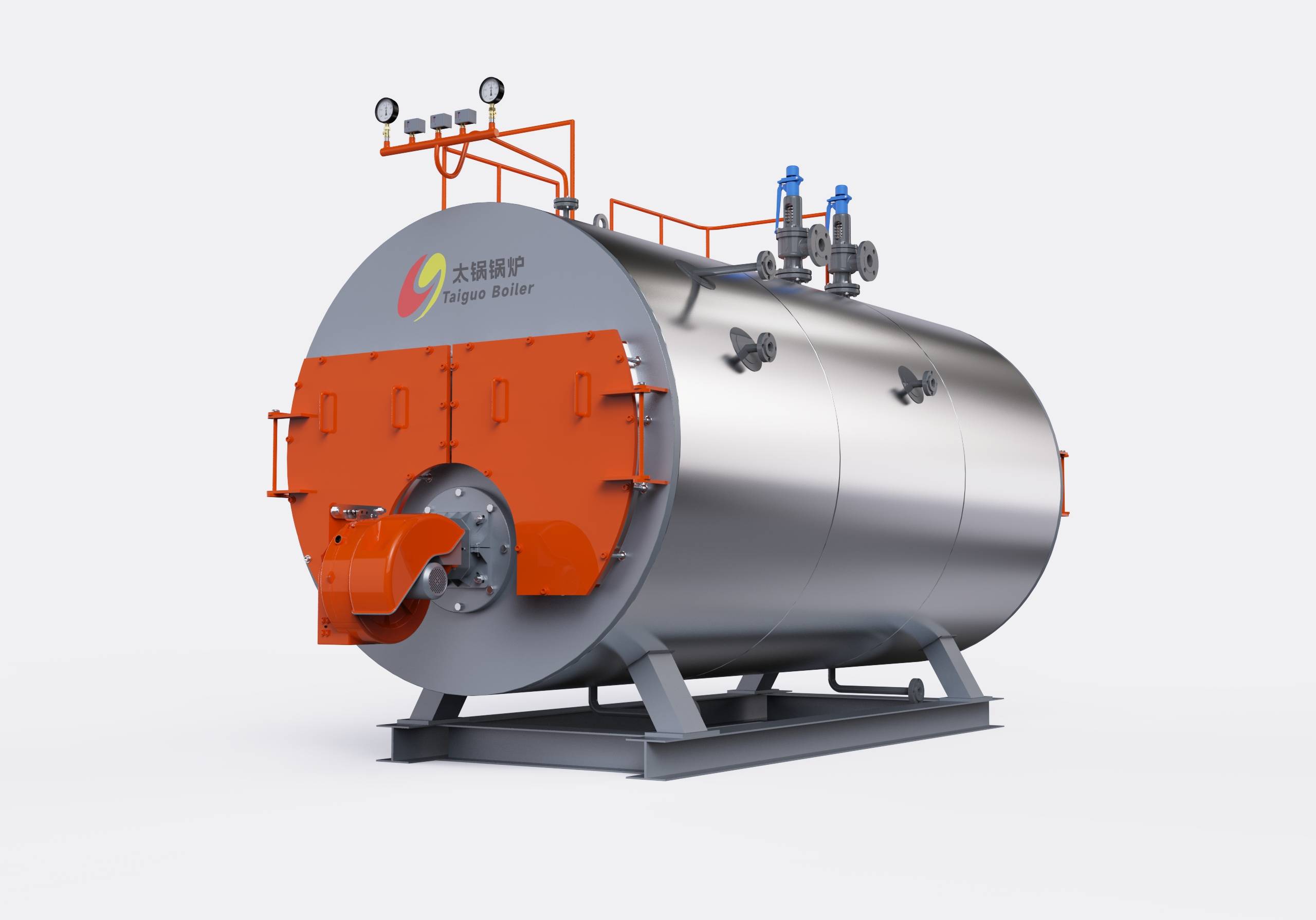
| Gas-Fired Steam Boiler ↗ WNS Series Packaged Unit | Rapid cold startup, peak load tracking, and automated backup | Moderate (Packaged skid unit) |
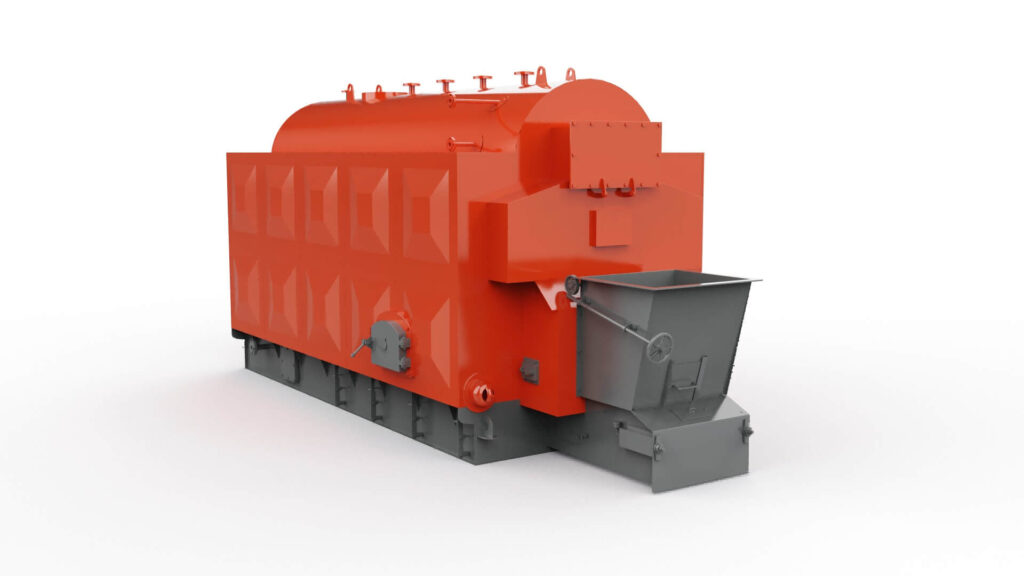
| Biomass-Fired Boiler ↗ SZL / DZL Chain Grate Series | Continuous base-load thermal generation | Significant (Heavy pressure vessel & grate) |
| Biomass Storage & Enclosed Silos | Moisture prevention and bulk buffer storage | Variable (Depends on yard layout) |
| Automatic Fuel Feeding Conveyors | Enclosed screw/belt conveyors and feeding hoppers | Moderate (Mechanical automation scope) |
| Multi-Cyclone & Baghouse Filters | Flue gas particulate removal and local emission compliance | Moderate to High (Environmental limits) |
| Feedwater Softening & Deaeration | Scale elimination and dissolved oxygen stripping | Essential (Baseline investment) |
| Synchronized Steam Distribution Header | Pressure stabilization and multi-source steam mixing | Moderate (High-pressure manifold) |
| Integrated Master PLC Cabinet | Dynamic combustion staging and load-sharing control | Moderate (Industrial automation controls) |
Main Factors Dictating Hybrid Boiler System Cost
- Total Steaming Capacity (t/h): Larger tonnage systems require heavier structural foundations, larger piping, and higher-capacity pumps.
- Design & Operating Pressure (MPa): Higher pressure thresholds increase boiler wall thickness and valve pressure ratings.
- Biomass Fuel Moisture & Geometry: High-moisture agricultural wastes require larger combustion chambers and specialized stepped chain grates.
- Flue Gas Emission Limits: Industrial zones near Tashkent require multi-cyclones paired with pulse-jet baghouses to control dust emissions.
- Site Automation Degree: Fully automated enclosed hydraulic pushers and screw conveyors cost more upfront than semi-manual fuel handling.
2. What Makes Up the Initial CAPEX?
Comparing boiler options requires isolating complete project delivery costs from factory-gate equipment tags.
A natural gas boiler room features low structural complexity. Conversely, biomass handling requires extensive civil foundations, fuel storage, and particulate scrubbers.
Thermal Energy Capital Investment Scenarios
Investment Comparison Across System Architectures
Thermal Energy Capital Investment & Trade-off Analysis
Comparative technical asset breakdown across standalone and multi-fuel hybrid configurations.
| Cost Category | Natural Gas Only Pipeline Connected | Biomass Only Solid Fuel Infrastructure | Gas-Biomass Hybrid Dual-Energy Resilience |
|---|---|---|---|
| Boiler Pressure Vessels | Lower | Medium-High | Highest (Dual vessel units) |
| Fuel Handling Equipment | Minimal (Pipeline connection) | Significant (Conveyors, elevators) | Significant (Biomass hardware) |
| Fuel Storage Infrastructure | Zero yard footprint | Large covered storage sheds | Large covered storage sheds |
| Flue Gas Filtration | Minimal (Standard stack) | Baghouse / Multi-cyclone required | Baghouse / Multi-cyclone required |
| Control Automation | Standard single PLC | Grate speed & fan PLC | Synchronized Dual-Source Master PLC |
| Civil Foundation Work | Compact concrete pad | Heavy reinforced foundations | Largest combined footprint |
| Operational Redundancy | Low (Single point of failure) | Low (Single point of failure) | Complete 100% Thermal Backup |
| Fuel Sourcing Flexibility | Rigid (Pipeline dependent) | Rigid (Biomass dependent) | Maximum Market Adaptability |
A hybrid setup carries a 40% to 70% higher initial CAPEX than an equivalent gas-only boiler. Therefore, continuous operating fuel savings must recover this capital gap within a commercially acceptable timeframe.
3. Hybrid Boiler Operating Cost: Gas vs. Biomass
Fuel flexibility delivers the core economic justification for hybrid investments. Plant operators can switch thermal loads between fuels depending on market pricing and seasonal supply.
The Dynamics of Gas Firing
Natural gas provides unmatched operational simplicity:
- Burners ignite instantly and reach operational pressure within minutes.
- Digital modulators adjust firing rates precisely to match steam demand.
- Clean combustion produces no bottom ash, soot, or fly ash.
- Gas pipelines eliminate fuel warehousing and mechanical handling labor.
However, pipeline allocations can fluctuate during peak winter periods. Rising industrial tariff structures can also inflate monthly factory overhead.
The Economics of Biomass Firing
Uzbekistan possesses rich regional agricultural and forestry biomass resources:
- Cotton stalks (guzapoya) and processing residues.
- Sawmill woodchips, sawdust, and planer shavings.
- Agricultural crop husks and crushed nut shells.
- Reclaimed fruit tree trimmings and wood pellets.
The Total Delivered Cost of Biomass
Biomass purchase price never reflects total energy cost. Smart factory controllers calculate the effective delivered cost using this formula:
The Impact of Fuel Moisture Content
High moisture reduces net calorific heat values substantially. Fuel water content absorbs significant thermal energy during combustion through latent heat of vaporization:
- Dry Wood Pellets (10% Moisture): Net calorific value reaches approximately 4,200 kcal/kg.
- Green Agricultural Waste (40% Moisture): Net calorific value drops below 2,400kcal/kg.
Consequently, wet biomass forces boilers to burn significantly higher tonnages to match equivalent steam output, increasing ash disposal volumes and conveyor wear.
4. How to Calculate Hybrid Boiler ROI
Financial calculations for hybrid boiler retrofits or new installations follow clear thermodynamic and capital payback metrics.
Dual-Fuel Hybrid Investment Payback Calculation
Standardized methodology for evaluating biomass-gas hybrid thermal modernization projects.
5. Illustrative ROI Example: 8 TPH Textile Factory in Uzbekistan
Consider a continuous textile processing plant requiring an average of 8 tons of saturated steam per hour at 1.25 MPa. The facility runs 24 hours per day, 300 days per year (7,200 operational hours annually).
Option A: Gas-Only Installation (1 × 8 t/h WNS Boiler)
- Relies entirely on pipeline natural gas.
- Burns approximately 640 Nm3 of natural gas per hour at full continuous output.
- Remains exposed to gas price adjustments and seasonal pipeline pressure drops.
Option B: Gas-Biomass Hybrid (1 × 6 t/h SZL Biomass + 1 × 4 t/h WNS Gas)
- The SZL biomass boiler carries the steady 6 t/h base load using local agro-waste.
- The WNS gas boiler modulates between 0 and 2 t/h to cover peak demands and shift startups.
- Total steam capacity reaches 10 t/h, providing 25% standby headroom for line expansion.
Financial Model Comparison Matrix
Comparative Operational Economics & Amortization Matrix
Standardized techno-economic appraisal based on 7,200 annual operating hours.
| Financial Variable | Option A: Gas-Only 8 t/h Packaged Setup | Option B: Hybrid 6 t/h Biomass + 4 t/h Gas |
|---|---|---|
| Annual Operating Hours | 7,200 hours | 7,200 hours |
| Total Steam Generated | 57,600 tons | 57,600 tons |
| Base Fuel Allocation | 100% Natural Gas | 75% Biomass / 25% Gas Peak Buffer |
| Auxiliary Electricity Draw | Lower (Fans & feed pumps) | Higher (Conveyors, ID fans, baghouse) |
| Annual Maintenance Reserve | ~$12,000 | ~$26,000 |
| Dedicated Handling Labor | 1 operator per shift | 2 operators per shift (Yard management) |
| Total Annual OPEX | Highest Baseline | Reduced by 32% – 45% Net |
| Capital Investment (CAPEX) | Lower Initial Baseline | +$160,000 to +$220,000 vs. Gas Baseline |
| Projected Payback Window | Reference Point | 16 to 26 Months |
6. How a Gas-Biomass Hybrid Boiler System Works
In an engineered hybrid system, both boilers operate in harmony through an automated thermal header. They share process loads based on fuel economics and dynamic system pressure.
The Operating Strategy: Base Load + Peak Follower
- Morning Startup: The fast-firing WNS gas boiler ignites automatically. It generates full 1.25 MPa steam within 20 minutes to heat factory pipelines.
- Base Load Transition: Operators light the SZL biomass boiler. Once solid-fuel combustion stabilizes, it ramps up to carry a steady 6 t/h base load.
- Automated Gas Modulation: The gas boiler burner modulates downward automatically. It remains on hot standby or low-fire mode.
- Peak Load Buffering: When several fabric dyeing vats open steam valves simultaneously, line pressure dips slightly. The gas burner instantly throttles up, injecting supplemental steam to protect line pressure.
7. When Does a Hybrid Boiler Make Financial Sense?
A hybrid boiler installation represents an ideal engineering investment when your facility exhibits these commercial conditions:
- Continuous Multi-Shift Operations: Factories operating over 6,000 hours per year consume massive fuel volumes, accelerating payback velocity.
- Low-Cost Local Biomass Sourcing: The plant sits within 50–80 km of timber processing centers, cotton gins, or agricultural grain processing hubs.
- Production Highly Sensitive to Downtime: In textile finishing or food pasteurization, an unexpected gas outage ruins ongoing production batches. The secondary biomass line ensures thermal continuity.
- Sufficient Plant Yard Area: The facility accommodates covered fuel storage sheds, truck turning radiuses, and automated ash containment boxes.
- Accessible Plant Investment Capital: The management team can access capital and focuses on minimizing 5-year running costs rather than minimizing initial equipment expense.
8. When Is a Hybrid Boiler Not Worth the Investment?
A hybrid system is not the right choice for every facility. Single-fuel gas boilers remain superior under the following conditions:
- Short Operating Seasons: Facilities operating fewer than 2,500 hours annually will struggle to recover the added capital expenditure.
- Restricted Urban Plant Footprints: Downtown sites or compact industrial zones lack space for biomass storage yards and truck delivery bays.
- Unstable Biomass Supply Chains: When regional biomass prices fluctuate wildly or feature erratic moisture above 50%, operational headaches erase financial gains.
- Small Thermal Capacities: For plants requiring under 2.0 t/h of steam, the mechanical complexity of fuel conveyors and baghouse filters rarely justifies the investment.
- Strict Capital Constraints: When immediate initial cash flow is constrained, a packaged WNS series gas boiler provides the most capital-efficient entry point.
9. Hidden Costs That Can Affect Hybrid Boiler ROI
Pro-forma financial models often fail because planners overlook secondary operating expenses. Accurate TCO models must budget for these practical operating realities:
Ignoring auxiliary electrical draws or baghouse maintenance will skew payback estimates by 4 to 8 months. Transparent budgeting ensures predictable financial returns.
10. Five-Year Total Cost of Ownership (TCO)
Evaluating industrial steam assets over a five-year lifecycle reveals the complete financial picture. In continuous manufacturing operations, fuel expenses represent over 75% to 85% of total lifecycle expenditures, dwarfing original equipment purchase costs.
5-Year Total Cost of Ownership (TCO) Analysis
11. How to Evaluate a Hybrid Boiler Investment
Before requesting commercial engineering proposals, gathering accurate operational data will ensure precise sizing and ROI modeling:
1. Steam Load Characteristics
- Baseline continuous steam demand (t/h).
- Peak momentary steam load and duration (t/h and minutes).
- Required steam operating pressure (MPa / bar) and temperature.
2. Operating Timeline
- Planned running hours per 24-hour cycle.
- Total working days per calendar month and year.
- Expected low-load seasonal shutdown periods.
3. Regional Fuel Sourcing Data
- Contracted natural gas tariff rate (1,000 Nm3).
- Local biomass types available (woodchips, agricultural husks, cotton stalks).
- Quoted delivered biomass pricing /ton).
- Average moisture content and seasonal availability swings.
4. Site Layout Parameters
- Available surface area for boiler house expansion (m2).
- Space available for covered fuel storage sheds.
- Soil bearing capacities for heavy solid-fuel foundations.
12. Hybrid Boiler Investment: What Should Be Compared?
When reviewing commercial bids from international boiler manufacturers, never compare vessel prices in isolation. Ensure each vendor proposal covers the full operational scope:
- Boiler Modules: Both gas-fired packaged shell and biomass water-tube/fire-tube boilers.
- Combustion Equipment: Low-NOx gas burner valve trains plus mechanical chain grates with speed drives.
- Fuel Transport Systems: Heavy-duty screw feeders, bucket elevators, and enclosed fuel hoppers.
- Environmental Cleaners: Multitube cyclone pre-separators and automated pulse-jet baghouses.
- Water Treatment Plant: Duplex ion-exchange softeners, feedwater tanks, and thermal deaerator systems.
- Fluid Circulation: High-temperature multi-stage centrifugal pumps in 100% active/standby pairs.
- Master Automation Integration: Dual-fuel coordinated PLC panels with variable frequency drives (VFD).
- Delivery & Installation Support: International logistics, rail border clearance, on-site supervision, and commissioning.
FAQ: Is the Hybrid Investment Validated?
Does a gas-biomass hybrid boiler cost more to maintain in Uzbekistan?
No, a hybrid configuration actually reduces long-term maintenance expenses.
The biomass boiler handles the steady thermal baseline continuously. Meanwhile, the modulating gas boiler absorbs dynamic peak swings.
This load-sharing strategy minimizes thermal shock on gas burners and boiler tubes. Consequently, your plant extends overall refractory lifespan and cuts annual component repair costs.
How do Uzbekistan’s new carbon market policies affect hybrid boiler ROI?
Uzbekistan adopted comprehensive greenhouse gas legislation to launch national carbon trading mechanisms.
Replacing pipeline natural gas with agricultural biomass significantly lowers your plant’s fossil emissions.
Industrial facilities can register verified carbon emission reductions. Furthermore, lower net carbon intensity protects textile exporters from emerging cross-border carbon border adjustment penalties.
What is the typical capital payback period for factories in Uzbekistan?
For a typical textile mill in the Tashkent region, the payback period averages 16 to 24 months.
Continuous fuel savings generate the primary financial return. Additionally, avoiding winter gas pipeline shut-offs protects active production batches from costly downtime.
Why invest in a hybrid boiler plant despite higher initial CAPEX?
Single-fuel boiler rooms expose your manufacturing lines to severe supply disruptions.
A gas-only boiler risks sudden winter downtime during regional gas pipeline pressure drops. Conversely, a biomass-only system requires long cold preheating and periodic grate maintenance shutdowns.
A CN MIRACLE &Taiguo gas-biomass hybrid system eliminates both production risks. It delivers continuous thermal redundancy while generating rapid financial payback through fuel savings.
How does the centralized control network switch between gas and biomass?
We engineer our master PLC control cabinets using standard industrial Modbus and Profinet interfaces.
The automated system monitors steam header pressure gradients in real time.
If biomass fuel moisture variations cause boiler output to drop, the gas boiler fires up automatically. This automatic modulation stabilizes plant steam pressure without manual operator intervention.
How does Taiguo’s packaged layout save factory footprint?
Traditional hybrid projects construct separate boiler rooms and duplicate expensive auxiliary water loops.
Instead, Taiguo integrates both boilers around a unified thermal layout.
Both systems share a common feedwater treatment plant, deaerator, and steam header manifold. This pre-engineered skid layout reduces required boiler house footprint by more than 35%.
What technical dossiers does Taiguo provide for local Uzbek permits?
Uzbek safety inspection agencies enforce strict operational standards on industrial pressure vessels.
Taiguo provides complete technical compliance dossiers for local regulatory filings.
Every delivery includes factory hydrostatic pressure test records and certified radiographic weld inspection sheets. We also supply Russian-translated structural blueprints and mechanical calculation books to secure local operating permits promptly.
How much does an industrial hybrid boiler cost in Uzbekistan?
Total investment depends on steaming capacity, working pressure, and automation degree. A turnkey dual-system setup typically ranges from $180,000 to over $600,000 depending on steam tonnage (e.g., 4 t/h to 15 t/h) and emissions scopes. Complete system CAPEX must include fuel yards, baghouse filtration, and integrated control manifolds.
How is hybrid boiler ROI calculated?
Calculate ROI by dividing the additional capital expenditure of the hybrid setup over a standard gas plant by the net annual fuel and operational savings. If the additional equipment costs $180,000 and generates $90,000 in yearly fuel savings after accounting for handling labor and power, the simple payback period is exactly 2.0 years.
How much can a hybrid system reduce monthly fuel bills?
In industrial zones with access to low-cost agricultural residues or timber processing waste, a hybrid system can reduce net thermal fuel expenditures by 30% to 50% compared to burning pure natural gas continuously.
Is a hybrid boiler suitable for textile manufacturing in Uzbekistan?
Yes. Textile mills run continuous fabric washing, drying, and batch dyeing operations. The biomass boiler handles continuous baseload hot water and drying lines economically, while the fast gas boiler absorbs sudden steam surges during dyeing vat heating cycles.
Can an existing gas boiler plant be upgraded into a hybrid system?
Yes. Facilities frequently retain their current operational gas boiler to handle peak loads and emergency backup, while adding an external SZL biomass-fired boiler and common steam header to take over the primary baseline thermal production.
Bulletproof Your Factory Processing Lines with CN MIRACLE &Taiguo Hybrid Systems
Are you ready to insulate your factory from volatile winter gas grid shortages and achieve total fuel cost autonomy utilizing advanced hybrid thermal networks? Contact premium Central Asian equipment author CN MIRACLE &Taiguo today to secure customized plant layout blueprints and highly competitive factory-direct quotes rapidly.
Contact us to get:
- Fuel cost comparison
- ROI & payback simulation
- Hybrid boiler configuration plan
- Investment budget estimate
Explore Our Complete Range of Gas-Fired, Biomass & Specialized Hybrid Industrial Boilers
Choose correct equipment configurations using our online industrial boiler selection guide.
Review specific automated multi-burner accessories inside the gas biomass hybrid boiler system for uzbekistan.
We weigh competitive fuel overheads clearly inside gas boiler vs biomass boiler in uzbekistan.