
Industrial Boiler ROI Analysis for Indonesia Factories (2026)
Discover how Indonesian factories can reduce steam production costs and achieve fast payback with a high-efficiency boiler upgrade. This Boiler ROI Analysis for Indonesia guide helps food, textile, palm oil, and chemical plants calculate fuel savings, maintenance reduction, and total return on investment. Evaluating a new steam system requires looking past the equipment price tag. […]
Get Instant Quote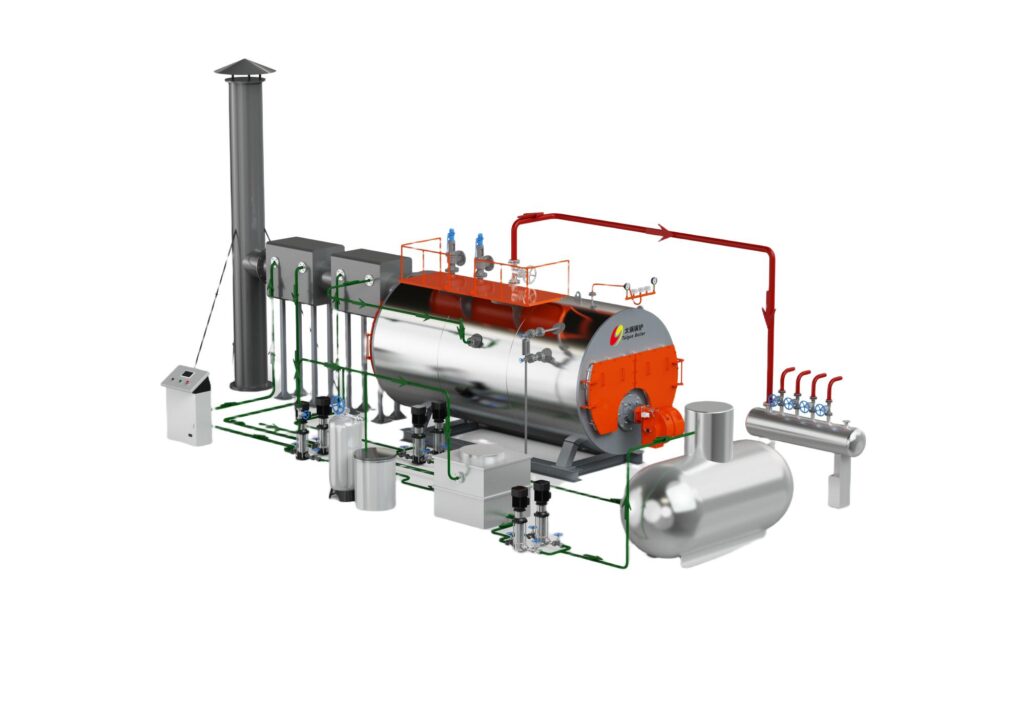
Technical Specifications
Discover how Indonesian factories can reduce steam production costs and achieve fast payback with a high-efficiency boiler upgrade. This Boiler ROI Analysis for Indonesia guide helps food, textile, palm oil, and chemical plants calculate fuel savings, maintenance reduction, and total return on investment.
Evaluating a new steam system requires looking past the equipment price tag. For industrial operations in Indonesia, fuel efficiency and operational uptime dictate long-term profitability.
This financial guide breaks down the investment metrics for Indonesian factories. We will help you calculate your exact path to permanent energy savings.
Why Indonesian Factories Need Boiler ROI Analysis
For Indonesian industrial factories, boiler investment decisions should not be based only on equipment price. A steam boiler affects long-term production costs through:
- Fuel consumption: Daily fuel bills represent the largest lifetime cost of your boiler room.
- Operating efficiency: High thermal efficiency directly reduces monthly resource waste.
- Maintenance requirements: Reliable components prevent unexpected service expenses and parts replacement.
- Production stability: Consistent steam pressure maintains high product quality on your line.
- Equipment lifetime: Durable pressure vessels protect your capital investment for decades.
A proper Return on Investment (ROI) analysis helps factories understand the real financial impact before investing in a new industrial boiler system.
Industrial Boiler Energy Challenges in Indonesia
Many Indonesian industries rely heavily on steam systems for core production processes. Common applications include:
- Palm oil processing: Sterilization, clarification, and oil extraction loops.
- Food and beverage manufacturing: High-temperature cooking, pasteurization, and clean-in-place (CIP) sanitation.
- Textile production: Fabric dyeing, washing, printing, and final finishing.
- Paper and packaging: Pulp cooking, sheet drying, and corrugating processes.
- Chemical industries: Reactor heating, distillation, and chemical synthesis.
For these factories, energy cost is one of the major factors affecting operating profit. Upgrading to modern [industrial boiler solutions for Indonesia] allows companies to reclaim lost margins.
👉 Get Boiler ROI Analysis for Indonesia Report
In 2026, the Indonesian industrial sector is witnessing a strategic shift in energy pricing. While the government continues to adjust subsidies for natural gas (HBT), the volatility of global fossil fuel prices has made ROI calculations more complex for factories in West Java and Surabaya. Our analysis shows that for Indonesian textile and food plants, integrating a high-efficiency heat recovery system can buffer against a 15-20% hike in fuel tariffs. By securing a Taiguo boiler with a multi-fuel burner, Indonesian operators can switch between gas and liquid fuels, effectively ‘hedging’ their energy costs for the next decade.
Optimizing Boiler Lifespan in Tropical Humidity
Indonesia’s high relative humidity and coastal salt spray can accelerate the corrosion of standard boiler casings, negatively impacting your long-term ROI through increased maintenance costs. Taiguo’s ‘Indonesia Edition’ boilers feature a double-layered, anti-corrosion coating and high-grade aluminum silicate insulation. This specialized protection prevents ‘sweating’ on the boiler shell and internal tube corrosion, extending the equipment’s operational life by 5-7 years compared to non-tropicalized models, thus significantly lowering the total cost of ownership (TCO).
Leveraging PKS: The Local Advantage for Indonesian ROI
For factories located near palm oil estates in Sumatra or Kalimantan, Palm Kernel Shells (PKS) represent the most cost-effective biomass fuel in 2026. A 10-ton biomass boiler utilizing PKS can reduce fuel expenses by up to 45% compared to diesel-fired systems. Our ROI models for the Indonesian market now include specific calorific value adjustments for PKS, accounting for its unique ash content and combustion characteristics. By optimizing the furnace grate for local biomass, Taiguo helps Indonesian clients achieve a full project payback in under 16 months.
The 3-Step Boiler ROI Analysis for Indonesia Formula
Step 1: Calculate Annual Fuel Cost
Annual Fuel Cost = Hourly Fuel Consumption × Operating Hours × Local Fuel Price
Example for a 10 ton gas boiler in Indonesia:
- Gas consumption: 720 Nm³/h
- Operating hours: 6,000 h/year
- Gas price: USD 0.32/Nm³
- Annual fuel cost: USD 1,382,400
Step 2: Compare Efficiency Upgrade Savings
Assume your old boiler runs at 82% efficiency and the new WNS boiler reaches 98% thermal efficiency.
Fuel savings potential:
- Existing boiler annual cost: USD 1,382,400
- New boiler saving: 12–16%
- Annual savings: USD 165,000–220,000
High-hour factories often recover investment in under 2 years. :contentReference[oaicite:2]{index=2}
Step 3: Calculate Payback Period
Payback = Total Investment ÷ Annual Savings
Example:
- Total project cost: USD 280,000
- Annual savings: USD 190,000
Estimated Payback:
1.47 Years
This is an extremely attractive capital approval metric for Indonesia manufacturing plants.
Boiler ROI Analysis for Indonesia Comparison: Old Boiler vs High-Efficiency Boiler
| Item | Existing Boiler | New High-Efficiency Boiler |
|---|---|---|
| Efficiency | 82% | 98% |
| Annual Fuel Cost | USD 1,382,400 | USD 1,175,000 |
| Maintenance Cost | High | Reduced |
| Downtime Risk | Medium | Low |
| ROI Payback | — | 12–18 months |
Best ROI Boiler Projects in Indonesia
Textile & Dyeing
Stable steam reduces re-dyeing losses and improves color consistency.
Palm Oil Industry
High steam demand makes fuel savings highly visible.
Food Processing
Continuous 24/7 sterilization and cooking lines create fast payback.
Chemical Plants
Stable pressure reduces production scrap and shutdown risk.
These sectors usually achieve the fastest boiler ROI in Indonesia because of long operating hours.
Hidden Savings Most Factories Ignore by making Boiler ROI Analysis for Indonesia
Besides fuel, modern boilers reduce:
- operator labor costs
- unplanned downtime
- refractory repair
- water treatment losses
- steam leakage waste
- startup time losses
- carbon compliance costs
These hidden items often shorten ROI by another 3–6 months.
Indonesia Fuel Strategy ROI Comparison
| Fuel Type | ROI Speed | Best Region |
|---|---|---|
| Natural Gas | Fast | Java / Batam / Jakarta |
| Diesel | Medium | Backup projects |
| Biomass (PKS) | Fastest | Sumatra / Kalimantan |
| LPG | Good | Cebu-style island logistics projects |
For Sumatra palm oil plants, PKS biomass can reduce fuel cost by 50–70% vs diesel, creating extremely fast payback.
For factory owners in Jakarta, Surabaya, and Medan, choosing a boiler is a major financial decision. We provide a comprehensive Boiler ROI analysis for Indonesia to help you understand how the right equipment turns operational costs into long-term profit. Leveraging our 10 years of industrial expertise, we help you calculate the real value of your investment beyond the initial purchase price.
Annual Fuel Cost Comparison: The Impact of Fuel Choice
Fuel represents over 80% of a boiler’s lifetime cost. We perform a detailed steam boiler fuel cost comparison based on current Indonesian market rates to show you the potential savings:
- Diesel (High Cost): While easy to install, diesel remains the most expensive option, often used as an emergency backup in Java.
- Natural Gas (Stable): Provides clean energy and moderate costs for factories with pipeline access in industrial zones.
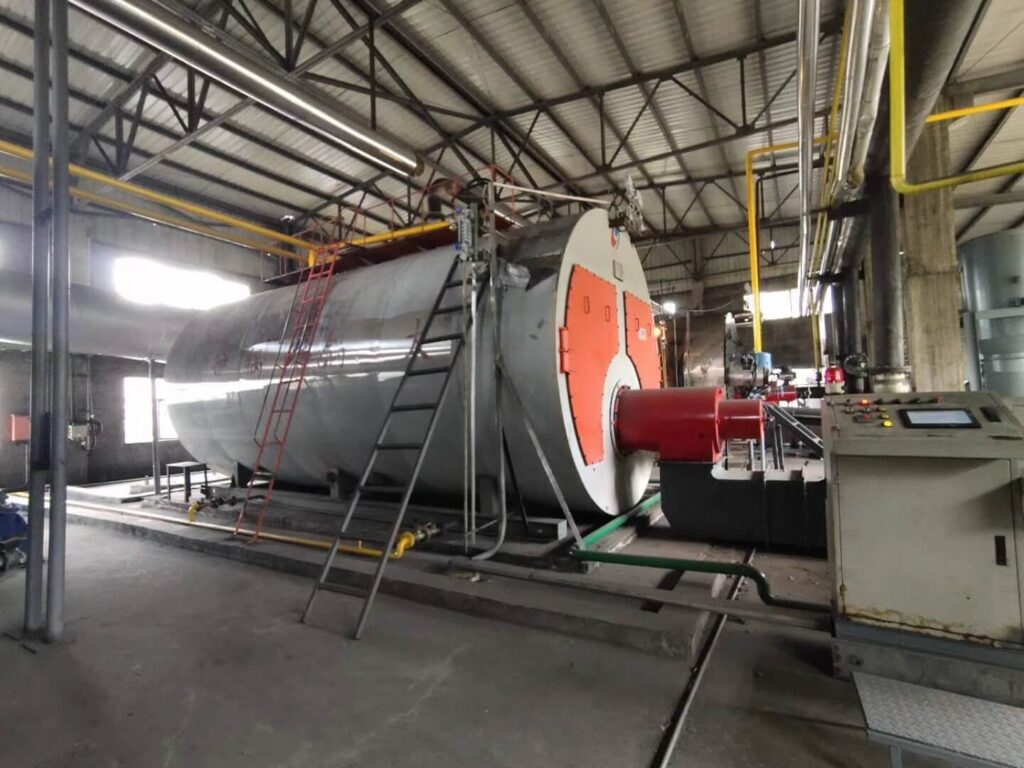
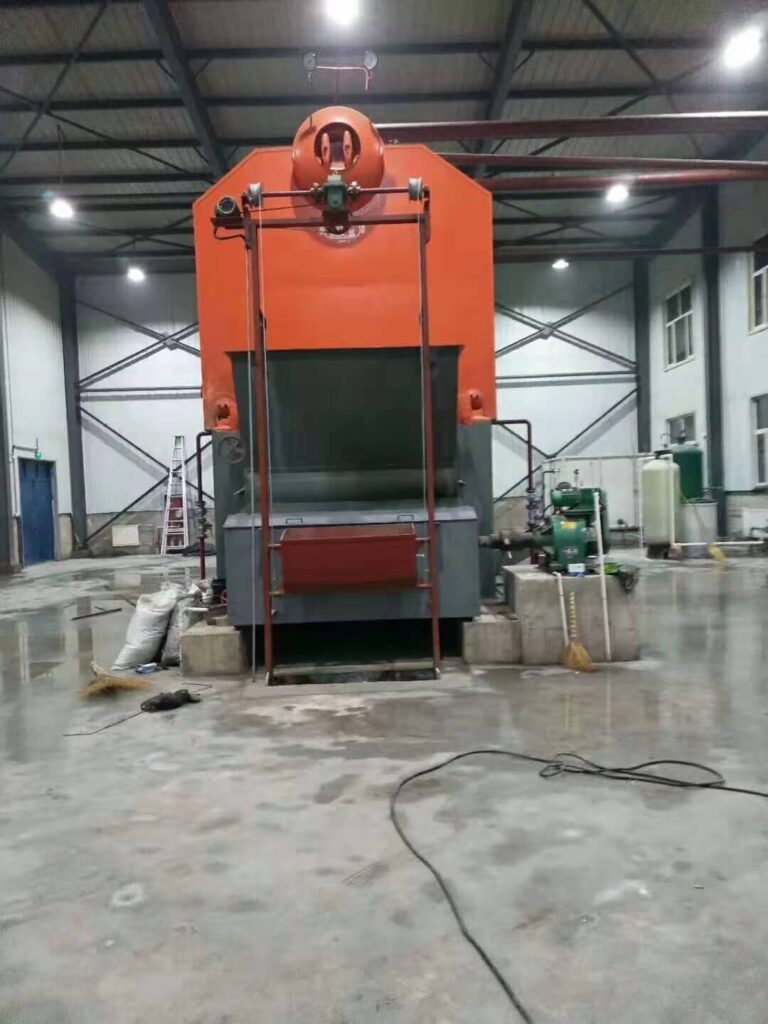
- Biomass (Lowest Cost): Utilizing Palm Kernel Shells (PKS) or wood chips in Sumatra and Kalimantan can reduce fuel bills by up to 50-70% compared to oil.
Gas Boiler vs. Biomass Boiler ROI Comparison in Indonesia
Fuel selection dictates your physical infrastructure requirements and your long-term payback timeline. The table below compares the two primary industrial energy paths in Indonesia:
| Factor | Gas Boiler | Biomass Boiler |
| Initial Investment | Lower upfront equipment cost | Higher system investment for fuel handling |
| Fuel Availability | Depends on regional pipeline infrastructure | Plentiful local biomass resources |
| Automation | High automated control, minimal labor | Medium-high automation with feeding systems |
| Fuel Handling | Simple pipeline gas connection | Requires dedicated warehouse storage space |
| Best Application | Urban factories requiring clean operation | Rural agricultural processing industries |
Natural gas delivers unmatched convenience in urban industrial zones. Meanwhile, solid waste fuels offer the lowest operating costs in resource-rich provinces.
- Compare these utility costs deeply: Gas vs Biomass Boiler Cost Comparison.
Biomass Boiler ROI Opportunities in Indonesia
Indonesia has abundant biomass resources from agricultural industries. Utilizing these localized waste products shields factories from volatile global fossil fuel prices. Potential biomass fuels include:
- Palm kernel shells (PKS)
- Empty fruit bunches (EFB) and fiber waste
- Rice husks from milling centers
- Wood residues and sawdust from processing plants
For factories with a stable biomass supply, installing a dedicated [biomass steam boiler system] provides massive long-term fuel cost advantages.
- Review another regional application: Biomass Boiler ROI Analysis.
7 Factors Affecting the Boiler Payback Period
Your actual financial recovery speed depends on seven core operating variables:
- Operating Hours: Factories running continuous 24-hour schedules achieve faster investment recovery.
- Fuel Cost Difference: A wider gap between old fuel costs and new fuel costs increases annual savings.
- Boiler Efficiency: Higher thermal efficiency reduces daily fuel consumption permanently.
- Production Scale: Large-scale steam users gain greater absolute economic benefits from upgrading.
- Maintenance Cost: Reliable equipment reduces unexpected downtime losses and emergency repair bills.
- Automation Level: Automatic control improves operating stability and reduces manual labor overhead.
- Boiler Lifetime: A durable, high-quality boiler provides long-term investment value across decades.
Boiler Payback Period Calculation by Boiler ROI Analysis for Indonesia: A Real-World Example
We help you visualize the boiler payback period calculation to justify your upgrade. Scenario: Upgrading a 10-Ton Diesel Boiler to a High-Efficiency Biomass System in Indonesia.
- Annual Fuel Savings: By switching to PKS, a typical mill saves approximately $200,000 – $400,000 USD per year depending on steam load.
- Initial Investment: Includes equipment, shipping from China, and boiler import regulations compliance.
- Payback Period: Most of our Indonesian clients recover their full investment within 12 to 18 months, after which the savings go directly to the bottom line.
Gains from Energy Saving and Emission Reduction
We integrate advanced technologies to maximize your industrial energy saving in Indonesia:
- Waste Heat Recovery: We install economizers and condensers that capture flue gas heat, increasing thermal efficiency to 98%.
- Automated Control: We use high-precision PLC systems to ensure the air-fuel ratio is always optimal, preventing fuel waste.
- Carbon Credits: As Indonesia moves toward carbon taxation, our high-efficiency biomass systems position your factory for future environmental incentives.
Investment Advice for the Indonesian Market based on Boiler ROI Analysis for Indonesia
Based on our experience with our global projects, we offer these strategic recommendations:
- Audit Your Fuel Source: If you have a stable supply of biomass (PKS/Fiber), choose a water-tube biomass boiler for the best long-term ROI.
- Don’t Skimp on Burners: For gas systems, investing in a world-class burner (Riello/Baltur) ensures stability and lower maintenance costs.
- Plan for Growth: We recommend selecting a capacity 10-20% higher than your current peak demand to allow for future production expansion without needing a second boiler.
Factoring in Indonesia’s 2026 Fiscal Incentives
A robust Boiler ROI Analysis for Indonesia must include the newly expanded “Green Investment” facilities provided by the Ministry of Finance and BKPM:
- Tax Holiday: For pioneer industries investing in renewable energy boilers, a 100% corporate income tax exemption for 5–20 years.
- Tax Allowance: A 30% reduction in net income over 6 years based on the investment value in energy-efficient machinery.
- Import Duty Exemption: Zero duties on imported high-tech boiler components and auxiliary systems, reducing upfront CAPEX by up to 10%.
When Should Indonesian Factories Replace an Existing Boiler?
Consider upgrading your boiler house infrastructure when you notice these five warning signs:
- Fuel consumption is increasing steadily without a rise in factory production.
- Steam pressure is unstable, causing delays on your manufacturing line.
- Maintenance cost is rising, and spare parts are becoming difficult to source.
- Production interruptions occur frequently due to component failures.
- Emission requirements become stricter near urban industrial zones.
2026 Indonesia Industrial Energy Audit Checklist
To maximize your Boiler ROI Analysis for Indonesia, Taiguo’s engineering team recommends conducting this localized energy audit before finalizing your equipment specifications:
- Check 1: 2026 ‘Green Industry’ Tax Incentives (Insentif Pajak)
- Action: Consult with the Indonesian Ministry of Industry (Kemenperin) to verify if your project qualifies for ‘Green Industry’ certification.
- Technical Why: In 2026, Indonesia is expanding tax allowances for factories that reduce carbon intensity. By choosing a Taiguo high-efficiency boiler with a certified economizer, you may qualify for significant corporate tax reductions, effectively shortening your ROI period by 12–18 months.
- Check 2: Java’s Hard Water & Softening Operational Costs
- Action: Conduct a detailed water quality test, specifically measuring the CaCO3 levels at your site (especially in East and Central Java).
- Technical Why: Ground water in many Indonesian industrial zones has high mineral content. Without a robust water softening system, scale will build up on the boiler tubes within months. Just 1mm of scale can increase fuel consumption by 5%. We factor the cost of high-grade resin and salt consumption into your ROI to ensure there are no “hidden” maintenance costs after installation.
- Check 3: PGN (Perusahaan Gas Negara) Pressure Calibration
- Action: Confirm the stable delivery pressure of the natural gas supplied by PGN to your facility.
- Technical Why: Gas pressure in some Indonesian industrial parks can be inconsistent. We calibrate our multi-stage burners specifically for PGN’s local pressure standards. This prevents flame instability and “nuisance shutdowns,” ensuring your production line maintains 100% uptime and optimal combustion efficiency.
- Check 4: Tropical Humidity & Corrosion Shielding
- Action: Evaluate the distance of your facility from the coast and the average local humidity.
- Technical Why: Indonesia’s high humidity (often >80%) can lead to external shell corrosion. We recommend our “Tropical Package,” which includes aluminum cladding and anti-corrosive coatings, to protect your investment and maintain the boiler’s resale value, a key factor in long-term ROI.
What is a good Boiler ROI Analysis for Indonesia period?
For Indonesia industrial factories, 12–24 months is considered excellent.
Which industry gets the fastest payback?
Palm oil, textile, and food factories due to high operating hours.
Does economizer really improve ROI?
Yes. Economizers often improve fuel savings by 5–8%, accelerating payback
Can you calculate ROI for my factory?
Yes. We provide a customized report based on your steam demand, fuel type, and local gas or biomass price.
How does the new KBLI 2025 classification affect my boiler investment?
The updated KBLI 2025 codes now specifically accommodate “Renewable Energy” and “Carbon Storage” activities. Aligning your boiler project with these codes ensures smoother OSS licensing and priority access to government “Green Bonds.”
Is natural gas still a viable long-term solution in Indonesia?
Gas remains a clean alternative, but for the best Boiler ROI Analysis for Indonesia, we recommend Gas-Biomass Dual Fuel systems. This allows you to hedge against gas price hikes by utilizing local wood industry residues when market conditions favor biomass.
How does the National Registry System (SRN-PPI) impact ROI?
By registering your biomass boiler project with the SRN-PPI, you can generate certified carbon credits (SPE-GRK). In 2026, these credits are tradable domestically and internationally, creating a secondary revenue stream that accelerates your payback period.
What is the average payback period for a high-efficiency boiler in Indonesia?
Most industrial factories recover the investment premium within 12 to 24 months through direct fuel savings, reduced electricity use, and lower maintenance costs.
Can a biomass boiler run entirely on palm shells in Sumatra?
Yes. Custom-designed biomass boilers utilize palm kernel shells and fiber efficiently, allowing palm oil mills to achieve complete fuel self-sufficiency.
How does automation improve my boiler investment return?
Automated PLC systems optimize the air-to-fuel ratio continuously. This prevents excess fuel burning, protects pressure vessels from thermal shock, and reduces manual labor costs.
Get Your Customized Boiler ROI Analysis for Indonesia Report
Send us your:
– steam tonnage
– operating hours
– current fuel type
– gas / diesel / biomass price
– factory city
– current boiler efficiency
Our engineers will provide within 12 hours:
– Fuel cost comparison
– ROI payback model
– 3-year TCO estimate
– Boiler model recommendation
– Indonesia shipping and installation budget
- WhatsApp Kim: 8615093412637
- See Our Success Cases: cnmiracletrade.com
Choose optimal auxiliary combinations by consulting our centralized industrial boiler selection guide.
Estimate your initial capital investment depreciation via our steam boiler price in indonesia guide.
Track daily factory thermal infrastructure savings using this standardized boiler roi analysis for indonesia.