
Breakthrough Biomass Boiler ROI Analysis: Secure Your 2026 Philippines Energy Future
For industrial factories in the Philippines, rising energy costs have become a major factor affecting production competitiveness. Traditional fossil fuels create volatile utility budgets that eat into manufacturing margins. Installing a modern biomass boiler in the Philippines provides an alternative solution. Utilizing locally available agricultural residues allows factories to reclaim long-term energy stability. This comprehensive […]
Get Instant Quote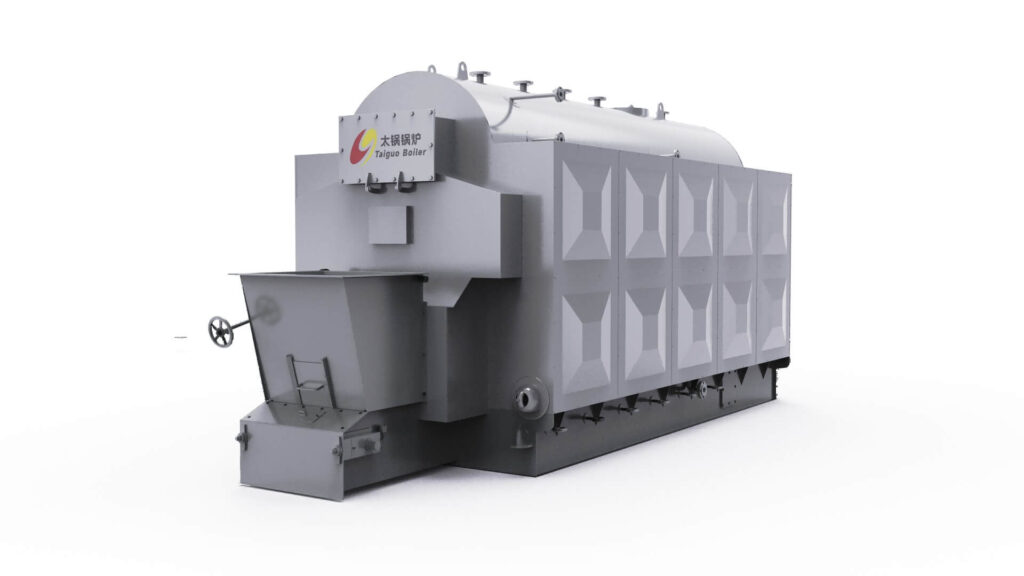
Technical Specifications
For industrial factories in the Philippines, rising energy costs have become a major factor affecting production competitiveness. Traditional fossil fuels create volatile utility budgets that eat into manufacturing margins.
Installing a modern biomass boiler in the Philippines provides an alternative solution. Utilizing locally available agricultural residues allows factories to reclaim long-term energy stability. This comprehensive investment guide analyzes how a proper financial evaluation can secure your production future.
For industrial enterprises in regions like Central Luzon, Western Visayas, and Mindanao, fuel costs are the single largest variable in production. With 10 years of energy engineering expertise, we provide this deep-dive Biomass Boiler ROI Analysis for Philippines to demonstrate how transitioning from fossil fuels to local biomass (Rice Husk, Coconut Shell) can transform your balance sheet.
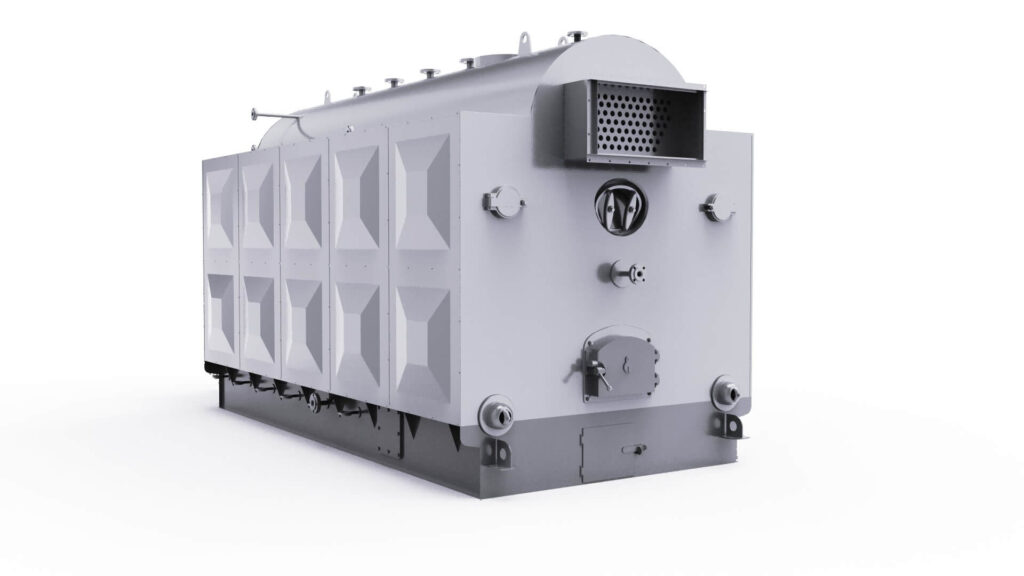
Biomass Boiler ROI Analysis for Philippines Industrial Factories (2026)
Industrial operators should not base boiler procurement decisions only on the equipment price tag. A complete biomass investment assessment helps factories evaluate five critical pillars:
- Initial investment: The total upfront capital needed for the pressure vessel and automated fuel processing lines.
- Fuel cost advantages: Real savings achieved by switching from expensive imported oil to domestic biomass.
- Operating savings: Monthly overhead reductions derived from automated combustion control systems.
- Payback period: The exact timeline required for operational savings to fully recover your capital outlay.
- Long-term energy stability: Protection against unpredictable global fossil fuel shortages and sudden price spikes.
Biomass Fuel Opportunities in the Philippines
The Philippines possesses abundant biomass resources due to its massive, thriving agricultural industry. Factories can match their equipment selection with dominant local crop wastes to drive down sourcing fees.
Rice Husk
Large volumes of rice husk are generated continuously from domestic rice milling industries.
- Primary Applications: Ideal for food processing facilities and agricultural drying plants located in major farming provinces.
- SEO Target: Perfect pairing for a high-efficiency rice husk boiler in the Philippines.
Coconut Shell
This dense biomass fuel remains highly available from regional coconut processing industries.
- Technical Advantages: Offers a high heating value and clean burn profile as a highly stable, renewable fuel source.
- SEO Target: Drives the operational returns behind a coconut shell biomass boiler in the Philippines.
Wood Residues
Sawdust, bark, and scrap wood are produced heavily by wood processing factories and manufacturing hubs. They provide a high-density thermal source for heavy manufacturing industries.
How to Calculate Biomass Boiler ROI in the Philippines
Smart financial managers and factory directors use a structured financial model to project their capital recovery timeline. Calculating your exact Return on Investment requires balancing the initial setup costs against your verified monthly operational savings.
To determine your baseline payback window, you divide your total initial biomass boiler investment by your projected annual operating savings. Building an accurate feasibility study for your factory requires breaking down both sides of this calculation into specific localized variables.
1. Total Investment Cost (CAPEX)
Upfront capital expenditure for a solid-fuel system involves much more than just purchasing the pressure vessel. Your total initial investment includes:
- Core Boiler Equipment: The high-efficiency boiler body, specialized mechanical combustion grate, and automated control panels.
- Fuel Handling Lines: Automated fuel feeding conveyors, storage hoppers, and mechanical silo unloading systems designed to handle bulk agricultural waste.
- Emissions Control Systems: High-efficiency multi-cyclone dust collectors and air scrubbers required to comply with local DENR (Department of Environment and Natural Resources) clean air standards.
- Logistics and Engineering: International shipping to major Philippine ports, local inland transport, site foundations, structural piping installation, and final engineering commissioning.
2. Annual Operating Savings (OPEX Reduction)
Your annual financial returns represent the cash reclaimed by replacing expensive imported fossil fuels with domestic agricultural waste. Your recurring operational savings include:
- Direct Fuel Substitution Savings: The massive price difference between burning expensive diesel or heavy fuel oil versus purchasing cheap local biomass like rice husks or coconut shells.
- Elimination of Fuel Volatility Costs: Complete insulation against unpredictable global oil market spikes, securing predictable monthly utility expenses for your corporate accounting.
- Reduced Waste Disposal Fees: For rice mills and agricultural processors, burning production byproducts on-site eliminates the cost of hauling crop waste away.
Concrete ROI Calculation Example
Consider a food processing plant in Bulacan replacing an inefficient four-ton diesel boiler with a high-efficiency four-ton automatic biomass steam boiler system utilizing local rice husks.
Let us assume the complete automated biomass system setup requires an extra capital investment of ninety-five thousand dollars over a standard oil burner setup. Running two daily shifts for four thousand operating hours per year cuts the factory’s annual fuel bill by approximately sixty-five thousand dollars.
By dividing the upfront investment by these annual savings, the factory reveals a payback period of less than one and a half years. In this typical industrial scenario, the facility fully recovers its entire capital premium in less than eighteen months. For the remaining fifteen-plus years of the boiler’s operational lifespan, those compounding energy savings flow directly into pure corporate profit.
The Hidden Cost of Fossil Fuels in the Philippines (2026) For Biomass Boiler ROI Analysis
Relying on imported diesel or coal exposes your factory to global price volatility and high logistics costs within the archipelago.
- Diesel Price Volatility: With Philippine diesel prices subject to global oil fluctuations and local “TRAIN Law” taxes, your energy costs are unpredictable.
- Coal Constraints: While coal is traditional, the 2026 Philippine energy shift toward “Green Energy” and carbon taxation makes coal-fired boilers a risky long-term investment.
- Combatting the Philippines’ High Energy Costs: In 2026, the Philippines continues to face some of the highest industrial electricity tariffs in Southeast Asia. For manufacturing plants in regions like Cavite and Batangas, switching to a biomass-fired steam system provides a strategic hedge against volatile grid prices. By utilizing a Taiguo biomass boiler for process heating and co-generation, factories can reduce their reliance on the grid. Our ROI data indicates that Philippine enterprises transitioning from electric or diesel heating to biomass can achieve a cumulative energy saving of up to 40% annually, significantly boosting their bottom-line profitability.”
Deep-Dive Cost Comparison: Biomass vs. Diesel vs. Gas-Biomass Boiler ROI Analysis
Evaluating a biomass boiler ROI in the Philippines requires a direct comparison against traditional diesel or gas configurations.
| Factor | Biomass Boiler System | Gas / Diesel Boiler Unit |
| Fuel Source | Local agricultural waste (husks, shells) | Purchased imported fossil utilities |
| Fuel Price Stability | Higher stability through local sourcing | Volatile market pricing cycles |
| Initial Investment | Higher upfront cost for handling lines | Lower initial equipment expenses |
| Operation System | Requires automated fuel handling storage | Simpler pipe intake infrastructure |
| Long-term Potential | Strong cost insulation across decades | Depends heavily on global oil baselines |
For factories with a reliable biomass supply, investing in an industrial biomass steam boiler in the Philippines provides massive long-term economic advantages.
To provide a realistic Biomass Boiler ROI Analysis, we must look at the Cost per Ton of Steam produced. We assume a 10-ton/hour boiler operating 300 days a year, 12 hours a day.
| Metric | Diesel Boiler (WNS) | Natural Gas (WNS) | Biomass (Rice Husk/PKS) |
| Fuel Price (PH Est.) | $0.92 / Liter | $0.15 / m³ | $35 – $50 / Ton (or $0 if onsite) |
| Efficiency | 92% | 95% | 82% – 85% |
| Steam Cost (per ton) | $75 – $85 | $45 – $55 | $12 – $18. |
| Annual Fuel Spend | ~$3,000,000 | ~$1,800,000 | $450,000 – $600,000 |
Factors That Accelerate Your Biomass Boiler ROI Analysis
A high-quality biomass boiler achieves ROI faster because of our specific engineering choices for the Philippine market:
A. Waste Heat Recovery (Economizers & Condensers)-Biomass Boiler ROI Analysis
We integrate advanced finned-tube economizers that capture waste heat from the flue gas to pre-heat the feedwater. This increases efficiency by 5% to 8%, potentially saving an additional $20,000/year in fuel alone.
B. Multi-Fuel Flexibility-Biomass Boiler ROI Analysis
Our furnace design handles a mix of Rice Husk, Coconut Shells, Wood Chips, and PKS. In the Philippines, fuel availability changes with the harvest season. Our reciprocating grate technology allows you to switch fuels without stopping production, ensuring you always use the cheapest available energy.
C. Maintenance vs. Durability-Biomass Boiler ROI Analysis
While biomass boilers require more maintenance than gas units, we mitigate this through Anti-Abrasion Technology. By using specialized alloy tubes in high-wear zones, we extend the maintenance interval from 6 months to 18 months, reducing your “Downtime Cost”—a critical part of the ROI calculation.
D.Durability in Philippine Maritime Conditions-Biomass Boiler ROI Analysis
The archipelago’s maritime environment poses a severe risk of salt-spray corrosion to industrial equipment. To protect your long-term ROI, Taiguo’s ‘Philippines Edition’ boilers are built with reinforced marine-grade external cladding and moisture-resistant PLC control cabinets. This ‘Salt-Shield’ technology prevents the structural degradation often seen in cheaper alternatives, ensuring that your 2026 investment remains operational for over 20 years with minimal repair costs.
Industries That Can Benefit From Biomass Boilers in the Philippines
1. Food Processing Industry
Food manufacturing lines require continuous, high-volume process steam for cooking, sterilization, general processing, and clean-in-place (CIP) sanitation loops. Utilizing clean agricultural waste keeps operating overhead low.
- Explore customized food manufacturing energy layouts: steam solutions for food industry.
2. Rice Milling Industry
Rice mills produce vast amounts of natural fuel during daily operations. Burning their own rice husk waste allows these facilities to eliminate external fuel purchasing completely while solving waste disposal issues.
3. Coconut Processing Industry
Sanding, shredding, and oil extraction plants utilize coconut shell biomass to generate renewable process steam, creating a highly efficient circular production economy.
4. Textile & Manufacturing
Heavy fabric processing requires steady steam energy for dyeing, drying, and production heating. Biomass systems insulate these high-volume users from national grid electricity adjustments.
Calculating the Payback Period: A Real Case Study for Biomass Boiler ROI Analysis
What Determines the Biomass Boiler Payback Period?
Your exact capital recovery speed depends on five distinct operational variables:
- Biomass Availability: Factories situated near milling or processing hubs achieve the lowest fuel transport costs.
- Operating Hours: Running continuous multiple-shift schedules speeds up your investment recovery significantly.
- Fuel Preparation Cost: Proper storage, drying, and chipping processes affect your total monthly operating expenses.
- Boiler Efficiency: Advanced pressure vessels extract more heat per ton of waste, reducing absolute fuel consumption.
- Automation Level: Installing an automatic biomass steam boiler system reduces manual labor requirements and stabilizes combustion.
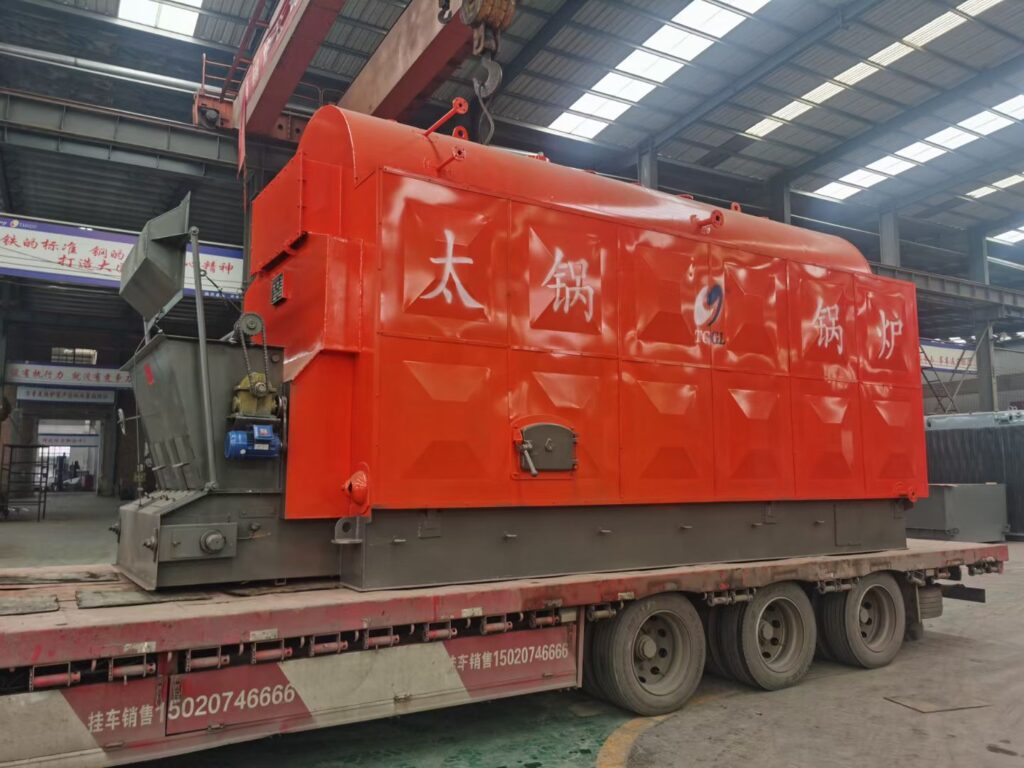
Client: A major Rice Mill in Nueva Ecija, Philippines.
- Old System: 6-ton Diesel-fired boiler.
- New System: 6-ton High-Efficiency Rice Husk Fired Boiler.
- Initial Capital (CAPEX): $120,000 (including shipping and installation).
- Monthly Savings: $11,500 in fuel costs.
- Payback Period: 10.4 Months.
- 5-Year Profit Gain: After the first year, the client generates an additional $138,000 in net profit annually.
Beyond the Money: Carbon Credits and Compliance
The Philippine Department of Energy (DOE) is increasingly favoring “Renewable Energy Certificates” (RECs). By installing a biomass system:
- Future-Proofing: You avoid potential “Carbon Taxes” that may be implemented by 2028.
- Sustainability Branding: Many international buyers of Philippine products (like desiccated coconut or textiles) now require a “Green Supply Chain” certification.
Biomass Boiler Application Scenario in the Philippines
A typical Philippine industrial project follows a structured engineering design to maximize thermal efficiency:
- Factory Profile: Food processing plant or large-scale agricultural milling facility.
- Fuel Specification: Raw rice husk blends or crushed coconut shells sourced within a 50-kilometer radius.
- Production Requirement: Continuous delivery of stable process steam to eliminate manufacturing downtime.
- Integrated Solution: An automatic biomass boiler paired with custom fuel storage, mechanical feeding lines, high-efficiency multi-cyclone dust collection systems, and automated steam distribution networks.
Biomass Boilers and Sustainable Manufacturing
Beyond delivering clear financial savings, modern solid-waste combustion equipment supports corporate environmental goals. Biomass systems advance sustainable manufacturing by:
- Redirecting raw agricultural waste away from open-field burning or landfill rotting.
- Reducing dependence on carbon-heavy imported fossil fuels.
- Improving regional resource efficiency through circular economy models.
- Supporting low-carbon production goals aligned with modern green supply chains.
Recommended Biomass Boiler Solutions
For medium and large industrial applications, engineering teams commonly specify automatic chain grate systems. These configurations are highly resilient and versatile.
- Our premium chain grate biomass steam boiler delivers fully automated fuel feeding, highly stable combustion zones, minimal manual labor overhead, and flexible adaptability to varied biomass moisture profiles.
Strategic Content Sections for the Financial Guide-Biomass Boiler ROI Analysis
A. Fuel Displacement: The 60% Savings Factor
The primary driver of a Biomass Boiler ROI Analysis in the Philippines is the staggering price difference between imported fossil fuels and local agricultural waste. While Industrial Diesel Oil (IDO) prices remain volatile, rice husk and coconut shells are available at a fraction of the cost. By switching to a biomass-fired system, a typical rice mill or food plant in Central Luzon can reduce annual fuel expenditure by 60-70%.
Maximizing ROI with Local Biomass Feedstock: The Philippines’ agricultural wealth—specifically coconut shells and rice husks—offers a ‘Zero-Cost’ fuel potential for many rural industries. Taiguo’s biomass boilers for the Philippine market are engineered with specialized reciprocating grates that handle the high silica content of rice husks and the high calorific value of coconut shells. For a 6-ton boiler project in Mindanao or Central Luzon, sourcing fuel locally eliminates expensive logistics costs, shortening the project’s ROI to as little as 12 months.
B. Accelerating Payback via Technical Efficiency
“A shorter payback period depends on high thermal efficiency. Taiguo’s 2026 biomass boilers utilize Reciprocating Grate Technology to ensure complete combustion of high-moisture coconut shells and rice husks. When our boilers achieve over 85% efficiency, the Biomass Boiler ROI Analysis shows a typical payback period of just 12 to 18 months, significantly faster than traditional coal-fired alternatives.”
Philippines Biomass Boiler ROI Analysis Checklist
To ensure your biomass project in the Philippines delivers the fastest payback period, Taiguo’s engineering team recommends evaluating these three localized factors during your planning phase:
- Check 1: Proximity to Agricultural Hubs (The 50km Rule)
- Action: Map your facility’s distance from major rice mills (e.g., in Central Luzon) or coconut processing hubs (e.g., in Mindanao).
- Technical Why: In the Philippines, logistics often account for up to 60% of total biomass fuel costs. Sourcing Rice Husks or Coconut Shells within a 50km radius significantly slashes transport expenses. If your site is within this range, your ROI can be achieved in as little as 12–15 months, compared to over 24 months for sites relying on inter-island fuel shipping.
- Check 2: 2026 DOE Renewable Energy Incentives
- Action: Consult with the Philippine Department of Energy (DOE) regarding “Income Tax Holidays” (ITH) and duty-free importation for biomass thermal systems.
- Technical Why: Under the 2026 National Renewable Energy Program, the Philippine government offers aggressive tax incentives for “Green Factories.” By installing a Taiguo high-efficiency biomass boiler, your facility may qualify for tax exemptions that effectively reduce your initial CAPEX by 10-20%, providing a massive head start on your ROI.
- Check 3: Automation vs. Rising Local Labor Costs
- Action: Evaluate the long-term cost of manual ash removal against an integrated automated discharge system.
- Technical Why: With the 2026 adjustments to minimum wages in regions like CALABARZON and NCR, manual boiler operation is becoming a significant OPEX burden. Taiguo’s automated ash discharge and screw-feeding systems reduce the required boiler-room manpower by 50%. This automation not only lowers labor costs but also ensures consistent combustion efficiency, which is vital for stabilizing your ROI projections.
Expert FAQ for CFOs and Plant Managers
Does the Biomass Boiler ROI Analysis include the cost of ash disposal?
Yes. In the Philippines, ash from rice husks is a “revenue byproduct” rather than a cost. It can be sold to the construction industry as a Pozzolanic additive or used as fertilizer, adding approximately 3-5% to your annual ROI.
What is the impact of the Renewable Energy Act on my ROI?
Under the Philippine RE Law, companies investing in biomass can apply for an Income Tax Holiday (ITH) and zero-rated VAT on local purchases. This reduces the CAPEX burden by nearly 12%, drastically improving your Net Present Value (NPV).
How do I calculate the ‘Fuel Savings’ for my specific site?
We provide a custom Biomass Boiler ROI Analysis tool that factors in your current fuel price, steam demand, and local biomass availability (Coconut, Rice, or Wood) to give you a localized financial forecast before you invest.
Is a biomass boiler more expensive to buy than a diesel boiler in the Philippines?
Yes, the initial investment for a biomass system is higher due to the required automated fuel feeding conveyors, storage hoppers, and dust extraction systems. However, the massive drop in daily fuel costs typically returns the premium within 12 to 24 months.
How do you control emissions when burning rice husks or coconut shells?
We integrate advanced multi-cyclone dust collectors and water film scrubbers. These systems capture particulate matter efficiently to meet strict local environmental regulations.
Can one biomass boiler handle different types of agricultural waste?
Yes. Our custom-engineered chain grate boilers allow factories to blend different fuels, such as mixing wood residues with agricultural husks, based on seasonal market availability.
Review additional regional cost comparison metrics: biomass vs gas boiler cost comparison or consult our master framework: industrial boiler ROI analysis.
Start Your Energy Transformation with Kim
Calculating ROI is a science, not a guess. With my 10 years of experience, I provide a full “Financial & Technical Feasibility Study” before you spend a single dollar.
- Free Energy Audit: We analyze your current fuel bills and production load.
- Customized ROI Matrix: We create a 5-year financial projection for your board of directors.
- Logistics & Rule 1160 Support: We ensure the ROI isn’t eaten up by regulatory delays or customs fines.
📩 Get Your Personalized ROI Study Today
- WhatsApp Kim: 8615093412637
- Case Gallery: Explore Our Philippines Installations
Compute accurate initial equipment payback cycles through our master industrial boiler selection guide.
Maximize local agricultural waste utilization by studying the custom steam boiler for food industry in philippines.
Slashed heavy production fuel dependence drastically utilizing our breakthrough biomass boiler roi analysis philippines.