Boiler Import Regulations in Indonesia: A Complete Guide for Industrial Buyers
Navigating the legal landscape of industrial equipment can be challenging. We simplify the boiler import regulations in Indonesia for you, ensuring your steam system reaches your factory floor without legal delays. Leveraging our 10 years of international trade expertise, we manage the complex compliance details so you can focus on production. Contents Hide 1 Boiler […]
Get Instant QuoteTechnical Specifications
Navigating the legal landscape of industrial equipment can be challenging. We simplify the boiler import regulations in Indonesia for you, ensuring your steam system reaches your factory floor without legal delays. Leveraging our 10 years of international trade expertise, we manage the complex compliance details so you can focus on production.
Boiler Import Regulations in Indonesia Essential Documents
We prepare a comprehensive documentation package to ensure a smooth transition through Indonesian customs (Bea Cukai). To avoid shipment detention, we provide:
- Commercial Invoice & Packing List: Precisely detailing every component of the boiler system.
- Bill of Lading (B/L): Managing the sea freight logistics to major ports like Tanjung Priok or Tanjung Perak.
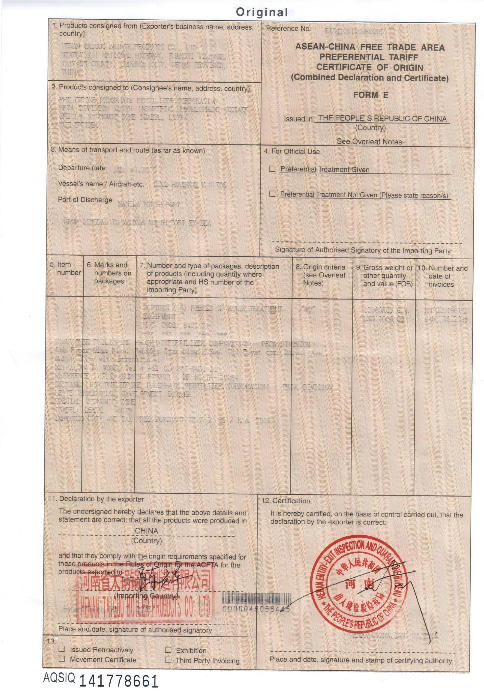
- Certificate of Origin (Form E): We issue this to help you claim preferential import duties for boilers in Indonesia under the China-ASEAN Free Trade Agreement.
- Technical Dossier: Including mill test certificates, strength calculation books, and hydrostatic test reports.
Safety and Indonesian Pressure Vessel Standards
Indonesian authorities prioritize safety. We engineer our boilers to align with internationally recognized codes that meet Indonesian pressure vessel standards.
- ASME Compliance: We design our boilers according to ASME Section I standards, which Indonesian inspectors widely accept.
- MIGAS/EBTKE Requirements: Depending on your industry (Oil & Gas vs. General Industrial), we ensure the equipment meets the specific ministry mandates.
- Material Traceability: We track every steel plate used in the boiler shell to guarantee it withstands high-pressure operational environments.
The Customs Clearance Process Explained
We streamline the clearance process by coordinating with your local agent. Once the boiler arrives:
- Notification of Import (PIB): We assist in providing the accurate HS Codes for boilers and accessories.
- Physical Inspection: Customs officers verify the serial numbers against the technical dossier we provided.
- Duty Payment: We help you calculate the import duties for boilers in Indonesia to ensure your budget remains accurate.
Installation and Disnaker Inspection Requirements
After the boiler arrives at your site, it must pass a local safety audit.
- Disnaker Certification: We provide all necessary manufacturer’s drawings for the mandatory Disnaker boiler inspection (Department of Manpower).
- On-site Commissioning: We send expert technical supervisors to guide the installation, ensuring the local inspectors find no faults in the safety interlocks or valve settings.
The Regulatory Framework: K3 Pesawat Uap
The primary safety law governing boilers in Indonesia is the Law of 1930 on Steam (Undang-Undang Uap 1930) and Minister of Manpower Regulation No. 1 of 1988.
A. OSH (K3) Certification-Boiler Import Regulations in Indonesia
Before any boiler can be operated in an Indonesian factory, it must undergo a technical inspection to obtain the SIA (Surat Izin Alat) and SKP (Surat Keterangan Penunjukan). In 2026, the Ministry of Manpower (Kemnaker) requires all imported boilers to be inspected by a third-party PJK3 (Perusahaan Jasa Keselamatan dan Kesehatan Kerja) to ensure the vessel meets Indonesia’s strict safety and health (K3) standards.
B. SNI (Standar Nasional Indonesia) Compliance-Boiler Import Regulations in Indonesia
For certain industrial components, SNI Certification is mandatory. While not all large-scale custom power boilers require an SNI mark, the auxiliary electrical components, valves, and safety sensors often must comply with SNI 17025 or equivalent international standards recognized by the National Standardization Agency of Indonesia (BSN).
Trade & Customs: NIB and TKDN Requirements-Boiler Import Regulations in Indonesia
A. Business Identification Number (NIB) via OSS-RBA
As of 2026, all importers must have an NIB (Nomor Induk Berusaha) issued through the OSS-RBA (Risk-Based Approach) system. Industrial boilers are categorized as High-Risk (Risiko Tinggi), meaning that in addition to the NIB, buyers must secure specific sectoral permits and undergo verified environmental and safety assessments before the goods clear the Bureau of Customs (Bea Cukai).
B. TKDN (Domestic Component Level) Impact
Under Ministry of Industry Regulation No. 35/2025, the TKDN threshold is a critical factor for projects funded by the state or state-owned enterprises (BUMN). If you are importing a boiler for a government-linked project, you may be required to prove that a certain percentage of the installation services or auxiliary parts are sourced locally. For 2026, even private-sector buyers are finding that a higher TKDN score can unlock significant Import Duty Exemptions.
Frequently Asked Questions (FAQ)
Q1: Do I need SNI certification for industrial boilers based on Boiler Import Regulations in Indonesia?
A: While many consumer goods require Boiler SNI certification, industrial-scale high-pressure boilers are primarily governed by Disnaker safety permits and international manufacturing codes like ASME.
Q2: How long does the import process take?
A: Sea freight and customs typically take 3-5 weeks. We coordinate the production timeline to match your factory’s readiness.
Q3: Do I need an Indonesian local representative for SNI certification?
A: Yes. Under current Boiler Import Regulations in Indonesia, foreign manufacturers must appoint a local representative (Agent or PT PMA) to hold the SNI certificate and handle the LSPro (Product Certification Body) audits on their behalf.
Q4: What are the emission standards for boilers in Indonesia for 2026?
A: New industrial boilers must comply with Ministry of Environment Regulation (Permen LHK) No. 11/2021. For 2026, stricter limits on Particulate Matter (PM),SO2, and NOx are being enforced, often necessitating a Two-stage Dust Collection System for biomass-fired units.
Q5: Can I get an import duty exemption for “Green” boilers?
A: Yes. Under the Green Investment Scheme, boilers that demonstrate high energy efficiency (e.g., condensing gas boilers) or utilize biomass waste may qualify for Tax Allowances and duty-free import of specialized components not yet produced in Indonesia.
Simplify Your Import with Kim’s Expertise
Don’t let regulations slow down your factory upgrade. Contact Kim today for a stress-free import plan and a compliant technical proposal for the Indonesian market.
- WhatsApp Kim: 8615093412637
- View Our Success Stories: cnmiracletrade.com