
Steam Boiler for Food Processing in Philippines: Selection Guide
Steam serves as a primary utility across modern food manufacturing, powering batch cooking, bulk heating, continuous sterilization, pasteurization, and CIP sanitization. For manufacturers operating in the Philippines, selecting the right steam boiler for food processing in Philippines requires evaluating technical parameters beyond basic nameplate capacity. Plant engineers and procurement teams must analyze operational steam demand […]
Get Instant Quote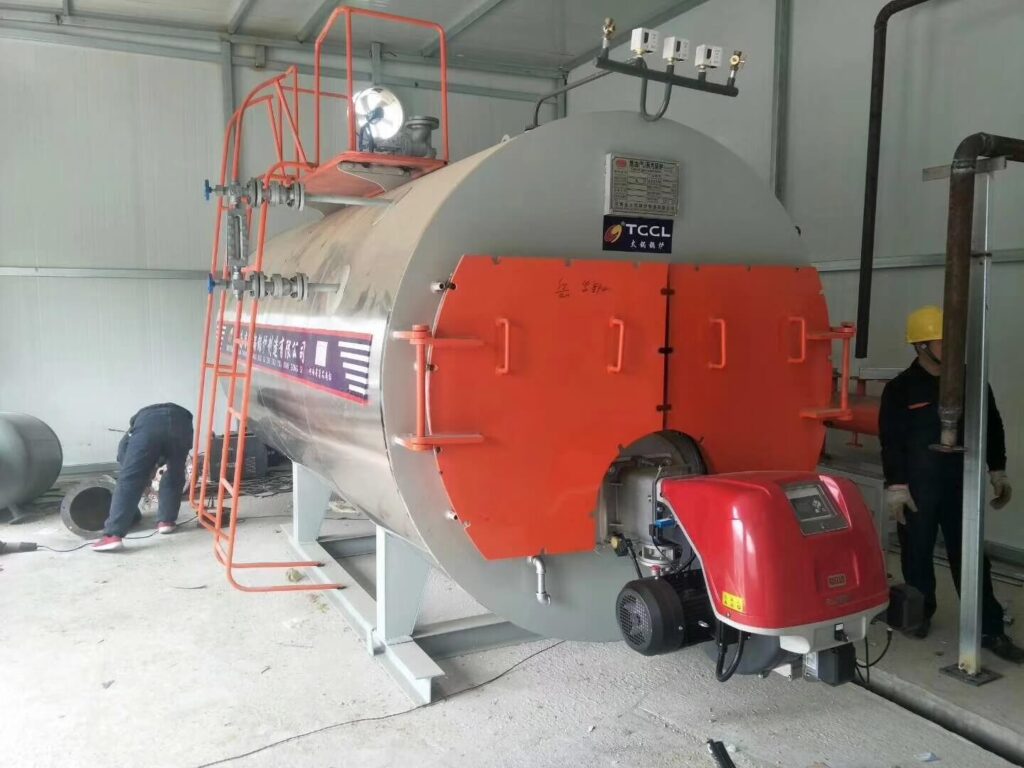
Technical Specifications
Steam serves as a primary utility across modern food manufacturing, powering batch cooking, bulk heating, continuous sterilization, pasteurization, and CIP sanitization. For manufacturers operating in the Philippines, selecting the right steam boiler for food processing in Philippines requires evaluating technical parameters beyond basic nameplate capacity. Plant engineers and procurement teams must analyze operational steam demand profiles, working steam pressure, fuel infrastructure, heat recovery systems, and auxiliary equipment to ensure dependable processing uptime.
This selection guide provides an engineering framework to size, specify, and select an industrial steam boiler system tailored to the regulatory, climatic, and logistical conditions of the Philippine food and beverage industry.
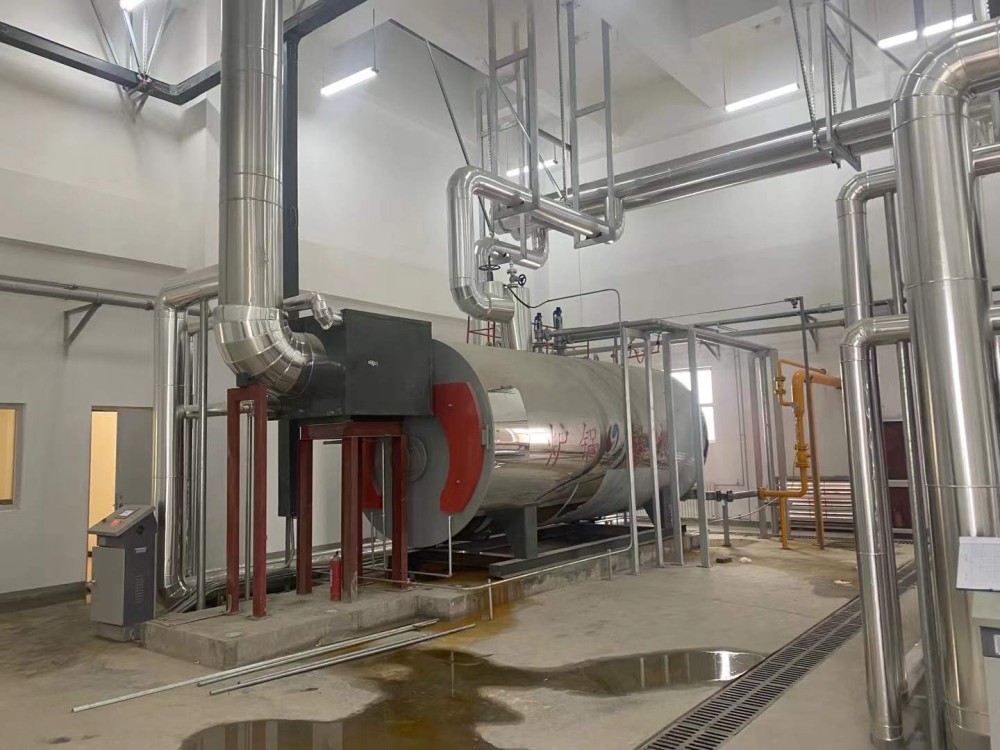
Why Do Food Processing Plants Need Steam Boilers?
Food production relies on saturated steam as a primary heat transfer medium due to its high latent heat, precise temperature-pressure relationship, and safe contact profile.
in Food Plants
Food processing operations use saturated steam across six primary unit applications:
- Cooking and Heating: Jacketed kettles, rendering vats, and frying heat exchangers use latent heat from steam to heat ingredients uniformly without localized scorching.
- Sterilization: Canned meats, fish packs, and retort pouch lines draw high-pressure saturated steam to eliminate microbiological pathogens and shelf-stable spores.
- Pasteurization: Continuous plate and tubular heat exchangers use controlled-temperature steam to pasteurize dairy, fruit juices, and sauces without degrading flavor profiles.
- Drying and Evaporation: Steam coils and drum dryers dehydrate agricultural products, including coconut desiccates, starches, and spent grains.
- Hot Water Production: Direct steam injection and shell-and-tube exchangers generate high-volume hot water streams for scalding, washing, and processing lines.
- Cleaning and Sanitation (CIP): Automated Clean-in-Place systems circulate hot water and chemical rinses at 80℃ to 85℃, utilizing culinary steam to sanitize pipework, holding vats, and filler heads.
The table below outlines common thermal operations across the Philippine food processing sector.
Common Steam Applications in the Philippine Food Industry
| Food Processing Segment | Primary Thermal Processes | Common Steam Use | Operating Profile |
|---|---|---|---|
| Canned Seafood & Tuna | Pre-cooking, retort autoclaves, can seam washing | Sterilization, batch heating, hot wash | Rapid peak cyclic loads |
| Meat Processing | Emulsion cooking, scalding, smokehouse coils | Process heating, pasteurization, CIP | Moderate batch cycling |
| Dairy & Beverage | Plate pasteurizers, bottle washers, CIP systems | Heating, continuous pasteurization, wash | Steady continuous demand |
| Coconut Processing | Desiccated drying, milk extraction, oil refining | Air heating, drying, vacuum distillation | High continuous demand |
| Sugar & Confectionery | Vacuum pan boiling, syrup concentration, melting | Indirect jacket heating, evaporation | Continuous steady loads |
| Bakery & Snack Foods | Proofer humidification, oven injectors, fryers | Direct steam injection, heat exchangers | Low to moderate cycling |
| Starch & Flour Mills | Slurry cooking, drum drying, flash drying | Bulk process heating, moisture drying | Continuous base load |
Review our comprehensive guide covering industrial boilers for food processing to explore specialized thermal processes for beverage, dairy, and meat packaging.
How Much Steam Does a Food Processing Plant Need?
A frequent error in industrial boiler selection is sizing a boiler based solely on factory floor area or total horsepower ratings. Sizing a Steam Boiler for Food Processing in Philippines requires analyzing the operational profiles of connected process equipment.
Total steam requirements combine continuous base loads with cyclic batch peaks. In food processing plants, batch autoclaves, retorts, and wash tanks cycle on and off throughout production shifts. Sizing for average consumption causes pressure drops when multiple retorts cycle simultaneously. Sizing exclusively for combined peak loads leads to oversized equipment that short-cycles at light loads, wasting fuel.
To establish correct plant sizing, engineers evaluate:
- Individual Machine Steam Ratings: Specific consumption figures for each jacketed kettle, pasteurizer, and drying tunnel.
- Equipment Diversity Factor: The statistical probability of multiple high-draw machines pulling steam simultaneously.
- Cyclic Startup Surges: High instantaneous condensation rates when cold food batches enter ambient cooking vessels.
- Auxiliary Thermal Demands: Parasitic steam consumption by deaerator preheating tanks and distribution piping losses.
- Planned Future Expansions: Planned packaging line additions over a 3- to 5-year operating window.
For a step-by-step sizing calculation methodology, read our engineering guide on industrial boiler capacity calculation.
How to Calculate Steam Demand for Food Processing
Engineers determine baseline food processing steam demand by evaluating the thermodynamic energy needed to heat food products, evaporate process moisture, and offset vessel radiation.
Sum of all active manufacturing connections under simultaneous peak conditions:
Staggering retort sequence timers avoids cumulative peaks (diversity factor = 0.85):
Add 10% allowance for transmission radiation, trap cycling, and feed deaerator load:
Apply a 1.20 margin for cold startups, wet monsoon raw food batches, and future line expansion:
Absorbs sudden cyclic retort openings without dragging down plant header pressures or causing wet steam carryover.
What Boiler Pressure Does a Food Factory Need?
Boiler operating pressure should be determined by the highest-pressure process consumer plus cumulative friction losses through the distribution network, not set arbitrarily.
High-Pressure Distribution vs. Low-Pressure Utilization
Saturated steam at higher pressure has higher density and lower specific volume (m3/kg). Distributing steam at high pressure (8.0 to 10.0 bar(g)allows smaller pipe diameters, cutting insulation and pipework installation costs.
At individual process connections, pressure-reducing valves (PRVs) drop the distribution pressure to match equipment ratings:
- Low Pressure (1.0 to 3.0 bar(g)): Supplies jacketed cooking kettles, CIP heating tanks, batch fryers, and pasteurizing plate exchangers. Low-pressure saturated steam transfers latent heat cleanly without overheating or caramelizing sugar-rich foods.
- Medium Pressure (6.0 to 9.0 bar(g)): Supplies retort autoclaves, canning sterilizers, and long drying tunnels requiring high saturation temperatures (160℃ to 180℃).
Specifying a boiler design pressure of 10.0 bar(g) (1.0 MPa) or 13.0bar(g) (1.25 MPa) provides sufficient pressure drop headroom while keeping equipment within standard Class 150 valve and fitting specifications.
Which Fuel Is Suitable for Steam Boiler for Food Processing in Philippines?
Selecting a boiler fuel for an industrial steam boiler in Philippines involves balancing utility access, operational labor, equipment footprint, and local air quality regulations across Luzon, the Visayas, and Mindanao.
Pipeline / Trucked Gas & Liquids
- Natural Gas, LPG, or Industrial Diesel
- Fully Automated Modulating Burners
- Minimal Ash and Clean Food-Grade Exhaust
- Lower Capital Equipment Footprint
Solid Biomass Residues
- Coconut Shell, Rice Husk, Wood Pellets
- Mechanical Stokers & Traveling Grates
- Requires Ash Handling & Baghouse Filters
- Fuel Cost Insulated from Global Oil Swings
Fuel Comparison for Philippine Food Plants
| Fuel Source | Combustion Profile | Primary Advantages | Philippine Market Considerations |
|---|---|---|---|
| GAS Pipeline Natural Gas | Clean, smoke-free | High automation, low maintenance, zero ash | Limited mainly to industrial economic zones in Southern Luzon |
| LPG Liquefied Petroleum Gas (LPG) | Clean, sulfur-free | Widely available via tanker, low emissions | Higher unit fuel cost; requires secure outdoor storage tanks |
| OIL Industrial Diesel (MDO/HSD) | Reliable, clean | Simple on-site storage, fast cold startups | Subject to international crude oil price fluctuations |
| BIOMASS Biomass (Coconut Shell/Wood) | Solid fuel | Lowest fuel cost per gigacalorie | Requires large covered storage, fuel conveyors, and ash collectors |
| AGRI-WASTE Rice Husk | High silica content | Cheap local fuel in rural agricultural areas | Abrasive ash; requires specialized grates and dust collectors |
| ELECTRIC Electricity | Zero local emissions | Compact footprint, no flue chimney needed | Unviable for high steam output due to high industrial power tariffs |
Gas Steam Boiler for Food Processing in Philippines
Packaged gas steam boilers are a standard choice for food manufacturing facilities across Metro Manila, Cavite, Laguna, Batangas, and Cebu.
Key advantages for food processing operations include:
- Hygiene and Food Safety: Natural gas and LPG combustion generate zero airborne soot, ash particles, or sulfur compounds around food packaging cleanrooms.
- Automated Combustion Management: Modulating European and Asian industrial burners automatically match firing rates to shifting plant steam loads from 20% to 100% MCR.
- Compact Boiler Room Layout: Firetube gas boilers arrive as pre-assembled skids, needing no large fuel yards or mechanical ash dumping systems.
- Fast Pressure Recovery: Wet-back firetube systems respond rapidly to the cyclic steam draws common in batch food processing.
For technical specifications on packaged units, read our guide on how to select a gas steam boiler and examine our horizontal WNS gas-fired steam boiler systems.
Biomass Steam Boiler for Food Processing in Philippines
For facilities operating outside urban pipeline networks—such as coconut plantations in Davao, pineapple canneries in Bukidnon, and rice mills in Central Luzon—solid biomass boilers offer lower fuel operating costs.
The Philippine agricultural sector produces large volumes of combustible residues:
- Coconut Shells and Husks: Dense lignocellulosic structure providing high calorific values (16,000 to 18,000 kJ/kg).
- Rice Husk: Widely available across regional milling centers, but demands abrasion-resistant conveying lines and multi-cyclone dust filters to manage abrasive ash (18%to 22% ash content).
- Wood Pellets and Offcuts: Delivers steady, uniform combustion on reciprocating step-grate furnaces.
Biomass boiler systems require higher initial capital investment for storage yards, fuel elevators, automatic stoker drives, and particulate collection systems. However, low local residue prices often deliver complete capital payback within 18 to 36 months for continuous three-shift food operations.
To evaluate solid fuel combustion systems, see our technical guide on how to choose a biomass boiler.
Boiler Efficiency and Operating Cost
Fuel expenditures represent 80% to 85% of the lifetime operating cost of an industrial steam plant. Small improvements in thermal efficiency yield significant annual cost savings.
Food manufacturing facilities improve boiler system efficiency through six key engineering measures:
- Installing an Exhaust Economizer: Standard firetube boilers discharge flue gases at 200℃ to 230℃. Installing a finned-tube economizer drops flue exit temperatures below 120℃, preheating boiler feedwater and improving thermal efficiency by 4% to 6%.
- Condensate Recovery Loops: Returning clean condensate (85℃ to 95℃) from closed jacket kettles and heat exchangers saves substantial fuel. Every 6℃ increase in feedwater temperature cuts boiler fuel consumption by approximately 1%.
- Digital Air-Fuel Modulation (O2 Trim): Industrial burners with servomotor control maintain excess combustion air within optimal limits (3% to 4% residual oxygen in flue gas), preventing fuel waste from excess cooling air.
- Automatic TDS Surface Blowdown: Replacing manual bottom blowdown valves with automated conductivity-sensing blowdown packages stabilizes chemical concentrations inside the drum while minimizing the loss of treated, pressurized water.
- Distribution Insulation: Insulating all distribution manifolds, valves, flanges, and piping networks prevents continuous radiant thermal loss.
- Optimizing Load Distribution: Operating boilers within their optimal firing envelope (70% to 85% load) avoids the efficiency penalties of continuous low-fire idling.
What Equipment Is Needed for a Food Processing Boiler System?
A dependable food processing boiler room requires integrated auxiliary systems to maintain steam purity, pressure stability, and safe operation.
A complete food manufacturing boiler installation includes:
- Pressure Vessel Island: Three-pass wet-back horizontal firetube or water-tube assembly complete with safety valves, dual water level indicators, and blowdown valves.
- Burner and Fuel Supply: Modulating gas or liquid burner with automatic leak detection, dual shut-off safety valves, and electrical ignition controls.
- Water Treatment Facility: Dual-bed sodium zeolite water softeners or reverse osmosis (RO) systems to remove calcium (Ca2+) and magnesium (Mg2+), preventing scale formation.
- Deaeration Plant: Atmospheric deaerator tanks or pressurized thermal spray deaerators that heat incoming feedwater to 104℃ and strip dissolved oxygen (CO2) and carbon dioxide (CO2) below corrosive thresholds.
- Feedwater Pumping Skid: Duplex stainless-steel high-pressure centrifugal pumps with automated start-stop and variable-frequency drives (VFD).
- Steam Header and Culinary Filtration: Central manifold with steam separators, automatic drain traps, and sintered 316L stainless steel micro-filters to deliver culinary-grade steam (95% retention at 2 microns) for direct injection lines.
- Condensate Recovery Unit: Pressurized flash tanks, mechanical float pumps, and receiver vessels to capture hot return water from process cookers.
- Electrical Control Center: Centralized PLC touch-panel cabinet providing continuous monitoring of drum water level, steam header pressure, stack temperature, and automated alarm systems.
Food Processing Boiler Room Design
Proper boiler room layout ensures operational safety, maintenance access, and local regulatory compliance. Philippine sanitary and industrial safety standards require complete physical separation between fuel-fired boiler rooms and food packaging cleanrooms.
Key physical and civil considerations include:
- Tube Removal Clearances: Maintain clear unobstructed floor space ahead of the boiler shell equal to the total length of the internal firetube bundle to allow tube replacement during overhauls.
- Boiler Room Ventilation: Natural combustion requires high air mass flow. Provide louvered air intake openings sized to at least 1.5 times total burner throat cross-sectional area, placed to pull fresh air past operating auxiliary motors.
- Drainage and Quenching Trenches: High-temperature boiler blowdown water cannot drain directly into municipal sewers. Install refractory-lined blowdown quenching pits or tanks to cool effluent below 40℃ before discharge.
- Overhead Lifting Structural Beams: Position heavy I-beams above the main pressure vessel and burner hinges to support hoists during annual inspections and maintenance.
For detailed floor diagrams, clearances, and ventilation requirements, see our guide on industrial boiler room design.
How to Select the Right Steam Boiler for Food Processing in Philippines
Selecting an industrial boiler system involves a nine-step engineering evaluation:
- Calculate True Maximum Instantaneous Steam Demand: Map process operations throughout production shifts, identifying simultaneous cooking and retorting cycles.
- Determine Working Steam Header Pressure: Base pressure on the highest-pressure consumer plus piping drops, keeping typical distribution between 7.0 and10.0 bar(g).
- Survey Available Energy Infrastructure: Verify fuel supply at your plant gate—evaluating pipeline gas, bulk LPG deliveries, diesel road tankers, or local biomass supplies.
- Evaluate Boiler Room Space: Match physical footprints to factory plots, accounting for fuel stockpiles, overhead piping racks, and clear tube-pull distances.
- Choose Appropriate Combustion Technology: Match dynamic steam swings to high-turn-down modulating burners, or select moving-grate stokers for steady agricultural residue firing.
- Integrate Waste Heat Recovery: Require a matched economizer to lower flue exhaust temperatures below 120℃ and protect plant operating margins.
- Specify Complete Water Treatment Equipment: Base water softening, reverse osmosis, and thermal deaerator specs on local municipal or well water tests.
- Calculate Total Cost of Ownership (TCO): Weigh the initial capital purchase against long-term fuel, power, chemical treatment, and maintenance expenditures.
- Plan for Production Line Expansions: Size the boiler house and distribution headers to accommodate planned packaging additions over the next 3 to 5 years.
To review active regional installations and technical capabilities, visit our guide to industrial boilers in the Philippines.
Frequently Asked Questions
What type of boiler is commonly used in food processing?
Packaged three-pass wet-back horizontal firetube boilers are the industry standard for small to medium food factories (1.0 to 15.0 TPH). They feature high water capacity, stable pressure retention during sudden load changes, and compact footprints. Larger processing plants and sugar refineries use industrial water-tube boilers.
How much steam does a food processing plant need?
Steam demand varies by industry sector and facility scale. Small bakeries and meat packagers typically require 0.5 to2.0 TPH. Medium-sized canneries, dairy bottling plants, and beverage processors use 3.0 to 8.0 TPH. Large coconut refineries, starch processors, and sugar mills require 10.0 to40.0+ TPH.
What boiler pressure is suitable for food processing?
Most food equipment operates between 1.5 and 4.0 bar(g). Distributing saturated steam through central factory mains at 8.0 to 10.0 bar(g) allows smaller pipe diameters while providing sufficient pressure drop through pressure-reducing stations.
Is a gas steam boiler suitable for food processing in the Philippines?
Yes. Packaged gas steam boilers burning natural gas or bulk LPG provide clean, smoke-free combustion, fast thermal response, and high operational automation. They are ideal for sanitary food cleanrooms and locations where floor space is limited.
Can biomass boilers be used in Philippine food factories?
Yes. Facilities in agricultural areas with steady, low-cost access to coconut shells, rice husks, or wood chips can lower fuel costs by installing biomass boilers. Biomass systems require dedicated covered fuel storage, fuel conveying systems, and particulate collectors.
What fuel is suitable for an industrial food processing boiler?
The choice depends on plant location and utility connections. Facilities inside industrial zones in Southern Luzon often select pipeline natural gas. Regional plants without pipeline connections typically choose bulk LPG or industrial diesel for clean operations, or agricultural biomass residues to minimize fuel costs.
What boiler equipment is required for a food processing plant?
A complete installation includes the boiler pressure vessel, a matched modulating burner or stoker, dual feed pumps, a water softening or reverse osmosis system, a thermal deaerator, chemical dosing units, a steam distribution header, culinary steam filters, an exhaust economizer, and a central PLC control cabinet.
Need a Steam Boiler for Your Food Processing Plant?
Tell our engineering team your steam demand, target operating pressure, fuel availability, daily shift schedules, and process application. CN MIRACLE configures complete industrial steam boiler packages designed for long service lives in the Philippine food manufacturing industry.
- Complete thermal energy balancing and equipment sizing
- Fuel supply integration for natural gas, LPG, diesel, or solid biomass
- Sanitary engineering support, including culinary filtration and water treatment
- Factory-direct supply, logistics management, and on-site commissioning support
Our engineering team will prepare a technical specification, auxiliary equipment layout, and fuel economy projection tailored to your plant requirements.