
Steam Boiler for Textile Factory in Uzbekistan: Reliable, Cost-Efficient & Industry-Proven Solutions
Contents Hide 1 Introduction: Why Steam Boilers Are Critical for Uzbekistan Textile Factories 2 Defeating Load Spikes: Thermal Battery Buffering in Heavy Textile Dyeing Corridors 2.1 2026 Market Context: The Export-Driven Surge 2.1.1 Fueling the $12.2 Billion Production Goal 2.1.2 Fixed Energy Tariffs and Financial Support 3 Where Steam Is Used in a Textile Factory […]
Get Instant QuoteTechnical Specifications
Introduction: Why Steam Boilers Are Critical for Uzbekistan Textile Factories
Uzbekistan is rapidly expanding its textile and garment industry, driven by local cotton resources and export-oriented manufacturing.
Across dyeing, washing, drying, and finishing processes, steam is the core energy source.
A reliable Steam Boiler for Textile Factory directly affects:
- Fabric quality
- Production stability
- Energy cost
- Delivery deadlines
Choosing the right steam boiler is therefore a strategic decision, not just equipment purchasing.
Defeating Load Spikes: Thermal Battery Buffering in Heavy Textile Dyeing Corridors
Operating high-capacity textile manufacturing conglomerates across modern Central Asian economic zones requires absolute thermal pressure stability continuously. Deploying an advanced steam boiler for textile factory in uzbekistan matrix dictates your fabric coloration consistency metrics and annual product rejection ratios. Taiguo structures specialized longitudinal double-drum water-tube configurations to balance massive, instantaneous downstream manufacturing drawing actions flawlessly.
Continuous textile finishing plants trigger sharp, aggressive thermal drawing spikes whenever bulk jet dyeing vats execute rapid heating cycles concurrently. This sudden downstream suction pulls high-velocity vapor streams out of your central boiler plant distribution headers entirely. Standard low-capacity package heating systems suffer instant interior pressure collapse events under these violent drawing forces. Our heavy industrial engineering division counteracts this operational bottleneck by expanding upper steam drum diameter metrics systematically to function as a massive thermal battery accumulator.
Anti-Priming Large-Surface Evaporation Boundaries: > We design expanded interior liquid-surface square-meter areas to suppress violent flash boiling lifting movements during sudden line pressure drops. Restricting upward vapor separation velocities effectively stops dangerous soft-water chemical droplet carryovers into your high-grade white cotton fabric bleaching lines.
Shade-Fixing Saturated Vapor Dryness Fractions : > Sustaining a constant steam dry fraction above 99% guarantees uniform, low-fluctuation thermal energy delivery inside localized fabric stretching chambers. Eliminating temperature drops prevents delicate polyester dye bleeding defects to secure flawless color-fastness ratings across every single production run.
Heavy Alloy Multi-Port Steam Header Headers: > We manufacture oversized, thick-walled distribution headers outfitted with independent precision flow control valve networks systematically. This integrated manifold layout isolates the volatile thermal consumption pulses of individual stenter frames to protect adjacent delicate washing lines perfectly.
2026 Market Context: The Export-Driven Surge
Fueling the $12.2 Billion Production Goal
Uzbekistan’s 2026 strategy focuses on high-value downstream products, aiming for 147 trillion soum in total textile output. For spinning, weaving, and dyeing plants, a Steam Boiler for Textile Factory Uzbekistan is a Critical asset. To support the planned addition of 397 million square meters of fabric capacity, manufacturers are prioritizing boilers that offer Superior pressure stability to ensure consistent dyeing quality and fabric strength.
Fixed Energy Tariffs and Financial Support
Starting in 2026, Uzbekistan has implemented a three-year fixed-tariff policy for natural gas. This provides Essential cost predictability for textile enterprises. Furthermore, the government has allocated $200 million in preferential loans to support the modernization of 138 enterprises. By investing in Superior steam technology now, factories can utilize these Authoritative financial tools to lock in long-term energy savings and operational stability.
Where Steam Is Used in a Textile Factory (Real Production Processes)-Steam Boiler for Textile Factory
1.Steam Boiler for Textile Factory: Dyeing & Printing
- Precise temperature control
- Continuous steam pressure
- No fluctuation allowed
Unstable steam leads to:
❌ Uneven color
❌ Fabric defects
❌ Rework and waste
2. Steam Boiler for Textile Factory:Washing & Bleaching
- Large volume steam consumption
- Long operating hours
- Stable saturation steam required
3. Steam Boiler for Textile Factory:Drying & Finishing
- Steam-heated dryers
- Ironing and fabric setting
- High energy demand during peak shifts
Key Steam Challenges Faced by Textile Factories in Uzbekistan
Gas Supply Stability
- Seasonal gas pressure reduction
- Industrial gas quota limits
- Winter supply prioritization to residential use
Rising Energy Cost
- Fuel cost directly affects textile margins
- Export factories require long-term cost predictability
Continuous Production Requirement
Textile lines often run:
- 20–24 hours/day
- With little tolerance for boiler downtime
Best Steam Boiler Solutions for Textile Factories in Uzbekistan
Steam Boiler for Textile Factory-Gas Steam Boiler – Clean & Simple
Best for:
- Small to medium textile factories
- Urban or gas-stable regions
Advantages:
- Fully automatic operation
- Clean steam, no ash
- Low labor requirement
Typical capacity:
1–6 TPH Steam Boiler for Textile Factory
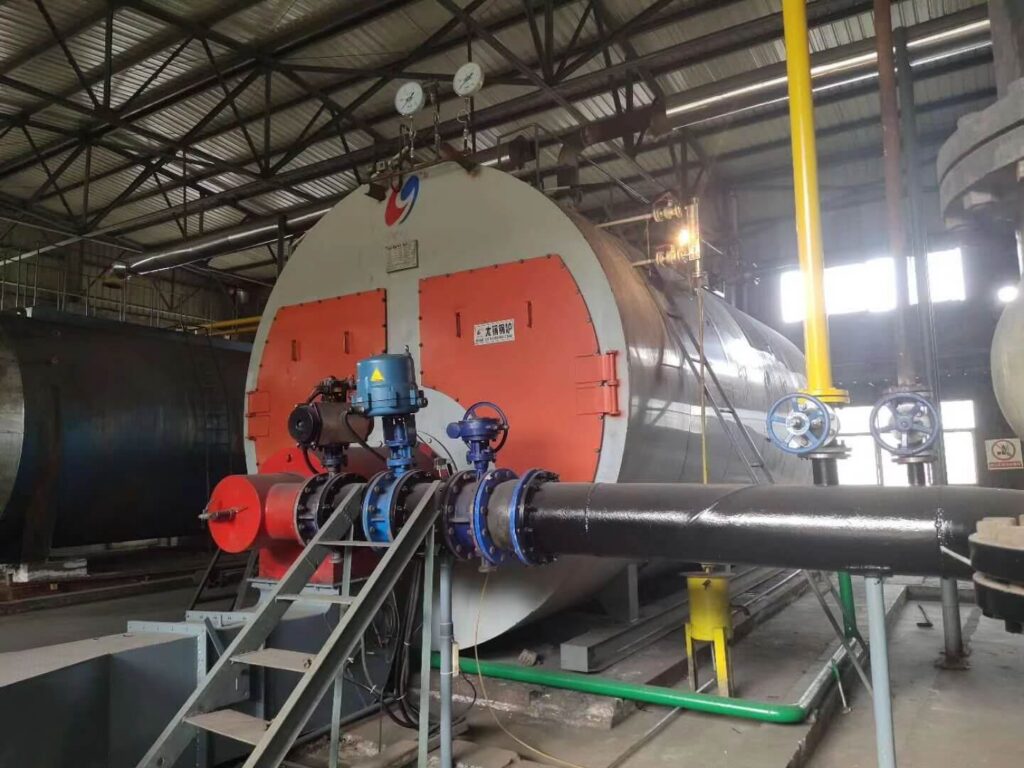
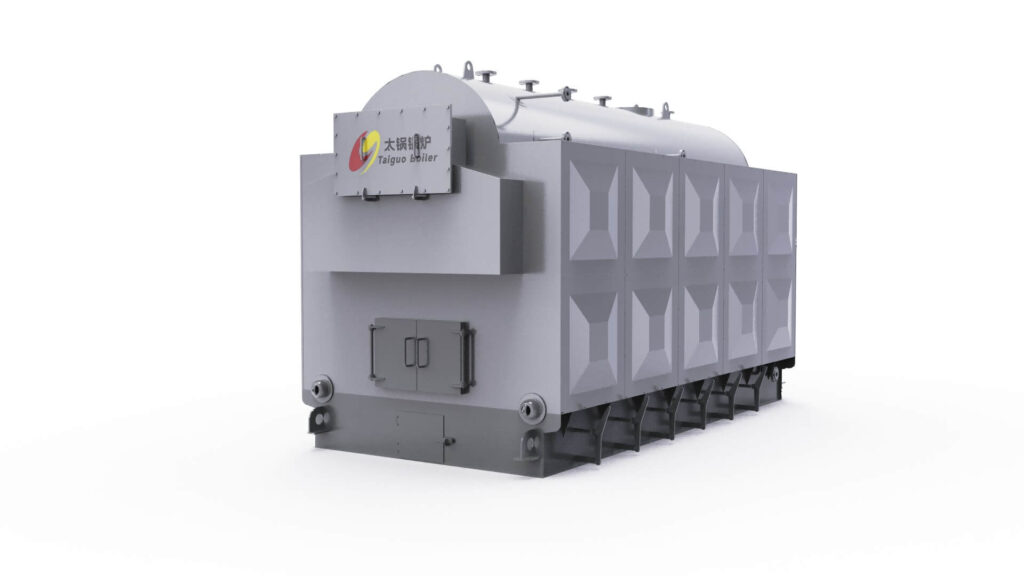
Steam Boiler for Textile Factory-Biomass Steam Boiler (Cotton Waste, Rice Husk)
Best for:
- Medium to large textile factories
- Areas with biomass fuel access
Advantages:
- 30–60% lower fuel cost
- Energy independence
- Utilization of cotton waste
Typical capacity:
4–10 TPH Steam Boiler for Textile Factory
Gas + Biomass Hybrid Boiler System (Recommended)
Best for:
- Export-oriented textile factories
- Continuous production lines
Advantages:
- Biomass for base load
- Gas for peak & backup
- Lowest total lifecycle cost
Typical Boiler Capacity Selection for Textile Factories-Steam Boiler for Textile Factory
| Factory Scale | Steam Demand | Recommended System |
|---|---|---|
| Small Workshop | 1–2 TPH | Gas Steam Boiler |
| Medium Factory | 3–6 TPH | Gas or Biomass |
| Large Factory | 8–15 TPH | Hybrid System |
Heavy-Duty Industrial Configurations Tailored for Large-Scale Uzbek Fabric Mills
Sustaining twenty-four-hour continuous fabric processing schedules demands highly robust, fully certified heavy-duty industrial pressure vessel configurations reliably. Curing miles of dense textile materials daily mandates deploying highly specialized fuel firing systems matching local utility logistics perfectly. Taiguo builds premium horizontal fire-tube units and heavy water-tube solid fuel setups to secure your manufacturing autonomy seamlessly:
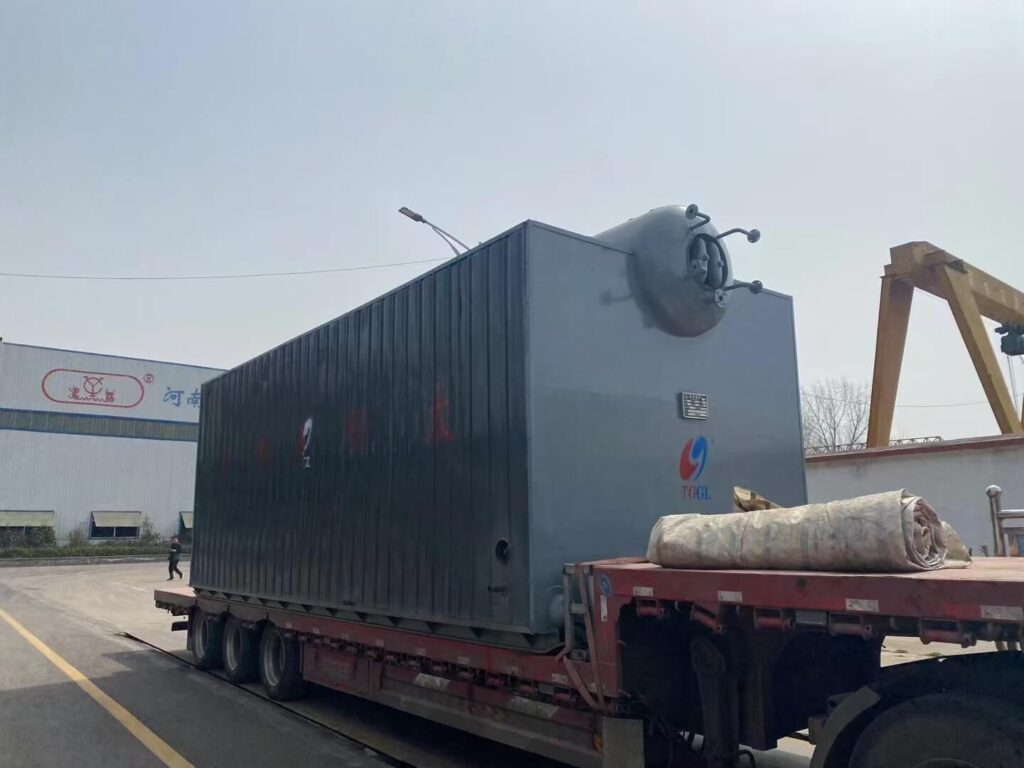
- SZL Series Biomass Chain Grate Boilers-Steam Boiler for Textile Factory (4 t/h to 35 t/h): This longitudinal double-drum water-tube structure fits large-scale cotton processing groups utilizing local cotton stalk remnants or wood pellets perfectly. The extra-large water capacity acts as a massive thermal heat sink to counter high-volume dye house steam spikes easily.
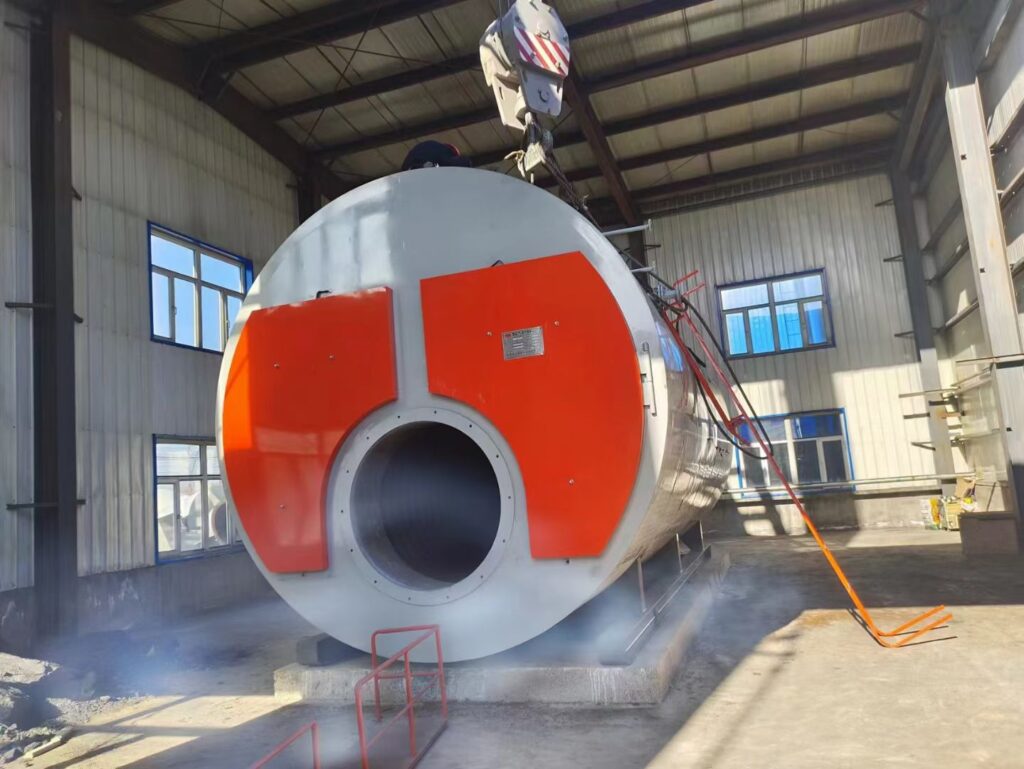
- WNS Series Automated Gas/Oil Packaged Boilers-Steam Boiler for Textile Factory (2 t/h to 20 t/h): This highly compact horizontal wet-back layout suits automated fabric operations operating near urban gas pipeline corridors cleanly. The large-volume corrugated furnace design maximizes flame radiation absorption fields while eliminating high-stress tube sheet welding cracks completely.
Why Textile Factories in Uzbekistan Prefer Chinese Boilers
Chinese steam boilers are widely adopted because they offer:
- Proven textile industry experience
- Custom design for cotton waste fuel
- Competitive pricing
- Fast spare parts availability
When properly engineered, they deliver stable steam and long service life.
Key Factors When Choosing a Steam Boiler for Textile factory Use
Steam Stability
- Pressure fluctuation tolerance must be minimal
- Direct impact on fabric quality
Fuel Cost Structure
- Gas price vs biomass availability
- Long-term cost planning
Automation & Reliability
- PLC control
- Automatic safety protection
- Remote monitoring (optional)
After-Sales Support
- Installation guidance
- Operator training
- Spare parts support
Dual-Stage Condensate Heat Recovery & Flue Gas Energy Recycling Circuits
Maximizing the annual financial profitability of your [steam boiler for textile factory in uzbekistan] investment requires installing active tail-end energy recycling networks. Fabric print workshops reject substantial volumes of high-temperature distilled condensate fluid and flashing vapor remnants after completing color-fixing sequences. Taiguo routes these high-temperature thermal waste streams straight back into sealed, pressurized feed-water deaerator storage systems systematically.
This closed-loop recycling infrastructure captures valuable latent heat fractions to reduce raw fresh water make-up needs by 25% effortlessly. Additionally, our engineering division mounts high-grade finned-tube economizers and integrated flue gas recirculation (FGR) ducts across rear stack assemblies. This multi-stage heat absorption setup drives total boiler thermal efficiency beyond 95% while suppressing toxic nitrogen oxide emissions flawlessly.
- Pressurized Flash Vapor Heat Exchangers: Extracts heat from wastewater blowdowns to preheat incoming raw softened water lines cleanly.
- Premium Hydrophobic Fiber Insulation Wrapping: Encases the boiler shell in thick protective blankets to eliminate radiant room cooling losses.
Case Insight: Typical Textile Factory Upgrade in Uzbekistan
A medium textile factory replaced an aging gas boiler with a hybrid system:
- 6 TPH biomass boiler (cotton waste)
- 4 TPH gas boiler (backup)
Results:
- Fuel cost reduced by ~40%
- Production downtime eliminated
- ROI achieved within 2 years
Conclusion: The Right Steam Boiler Determines Textile Factory Profitability
For textile factories in Uzbekistan, a steam boiler is not just equipment —
it is the heart of production.
The right solution delivers:
✔ Stable fabric quality
✔ Lower energy cost
✔ Reliable delivery schedules
✔ Long-term competitiveness
Hourly Shift-Change Maintenance Checklist for Textile Boiler House Operators
Textile manufacturing facility engineering managers must enforce strict hourly control room tracking schedules to protect high-pressure steam paths. Enforce our technical engineering division’s verified operational parameter checklist across your daily fabric production shifts safely:
- Audit Main Distribution Header Pressures: Track individual manifold pressure levels to ensure stable delivery across all active dye lines.
- Check Thermal Deaerator Operating Status: Monitor feed tank temperatures to ensure they sustain a constant 105°C baseline for oxygen stripping.
- Execute Main Shell Bottom Blowdowns: Open lower blowdown valves for 10 seconds under low-load states to flush out accumulated sediment slurry.
- Verify Burner Flue Gas Recirculation Dampers: Inspect automated FGR actuator positions to confirm accurate air-staging adjustments for low-NOx runs.
- Audit Feed-Water Hardness Transmissions: Test soft water softener outputs daily to ensure hardness metrics stay under 0.03 mmol/L.
FAQ: Textile Steam Solutions
Can your boilers support the new 2026 synthetic yarn production lines?
Yes. Our Superior steam solutions are designed for the high-temperature requirements of synthetic and blended yarn processing, which is a Critical growth area for Uzbekistan in 2026.
Are there tax incentives for installing “Green” boilers?
Absolutely. Under Law No. ZRU-1104, textile manufacturers implementing energy-efficient technologies can benefit from Essential corporate income tax reductions (as low as 2%) and social tax incentives until 2028.
How do we handle water hardness in major textile hubs like Andijan?
We provide Validated automated water softening systems as an Essential part of every project. This prevents scale buildup, ensuring your Steam Boiler for Textile Factory Uzbekistan maintains its Superior 98% efficiency even in areas with difficult water chemistry.
Why does a textile dyeing mill require a steam boiler with a much larger steam storage space than generic packaging factories?
Packaging factories run continuous, highly stable processing lines that present predictable thermal consumption profiles throughout the day. Conversely, textile dyeing mills operate multiple massive wash vats and stenter frames that draw huge, abrupt steam volumes during start-up sequences. Utilizing a small-volume boiler causes immediate internal pressure drops, triggering violent boiling carryovers that flood production lines with chemical water droplets. Sourcing our specialized [steam boiler for textile factory in uzbekistan] architecture providing an expanded vapor buffer zone eliminates pressure dropouts entirely.
How does a sudden boiler pressure drop cause color-bleeding defects across high-speed fabric dyeing vats?
Sharp internal pressure dropdowns carry wet, low-quality steam drops directly into delicate fabric coloration environments. Excessive liquid water introduction creates cold localized temperature zones across the raw textile fibers during critical color-fixing hours. This thermal imbalance disrupts the essential chemical molecular bonding required to fix dye pigments into the yarn layers permanently. This incomplete molecular bonding results in severe color shade variations, fabric bleeding defects, and high factory product scrap rates inside the warehouse.
What document package does Taiguo provide to ensure immediate Gospromtekhnadzor installation approvals inside Uzbekistan?
Local safety inspection bureaus enforce exceptionally strict engineering codes on high-pressure pressure vessels operating inside textile industrial zones. Taiguo holds elite international A-class manufacturing licenses to back your long-term capital equipment investments with absolute legal compliance. We deliver a comprehensive, factory-certified technical documentation package containing non-destructive x-ray weld testing records and fully translated translated structural blueprint dossiers in Russian. This rigorous validation guarantees immediate administrative installation approvals smoothly without requiring expensive field modifications.
Can Taiguo’s industrial fabric curing boilers interface directly with European or Asian automated factory main systems (DCS)?
Yes, we build our centralized microcomputer PLC networks utilizing standard, native Modbus-RTU industrial digital communication interfaces seamlessly. This digital integration permits our heavy equipment panels to broadcast real-time temperature, water level, and fuel consumption trends over your plant’s networks. Your central control technicians can supervise thermal outputs and adjust multi-vat load profiles from a single centralized desktop workstation smoothly.
👉 Call to Action
Looking for the best steam boiler solution for your textile factory in Uzbekistan?
Contact us to receive:
- Steam demand calculation
- Boiler type & capacity recommendation
- Fuel cost & ROI analysis
- Complete project quotation
you may need more information about biomass fired steam boiler
Research complete cotton processing workshop layouts via our insights industrial boiler applications by industry portal.
Recycle ginning spinning residue efficiently utilizing our Cotton Waste Biomass Boiler for Textile Industry in Uzbekistan: Cost-Effective, Sustainable & Efficient.
Maintain uniform temperature loops across weaving cylinders inside Reliable Steam Boilers for Textile Factories in Uzbekistan.