
How a Chemical Plant Achieved Up to 37% Improved Heating Efficiency With a 2.5 Million kcal/h Gas-Fired Thermal Oil Heater
Contents Hide 1 Overview 2 Client Background 3 Challenges Before Upgrading Of Gas Fired Thermal Oil Heater 4 Solution: Installation of a 2.5-Million kcal/h gas fired Thermal Oil Heater 4.1 Stability for Sensitive Chemical Synthesis Of Gas Fired Thermal Oil Heater 4.2 Advanced Heat Recovery Integration Of Gas Fired Thermal Oil Heater 5 Implementation Process […]
Get Instant Quote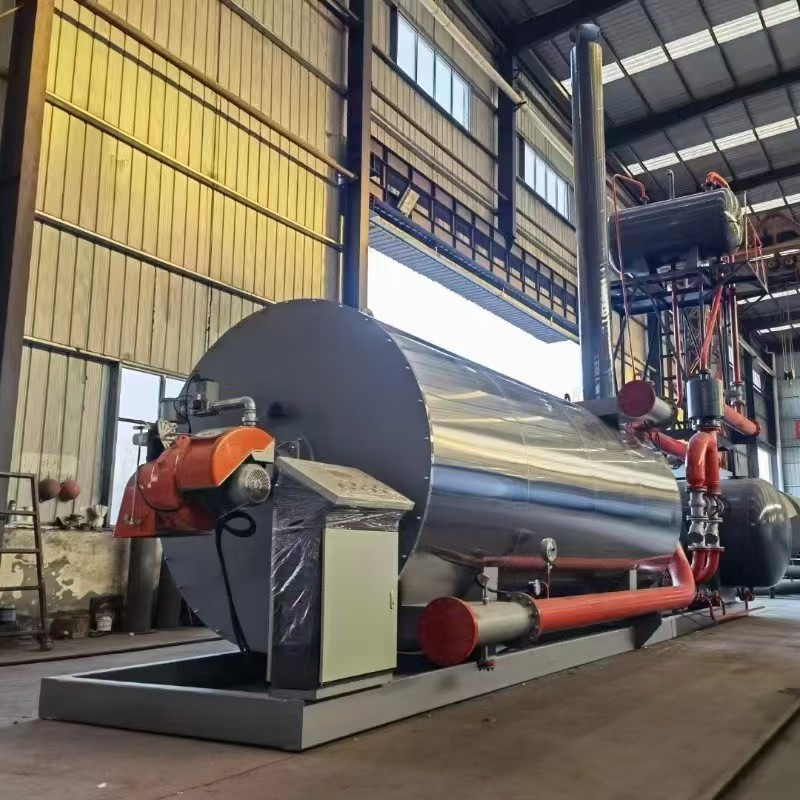
Technical Specifications
Overview
This success case highlights how a mid-sized chemical manufacturer replaced its unstable steam heating system with a 2.5-million kcal/h gas fired thermal oil heater, achieving higher stability, lower operating costs, and improved product quality. Thermal oil technology enabled the plant to maintain precise temperature control for continuous high-temperature processes.
Client Background
Company: BlueRiver Chemical Technology
Industry: Fine Chemical Production
Main Products: Resin, specialty coatings, plastic additives
Heating Requirements: Continuous heating between 180–280°C
The company’s previous system—a traditional steam boiler—struggled to provide constant high temperatures. Frequent pressure drops reduced batch quality and increased waste.
Challenges Before Upgrading Of Gas Fired Thermal Oil Heater
The client faced several serious operational issues:
- Inconsistent temperature control affecting chemical reaction stability
- High energy consumption due to steam losses and condensate recovery problems
- Safety concerns related to high-pressure steam operation
- Production downtime caused by pipe scaling and corrosion
- Difficulty reaching temperatures above 200°C with steam alone
To stay competitive, they needed a high-temperature, low-pressure heating solution with excellent reliability.
Identifying the 37% Efficiency Gap Of Gas Fired Thermal Oil Heater
Before the upgrade, the chemical plant struggled with a legacy steam-based heating system that suffered from massive heat loss during long-distance piping. Our engineers conducted a comprehensive thermal audit and identified that 25% of the energy was wasted in condensate loss and high-pressure steam leaks. By switching to a 2.5 million kcal/h Gas Fired Thermal Oil Heater, we transitioned the plant to a closed-loop liquid phase system. This shift eliminated the need for high-pressure piping and steam traps, immediately recapturing the lost energy and providing the foundation for the total 37% efficiency gain.
Solution: Installation of a 2.5-Million kcal/h gas fired Thermal Oil Heater
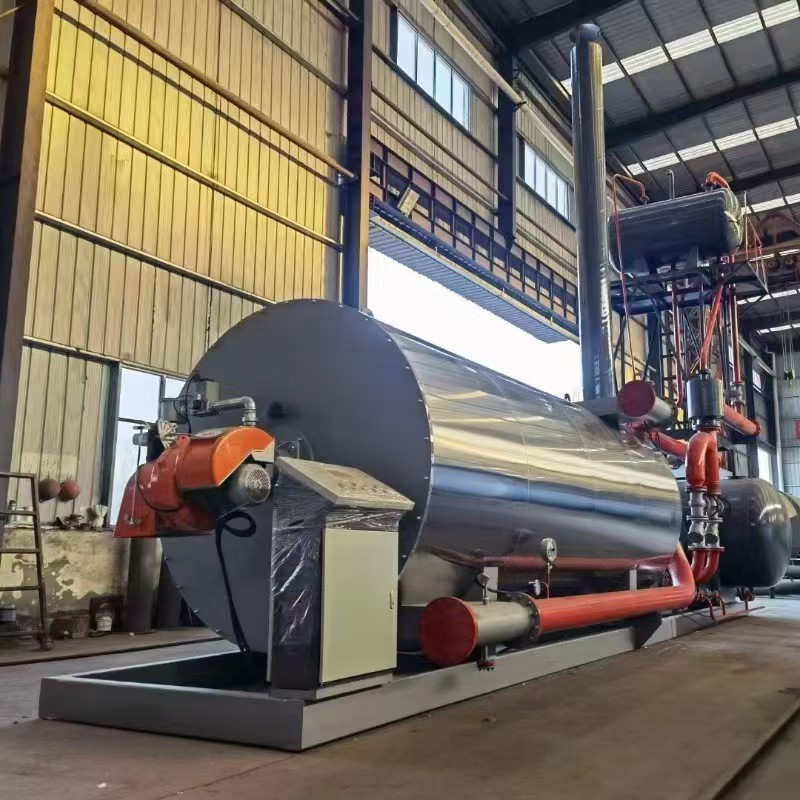
After conducting a full heating load analysis, the engineering team recommended a 2.5-million kcal/h horizontal gas fired thermal oil heater system, with key features including:
- High-efficiency coil design providing up to 92% thermal efficiency
- Low-pressure operation, greatly improving safety
- Precise temperature control (±1°C)
- Automatic control system with real-time monitoring
- Energy-saving economizer for heat recovery
- Dual fuel burner (natural gas / diesel) for flexibility
A new thermal oil circulation pump and expansion tank were integrated to create a stable, closed-loop system.
Stability for Sensitive Chemical Synthesis Of Gas Fired Thermal Oil Heater
In chemical manufacturing, even a 2°C fluctuation can lead to byproduct formation or batch failure. The 2.5 million kcal/h heater was integrated with a frequency-converting oil pump and a high-precision PID control system. This allowed the plant to maintain a constant 280°C supply temperature with a variance of less than ±0.5°C. This level of precision not only saved fuel but also improved the chemical product’s purity, effectively reducing waste and increasing the plant’s overall production throughput.”
Advanced Heat Recovery Integration Of Gas Fired Thermal Oil Heater
The final piece of the 37% efficiency puzzle was the installation of a dual-stage waste heat recovery unit. We designed a custom economizer that captures the high-temperature flue gas to pre-heat the combustion air. This ‘Air Pre-heating’ technique boosted the furnace temperature while lowering the exhaust temperature to 110°C. By feeding hotter air into the burner, the 2.5 million kcal/h system reached a thermal efficiency that outperformed the client’s old system by a significant margin, directly reflecting in their monthly fuel savings.”
Implementation Process of gas fired thermal oil heater
- Heating demand assessment and sizing verification
- System design, including piping layout and insulation plan
- Installation of the heater, pumps, valves, and control cabinet
- Commissioning and performance testing
- Operator training for safe long-term operation
The entire installation took 18 days, allowing the plant to resume production quickly.
Results After Installation of gas fired thermal oil heater
✓ 37% Increase in Heating Efficiency
Thermal efficiency improved from 67% (steam system) to 92%, significantly reducing energy waste.
✓ Stable 180–280°C Temperature Control
The heater provided smooth, uninterrupted high-temperature heat, enhancing reaction stability.
✓ 28% Reduction in Energy Costs
Switching to a closed-loop thermal oil system eliminated steam losses, cutting annual energy expenses.
✓ Zero Pressure-Related Safety Incidents
Since thermal oil operates at atmospheric pressure, safety risks dramatically decreased.
✓ Higher Product Quality and Yield
Consistent heating improved reaction uniformity, increasing batch yield by 16%.
Environmental & Economic Impact of gas fired thermal oil heater
- Lower emissions due to clean combustion and reduced fuel usage
- Less water consumption (no feedwater or condensate treatment required)
- Return on investment (ROI) achieved in 14 months
- Reduced maintenance costs by eliminating water-related corrosion issues
Chemical Plant Heating Optimization Checklist
To achieve the 37% efficiency increase demonstrated in this 2.5 million kcal/h project, Taiguo’s engineering team utilizes the following checklist to diagnose and optimize chemical heating circuits:
- Check 1: System Phase Analysis (Liquid vs. Vapor Phase)
- Action: Evaluate if your current heating medium is operating in the liquid or vapor phase.
- Technical Why: In most chemical processes, a liquid-phase thermal oil system is superior to steam (vapor phase). Liquid systems eliminate “latent heat loss” and the need for complex condensate return networks. By keeping the thermal fluid in a closed-loop liquid phase, you prevent the 10-15% energy loss typically associated with steam traps and boiler blowdown.Our heaters are optimized for high-stability liquid phase circulation.
- Check 2: Reactor Jacket Flow Dynamics (Preventing Hotspots)
- Action: Inspect the internal flow velocity within the reactor jackets and ensure high-velocity bypasses are installed.
- Technical Why: Chemical reactors are sensitive to “hotspots” which can cause product degradation or vessel fatigue. We ensure a high-velocity flow to maintain a uniform temperature across the jacket surface. This not only protects the reactor but also increases the heat transfer coefficient, allowing the thermal oil heater to satisfy the heat demand more quickly and efficiently.
- Check 3: Flue Gas & Excess Air Calibration
- Action: Perform a professional flue gas analysis to measure CO2 and O2 levels at various burner firing rates.
- Why: High levels of “excess air” are the most common cause of hidden energy waste. If the burner is pulling in too much cold air, it cools the flame and carries heat straight out the chimney. By calibrating the air-to-fuel ratio to maintain optimal O2 levels (typically 2-3% for gas), we ensure that the maximum amount of energy stays inside the furnace to heat the oil.
- Check 4: Insulation Integrity & Thermal Imaging
- Action: Use infrared thermography to scan the high-temperature piping and valve manifolds.
- Why: In large-scale 2.5 million kcal/h systems, even a few meters of uninsulated piping can act as a massive radiator. Professional-grade rock wool insulation with aluminum cladding is essential to ensure that 99% of the heat generated at the boiler actually reaches the chemical reactor.
Client Testimonial Of Gas Fired Thermal Oil heater
“The thermal oil heater has been a game changer for our production line. We now achieve stable high-temperature heating with far lower energy consumption. Product quality has noticeably improved.”
— Production Director, BlueRiver Chemical Technology
Why Gas Fired Thermal Oil Heater Are the Ideal High-Temperature Solution
- No pressure = safer operation
- Can reach 300°C+ without steam
- Highly energy-efficient
- Low maintenance and long service life
- Suitable for chemicals, textiles, food processing, plastics, wood, asphalt, and pharmaceuticals
Understanding 2.5 Million kcal Gas Fired Thermal Oil Heaters
A 2.5 million kcal gas fired thermal oil heater is an advanced industrial high-temperature heating system. It provides highly stable thermal energy for process applications requiring precise temperature control.
Unlike traditional steam-based heating systems, thermal oil heaters use specialized heat transfer oil as the circulation medium. This closed-loop configuration allows factories to achieve high-temperature heating without high operating pressures.
Gas fired thermal oil heaters operate efficiently in industries where continuous heating and temperature stability are essential. Common fields include chemical processing, textile manufacturing, industrial food production, and various heavy manufacturing sectors.
What Does 2.5 Million kcal/h Mean?
The heating capacity of 2.5 million kcal/h represents the total continuous thermal output capability of the heater. (This rating roughly equals 2900 kW or 2.9 MW of thermal power).
This specific capacity level is highly suitable for medium to large industrial applications requiring continuous heat supplies. The actual heater model selection depends on multiple project parameters:
- Production process operating temperature requirements
- Peak and average heating load demands
- Daily and annual factory operating hours
- Heat transfer oil circulation pump flow rates
- Future factory production expansion plans
Professional heat load calculation is absolutely important. It ensures the complete industrial heating system operates at maximum efficiency.
How Does a Gas Fired Thermal Oil Heater Work?
A gas fired thermal oil heater transfers heat energy through an engineered, closed-loop thermal oil circulation system. The basic working process includes four critical steps:
1. Fuel Combustion
Natural gas or other gaseous fuels burn efficiently inside the combustion chamber. Advanced low-NOx burners generate precise thermal energy.
2. Thermal Oil Heating
The generated heat transfers rapidly to the heat transfer oil. The fluid flows continuously through high-quality heating coils inside the heater.
3. Heat Circulation
Heavy-duty circulation pumps transport the heated thermal oil through production equipment. This process provides uninterrupted heat delivery to your manufacturing lines.
4. Temperature Control
Intelligent automatic control systems constantly regulate combustion and fluid circulation. They maintain extremely stable operating temperatures under varying production loads.
Gas Fired Thermal Oil Heater Applications
Gas fired thermal oil heaters provide vital, high-temperature thermal energy across multiple specialized manufacturing sectors.
Chemical Industry
Heaters provide reliable process heating for reactors, storage tanks, and chemical processing equipment. Discover our specialized Chemical Industry Boiler Solution.
Textile Industry
Thermal oil drives essential heat-setting stenter machines, fabric drying, and high-temperature finishing lines. Explore our high-efficiency Textile Industry Boiler Solution.
Food Processing Industry
Systems supply steady heat for industrial baking ovens, continuous deep fryers, and thermal processing equipment. Review our Food Industry Boiler Solution.
Rubber and Plastic Industry
High-temperature oil circulation supports precise molding, extrusion, and rubber vulcanization processes perfectly.
Wood Processing Industry
Heaters provide exceptionally stable heat for large-scale wood drying kilns and hot press manufacturing systems.
How to Select a Gas Fired Thermal Oil Heater?
When selecting an industrial gas fired thermal oil heater, factory procurement teams must analyze several technical factors:
- Required Heating Temperature: Different manufacturing processes require specific thermal oil temperatures to maintain product quality.
- Thermal Load: The rated heater capacity must match your actual production peak heat demand accurately.
- Fuel Availability: Natural gas infrastructure availability and local utility tariffs heavily influence your long-term operating costs.
- Thermal Oil Selection: Engineers must choose suitable heat transfer fluids based on your exact operating temperature limits.
- System Design: Proper circulating pump selection, expansion tank sizing, and piping layouts directly affect overall thermal performance.
Thermal Oil Heater vs Steam Boiler
Thermal oil heaters and steam boilers are both premier industrial heating solutions. However, they serve completely different manufacturing process requirements.
Thermal Oil Heater
- Best Suited For: High-temperature heating processes requiring precise temperature control under low operational system pressures. They deliver excellent indirect heating via circulation loops.
Steam Boiler
- Best Suited For: Processes with direct steam demand, open-injection heating, sterilization, or plants requiring wide steam distribution networks.
The final selection depends entirely on your process temperature targets, maximum pressure limits, and specific factory production conditions.
Engineering Considerations for Thermal Oil Heating Systems
A successful thermal oil heating project requires comprehensive engineering planning. Complete system integration must evaluate several critical factors:
- Accurate factory heat load calculations and margin allocations
- Heater physical footprint sizing and boiler room ventilation layout
- High-efficiency thermal oil circulation piping network design
- Proper expansion tank and oil storage tank configuration
- Industrial pipeline insulation materials to reduce heat loss
- Advanced safety control systems and automatic interlock protections
Proper engineering design significantly improves system efficiency, operational safety, and equipment service life.
Engineering Resources: Plan your complete boiler room layout via our Engineering Hub. Discover advanced methods to improve system efficiency through Industrial Boiler Optimization.
Related Thermal Oil Heating Solutions
We customize industrial gas fired thermal oil heaters according to different industrial heating requirements and fuel conditions. Explore our core thermal solutions:
- Industrial Thermal Oil Heating Systems: Heavy-duty, long-lifespan thermal fluid heaters engineered for international manufacturing plants. Visit our main Industrial Thermal Oil Heating Systems Hub.
- High Temperature Process Heaters: Specialized heating units designed for precise temperature control in chemical and textile operations. Learn more on our main Thermal Oil Heater Product Page.
- Gas Fired Industrial Heating Equipment: High-efficiency, automated thermal packages configured to reduce factory emissions.
FAQ: Essential 2026 ROI Insights For gas fired thermal oil heater
Why is a 2.5-Million kcal/h gas firedgas fired Thermal Oil Heater more efficient than steam for chemical plants?
In the 2026 energy landscape, steam is often seen as wasteful due to blowdown and trap losses. A Superior thermal oil system eliminates these. The Validated 37% efficiency gain is primarily due to the lack of phase-change energy loss and the Essential reduction in water treatment overhead.
What is the expected payback period for an upgrade of this scale?
Based on current 2026 fuel prices, the Reliable payback period for a 2.5-Million kcal/h unit is typically 14 to 22 months. The Critical savings in fuel and maintenance costs provide an immediate boost to the plant’s operational budget.
Does this high-capacity heater meet 2027 safety mandates?
Yes. The unit is fully Authoritative and compliant with ASME Section VIII and the upcoming 2027 GOSSAN digital safety standards. Its low-pressure operation is Essential for meeting modern “Inherently Safer Design” (ISD) protocols in chemical manufacturing.
Can this 2.5-Million kcal/h unit handle multiple reactors simultaneously?
Absolutely. As a Superior centralized heat source, it can be distributed through a Seamless manifold system to provide precise, independent temperature control for multiple batch reactors or distillation columns.
What is a gas fired thermal oil heater used for?
It provides stable, high-temperature thermal energy for manufacturing processes. Applications include chemical reactors, textile heat-setting, industrial drying, and food frying operations.
Can thermal oil systems achieve high temperatures safely?
Yes. Thermal oil systems achieve operating temperatures above 300°C while maintaining low operating pressures. This feature makes them safer than high-pressure steam systems.
How do I choose a gas fired thermal oil heater?
Selection depends on your required process temperature, total heat load, natural gas availability, and specific factory installation conditions.
What industries rely on thermal oil heating?
Common sectors include chemical plants, textile mills, industrial food processing facilities, rubber manufacturers, and wood processing factories.
Conclusion
The successful transformation at BlueRiver Chemical Technology proves that a thermal oil heater is one of the most efficient and reliable high-temperature heat sources for industrial production. Companies struggling with unstable steam systems or energy waste can greatly benefit from upgrading to a modern thermal oil boiler.
See more about our factory hot oil boiler ,thermal oil heaters!
contact us for details please !
Check validated refinery fuel efficiency benchmarks through our insights industrial boiler applications by industry.
Coordinate centralized automated industrial control panel layouts with Steam Boilers for Chemical Factories in Uzbekistan | Safe & Efficient Solutions.
Track heavy chemical processing heat recovery performance indices inside Case Study: High-Efficiency Thermal Oil Boiler Solution for the Asphalt Heating Industry.