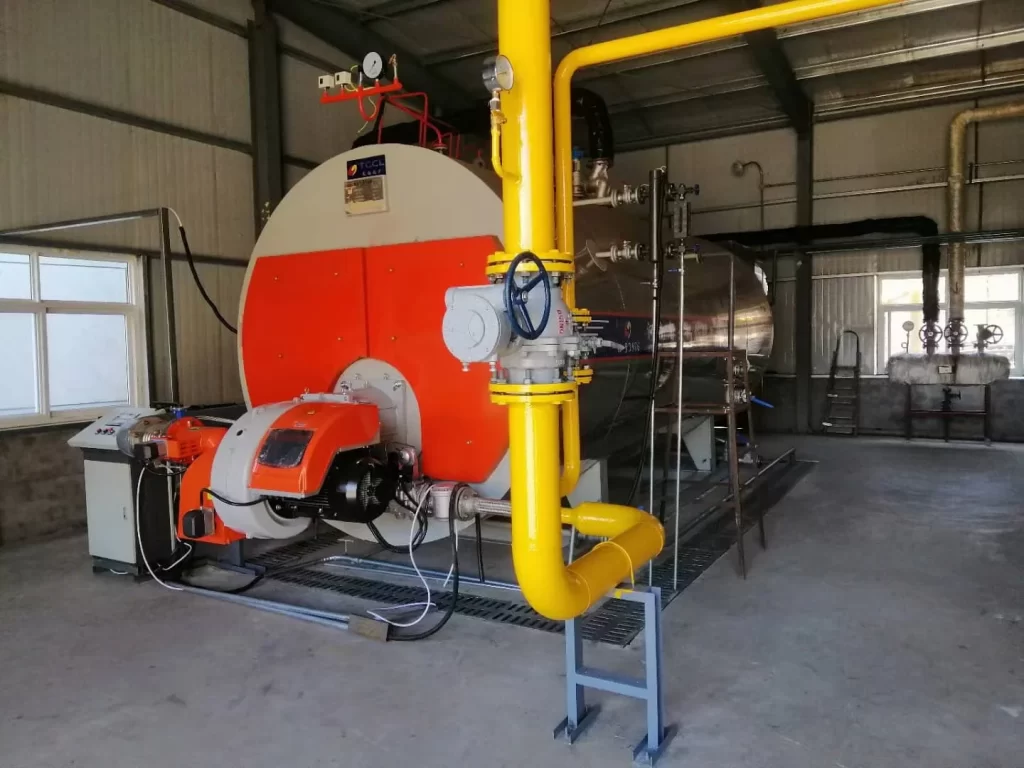
Advanced Steam Solutions for the Global Food & Beverage Industry: Efficiency, Hygiene, and Reliability
CE CertifiedISO 900199% Efficient
Steam is one of the most important energy sources in modern food processing industries. From cooking and sterilization to cleaning and production processes, industrial steam systems provide reliable heat transfer. At the same time, they help manufacturers maintain strict hygiene requirements. A properly designed food processing steam system enables factories to achieve stable production. It […]
From cooking and sterilization to cleaning and production processes, industrial steam systems provide reliable heat transfer. At the same time, they help manufacturers maintain strict hygiene requirements.
A properly designedfood processing steam systemenables factories to achieve stable production. It also ensures efficient energy use and consistent product quality.
Choosing our advanced steam solutions for food industry operations ensures your plant maintains maximum safety and efficiency.
At Taiguo Boiler, we provide advanced industrial Steam Solutions for Food Industry and beverage manufacturers, helping factories improve:
thermal efficiency
steam hygiene
batch consistency
fuel savings
continuous uptime
international compliance
Whether you process dairy, beverages, canned food, meat, bakery products, breweries, or frozen foods, our systems deliver reliable steam performance for every production stage. Industry use cases commonly include pasteurization, sanitation, proofing, drying, and packaging sterilization.
In food processing, particularly in direct injection applications like milk pasteurization or canning, the purity of the steam is non-negotiable. Taiguo’s 2026 steam solutions for the F&B sector integrate Automatic Surface Blowdown Systems (TDS Control). By continuously monitoring the conductivity of the boiler water, our systems prevent ‘priming’ and carryover—the phenomenon where water droplets containing treatment chemicals are swept into the steam flow. This ensures that the steam reaching your heat exchangers or spray retorts meets the highest hygiene standards, preventing batch contamination and ensuring compliance with global food safety audits.
2) Precise Temperature Control
Processes like:
milk pasteurization
beverage sterilization
sauce concentration
brewery mashing
bakery fermentation
retort sterilization
require tight pressure and temperature stability, otherwise batch defects rise quickly. Best-practice CIP steam control layouts are known to reduce downtime and improve consistency.
3) 24/7 Reliability
Food plants often run continuous multi-shift production, where any steam interruption can cause:
production loss
contamination risks
wasted raw materials
delayed shipment
This is why boiler redundancy, skid-mounted backup systems, and automatic PLC controls are critical.
4)Responsive Thermal Power: Mastering the Filling Line Cycles
Food and beverage production lines, especially bottling and batch-cooking, are notorious for their ‘spiky’ steam demand. A standard boiler often struggles to maintain pressure during these sudden spikes, leading to downtime or incomplete sterilization. Taiguo boilers feature an Oversized Steam Space design combined with high-performance Modulating Burners. This provides a thermal buffer that can handle load changes of up to 50% within seconds. This pressure stability ensures that your CIP (Cleaning-In-Place) systems and pasteurizers always operate at the precise temperatures required for microbial safety.
5)Chemical-Free Deaeration: Protecting the Steam Loop
To minimize the use of oxygen-scavenging chemicals in the food chain, Taiguo emphasizes Thermal Deaeration technology. By heating the feedwater to 104 ℃, we physically remove dissolved oxygen before it enters the boiler. For 2026, we have upgraded our heat recovery systems to include Food-Grade Stainless Steel Economizers. Unlike carbon steel, these resist the corrosive nature of pure condensate, ensuring that your energy recovery loop remains rust-free and your factory maintains a ‘Green and Clean’ production profile that appeals to international retailers.”
Optimized Steam Solutions for Food Industry
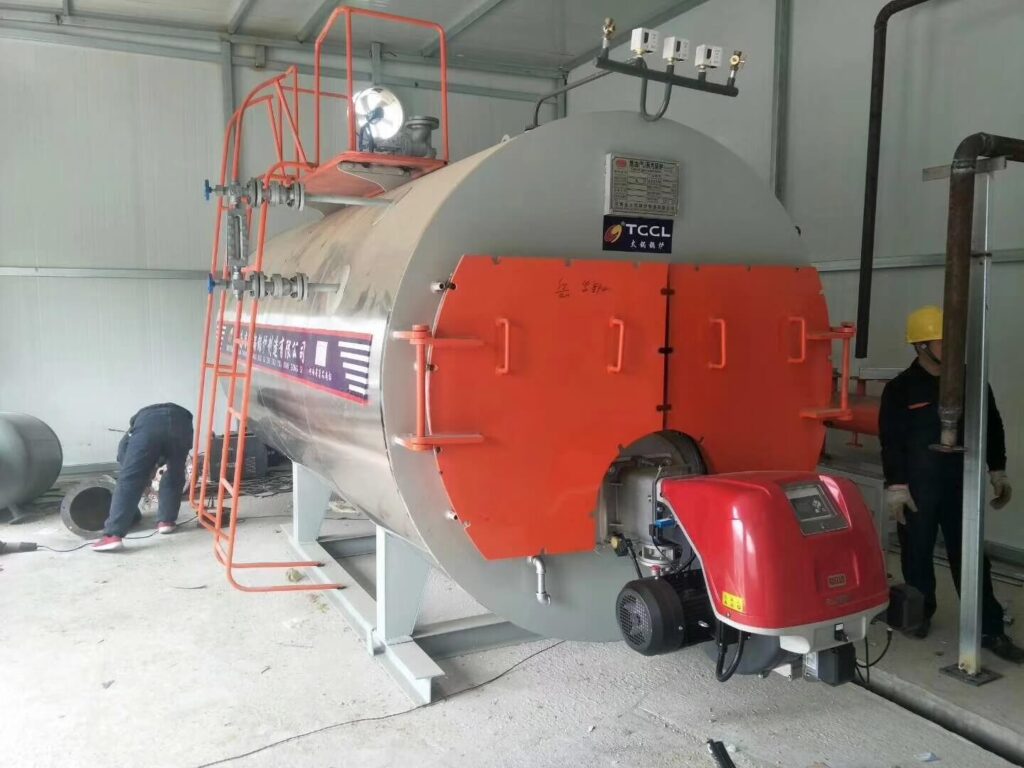
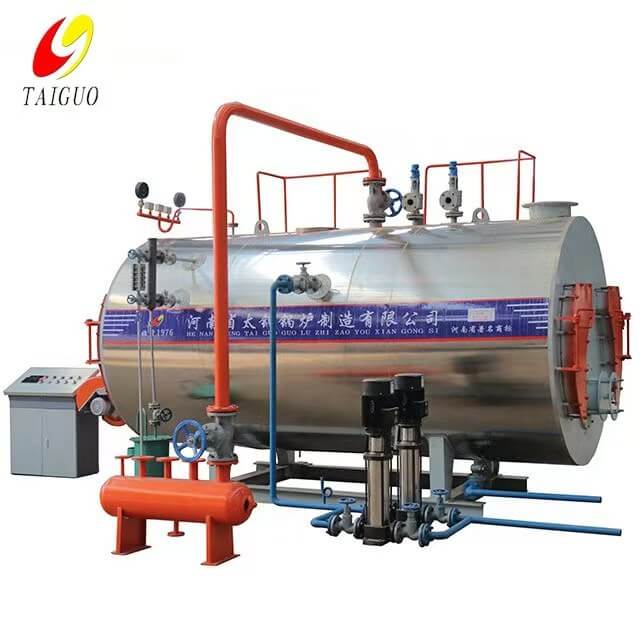
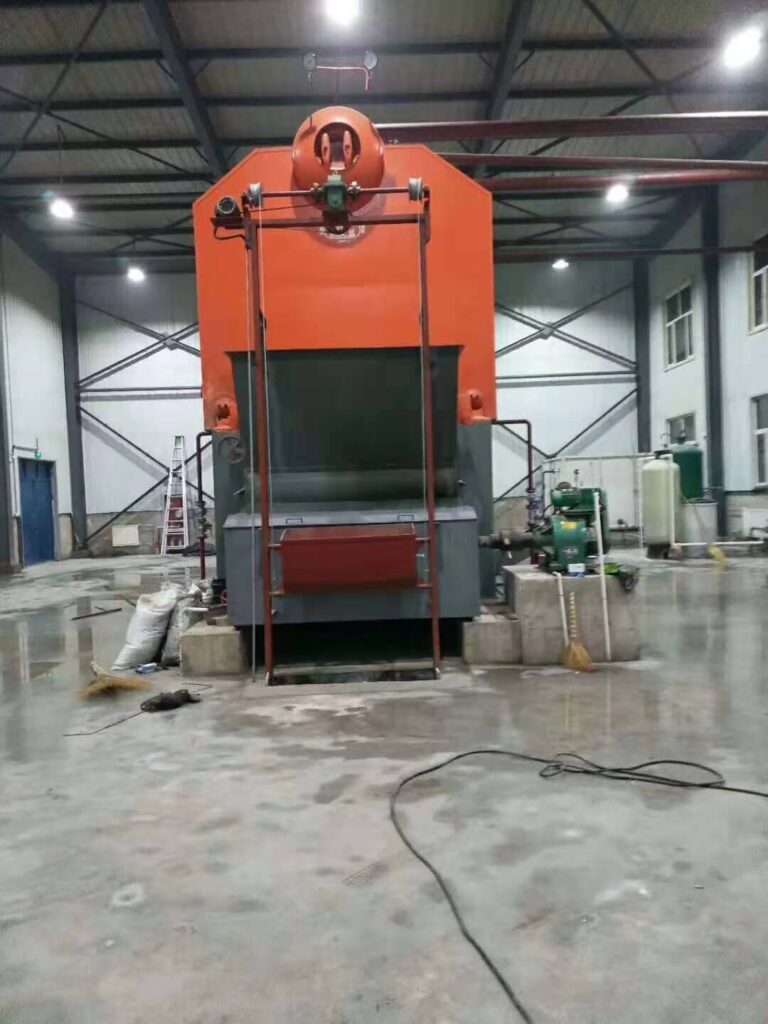
Based on fuel availability and production scale, we recommend the following high-performance boiler series for the food industry:
The Industry Risk: Standard industrial steam can sometimes carry over boiler water chemicals or metallic impurities, which is a major compliance risk in food processing.
The Taiguo Solution: We utilize Stainless Steel (SUS304/316) Internal Components and advanced Deaeration Systems .
The Benefit: Our boilers produce high-purity saturated steam with zero chemical carryover. This protects your heat exchangers from fouling and ensures that steam used in direct-injection processes (like blanching or peeling) meets the strictest hygiene audits in Jakarta or Tashkent.
Solving the “Batch-Process” Load Spike
Food plants often operate in batches—kettles and retort pouches open and close, causing massive, sudden swings in steam demand.
The Tech: Our WNS series features an Extra-Large Steam Space and a large water volume.
The Performance: This acts as a thermal buffer, preventing “prime carryover” (water droplets in the steam) even during peak load spikes. You get 99% steam dryness, ensuring that your sterilization temperatures are hit perfectly every time, reducing the risk of bacterial contamination .
ROI through Waste Heat Recovery (The “Green Factory” Logic)
The Efficiency Gap: Food processing produces large amounts of hot wastewater.
The Innovation: We integrate Condensing Heat Exchangers and Condensate Recovery Skids.
The ROI: By capturing heat from the flue gas and returning hot condensate to the boiler, we push thermal efficiency to 104%. For a mid-sized beverage plant, this can reduce annual natural gas consumption by 12-18%, helping you meet 2026 sustainability targets while padding your bottom line.
2026 Compliance: EAC, SNI & Automated CIP Support
Global Readiness: Fully certified with EAC (TR CU) Passports for the CIS market and SNI for Indonesia. We provide 24/7 remote monitoring to ensure your food production never stops.
Seamless Integration: Our Siemens PLC control systems support full integration with your plant’s Cleaning-In-Place (CIP) protocols, allowing for automated descaling and water quality monitoring.
Typical Food & Beverage Steam Applications: Engineering the Heat
In a 2026 food facility, steam usage is divided into Indirect Heating (via exchangers) and Direct Injection (contact with food). Each application requires a specific thermal strategy to ensure both safety and taste profile.
1. UHT & HTST Pasteurization (Dairies & Juices)
The Process: Ultra-High Temperature (UHT) treatment requires heating liquids to 135-150 ℃ for a few seconds.
The Engineering Challenge: This requires precise, high-pressure saturated steam. If the steam pressure fluctuates, the temperature in the Plate Heat Exchanger (PHE) drops, resulting in under-pasteurized product that must be discarded.
Taiguo’s Solution: We configure our WNS boilers with High-Sensitivity Pressure Transmitters and modulating burners that maintain a steam header variance within ±0.02MPa. This stability ensures that the “lethality effect” on microbes is consistent, extending the shelf life of milk and juices without compromising flavor.
2. Retort Sterilization & Canning
The Process: Sealed cans or pouches are placed in a pressure vessel (retort) and heated to kill all microorganisms.
The Engineering Challenge: When the retort starts, there is a massive “Steam Surge.” This sudden draw can cause a “Water Hammer” or a low-water trip in a standard boiler.
Taiguo’s Solution: We design systems with Large Steam Buffering Volumes. Furthermore, we integrate High-Efficiency Internal Steam Separators to ensure that only “Dry Saturated Steam” enters the retort. This prevents water spots on the packaging and ensures rapid heat penetration into the center of the cans.
The Process: High-pressure steam is used to rapidly loosen skins or inactivate enzymes in vegetables before freezing.
The Engineering Challenge: This process involves frequent “On/Off” steam cycles. This creates a risk of “Vacuum Collapse” in the piping and requires the boiler to handle “Cold Start” thermal shocks.
Taiguo’s Solution: Our DZL and WNS series utilize Reinforced Tube Sheets and specialized welding technology to handle high-frequency thermal cycling. We also recommend Automated Air Vents at the blancher inlet to ensure that air is purged, allowing the steam to transfer its latent heat directly to the product surface instantly.
4. CIP (Cleaning-In-Place) & Sanitization
The Process: Washing pipes, tanks, and fillers with hot water and chemicals.
The Engineering Challenge: CIP systems require vast amounts of hot water, often produced via “Steam-to-Water” shell-and-tube exchangers. The primary concern here is energy waste.
Taiguo’s Solution: We integrate Flue Gas Condensing Heat Exchangers to preheat the CIP makeup water using waste heat. This “Secondary Energy Loop” can reduce the total fuel bill of a bottling plant by 8-12%, turning the sanitation cycle into a profit-recovery stage.
Complete Steam System for Food Factories
Our expertise goes beyond selling boilers. We deliver a complete, highly integrated thermal system.
A professional steam boiler for food processing plant setup normally includes:
Steam Boiler
The boiler provides stable steam generation. We match the capacity to your peak production demand.
Water Treatment System
This system purifies feed water. It prevents scaling and corrosion inside your boiler and pipes.
Steam Distribution Pipeline
The pipeline network transfers steam efficiently. We design it to minimize heat loss during transport.
Condensate Recovery System
This system recovers hot condensate water. It recycles heat energy to reduce fuel consumption.
Intelligent Control System
Our control panel monitors steam pressure, temperature, water level, and energy use automatically.
How to Select a Steam Boiler for Food Processing?
Selecting the correct food factory boiler system requires evaluating five essential factors:
1. Steam Consumption
We help you calculate the required steam capacity. We analyze your production equipment requirements.
2. Fuel Availability
You can select the most economical fuel source. Common options include natural gas, biomass, electricity, or oil.
3. Hygiene Requirements
Food factories require stable, high-purity steam. The system design must prevent any product contamination.
4. Operating Schedule
Continuous production requires reliable boiler performance. We design backup solutions to avoid downtime.
5. Energy Cost
Fuel prices and operating efficiency directly affect production costs. We focus on maximizing heat recovery.
How Our Steam Systems Reduce Food Factory Operating Costs
Heat recovery economizers alone can improve boiler-side efficiency by up to ~10% in food process duty cycles, especially in cooking and drying lines.
Global Compliance for Steam Solutions for Food Industry
Our Steam Solutions for Food Industry support international standards including:
ASME / CE
ISO 9001
ISO 22000 food safety systems
HACCP plant integration
low NOx emission requirements
pressure vessel export compliance
This helps overseas buyers pass factory audits faster and reduce import project risks.
Why Choose Our Factory for Your Steam Solutions for Food Industry?
As a specialized partner for food manufacturers in Southeast Asia and Central Asia, we offer unique advantages that set us apart:
Food-Grade Steam Quality Assurance of Steam Solutions for Food Industry
Our systems are integrated with high-end water treatment equipment and deaerators, removing oxygen and impurities to produce steam that meets international hygiene standards.
Advanced PLC Smart Control (Industry 4.0) of Steam Solutions for Food Industry
Equipped with full-color touch screens, our boilers feature one-button startup and remote monitoring. You can track steam output, fuel consumption, and safety status via your smartphone or PC.
Localized Compliance & Global Standards of Steam Solutions for Food Industry
Our boilers are built according to ISO/ASME standards and come with EAC (CU-TR) certification for Central Asian markets (Uzbekistan, Kazakhstan), ensuring smooth customs clearance and legal operation.
Energy Saving & Waste Heat Recovery of Steam Solutions for Food Industry
Every boiler can be equipped with an Economizer (Condensing technology), which reclaims heat from flue gases to preheat feed water, reducing fuel costs by up to 12% annually.
60+ years boiler manufacturing
Class A boiler license
150+ export countries
food-grade steam project experience
turnkey piping + burner + water treatment
fast spare parts response
remote commissioning support
multilingual overseas service
Success Stories in the Food Sector,nice Steam Solutions for Food Industry
From dairy plants in Tashkent to palm oil refineries in Indonesia, our steam systems are running 24/7, providing the reliable power needed to feed the world.
“Our steam stability increased by 15% after switching to their PLC-controlled gas boiler, and fuel costs dropped significantly.” — Project Manager, SE Asia Food Group.
Strategic Content Sections for F&B Excellence
A. Culinary Steam: Ensuring Product Purity
In food processing, steam often comes into direct contact with the product during cooking or blanching. Our Steam Solutions for Food Industry prioritize purity. By utilizing stainless steel heat exchangers and specialized water treatment auxiliaries, we ensure ‘Culinary Grade’ steam that is free from boiler chemicals and carryover, meeting the strictest HACCP safety standards.
B. High-Efficiency Sterilization for Maximum Uptime
Whether it’s for milk pasteurization or vegetable canning, high-speed bottling lines require instant, stable thermal energy. Taiguo’s Steam Solutions for Food Industry feature rapid-start technology, providing high-pressure steam in minutes. This minimizes downtime and ensures that the sterilization temperature remains constant, protecting your brand from microbial risks.
2026 ROI Comparison: Food Industry Efficiency Matrix
Requirement
Traditional Industrial Boiler
Taiguo F&B Optimized Solution
Steam Quality
Industrial Grade (Risk of carryover)
Culinary Grade (Stainless Options)
Compliance
Standard
FDA / HACCP Ready
Energy Efficiency
88% – 90%
95% – 98% (Condensing Technology)
Automation
Basic PLC
Full Smart Integration (Remote Monitoring)
Footprint
Large
Compact / Modular (Fits cleanrooms)
Improving Energy Efficiency in Food Steam Systems
Food factories can improve steam system efficiency through professional engineering.
We optimize your system by:
Selecting the proper boiler size
Installing high-efficiency economizers
Implementing condensate recovery systems
Improving pipeline insulation
Setting up automatic control systems
An optimized steam system reduces fuel consumption. Ultimately, it improves your overall production reliability.
Steam Quality and Hygiene Considerations
Food manufacturers must prioritize steam quality and system cleanliness.
A well-designed clean steam system for food industry use supports reliable and hygienic production.
Food Industry Steam Project Considerations
We customize every food industry steam project according to your unique operating conditions.
Our engineering team analyzes your target production capacity. We also evaluate processing temperatures and local fuel costs. Our complete solution considers both boiler performance and entire steam distribution efficiency.
Action: Confirm the inclusion of high-efficiency internal steam separators.
Technical Why: Wet steam carries less energy and can cause “water hammer” in delicate plate heat exchangers common in dairies.
FDA/Local Food Safety Compliance for Water Treatment
Action: Ensure the water softening and demineralization system uses food-safe resins.
Technical Why: Any leakage from the water treatment system must not compromise the edible nature of the final product.
Variable Frequency Drive (VFD) on Feedwater Pumps
Action: Verify the use of VFDs to maintain constant water levels during high-demand cycles.
Technical Why: Stable water levels prevent the “Low Water Cut-off” trips that often occur during sudden steam draws in bottling plants.
Technical Checklist: F&B Process Integration Audit
Before commissioning your steam line, verify these three application-specific “Critical Control Points”:
Condensate Return Purity Monitoring
Action: Install a conductivity sensor on the condensate return line from the cookers.
Technical Why: If a heat exchanger leaks, food product (like sugar or fats) can enter the boiler water, causing massive foaming and potential boiler failure. An automated “Dump Valve” is essential for F&B safety.
Steam Trap Selection for Batch Cooking
Action: Ensure “Thermostatic” or “Float & Thermostatic” traps are used on jacketed kettles.
Technical Why: Batch cooking traps a lot of air at startup. These traps remove air quickly, allowing steam to fill the jacket immediately, reducing cooking time by 15-20%.
Pressure Reducing Valve (PRV) Stability
Action: Check the “Turndown Ratio” of the PRV supplying the filling room.
Technical Why: Filling machines often have low steam flow requirements compared to the main header. A PRV that “hunts” or vibrates will cause inconsistent seal temperatures on packaging.
What is the difference between Clean Steam and Industrial Steam?
Industrial steam is used for indirect heating (jackets). Clean or Culinary steam, provided by our specialized Steam Solutions for Food Industry, is filtered and treated to prevent any chemical or metallic contamination, making it safe for direct contact with food and beverages.
Can your boilers support 24/7 bottling operations?
Yes. Our WNS and Electric series are engineered for continuous high-load operation with dual-redundant safety systems, ensuring your production line never stops due to thermal failure.
Are Taiguo boilers easy to clean and maintain?
Absolutely. Our F&B models feature large-opening manholes and easy-access tube plates for thorough inspection and cleaning, which is vital for maintaining hygiene in food-grade environments.
Why is steam dryness so important for food sterilization?
Wet steam contains water droplets that act as insulators, preventing the steam from reaching the precise temperature needed to kill pathogens. Taiguo boilers ensure 99% dryness, guaranteeing a 100% kill-rate in your autoclaves and retorts.
Do your boilers comply with international food safety regulations?
Yes. We use food-grade internal coatings and stainless steel accessories where required. Our manufacturing process is ISO 9001 certified, and we provide full material traceability for all pressure-bearing parts.
How do you handle the high water-softening requirements of food plants?
We bundle our boilers with Dual-Tank Automatic Water Softeners to remove calcium and magnesium, preventing scale buildup and ensuring the longevity of your high-efficiency heating tubes.
Why do food factories use steam boilers?
Steam provides efficient heating for cooking, sterilization, cleaning and other food processing applications.
Which boiler is suitable for food processing?
The best choice depends on steam demand, fuel availability, energy cost and production requirements.
Can biomass boilers be used in food factories?
Yes, especially in regions with available agricultural biomass resources.
How can food factories reduce steam costs?
Through efficient boiler selection, heat recovery, insulation and optimized operation.
Request a Customized Steam Solution for Your Food Factory