
Industrial Thermal Oil Heaters: The Ultimate Guide to High-Temperature Process Heating
Contents Hide 1 What Is an Industrial Thermal Oil Heater? 2 How Does a Thermal Oil Heating System Work? 2.1 1. Heat Generation 2.2 2. Thermal Oil Heating 2.3 3. Oil Circulation 2.4 4. Heat Release 3 Why Thermal Oil? The “Low Pressure” Advantage 4 Advanced Engineering of Thermal Oil Heaters: Protecting Your Thermal Fluid […]
Get Instant Quote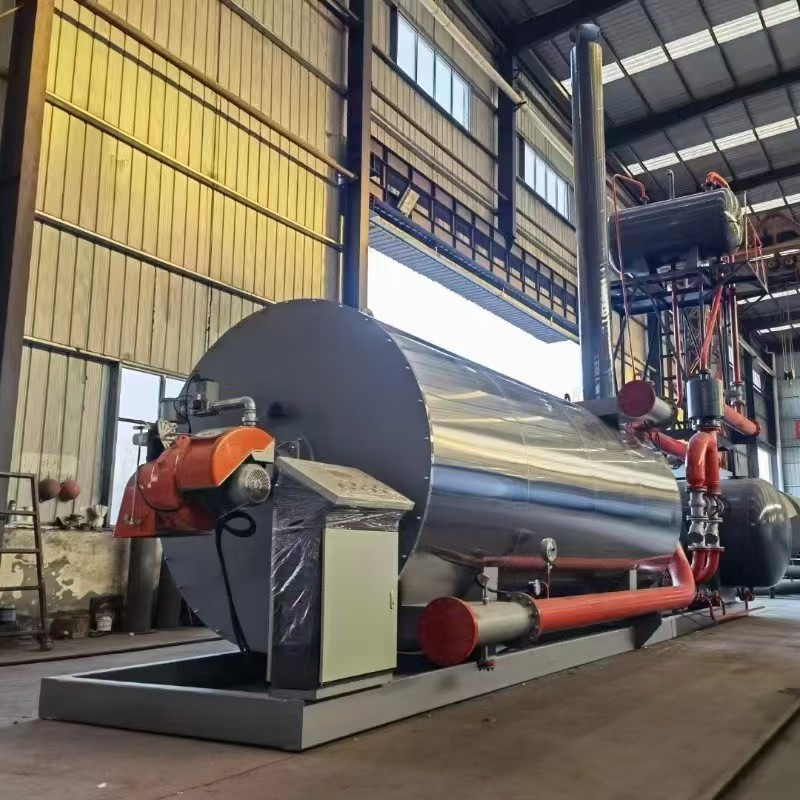
Technical Specifications
What Is an Industrial Thermal Oil Heater?
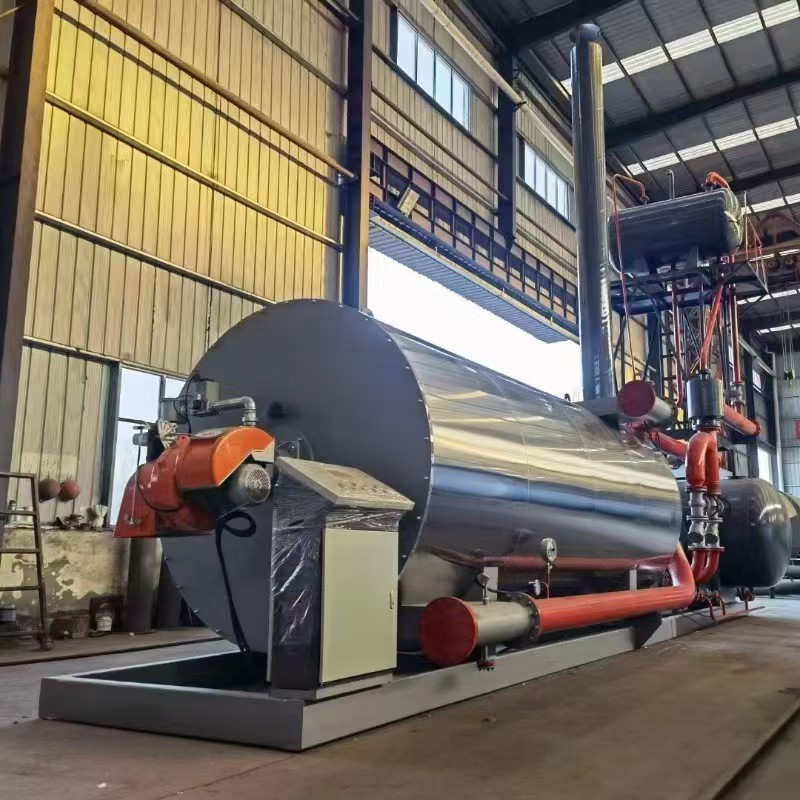
An Thermal Oil Heaters is a high-temperature heating system. It uses heat transfer oil as the circulation medium to deliver thermal energy directly to industrial processes.
Unlike traditional steam boilers, a thermal oil heating system does not rely on water evaporation. Therefore, it does not generate extreme high pressure. Instead, this thermal fluid heater provides high-temperature heat transfer under low operating pressure conditions.
Because of excellent temperature stability, many global factories choose this system. It offers flexible operation for industries requiring continuous and precise heating. These key sectors include chemical processing, textile manufacturing, food processing, and rubber production.
How Does a Thermal Oil Heating System Work?
A thermal oil heating system operates through a closed-loop circulation process. This process ensures high thermal efficiency and minimal energy loss.
The basic working principle includes four essential steps:
1. Heat Generation
First, the burner or fuel heating source generates massive thermal energy inside the combustion chamber.
2. Thermal Oil Heating
Next, the system transfers this heat to special heat transfer oil circulating inside the heater coils.
3. Oil Circulation
Then, a high-temperature pump circulates the hot oil through insulated pipelines to your production equipment.
4. Heat Release
Finally, the thermal oil releases heat to your industrial processes. Afterward, the cooled oil returns to the heater for reheating.
This continuous, closed-loop circulation allows a stable, highly efficient, and safe heat supply for your plant.
Why Thermal Oil? The “Low Pressure” Advantage
For industries like chemical reactors or wood pressing, thermal oil offers significant operational benefits over steam:
- High Temperature Stability: Achieve temperatures up to 350°C while maintaining system pressure below 0.8 MPa. A steam boiler would require over16.0 MPa to reach similar temperatures.
- No Corrosion & Scaling: Unlike water-based systems, thermal fluid is non-corrosive to the internal piping, significantly extending the lifespan of the entire heating loop.
- Uniform Heating: The closed-loop liquid phase circulation ensures there are no “cold spots” in your reactors or presses, which is critical for product quality.
Advanced Engineering of Thermal Oil Heaters: Protecting Your Thermal Fluid
The biggest operational cost in this system isn’t the heater itself—it’s the thermal oil. If the oil overheats, it “cracks” (carbonizes), leading to efficiency loss and pipe blockages. We prevent this through specialized engineering:
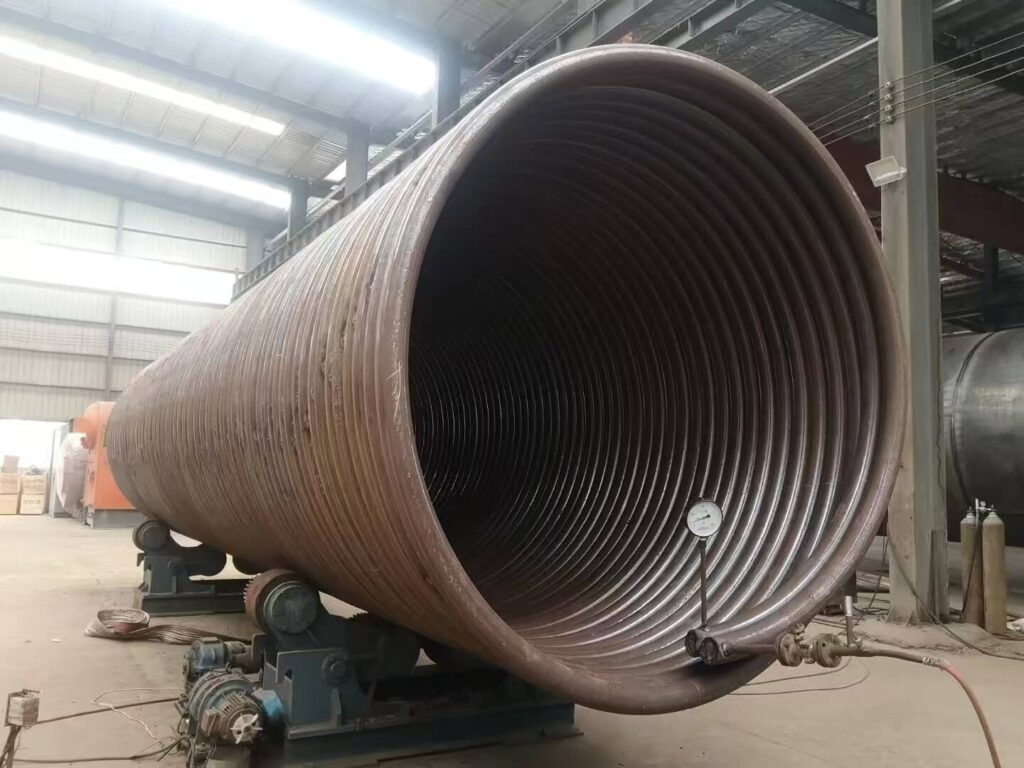
- Low Heat Flux Design: We design our heating coils with a large radiant surface area to ensure the “Film Temperature” of the oil never exceeds its safety limit.
- Multi-Loop Coil Structure: Ensures high-velocity oil flow (above 2 m/s), creating turbulence that prevents localized hot spots.
- Nitrogen (N2) Blanketing: For high-end systems, we provide nitrogen sealing for the expansion tank. By eliminating contact with oxygen, we prevent oil oxidation and extend the fluid’s life by up to 50%.
- Engineering for Longevity: Mastering the Boundary Layer
- The lifespan of your thermal oil is determined by the ‘Film Temperature’—the layer of oil in direct contact with the heating surface. If the flow is too slow, this layer overheats, leading to Carbonization (Cracking), which destroys the oil and clogs your system. Taiguo’s 2026 YQL/YQW series is engineered for High-Velocity Forced Circulation (>2 m/s). This turbulent flow breaks the laminar boundary layer, keeping the film temperature within safe limits. For the owner, this means avoiding the 20,000 USD cost of premature oil replacement and ensuring a clean, efficient heat transfer surface for decades.
- Operational Safety: High Heat at Low Pressures
- One of the most misunderstood advantages of a thermal oil heater is its ability to deliver temperatures up to 320℃ at pressures as low as 0.8 MPa. To achieve the same temperature with steam, you would require a dangerous 10 MPa system. This ‘Pressureless’ advantage reduces the structural requirements for your process vessels and piping, lowering your initial infrastructure costs by 25-30%. At Taiguo, we enhance this safety with our Automatic Residual Heat Dissipation Logic, which ensures the pump continues to circulate oil after burner shutdown, preventing stagnant oil from cracking due to refractory heat.
- System Stability: The 2026 Automated Deaeration Protocol
- Moisture is the enemy of thermal oil. Even a trace amount of water in the system can turn into steam, causing ‘Oil Hammer’ and pump cavitation. Taiguo’s 2026 systems integrate an Automated Deaeration Cycle via a strategically placed Expansion Tank. During the initial heating phase, our PLC manages a slow temperature ramp that allows moisture and light components to vent safely without causing system surges. This ensures a stable, vibration-free heat supply, critical for high-precision industries like chemical synthesis and plywood pressing.
Thermal Oil Heater vs Steam Boiler
Choosing between a thermal oil heater vs steam boiler is a critical decision for your plant. Both serve as excellent industrial heating solutions, but they meet entirely different process requirements.
| Feature | Industrial Thermal Oil Heater | Industrial Steam Boiler |
| Heat Carrier | Synthetic or Mineral Heat Transfer Oil | Water / Steam |
| Operating Pressure | Low Pressure (Typically < 1.0 MPa) | High Pressure (To reach high temperatures) |
| Max Temperature | Up to 350°C (At low pressure) | Up to 180°C – 200°C (Requires high pressure) |
| System Loop | Closed-Loop (Zero fluid loss) | Open or Semi-Closed (Requires water treatment) |
Industrial Thermal Oil Heaters
This system is best suited for:
- High-temperature industrial heating.
- Advanced heat transfer processes.
- Manufacturing lines requiring extremely precise temperature control.
Industrial Steam Boilers
In contrast, steam systems are best suited for:
- Large-scale process steam supply.
- Direct heating, sterilization, and cooking.
- Production lines requiring extensive steam distribution.
Therefore, the correct choice depends on your specific process temperature, pressure requirements, and local safety regulations.
Strategic Industry Applications: Engineering High-Temperature Precision
In 2026, the shift toward Thermal Oil (Heat Transfer Fluid) is driven by the need for high temperatures without the structural risks of high-pressure steam. Here is how Taiguo redefines thermal efficiency in your sector:
1. Thermal Oil Heaters For Wood Processing: The Pressure Behind Every Layer
In the production of Plywood, MDF, and Particle Board, temperature consistency directly determines the bonding strength of the urea-formaldehyde resins.
- Uniform Heat Flux: Multi-layer hot presses require exactly the same temperature on every platen to prevent “warping.” Our heaters maintain a circulation delta of<±2℃ across the entire press, ensuring that the glue cures evenly from the center to the edge.
- Rapid Cycle Times: High-velocity oil flow allows for faster “thermal recovery” after a cold load is inserted. This reduces the pressing cycle by 10-15%, allowing plywood mills to increase daily output without expanding their physical footprint.
2.Thermal Oil Heaters For Chemical & Petrochemical: The “Safety-First” High-Heat Source
Chemical reactions (Polymerization, Distillation, and Esterification) often occur at 250℃+, where steam becomes dangerous.
- Low-Pressure Safety: To reach 300 ℃, steam would require a massive 10 MPa system. Taiguo’s thermal oil heaters achieve this at just 0.8MPa . This significantly lowers the cost of the reactor jackets and piping, while virtually eliminating the risk of a high-pressure explosion.
- Exothermic Reaction Control: In chemical synthesis, the ability to “cool” is as important as the ability to “heat.” Our systems can be integrated with Oil-to-Water heat exchangers, allowing the thermal oil to act as a heat sink during exothermic peaks, preventing “runaway reactions.”
3. Thermal Oil Heaters For Bitumen & Asphalt: Fluidity in the Harshest Climates
From Uzbekistan’s highways to Southeast Asia’s ports, bitumen must stay at 160℃ to remain pumpable.
- Decanting & Storage: Our heaters provide the high-intensity heat required for Bitumen Decanting . The large-diameter heating coils prevent localized “oil cracking” while melting solid bitumen into a liquid state in record time.
- Marine & Transport Support: For large bitumen terminals, Taiguo provides Modular Containerized Heaters that can be installed directly on the jetty or near the storage tanks, minimizing the “Pipe Loss” associated with long-distance thermal transport.
4. Thermal Oil Heaters For Textile & Non-Wovens: High-Speed Fabric Setting
For stenter frames and textile printing, the air temperature inside the machine must be bone-dry and ultra-stable.
- Color Integrity: Electric or gas-fired air heaters can create “Hot Spots” that scorch delicate fibers. Thermal oil provides a “gentle” yet high-intensity heat that is perfectly uniform across the Stenter Frame , ensuring that 100% of the fabric achieves the same color fastness and texture.
- Non-Woven Bonding: In the production of medical masks or industrial filters, our heaters provide the precise 180-220℃ required for thermal bonding of polypropylene, ensuring the structural integrity of the non-woven web.
5.Rubber and Plastic Industry
Our high-temperature systems provide controlled heat for molding, extrusion, and curing processes.
System Components: The Complete Thermal Loop
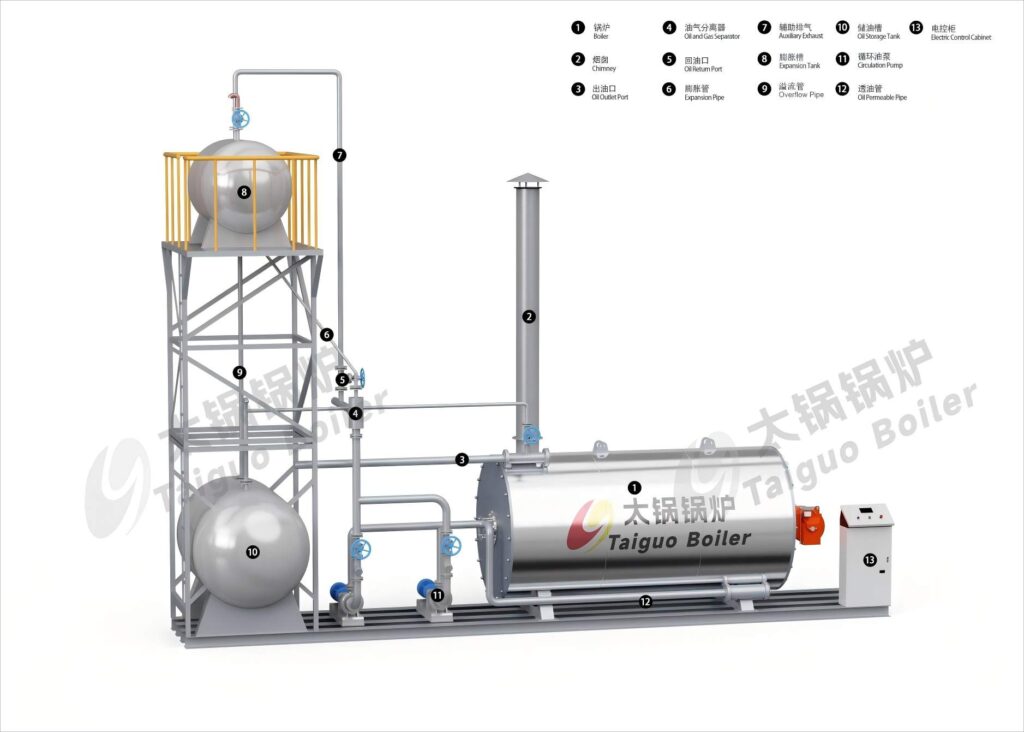
TaiguoThermal Oil Heaters solution is a fully integrated package:
- The Heater (YLW/YYW Series): Available in vertical or horizontal configurations, fired by Gas, Oil, or Biomass.
- Circulation Pumps: High-temperature centrifugal pumps designed for continuous duty.
- Expansion & Storage Tanks: Critical for handling the thermal expansion of the oil (approx. 7% for every 100°C rise).
- Integrated Control System: PLC-based monitoring of oil inlet/outlet temperature and flow rates to ensure automatic safety shutdown.
why you need Thermal Oil Heaters
A. Steam vs. Industrial Thermal Oil Heaters
Unlike steam boilers that require high pressure to reach high temperatures, Industrial Thermal Oil Heaters can operate at temperatures up to 350°C while maintaining atmospheric pressure. This reduces the risk of explosions, eliminates the need for complex water treatment, and significantly lowers maintenance costs.
B. The Engineering Behind Taiguo’s Coil Design
At Henan Taiguo, our Industrial Thermal Oil Heaters feature a unique multi-layered, small-radius coil design. This increases the flow velocity of the heat transfer fluid, preventing oil film overheating (cracking) and ensuring a service life that exceeds 15 years.
Thermal Oil Heating System Engineering Considerations
A complete thermal oil project requires professional engineering planning to ensure safety and efficiency. At our factory, our engineering team prioritizes critical system factors.
Key engineering factors include:
- Precise heat load calculation.
- Right-sized thermal fluid heater selection.
- Balanced thermal oil circulation piping design.
- Safe expansion tank configuration.
- High-density pipeline insulation.
- Advanced safety control systems with automatic shut-off.
Ultimately, proper engineering design improves overall efficiency, guarantees plant safety, and extends equipment lifetime.
- Visit our Engineering Hub to learn about our manufacturing standards.
- Discover our customized System Optimization services.
Related Thermal Oil Heating Solutions
We customize our industrial thermal heating solutions according to your temperature requirements, fuel conditions, and production layouts.
Browse our high-performance solutions:
- Gas Fired Thermal Oil Heaters: Highly efficient heating with low emissions.
- High Temperature Thermal Oil Systems: Designed for heavy-duty industrial processing.
- Industrial Process Heating Equipment: Customized thermal systems for global factories.
If you need professional engineering support, our technical team is ready to assist you with complete project implementation.
- Product Details: 2.5 Million kcal Gas Fired Thermal Oil Heater
- Product Catalog: Thermal Oil Product Hub
Technical Checklist: Thermal Oil System Audit (2026)
Expansion Tank Nitrogen Blanketing
- Action: For systems operating above 250 ℃, specify a Nitrogen Blanket.
- Technical Why: This prevents the thermal oil from coming into contact with air in the expansion tank, eliminating oxidative degradation and ensuring the oil remains clear and efficient for much longer.
High-Temperature Pump Sealing
- Action: Confirm the use of Air-Cooled Mechanical Seals or Canned Motor Pumps.
- Technical Why: Leaks in a thermal oil system are a major fire hazard. Taiguo uses premium air-cooled seals that require no external cooling water, simplifying your installation while maximizing safety.
Refractory Quality and Radiant Heat Balance
- Action: Verify the use of Multi-Layer Ceramic Fiber Insulation.
- Technical Why: Poor insulation leads to shell overheating and energy waste. Our 2026 design ensures the outer shell temperature remains below 50℃, keeping the heat focused entirely on your production process.
FAQ: Expert Guidance on Thermal Oil Heaters
How do I choose between a Vertical and Horizontal thermal oil heater?
Vertical (YYW) heaters are ideal for factories with limited floor space. Horizontal (YLW) heaters are generally preferred for larger capacities (>2000 kW) because they are easier to maintain and offer better stability for the internal coil structure.
What is the most common cause of thermal oil heater failure?
Sudden power failure. When the circulation pump stops but the furnace is still hot, the stagnant oil can burn. We equip our systems with a Gravity-Fed Emergency Cooling Loop or auxiliary power backups to keep the oil moving during outages.
How often should I test my thermal fluid?
We recommend a laboratory analysis of your thermal oil every 6 to 12 months. Testing for flash point, viscosity, and carbon residue will tell you exactly when the oil needs to be filtered or replaced.
What are the main applications for Industrial Thermal Oil Heaters?
These heaters are essential for processes requiring uniform heat, such as bitumen heating, textile stenter frames, plywood pressing, and chemical reactors. Their ability to provide stable, high-temperature heat makes them superior to traditional steam.
How do you maintain the efficiency of Industrial Thermal Oil Heaters?
Regular oil analysis is critical. Monitoring the flash point and viscosity of the fluid ensures the system remains efficient. Additionally, utilizing Premium Boiler Auxiliaries like waste heat recovery units can boost efficiency to over 95%.
Is an A-Class license required to manufacture Industrial Thermal Oil Heaters?
Yes. Because these units operate at high temperatures, the manufacturing of the pressure coils must adhere to strict A-Class Boiler standards to ensure safety and durability under thermal stress.
What is an industrial thermal oil heater?
An industrial thermal oil heater is a heating system using thermal oil as
a heat transfer medium for high-temperature industrial processes.
Why use thermal oil instead of steam?
Thermal oil systems are suitable for high-temperature applications requiring
stable heat transfer and lower operating pressure.
What industries use thermal oil heaters?
Common applications include chemical, textile, food processing, rubber,
plastic and wood industries.
What fuel can thermal oil heaters use?
They can use gas, oil, biomass or electricity depending on project
requirements.
Global Support & Engineering by Kim
- 10 Years of Expertise: Specializing in complex thermal loops for chemical and wood plants.
- Compliance Ready: Full technical dossiers for ASME, PED, or local codes like Uzstandard.
- Energy Audits: We help you calculate the ROI of switching from expensive electric heating to high-efficiency gas or biomass Thermal Oil Heaters.
📩 Request a High-Temperature Thermal Audit Today
- WhatsApp: 8615093412637
- Email:kimjin2018@cnmiracletrade.com
Precise temperature control is vital for asphalt. Explore how our Thermal Oil Heaters prevents oil coking during high-temperature cycles.
Calculate strict industrial peak thermal demands utilizing our central industrial boiler selection guide spreadsheet.
Coordinate high-temperature jacketed processing loops with our thermal oil heater applications in the asphalt report.
Evaluate continuous zero-pressure thermal fluid operations through our certified online thermal oil heaters documentation.