
High-Efficiency Biomass & Solid Fuel Fired Steam Boilers: Sustainable Energy for Industry
Contents Hide 1 Bridging the Gap Between Energy Autonomy and Environmental Stewardship 1.1 The “Multi-Fuel” Adaptation – Zero Waste Logic 1.2 Versatile Fuel Compatibility: Turning Waste into Power 1.3 ESG Compliance – Turning Waste into Carbon Credits 2 Advanced Combustion Technology: SZL & DZL Series biomass and solid fuel fired steam boilers 2.1 A. DZL […]
Get Instant Quote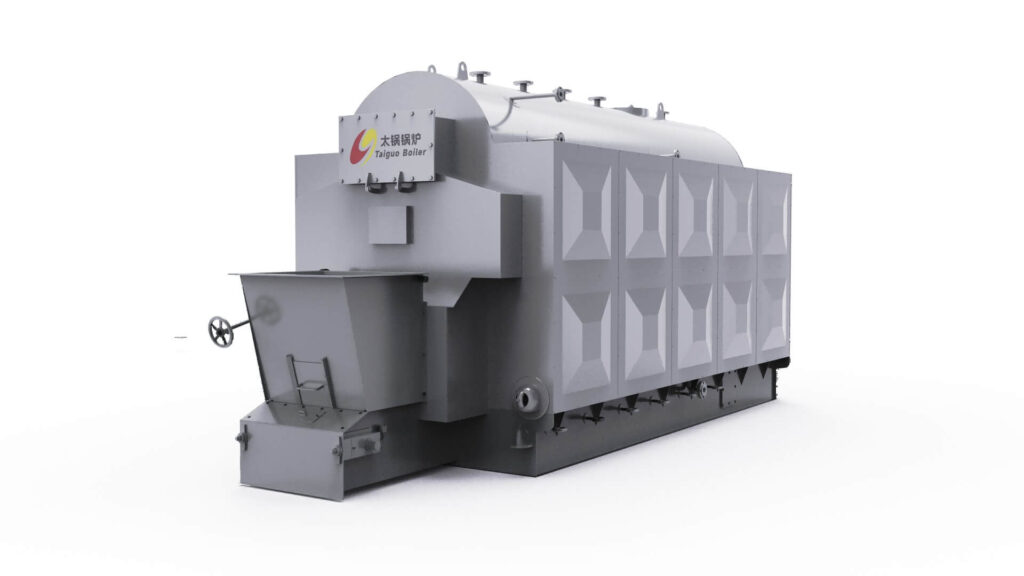
Technical Specifications
Bridging the Gap Between Energy Autonomy and Environmental Stewardship
For energy-intensive industries in Southeast Asia and the Eurasian Economic Union, relying on volatile fossil fuel imports is no longer a viable long-term strategy. The shift toward biomass and solid fuel fired steam boilers are the most effective way to decouple your production costs from global oil markets while hitting your 2026 decarbonization targets. At Taiguo Boiler, we transform agricultural waste—wood chips, rice husks, and palm shells—into high-enthalpy industrial steam.
In an era of volatile gas and oil prices, switching to biomass and solid fuel fired steam boilers is the most effective strategy for industrial energy independence. Whether utilizing agricultural waste like rice husks and coconut shells or traditional coal, our boiler systems are engineered for maximum thermal extraction and long-term reliability. With 10 years of expertise, we help factories in the Philippines, Indonesia, and beyond convert waste into wealth.
The “Multi-Fuel” Adaptation – Zero Waste Logic
- The Industry Challenge: Many biomass and solid fuel fired steam boilers are “picky” eaters. If the fuel moisture varies by 10%, the steam pressure drops.
- The Taiguo Solution: Our advanced Reciprocating or Chain Grate Systems are engineered with High-Volume Combustion Chambers.
- The Benefit: This design provides the necessary residence time for low-calorific fuels to burn completely. Whether you are burning 4000 kcal coal or 3200 kcal rice husks, our Secondary Air Injection System ensures a stable flame and zero unburned carbon in the ash.
Versatile Fuel Compatibility: Turning Waste into Power
One of the biggest advantages of our biomass and solid fuel fired steam boilers is their ability to handle a wide variety of “free” or low-cost fuels:
- Agricultural Waste: Rice husks, coconut shells, palm kernel shells (PKS), and corn cobs—ideal for Southeast Asian food processors.
- Wood Biomass: Wood chips, sawdust, and bark—perfect for the furniture and paper industries.
- Coal: High-calorific coal for heavy industrial processes requiring intense, steady heat.
- Pellets: Compressed biomass pellets for high-efficiency, low-emission automated operation.
ESG Compliance – Turning Waste into Carbon Credits
- The Sustainability Angle: In 2026, many multinational buyers (Nestlé, Unilever, etc.) require their suppliers in Indonesia and Vietnam to reduce their carbon footprint.
- Our Edge: By switching from Coal or Diesel to Renewable Biomass, your facility can reduce CO2 emissions by thousands of tons annually.
- The Result: This not only lowers your “Carbon Tax” liabilities but positions your factory as a Preferred Green Supplier in the global market.
Advanced Combustion Technology: SZL & DZL Series biomass and solid fuel fired steam boilers
We specialize in two core structures that define the industry standard for biomass and solid fuel fired steam boilers:
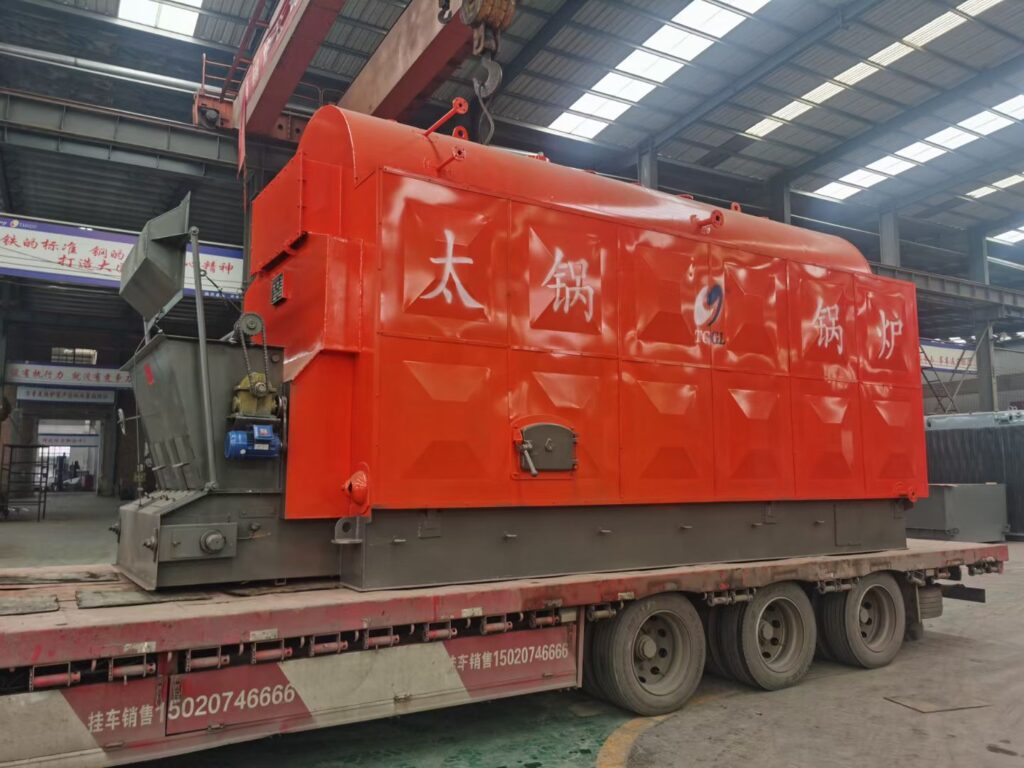
A. DZL Series (Single-Drum Vertical biomass and solid fuel fired steam boilers)
- Design: Compact, packaged design for easy shipping and installation.
- Best For: Small to medium factories (1 t/h – 6 t/h).
- Feature: Fire-water tube composite structure, providing fast steam response and high efficiency.
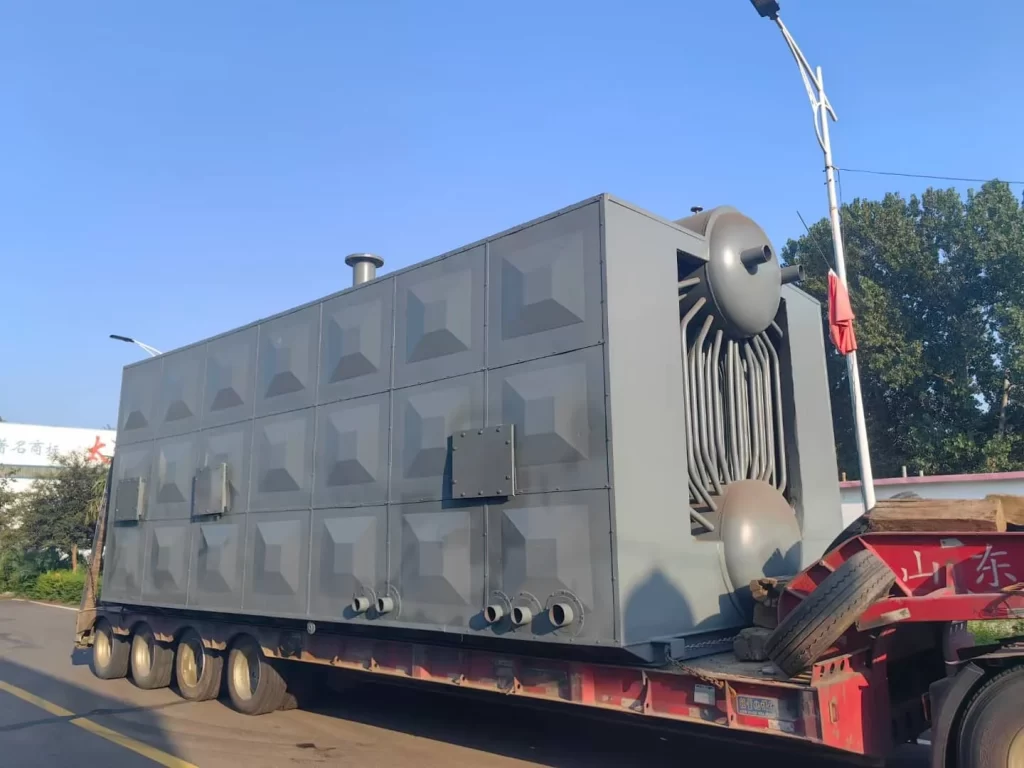
B.SZL Series (Double-Drum Chain Grate biomass and solid fuel fired steam boilers)
- Design: Large combustion chamber with a sophisticated chain grate stoker.
- Engineering for Fuel Versatility: The Heavy-Duty Chain Grate :In 2026, the volatility of fuel markets in Southeast Asia and Africa requires boilers to be adaptable. Taiguo’s biomass and solid fuel series utilize a Large-Scale Chain Grate (DZL/SZL) with a specialized ‘small-gap’ design. This prevents the sifting of fine fuel particles (like sawdust or crushed shells) while maintaining the mechanical torque needed for larger wood chips or coal. During the transition between different fuel types, our adjustable Frequency Conversion (VFD) speed controllers allow for the precise regulation of the residence time in the furnace, ensuring a 98%+ burnout rate regardless of the fuel’s density or shape.
- Best For: Large-scale industrial production (4 t/h – 35 t/h).
- Feature: Two-drum water tube structure with multi-stage air distribution, ensuring complete combustion of low-quality fuels.
Automated Fuel Handling – From “Dirty” to “Digital”
- The Stigma: Traditional solid fuel boilers are seen as labor-intensive and messy.
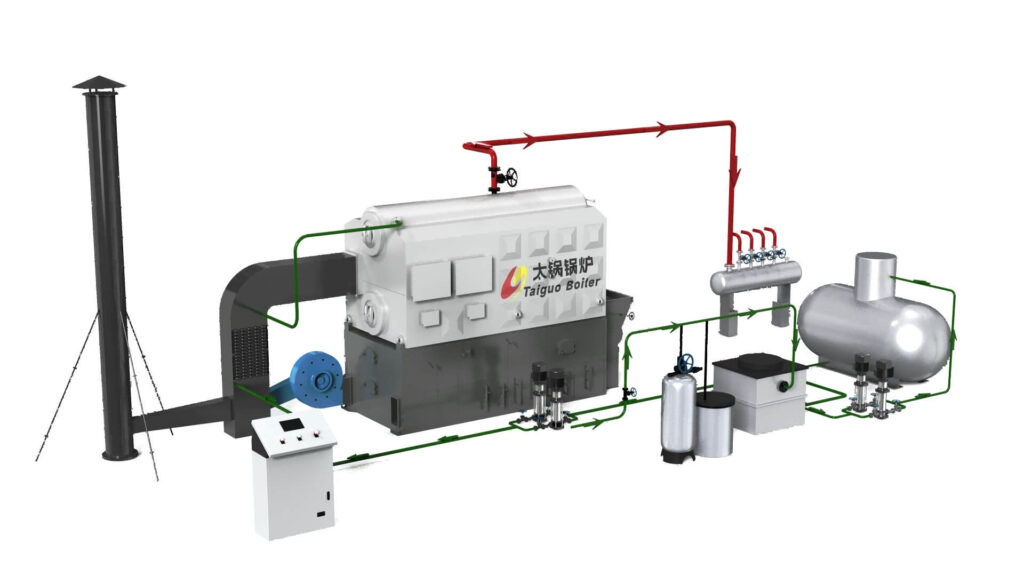
- The 2026 Reality: We bundle our SZL/DZL series with Fully Automated Fuel Conveyors and PLC-Controlled Ash Extractors.
- The ROI: You reduce manual labor by 70%. Your boiler room remains as clean as a gas plant, while the Siemens PLC interface monitors fuel-to-air ratios in real-time to prevent clinkering and slagging.
The “ROI Game-Changer“: Why Switch to biomass and solid fuel fired steam boilers
For a factory in the Philippines or Indonesia, the numbers speak for themselves:
| Fuel Type | Cost Per Ton of Steam (Approx.) | Annual Savings Potential |
| Diesel (LDO) | Highest | – |
| Natural Gas | Medium-High | 20% – 30% Savings |
| Biomass (Rice Husk) | Lowest | 50% – 70% Savings |
Kim’s Expert Insight: “Most of our clients in the rice milling or wood processing sectors recover their entire boiler investment within 12 to 18 months simply through fuel cost savings.”
Environmental Compliance: Clean Solid Fuel Energy
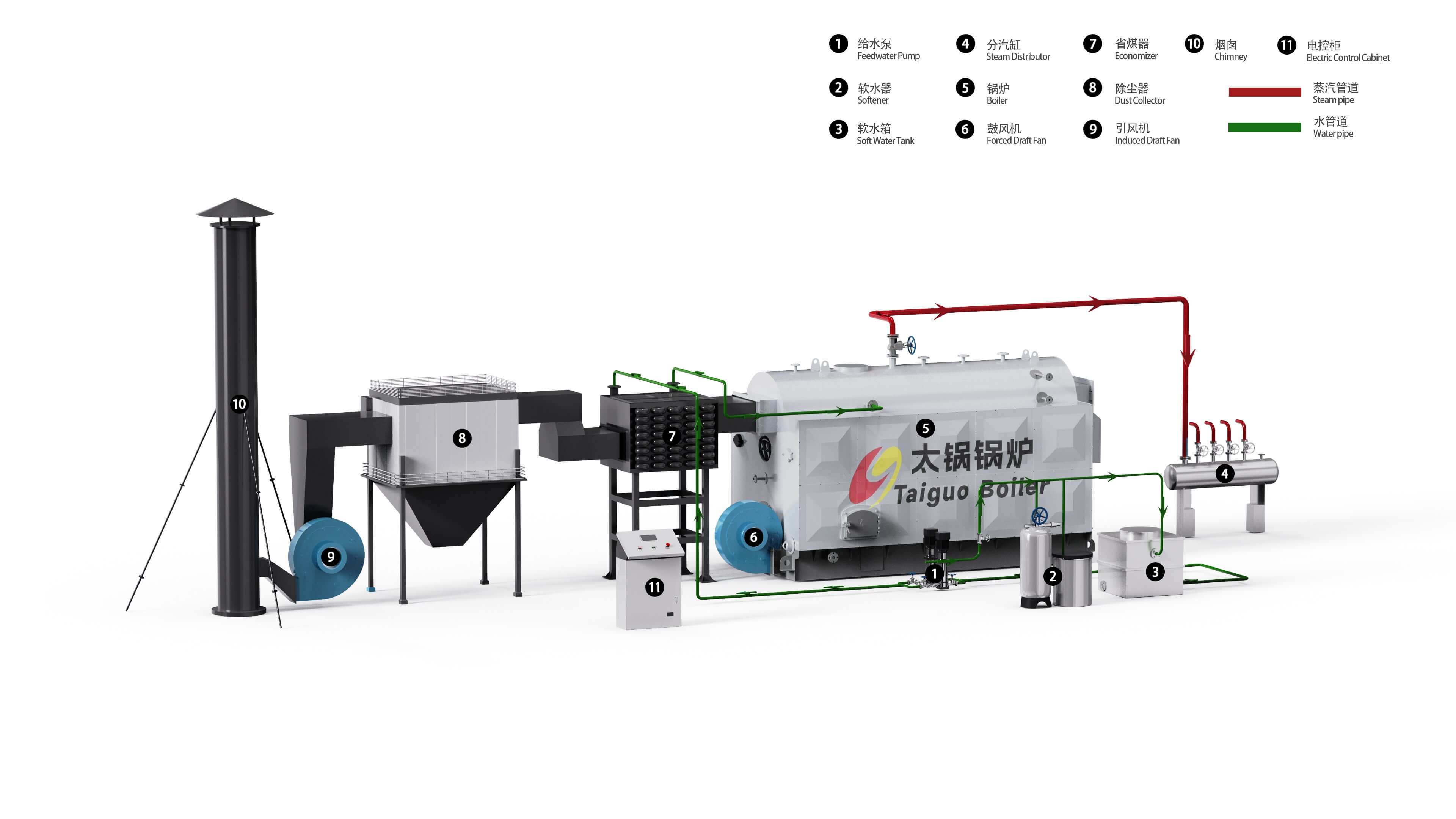
To meet the emission standards in industrial zones (like those in Uzbekistan or the Philippines), we integrate advanced dust removal systems:
- Cyclone Dust Collector: Removes large particles from the flue gas.
- Bag Filter (Fabric Filter): Captures fine dust to ensure the exhaust is invisible and meets local air quality codes.
- Automated Ash Removal: Keeps the boiler room clean and reduces labor costs.
Environmental Security: Advanced Flue Gas Treatment:
As industrial zones in Vietnam, Thailand, and Indonesia implement stricter particulate matter (PM) standards in 2026, standard cyclone dust collectors are no longer enough. Taiguo provides an integrated Dual-Stage System: a primary high-efficiency Cyclone followed by an optional Baghouse Filter or Electrostatic Precipitator (ESP). This configuration ensures that smoke emissions remain transparent and well below the local 50mg/Nm³ threshold. Investing in this technology today protects your factory from future environmental ‘stop-work’ orders and enhances your brand’s sustainability profile.”
Advanced Flue Gas Cleaning
- The Compliance Shield: We don’t just sell the boiler; we sell the Air Quality System.
- The Tech: Our systems feature Bag-type Dust Collectors and Wet Scrubbers that capture 99.5% of particulate matter (PM).
- The Certification: Fully compliant with the 2026 EAC and ISO environmental standards, ensuring your plant passes every unannounced government inspection in Tashkent or Jakarta.
Combatting High-Temperature Corrosion in Biomass Systems
Agricultural waste, particularly straw and rice husks, contains high levels of alkali metals (potassium and sodium) which can cause severe high-temperature corrosion on boiler tubes. To counter this, Taiguo’s 2026 export models integrate a Sacrificial Coating and Specialized Tube Geometry in the convection bank. By maintaining flue gas velocities within a specific ‘Self-Cleaning’ range, we minimize the accumulation of corrosive ash. This proactive engineering extends the interval between tube inspections by 30%, making our solid fuel boilers a long-term, low-maintenance asset for palm oil mills and timber factories.”
Global Engineering Support & Logistics
We understand the challenges of importing heavy machinery:
- ASME Standards: All pressure parts are manufactured to international safety codes.
- FCA/CIP Shipping: We handle the complex logistics, including Form E for tax exemptions in ASEAN markets.
- On-Site Supervision: We provide technical guidance for refractory masonry and system commissioning.
Why Biomass Is the Future of Sustainable Industrial Steam
1) Reduce Fuel Cost by 20–35%
The biggest financial advantage comes from fuel substitution.
Instead of expensive:
- diesel
- LNG
- LPG
- pipeline natural gas
Factories can use:
- local wood waste
- rice husk
- sawmill residue
- agricultural by-products
- crop stalks
- biomass pellets
In many markets, this cuts steam generation cost by 20–35%, especially where agricultural waste is abundant.
This is highly valuable for:
- rice mills
- textile clusters
- food drying plants
- wood processing factories
- palm oil mills
2) Lower Carbon Footprint & ESG Compliance
Global industrial buyers increasingly require sustainable supply chains.
Biomass systems support:
- reduced Scope 1 emissions
- lower fossil fuel dependency
- waste recycling utilization
- green factory certifications
- ESG procurement compliance
- carbon reduction targets
Some industrial studies show biomass systems can significantly reduce lifecycle CO₂ emissions compared with fossil alternatives.
This section is excellent for attracting higher-quality international buyers.
3) Energy Security Through Local Fuel Supply
For many developing markets, fuel price volatility is a major risk.
Biomass solves this by using locally available renewable fuels, improving:
- energy independence
- predictable steam cost
- supply chain resilience
- local waste monetization
- reduced import exposure
This is especially strong for your target markets like Uzbekistan and Southeast Asia.
Core Technical Advantages of biomass and solid fuel fired steam boilers
Advanced Combustion Control of biomass and solid fuel fired steam boilers
Modern biomass boilers use:
- staged combustion air
- primary & secondary air distribution
- O₂ trim control
- VFD fans
- PLC fuel feed control
- adaptive combustion tuning
These features help maintain high efficiency even with mixed fuels.
Heat Recovery System of biomass and solid fuel fired steam boilers
High efficiency comes from integrated:
- economizer
- air preheater
- condensate heat recovery
- blowdown heat recovery
- insulated furnace walls
This reduces stack loss and boosts fuel utilization.
Automatic Fuel Feeding & Ash Removal of biomass and solid fuel fired steam boilers
To support 24/7 industrial operation:
- screw feeding
- hydraulic feeding
- chain grate feeding
- automatic ash discharge
- bottom slag removal
- dust collector integration
This reduces labor cost and stabilizes combustion.
Best Industry Applications of biomass and solid fuel fired steam boilers
Textile & Garment
Perfect for:
- dyeing
- finishing
- garment washing
- ironing
- drying
Factories using cotton stalk or biomass pellets gain major savings.
Food Processing
Widely used in:
- sterilization
- edible oil refining
- feed mills
- noodle production
- brewery systems
- dairy plants
Stable dry steam improves product quality.
Pulp, Paper & Wood
A very strong use case.
Wood waste can be reused for:
- veneer drying
- MDF pressing
- paper drying
- pulp digestion
- board manufacturing
This creates a strong circular economy story.
Chemical & Pharmaceutical
Suitable for:
- reactor heating
- distillation
- CIP sterilization
- extraction lines
- clean utility support
Advanced PLC systems improve process consistency.
Agro-Industrial Processing
Excellent for:
- rice mills
- palm oil
- sugar processing
- grain drying
- greenhouse heating
- feed factories
Agricultural waste becomes direct thermal energy.
Technical Customization Options of biomass and solid fuel fired steam boilers
Capacity
- 1 ton
- 2 ton
- 4 ton
- 6 ton
- 10 ton
- 20 ton
- 35 ton
- 100 ton custom systems
Pressure
- 1.0 MPa
- 1.25 MPa
- 1.6 MPa
- 2.5 MPa
- superheated options
Fuel System
- pellet
- briquette
- mixed biomass
- coal co-firing
- agricultural residue
Emission Control
Optional:
- multicyclone
- bag filter
- ESP
- wet scrubber
- SNCR NOx control
Modern industrial systems can achieve NOx below 100–180 mg/m³ depending on design and controls
Overseas Export & Engineering Support for biomass and solid fuel fired steam boilers
We support global buyers with:
- fuel analysis
- biomass feasibility study
- steam load sizing
- layout drawings
- P&ID
- dust collector matching
- export documentation
- remote commissioning
- engineer dispatch
- spare parts packages
Biomass & Solid Fuel Selection Checklist (2026)
Check 1: Fuel Moisture Content (MC) Management
- Action: Ensure your storage facility keeps biomass MC below 25%.
- Technical Why: For every 10% increase in moisture, the boiler’s thermal efficiency drops by approx. 5%. We can provide pre-drying furnace designs for regions with high-humidity fuels.
Check 2: Ash Fusion Temperature Analysis
- Action: Request a chemical analysis of your fuel’s ash composition.
- Technical Why: Some fuels (like corn stalks) have low ash melting points, which causes “Slagging” on the grate. Taiguo custom-tunes the Grate Cooling System to prevent fused ash from damaging the mechanical components.
Check 3: Refractory Arch Geometry
- Action: Confirm the arch design is optimized for your specific primary fuel (Wood vs. Coal).
- Technical Why: The “Front and Rear Arch” geometry dictates how heat is reflected onto the fuel bed. Our R&D center uses CFD (Computational Fluid Dynamics) to shape these arches, ensuring rapid ignition and stable combustion even with low-quality fuels.
FAQ: Biomass Fuel Handling & Slagging Prevention
What are the primary causes of “Slagging” in biomass and solid fuel fired steam boilers, and how do you prevent it?
Slagging occurs when the ash melting point of the fuel is lower than the furnace temperature, causing ash to fuse into hard glass-like deposits on the grates and tubes. We prevent this through two core designs:
Low-Speed Chain Grate: Our SZL series uses an elongated chain grate with multiple wind chambers to ensure a uniform temperature field.
Secondary Air Injection: By injecting high-velocity secondary air, we create turbulence to lower the furnace temperature and ensure complete combustion without localized overheating.
Can I mix different types of biomass fuels in the same boiler?
Yes, but with caution. Mixing fuels like wood chips and rice husks is common, but it affects the boiler’s air-to-fuel ratio. Our control systems feature Variable Frequency Drives (VFD) that allow you to adjust the grate speed and fan intensity based on the fuel’s calorific value and moisture content. We recommend a consistent mixing ratio to maintain stable steam pressure.
How does fuel moisture content affect boiler performance?
Moisture is the “efficiency killer.” Ideally, biomass fuel should have a moisture content below 20-25%. For every 10% increase in moisture, the boiler efficiency drops by approximately 1% due to the energy required to evaporate the water. For high-moisture fuels (like fresh wood chips), we suggest adding a pre-heating section or using a larger furnace volume to allow for initial drying before combustion.
How do you handle “Ash Build-up” on the convection tubes?
Biomass ash is often light and sticky. To prevent it from insulating the tubes and raising the exhaust temperature, we equip our boilers with Soot Blowers (Steam or Sonic type). These devices periodically clean the tube surfaces during operation, ensuring maximum heat transfer and maintaining a stable stack temperature.
What fuel preparation equipment is required for a biomass and solid fuel fired steam boilers project?
Q5: What fuel preparation equipment is required for a biomass boiler project? A: For a seamless operation, we can provide a complete “Front-end” package, including:
Crushers/Chippers: To ensure uniform fuel size (ideally 10-50mm).
Magnetic Separators: To remove metal debris that could jam the chain grate.
Automated Screw Feeders: To ensure a consistent and airtight fuel supply, preventing “backfire” into the hopper.
Can biomass and solid fuel fired steam boilers handle different types of fuel simultaneously?
Yes. Our DZL and SZL series are designed for multi-fuel capability. You can mix wood pellets with coal or agricultural waste, provided the combustion air and grate speed are adjusted via our PLC smart control system.
How do you manage the emissions from solid fuel combustion?
We equip our biomass and solid fuel fired steam boilers with multi-cyclone dust collectors and pulse-jet bag filters. This ensures that particulate emissions comply with even the strictest environmental standards, such as the 2026 ultra-low emission mandates.
Get Your Sustainable Steam Energy Proposal
If your factory wants to reduce energy cost while building a greener industrial brand, our high-efficiency biomass and solid fuel fired steam boilers provide the ideal long-term solution.
We help with:
- fuel matching
- ROI analysis
- carbon reduction planning
- layout drawings
- export packaging
- commissioning support
Request a Free Biomass Boiler Feasibility Plan in 24 Hours
Send your steam capacity, available biomass fuel, and country today.
👉 Get drawings, pricing, and fuel-saving ROI analysis now.
- WhatsApp:8615093412637
- Request a Fuel Cost Comparison: kimjin2018@cnmiracletrade.com
If you have access to rice husks or wood chips, our Biomass Fired Boiler can ‘eat’ these fuels to slash your energy bills.
Need a simpler solution? Compare with our DZH manual-feed biomass boilers
Evaluate long-term plant capital expenditures using our central industrial boiler selection guide.
Review actual travelling grate furnace combustion parameters inside the 8-ton biomass steam boiler installation case study.
Explore customized automated multi-fuel feeding designs by inspecting our comprehensive high-efficiency biomass solid fuel boilers review.