
Mastering Pressure and Vacuum: The Science of Material Preservation
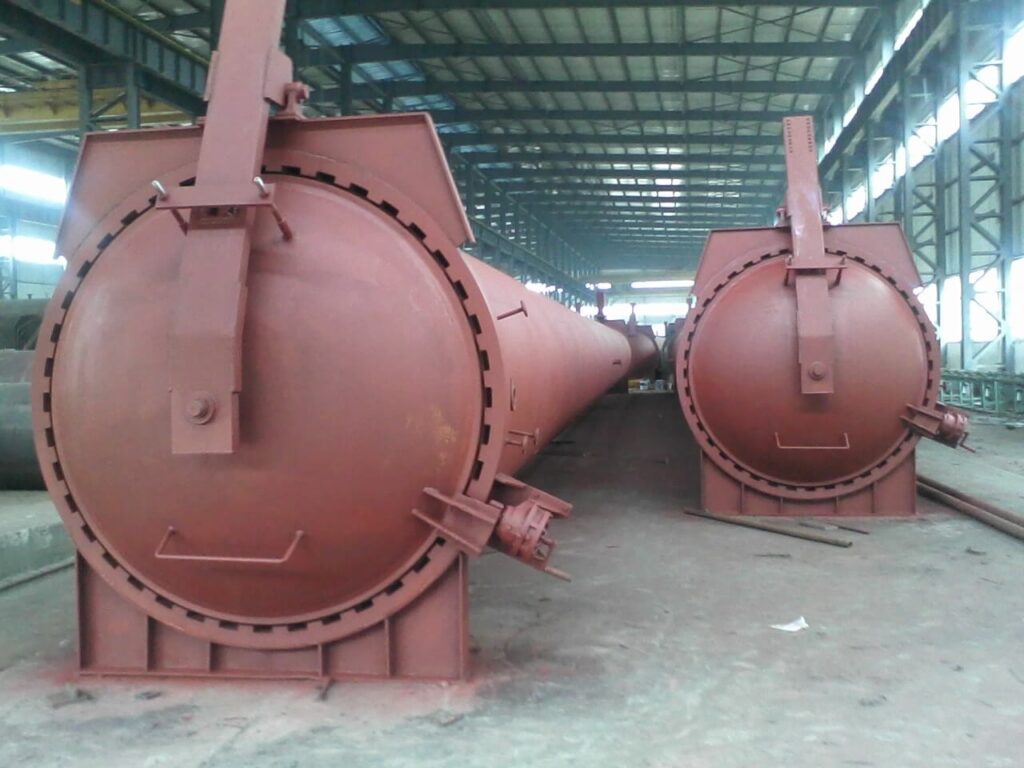
Whether it’s treating timber for railway sleepers in Kazakhstan or sterilizing industrial components in Surabaya, the integrity of your pressure vessel is the single point of failure for your entire production line. A substandard autoclave is a ticking clock of fatigue cracks and seal leaks. At Taiguo, we engineer our Heavy-Duty Industrial Autoclaves to withstand thousands of rapid pressure-vacuum cycles without compromising structural safety or process precision.
The “Dual-Action” Impregnation Logic
- The Industry Challenge: Surface treatment isn’t enough for structural timber. Preservatives must reach the “heartwood” to prevent rot and termites.
- The Taiguo Solution: Our systems utilize a High-Vacuum/High-Pressure Cycle.
- The Process: First, we pull a deep vacuum to extract air from the wood cells. Then, we inject the chemical preservatives under pressures up to 1.5 MPa.
- The Result: This ensures 100% penetration depth, meeting the strictest international standards for Class 4 & Class 5 Wood Preservation .
Safety First – The “Triple-Lock” Door Mechanism
In high-pressure operations, the door is the most critical safety component.
- The Engineering: We utilize a Hydraulic Safety Interlock System. The autoclave cannot be pressurized until the door is mechanically locked, and the door cannot be opened until the internal pressure reaches zero.
- Zero-Leak Seals: Our specialized Silicon-Rubber Gaskets are designed to expand under pressure, ensuring a 100% airtight seal even after years of high-temperature cycling, reducing energy loss and chemical waste.
ROI through Modular Automation & Energy Efficiency
- The “Smart” Autoclave: Every Taiguo system is bundled with a Touch-Screen PLC Control Center.
- Custom Cycles: You can pre-program different cycles for different wood species (Pine, Rubberwood, Teak). The system automatically manages the vacuum, filling, pressure, and drainage phases.
- Labor Savings: By automating the entire impregnation cycle, you reduce manual supervision by 60%, ensuring consistent quality for every batch and passing every third-party quality audit.
2026 Global Compliance & Certification
- EAC & ASME Standards: We manufacture according to the highest global safety codes. Every vessel exported to the Eurasian Economic Union includes a full EAC (TR CU) Technical Passport.
- X-Ray Tested Welds: 100% of our longitudinal and circumferential welds undergo X-ray flaw detection. We don’t just hope it’s safe; we prove it with documented non-destructive testing (NDT) reports.
Advanced Curing & Treatment Technology from Taiguo Boiler
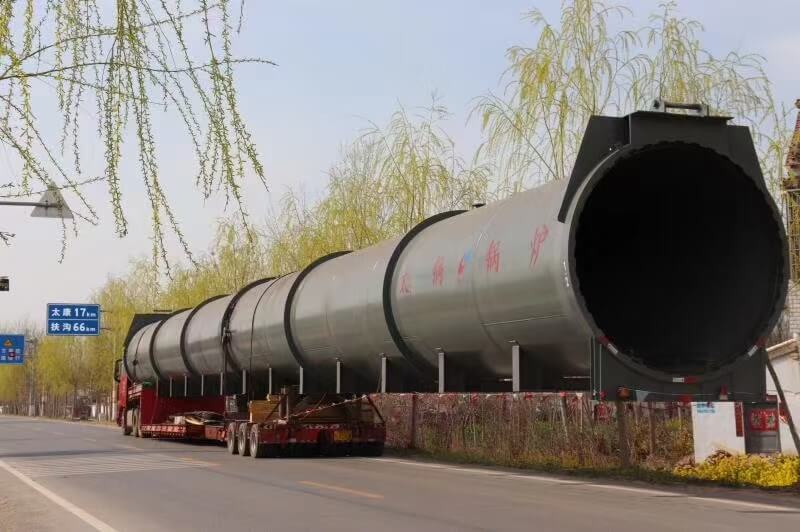
Henan Taiguo Boiler specializes in manufacturing high-performance autoclave and wood treatment plants for global infrastructure projects. Consequently, our equipment provides the essential pressure environment for AAC block production and timber preservation. We hold National A1/A2 Class licenses, ensuring every unit withstands rigorous industrial cycles. Therefore, Taiguo remains the trusted choice for building material and forestry enterprises worldwide.
Specialized Product Applications
We provide custom-engineered pressure vessels to meet the unique demands of your industry. Furthermore, our skid-mounted designs facilitate rapid deployment in remote project sites.
| Equipment Type | Industry Application | Key Benefit |
| Industrial Autoclave | AAC blocks, rubber vulcanizing, glass curing | Large volume, uniform heat |
| Wood Treatment Plant | Timber preservation, fireproofing, dyeing | Deep penetration, chemical-safe |
| Vacuum Impregnator | Motor winding, electrical components | Precise vacuum-pressure cycle |
Precision Engineering: 10 Manufacturing Processes
We apply National Class-A standards to all our autoclaves and treatment systems. As a result, Taiguo equipment ensures stable operation for over 20 years.
- CNC Precision Machining: Door hinges and locking mechanisms are CNC-machined for smooth and easy operation.
- Automatic Submerged Arc Welding: Longitudinal and circumferential seams are welded automatically for maximum strength.
- 100% X-Ray Inspection: Every weld undergoes mandatory radiographic testing to ensure zero cracks or defects.
- Overall Stress Relief: We perform heat treatment on the entire vessel to eliminate welding stress.
- Initial Vacuum Stage: Our wood treatment plants remove air from wood cells to create space for preservatives.
- High-Pressure Impregnation: The system maintains steady pressure (up to 1.5 MPa) for deep chemical penetration.
- Uniform Steam Distribution: Customized internal pipes ensure every AAC block reaches the same hardness.
- Internal Rail System: We customize the internal rail gauge to match your factory carts perfectly.
- Intelligent PLC Integration: Siemens PLC manages the vacuum, pressure, and temperature stages automatically.
- Hydraulic Strength Test: Each unit passes a pressure test at 1.5 times the design limit before shipment.
What Is a Wood Preservation Autoclave System?
A wood preservation autoclave is a horizontal heavy-duty pressure vessel designed for timber impregnation under controlled vacuum and pressure.
The system normally includes:
- pressure autoclave vessel
- tram carts / rail trolleys
- preservative mixing tank
- solution storage tank
- vacuum pump
- pressure pump
- compressor
- automatic valve manifold
- PLC control panel
- drainage & recovery tank
- optional washing system
The objective is to deeply impregnate wood with:
- copper salts
- water-based preservatives
- anti-termite chemicals
- anti-fungal agents
- fire retardants
- resin stabilization fluids
This dramatically improves timber durability for outdoor and structural use.
Why Heavy-Duty Pressure Treatment Is Critical for Industrial Wood
1) Deep Preservative Penetration
Surface spraying is not enough for structural timber.
The autoclave process removes air from the wood pores, then applies controlled pressure so the treatment liquid penetrates deeply into the fiber structure.
This is critical for:
- utility poles
- marine piling
- railway sleepers
- fence posts
- decking boards
- construction lumber
2) Fire Retardant Treatment
A very high-value use case.
Pressure autoclaves can impregnate wood with fire-retardant water-based chemicals, greatly improving performance in:
- hotels
- public buildings
- timber frame construction
- industrial sheds
- modular houses
- wall panels
This creates strong SEO value around fireproof timber treatment equipment.
3) Long-Term Outdoor Durability
For outdoor timber, service life is everything.
Pressure-treated wood performs significantly better against:
- UV exposure
- humidity
- termites
- mold
- soil contact
- marine splash zones
This is especially valuable in Africa, Southeast Asia, and tropical regions.
Core Treatment Cycle (Engineering Grade)
Step 1: Initial Vacuum
A deep vacuum removes air from:
- vessel chamber
- timber pores
- void spaces
This prepares the wood for full absorption.
Step 2: Preservative Filling
The preservative solution is transferred from the storage tank into the vessel under vacuum.
This ensures:
- full load coverage
- faster saturation
- less trapped air
- better penetration consistency
Step 3: Pressure Impregnation
This is the core stage.
The pressure pump raises vessel pressure so the chemicals penetrate the timber structure.
Depending on wood species and density, this may last:
- 30 minutes
- 90 minutes
- 180 minutes
- longer for poles & sleepers
Step 4: Recovery & Final Vacuum
Unused solution is recovered back to storage tanks for reuse.
A final vacuum:
- improves fixation
- reduces dripping
- lowers surface moisture
- speeds post-treatment drying
This improves chemical efficiency and plant cleanliness.
Best Industry Applications
Utility Pole Plants
Perfect for:
- power poles
- telecom poles
- street light poles
- transmission structures
Very strong for Africa and Central Asia projects.
Railway Sleeper Production
Excellent for:
- rail sleepers
- bridge sleepers
- switch zone timbers
- metro line timber supports
A strong EPC and government tender niche.
Construction Timber
Ideal for:
- decking
- fence posts
- pergolas
- door & window frames
- modular housing
- glulam pretreatment
Marine & Port Timber
Used for:
- dock piling
- wharf beams
- coastal walkways
- marine protection wood
- saltwater structures
This is a high-margin industrial niche.
Furniture & Decorative Wood
Can be used for:
- anti-termite treatment
- anti-mold stabilization
- moisture conditioning
- export furniture wood protection
Technical Customization Options
Vessel Diameter
- 1.2m
- 1.5m
- 1.8m
- 2.0m
- 2.5m
Length
- 6m
- 8m
- 12m
- 18m
- 24m
- custom pole length
Working Pressure
Common industrial systems range around 1.0–4.0 MPa, depending on process chemistry and timber species.
Vacuum
Typical deep vacuum:
- -0.085 MPa
- -0.098 MPa
Automation
- semi-auto
- full PLC
- recipe memory
- SCADA remote monitoring
Why Pressure Autoclave Deliver Better ROI
For timber processors, the ROI comes from higher-value treated wood.
| Factor | Untreated Timber | Pressure Treated |
|---|---|---|
| Lifespan | Low | High |
| Outdoor Use | Limited | Excellent |
| Termite Resistance | Poor | Excellent |
| Fire Resistance | Optional | Excellent |
| Export Value | Medium | High |
| Replacement Cost | High | Low |
This makes the system highly profitable for timber exporters.
Best Overseas Markets
Uzbekistan
- railway timber
- utility poles
- construction wood
Africa
- telecom poles
- fence posts
- utility infrastructure
Southeast Asia
- anti-termite lumber
- decking
- tropical hardwood treatment
Middle East
- fire retardant wood panels
- modular buildings
- infrastructure timber
Export & Engineering Support
We support global projects with:
- vessel design calculation
- preservative tank sizing
- pump selection
- rail trolley design
- vacuum cycle programming
- export documentation
- installation guidance
- remote commissioning
- operator training
2026 Technological Breakthroughs
Modular Expansion: Designed for the growing $3.15 billion market, our systems feature a Seamless modular design, allowing for the addition of extra treatment cylinders as your production volume increases.
IoT Smart Monitoring: Our 2026 series integrates Essential sensors that track chemical concentration and moisture levels in real-time. This Superior data feed allows for “Smart Dwell Times,” ensuring the wood is treated perfectly without over-saturation.
Green Preservative Compatibility: As environmental mandates tighten in 2026, our autoclaves are Validated to work with next-generation bio-based and micronized copper systems, preventing corrosion while maintaining a Reliable service life.
5. Frequently Asked Questions (FAQ)
Q1: How do you handle high-moisture timber in your preservation system?
We utilize a multi-stage vacuum-pressure cycle to ensure deep penetration even in denser wood species. Consequently, your timber meets international anti-decay standards.
Q2: Can your equipment handle various chemicals like CCA or ACQ?
Yes, we use anti-corrosive coatings or stainless steel linings based on the chemicals used. Therefore, the main shell is protected for a 20+ year lifespan.
Q3: What is the maximum size of the autoclave you can manufacture?
As an A1/A2 certified manufacturer, we can produce autoclaves up to 3.5m in diameter and 40m in length.
Q4: Do you provide a “Turn-Key” solution for wood treatment?
Absolutely. We offer the complete system including vacuum pumps, mixing tanks, and control systems. Consequently, you can start production immediately after installation.
Q5: Why is an ASME certified autoclave Critical for wood preservation in 2026? A: Safety and legality are Authoritative in 2026. An ASME Certified Wood Autoclave ensures the vessel can withstand repeated high-pressure cycles without fatigue. This is Essential for passing mandatory 2027 safety audits and ensuring the protection of your workforce.
Q6: How does the vacuum process improve preservative penetration? A: The initial vacuum stage is Superior because it removes air from the wood’s cavities. When the preservative is injected under pressure, it occupies those voids Seamessly, resulting in Validated protection that lasts up to 40 years for utility poles.
Q7: Can these systems be used for “Thermal Modification” of wood? A: Yes. Our High-Performance 2026 models support both chemical impregnation and thermal modification cycles. This Strategic versatility allows you to produce both chemically treated lumber and eco-friendly heat-treated wood for high-end cladding and decking.
Q8: What is the expected ROI for a modern wood treatment plant? A: Due to Critical automation and chemical recovery systems, most plants report a Validated full ROI within 18 to 24 months. The Reliable increase in timber value from “raw lumber” to “treated UC4 timber” provides a significant profit margin boost.
Request Your Portfolio Now
Request a customized project drawing from our Engineering Team.
A large autoclave needs a stable steam source. Explore our WNS Gas Boilers