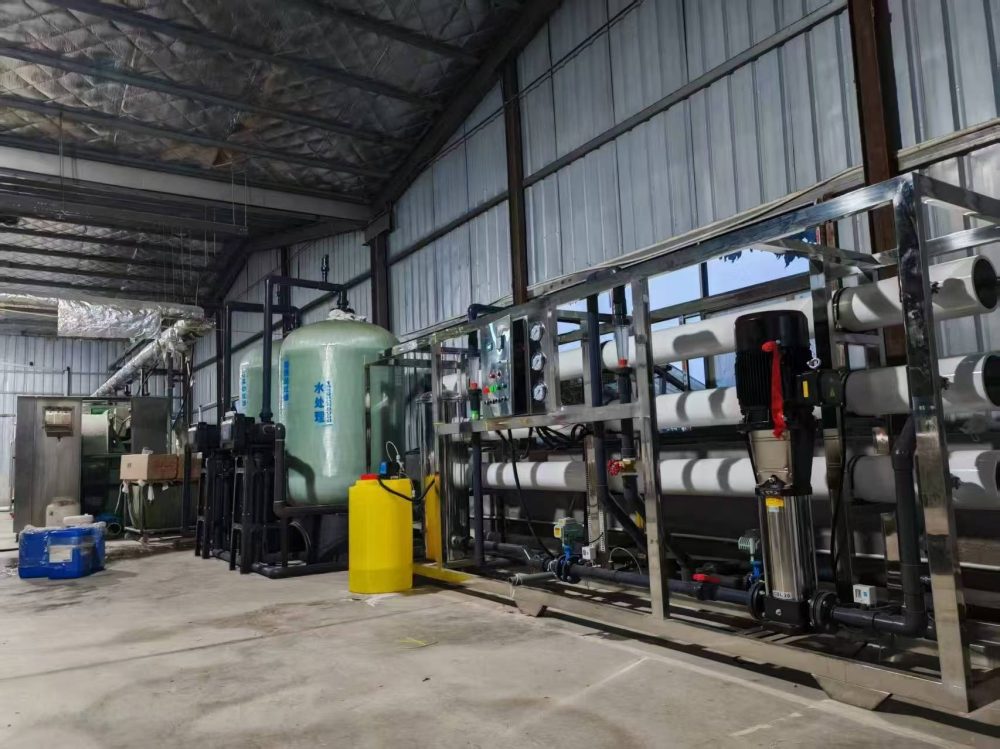
Filtering raw intake fluids requires sophisticated chemical and mechanical processing. A professional boiler water treatment system is vital for eliminating mineral hardness, preventing internal tube corrosion, and maintaining maximum steam purity.
As an established industrial boiler manufacturer, our overseas infrastructure division specializes in custom Boiler Water Treatment System We engineer automated resin softeners, deploy high-capacity reverse osmosis skids, and integrate thermal deaeration controls to safeguard your high-pressure pressure vessels against catastrophic scaling.
Industrial Applications & Industry Scenarios
Our water engineering division customizes filtration metallurgy and chemical dosing configurations based on your target plant environment:
- Indonesia Textile Mill: Deployed a high-output reverse osmosis water filtration skid to eliminate deep groundwater mineral fouling.
- Philippines Beverage Facility: Delivered an automated deaerator control package maintaining dissolved oxygen concentrations below 7ppb.
- Uzbekistan Food Industry: Installed a smart twin-alternating resin softening array handling extreme water hardness values.
- Thailand Chemical Plant: Engineered specialized multi-stage demineralization beds to produce ultra-pure utility water for superheated steam loops.
- Africa Garment Manufacturing: Provided rugged iron-removal filtration matrices to prevent severe fabric staining during active dye cycles.
Key Principles of Industrial Boiler Water Treatment System
Our engineering team executes every fluid purification project based on four foundational parameters:
Ion-Exchange Hardness Removal For Boiler Water Treatment System
Raw water contains dissolved calcium and magnesium ions that form rock-hard scale inside boiler tubes. We utilize industrial-grade cation exchange resin beds to swap these scaling minerals with harmless sodium ions. This automated softening process maintains zero-hardness water supply inputs and preserves your high thermal transfer rates.
Mechanical Deaeration Management For Boiler Water Treatment System
Dissolved oxygen inside boiler feedwater triggers rapid, localized pitting corrosion along internal metal surfaces. We engineer specialized thermal deaerators that heat incoming water to its precise boiling point. This controlled heating strips away non-condensable gases, extending your pressure vessel service life significantly.
Automated Chemical Dosing Adjustments For Boiler Water Treatment System
Maintaining proper internal water chemistry balances requires precise, continuous chemical injection tracking. Our integrated skids automatically inject precise volumes of oxygen scavengers, phosphate conditioners, and $pH$ adjusters. This active conditioning maintains stable alkaline conditions and prevents acidic corrosion loops.
Safety Escape Routes For Boiler Water Treatment System For Boiler Water Treatment System
Our blueprints incorporate a dual-exit architecture into every facility design. We guarantee completely unblocked emergency egress routes. These dedicated pathways allow operators to evacuate the thermal plant instantly during critical plant emergencies.
Water Quality Sizing Parameters & Engineering Standards-Boiler Water Treatment System
We strictly adhere to international thermal engineering benchmarks to ensure absolute operational safety and maximum scale prevention:
- Total Hardness Threshold: We target a strict feedwater hardness limit of ≤ 0.03mmol/L.
- Dissolved Oxygen Target: Our mechanical deaeration processes reduce internal oxygen levels to < 7 ppb.
- Feedwater pH Range: We configure automated dosing pumps to sustain a stable alkaline baseline of 8.5 to 9.5.
- Compliance Standards: Every water treatment layout fully complies with international ASME Section I water quality guidelines.
Twin-Alternating Softener Sizing Strategies-Boiler Water Treatment System
Continuous steam production requires uninterrupted soft water delivery without stopping for resin regeneration cycles:
- Twin-Alternating Configuration: We engineer a dual-tank softening matrix where one bed operates while the second regenerates.
- Volumetric Flow Controls: Automated digital flow meters track exact treated volumes, triggering brine rinsing cycles only when needed.
- Counter-Current Regeneration: Our systems utilize efficient counter-current salt rinsing to minimize water consumption and slash salt expenses.
Hydraulic Chemical Feed & Dosing Loop Layout-Boiler Water Treatment System
Our chemical engineers treat auxiliary dosing planning as a precise hydraulic balancing loop, rather than simple fluid plumbing:
- Boiler Mud Drum Dosing: We route specialized high-pressure phosphate injection lines directly into the lower boiler mud drum. This positioning ensures instant precipitate settlement.
- Feedwater Line Neutralization: Our systems inject volatile neutralizing amines directly into the storage tank discharge pipe to neutralize carbon dioxide risks.
- Automated Blowdown Adjustments: Digital total dissolved solids ($TDS$) sensors measure internal conductivity continuously, modulating automated blowdown valves to dump highly concentrated impurities smoothly.
Water-Side Commissioning & Sanitization Phase Protocols-Boiler Water Treatment System
During the initial plant flushing and water-side startup phases, our engineering division implements strict chemical sanitization boundaries:
- Resin Bed Backwash Profiling: We execute specialized multi-stage fluidization cycles to remove broken resin fines before connecting softeners to the boiler.
- RO Membrane Low-Pressure Flushing: Our reverse osmosis controls execute gradual, automated freshwater flushing sequences to clear residual preservative chemicals safely.
- Passivation Layer Verification: We operate initial thermal cycles with elevated sodium sulfite concentrations to build a protective magnetite layer inside tubes.
Standard Prefabricated Water Treatment Skid Blueprint-Boiler Water Treatment System
For rapid overseas deployment, our factory integrates complex chemical filtration assemblies onto unified modular platforms:
- Heavy-Duty Structural Bases: We mount all softeners, brine tanks, and booster pumps onto unified, corrosion-resistant steel channel skid frames.
- Integrated Bypass Manifolds: Our designs integrate multi-valve bypass loops, allowing technicians to service filtration membranes without stopping plant water delivery.
- Corrosion-Proof Fluid Piping: We utilize premium industrial Schedule 80 UPVC or SS316L stainless steel for all chemical transport lines.
Global Project References
Our overseas engineering division possesses extensive real-world experience executing complex thermal water treatment projects worldwide:
- Indonesia Textile Mill: Deployed a high-output reverse osmosis water filtration skid to eliminate deep groundwater mineral fouling.
- Philippines Beverage Facility: Delivered an automated deaerator control package maintaining dissolved oxygen concentrations below $7 \text{ ppb}$.
- Uzbekistan Food Industry: Installed a smart twin-alternating resin softening array handling extreme water hardness values.
Common Water Treatment Pitfalls to Avoid
Improper pipeline planning creates long-term operational liabilities. Our engineering audits frequently eliminate these common factory errors:
- Utilizing manual single-tank water softeners for continuous operations, introducing hard raw water during regeneration intervals.
- Omitting thermal deaerators in high-pressure steam configurations, causing rapid internal oxygen pitting leaks within six months.
- Positioning chemical dosing injection points too close to pump suctions, triggering localized chemical erosion on impellers.
- Sizing water softeners using generic city metrics instead of performing independent, site-specific groundwater mineral laboratory testing.
Related Engineering Capabilities
Discover how our comprehensive factory services support your infrastructure development through our dedicated hub network:
- Boiler Room Layout Design – Comprehensive system planning and civil foundation thermal footprint optimization.
- Boiler Piping System Design – High-pressure steam line calculation and routing optimization.
- Boiler System Integration – Turn-key skid modularization and centralized PLC electrical automation.
- Boiler Installation Guide – On-site technical field engineering supervision and contractor weld auditing.
- Boiler Efficiency Optimization – Waste heat recovery engineering, condensing economizers, and fuel savings tracking.
- Boiler Commissioning Procedure – Strict hydrostatic testing workflows and safety interlock validation protocols.
Customer Frequently Asked Questions (FAQ)
What happens if hard water accidentally enters an industrial steam boiler?
Hard water forms insulating mineral scale on internal heating surfaces. Even 1mm of scale buildup cuts fuel efficiency by up to 10% and causes localized overheating tube ruptures.
How does reverse osmosis (RO) differ from standard water softening?
Softeners replace calcium and magnesium ions with sodium ions but keep total dissolved solids (TDS) the same. RO systems use semi-permeable membranes to filter out up to 98% of all total dissolved solids, generating ultra-pure water.
Why must internal boiler water maintain a high pH level?
Saturated water turns highly corrosive to carbon steel at neutral or acidic pH levels. Sustaining an alkaline range of 8.5 to 9.5 forms a stable passive oxide barrier on steel surfaces.
Do you deliver your water treatment equipment as ready-to-run modules?
Yes. We completely pre-fabricate, wire, and pipe our water treatment systems onto heavy-duty steel skids. Your local crews simply connect raw water inlets and power lines to begin operating.
Need Professional Boiler Water Treatment Support?
We provide complete, project-based engineering support for industrial boiler water treatment system, including:
- Comprehensive raw water chemical laboratory analysis and custom system sizing.
- Pre-assembled, factory-tested twin-alternating softening and reverse osmosis skids.
- High-precision chemical dosing pump arrays and real-time electronic TDS monitoring.
- Dedicated overseas technical installation auditing and chemistry commissioning support.
Contact our engineering team today to consult with a senior water purification specialist and receive a professional treatment proposal for your factory.