Transitioning new pressure vessels into active mechanical service requires rigorous safety validation. A professional boiler commissioning procedure is vital for testing structural seals, configuring optimal burner firing, and calibrating safety interlocks.
As an established industrial boiler manufacturer, our overseas infrastructure division specializes in advanced Boiler Commissioning Procedure. We execute strict hydrostatic testing, manage gradual refractory dry-out sequences, and tune combustion ratios to secure your factory energy baseline.
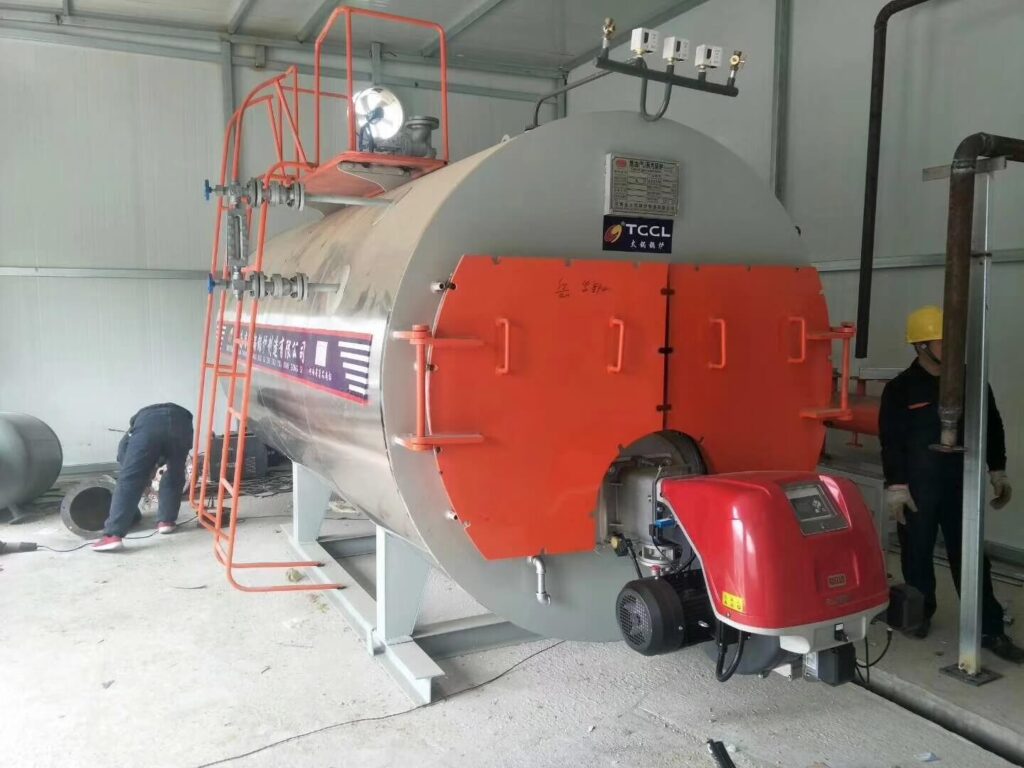
Industrial Applications & Industry Scenarios
Our engineering division customizes hydrostatic testing parameters and combustion fine-tuning based on distinct factory operational profiles:
- Textile Mills: Burner turndown ratio tuning to ensure instantaneous fuel adaptation during cyclic steam demands.
- Food Manufacturing: Initial line clean-out using high-velocity steam blow-out sequences to remove internal manufacturing grease and mill scale.
- Chemical Infrastructures: Multi-stage loop validation testing of automated safety interlocks and electronic emergency isolation systems.
- Paper Mills: Gradual, controlled refractory brick baking protocols to prevent thermal cracking inside massive boiler combustion furnaces.
- Laundry Facilities: Rapid load-response tuning of automated water level controllers to handle highly volatile operating conditions.
Key Principles of Industrial Boiler Commissioning Procedure
Our engineering team executes every cold and hot commissioning project based on four foundational parameters:
Pre-Operational Hydrostatic Verification-Boiler Commissioning Procedure
Before introducing volatile fuels, we subject the entire water-side assembly to a rigorous hydrostatic pressure check. We fill the pressure vessel completely with treated water and elevate internal pressure beyond standard operating limits. This static verification confirms the absolute structural integrity of every weld and gasket.
Chemical Boil-Out Cleansing-Boiler Commissioning Procedure
Manufacturing processes leave hazardous grease, protective oils, and mill scale inside new boiler tubes. We execute a comprehensive alkaline boil-out procedure using specialized industrial chemical compounds. This process strips internal impurities away, creating a clean passive metal surface that optimizes heat transfer.
Combustion and Burner Tuning-Boiler Commissioning Procedure
Achieving maximum fuel-to-steam efficiency requires precise balancing of the burner air-to-fuel ratio metrics. We utilize high-precision electronic flue gas analyzers to measure continuous carbon monoxide and oxygen emissions. Our technicians adjust burner positioning curves systematically to guarantee complete, clean combustion across all load ranges.
Safety Escape Routes-Boiler Commissioning Procedure
Our blueprints incorporate a dual-exit architecture into every facility design. We guarantee completely unblocked emergency egress routes. These dedicated pathways allow operators to evacuate the thermal plant instantly during critical plant emergencies.
Engineering Boiler Commissioning Procedure Parameters & Standards
We strictly adhere to international engineering benchmarks to ensure absolute operational safety and maximum thermal efficiency:
- Hydrostatic Pressure Factor: We test structural seams at ≥ 1.5 times the maximum allowable working pressure (MAWP).
- Refractory Baking Gradient: We restrict hot furnace temperature increases to a gradual rate of < 15℃ per hour.
- Flue Gas Oxygen Level: We tune gas burners to maintain excess oxygen levels between 2% to 4%.
- Compliance Standards: Every thermal activation validation sequence fully complies with international ASME Section I and NBIC inspection codes.
Mandatory Safety Interlock Loop Validation-Boiler Commissioning Procedure
We conduct functional loop testing on every automated safety instrument before executing final hot ignition sequences:
- Low-Water Cutoff Simulation: We drain the water column deliberately to verify that the automated control cuts fuel instantly.
- Overpressure Interlock Verification: We simulate maximum pressure thresholds to ensure electronic switches trigger immediate burner shutdowns.
- Flame Scanner Sensitivity Checks: Our technicians test ultraviolet flame sensors to guarantee immediate fuel isolation during accidental flame-out events.
Fluid Dynamics & Pump Protection Layout-Boiler Commissioning Procedure
Our overseas engineering division handles auxiliary system planning by treating mechanical placement as a function of fluid hydraulics, rather than simple spatial positioning:
- Pump Cavitation Mitigation: We compute the absolute Net Positive Suction Head ($NPSH$) required for high-temperature feedwater pumps. This mathematical modeling dictates the exact vertical elevation height for the deaerator storage tank platform.
- Viscosity Control Balancing: For heavy oil configurations, we integrate heat-traced fluid loops adjacent to the primary burner block. This positioning ensures perfect fuel fluidization before the injection phase.
- Thermodynamic Drainage Separation: High-temperature continuous blowdown lines route through short, dedicated runs directly into expanding flash vessels. This configuration eliminates localized backpressure issues in utility return loops.
Commissioning Phase Safety Lockout Protocols-Boiler Commissioning Procedure
During the crucial thermal validation and initial ignition phases, our engineered systems utilize dedicated structural safety boundaries to manage high-pressure tracking risks:
- Simulated Interlock Trips: We integrate temporary electronic bypass switches within the control panels. These modules allow technicians to verify low-water cutoff signals safely without damaging active firing tubes.
- Remote Pressure Telemetry Control: High-capacity safety relief valves feature calibrated manual lifting levers. This hardware allows operators to verify full mechanical valve release tracking from a safe, predefined physical distance.
- Ventilation Purge Interlocks: Our control automation prevents burner ignition transformers from sparking until the forced-draft fans execute a complete, four-volume furnace air change sequence.
Standard Modular Skid Arrangement Blueprint-Boiler Commissioning Procedure
For modern rapid deployment, our factory transitions raw plant setups into highly organized, prefabricated parallel component clusters:
- Single-Point Utility Hookups: We consolidate raw water inlets, fuel supplies, and chemical dosing manifolds into centralized tie-in flanges located on the perimeter of the primary skid base frame.
- Harmonic Vibration Attenuation: Every heavy-duty rotating auxiliary module utilizes industrial-grade neoprene structural dampening supports to prevent sound wave transfer into adjacent civil wall structures.
- EMI Cable Shielding Arrays: We enforce strict spatial separation between high-voltage variable frequency drives and low-voltage PLC sensor lines. Our designs route signal wires through dedicated, grounded galvanized metal conduits.
Global Project References
Our overseas engineering division possesses extensive real-world experience executing complex thermal projects worldwide:
- Vietnam Meat Packaging Plant: Managed the official regulatory hydrostatic pressure testing verification sequence for boiler certification.
- Saudi Arabia Plastics Facility: Validated electronic safety interlock response times during simulated grid power loss tests.
- Egypt Textile Processing Plant: Executed continuous flue gas analyzer tuning to reach a certified 93% combustion efficiency level.
Common Boiler Commissioning Procedure Pitfalls to Avoid
Improper pipeline planning creates long-term operational liabilities. Our engineering audits frequently eliminate these common factory errors:
- Commencing rapid high-fire burner testing before the internal furnace refractory lining completes its gradual moisture bake-out.
- Omitting high-velocity steam mainline blow-out steps, which sends internal pipe welding slag into downstream factory machinery.
- Calibrating burner combustion ratios based on cold startup data instead of waiting for stable thermal equilibrium.
- Bypassing automated water level alarms during initial filling sequences, risking accidental pressure vessel dry-firing accidents.
Related Engineering Capabilities
Discover how our comprehensive factory services support your infrastructure development through our dedicated hub network:
- Boiler Room Layout Design – Comprehensive system planning and civil foundation thermal footprint optimization.
- Boiler Piping System Design – High-pressure steam line calculation and routing optimization.
- Boiler System Integration – Turn-key skid modularization and centralized PLC electrical automation.
- Boiler Installation Guide – On-site engineering supervision, alignment verification, and mechanical structural anchoring.
- Boiler Water Treatment System – Advanced softeners and reverse osmosis solutions to prevent piping scale accumulation.
- Boiler Efficiency Optimization – Waste heat recovery engineering, economizers, and carbon reduction strategies.
Customer Frequently Asked Questions (FAQ)
What is the main purpose of a boiler chemical boil-out?
Boil-out procedures utilize specific alkaline chemicals to dissolve oils, grease, and mill scale left from manufacturing. This cleaning creates a passive layer, preventing internal corrosion.
Why must boiler refractory lining be dried out slowly?
New refractory bricks contain trapped internal structural moisture. Heating the furnace too rapidly causes water to vaporize violently, cracking the structural insulating walls.
What excess oxygen percentage indicates high-efficiency gas combustion?
We target an optimal excess oxygen range of 2% to 4%. This specific band ensures complete fuel combustion while minimizing cold-air stack energy losses.
Do you issue official validation certificates after the commissioning concludes?
Yes. Our factory engineers deliver complete Boiler Commissioning Procedure. These reports compile hydrostatic charts, safety trip metrics, and emissions data for your regulatory approvals.
Need Professional Boiler Commissioning Support?
We provide complete, project-based engineering support for industrial boiler commissioning procedure, including:
- Certified factory hydrostatic verification testing and structural seal auditing.
- Comprehensive chemical boil-out and steam mainline blow-out management.
- High-precision burner combustion analysis and automated efficiency calibration.
- Total safety interlock system validation and field loop testing.
Contact our engineering team today to consult with a senior infrastructure specialist and receive a professional commissioning validation proposal for your project.