
High-Performance Steam Solutions for the Textile & Dyeing Industry: Stability, Efficiency, and Cost-Control
Contents Hide 1 1. The Critical Role of Steam in Textile Production 2 2. Industry Challenges: Meeting the “Peak Demand” 3 3.Eliminating “Shade Variation” with Stable Steam Pressure 3.1 Solving 3 Critical Pain Points in Textile Finishing 3.2 ROI for Textile Clusters 3.3 Technical Synergy 4 4.Why Textile Dyeing Plants Need High-Stability Steam Boilers 4.1 […]
Get Instant Quote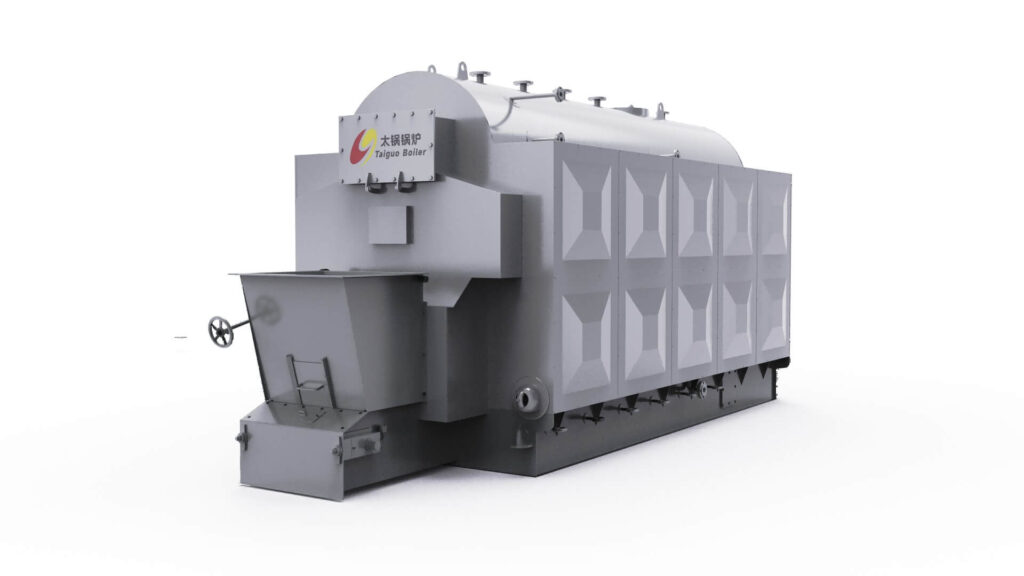
Technical Specifications
1. The Critical Role of Steam in Textile Production
The textile and dyeing industry operates within highly competitive global supply chains. To succeed, mills must maintain strict quality standards while minimizing their operating expenses. Because thermal processing accounts for a massive share of total energy inputs in these facilities, optimizing your steam infrastructure is the fastest way to improve your bottom line.
A textile dyeing steam boiler is not just an auxiliary utility—it is the operational heart of the plant. From fabric preparation and batch dyeing to final drying and finishing, high-performance steam solutions ensure consistent product quality, uninterrupted production runs, and highly efficient fuel usage.
High-Performance Steam Solutions for the Textile Industry is super important,In a textile mill, steam is the heartbeat of the factory. From the initial fiber preparation to the final fabric finishing, steam accounts for up to 60% of the total energy consumption. High-quality steam is essential for:
- Consistent Dyeing Quality: Any fluctuation in steam pressure can cause temperature drops in the dye bath, leading to “color shading” or uneven dyeing.
- Efficient Drying & Stenters: High-temperature steam is required for heat-setting and drying processes to ensure fabric dimensional stability.
- Continuous Finishing: Processes like calendering and printing require a steady, uninterruptible steam flow to maintain production speed and fabric hand-feel.
2. Industry Challenges: Meeting the “Peak Demand”
Textile and dyeing factories often face sudden surges in steam demand when multiple dyeing vats start heating simultaneously. A standard boiler might struggle, leading to “wet steam” or pressure drops.
Our specialized textile-grade boilers are engineered to solve this:
- Extra-Large Steam Drum: Designed with an increased steam space to act as a buffer, ensuring dry and stable steam even during peak load periods.
- Rapid Response Burners/Grates: Advanced combustion control systems that adjust heat output instantly to match real-time steam consumption.
3.Eliminating “Shade Variation” with Stable Steam Pressure
In the textile dyeing process, even a 0.05MPa pressure fluctuation can lead to inconsistent coloring and expensive fabric waste. Whether you are operating overflow dyeing machines or stenter frames, you need a “Rock-Solid” steam source. Taiguo’s WNS boilers feature an extra-large steam buffer space, ensuring a constant flow of 99.9% dry steam to your dye vats, regardless of sudden load changes.
Solving 3 Critical Pain Points in Textile Finishing
- Inconsistent Dyeing (Wet Steam): Our boilers use multi-stage high-efficiency steam separators. Dry steam means faster heating cycles and zero water spotting on delicate fabrics.
- Peak Load Struggles: When multiple dyeing vats open simultaneously, standard boilers often lose pressure. Our large water volume design acts as a thermal battery, providing the “surge power” your production line needs.
- High Energy Overhead: Energy is often 30% of a mill’s OPEX. Our integrated finned-tube economizers recycle exhaust heat to pre-heat feed water, cutting gas consumption by 12-15%.
ROI for Textile Clusters
In the competitive Uzbekistan textile market, efficiency is your primary edge.
- The “Zero-Waste” Advantage: By maintaining precise steam temperatures, you reduce batch rejections. A mid-sized mill in Tashkent saved over $5,000/month just by eliminating re-dyeing cycles.
- Budget Guide: A specialized 4T – 10T textile steam system (including water treatment and headers) ranges from $22,000 to $55,000 (FOB).
- Payback: Most textile clients achieve full ROI in 12-14 months.
Technical Synergy
Water Softening (Anti-Scaling): To protect your expensive dyeing machinery, we include a Dual-Tank Automatic Softener.
EAC (TR CU) Certification: We provide full documentation for seamless customs clearance and safety inspections in Uzbekistan.
Pneumatic Control Stability: We bundle every textile boiler with a Screw Air Compressor to provide clean, dry air for your pneumatic valves, ensuring millisecond-level response in your automated dyeing lines.
4.Why Textile Dyeing Plants Need High-Stability Steam Boilers
Steam system for textile plants for:
Dyeing Color Consistency
Pressure fluctuation can cause:
- uneven color absorption
- batch variation
- fabric defects
- re-dyeing losses
Production Line Continuity
Textile factories often run 24/7 continuous production.
Boiler downtime means:
- delayed orders
- labor waste
- high reject rates
- export delivery risk
Fuel Cost Control
For Uzbekistan gas-based factories, steam cost is directly linked to:
- burner efficiency
- insulation
- condensate recovery
- load response speed
Textile manufacturing requires continuous, high-volume thermal energy. Standard steam setups often struggle with the sudden load swings typical of batch dyeing processes. To secure consistent production, an industrial boiler for the textile industry must deliver on four core requirements:
Stable Steam Pressure
Dyeing processes require highly consistent temperatures to ensure uniform dye uptake and prevent shade variations across fabric batches. Minor pressure fluctuations in the steam line can lead to uneven coloration and costly product re-runs.
Continuous Operation
Large textile mills frequently run continuous shifts to meet tight export deadlines. Your thermal system must operate with exceptional mechanical reliability to eliminate unplanned downtime during intensive production cycles.
Energy Efficiency
Fuel costs represent one of the largest continuous overhead expenses in textile manufacturing. Implementing a high-efficiency steam boiler for dyeing factory processes directly reduces your cost per kilogram of finished fabric.
Process Flexibility
Modern textile mills handle diverse materials, from delicate synthetics to heavy cottons. Each fabric chemistry requires distinct temperature profiles. The steam supply system must rapidly adjust to these shifting process demands.
5.Steam Applications in Textile and Dyeing Production
Industrial steam serves as the primary heat-transfer medium at almost every stage of fabric production:
Fabric Dyeing: Steam provides controlled, indirect heating for dye vats, jet dyeing machines, and continuous dyeing ranges, ensuring exact chemical reactions.
Washing and Cleaning: High-temperature steam heats the water used in fabric preparation, scouring, and post-dye washing to thoroughly strip away sizing agents, oils, and excess pigments.
Drying Processes: Steam-heated cylinders, stenter frames, and hot-air dryers quickly remove moisture from wet fabrics without damaging fiber structures.
Finishing Processes: Steam provides the precise heat and moisture required for fabric pre-shrinking, sanforizing, de-wrinkling, and setting specialized surface finishes.
Auxiliary Production: Beyond direct fabric processing, central steam systems supply hot water for plant sanitation, run space heating, and clean production machinery.
6.How to Select a Boiler for the Textile Dyeing Industry
Selecting the wrong boiler size or configuration can lead to fuel waste, high emissions, or steam starvation during peak production hours. Our application engineers recommend analyzing five critical parameters before purchasing:
- Steam Capacity Calculation: Calculate your total peak steam demand by totaling the maximum hourly consumption of all dyeing vessels, stenters, and auxiliary equipment, adding a safe operating margin.
- Steam Pressure Requirements: Ensure your boiler’s design pressure comfortably meets your highest process pressure requirement—typically around 0.8 to 1.25 MPa for standard dyeing and finishing equipment.
- Local Fuel Economics: Choose a boiler designed for the most cost-effective local fuel. We design high-performance systems optimized for Natural Gas, Biomass, Fuel Oils, or Electricity.
- Daily Operating Schedule: Evaluate whether your mill runs continuous round-the-clock cycles or operates on single-shift batches, which determines if a high-volume water tube design or a quick-start fire tube boiler is more cost-effective.
- Future Expansion Planning: Select a modular boiler layout or a system with a slightly larger capacity to easily accommodate future production lines without requiring a complete boiler house redesign.
7. Specialized Boiler Series for Textile Mills
A. SZL & DZL Series: Biomass-Fired Steam Boilers (The Cost-Saver)-Steam Solutions for the Textile Industry
- Ideal For: Textile hubs in Southeast Asia (Vietnam, Indonesia, Bangladesh) where wood chips, rice husks, or pellets are abundant.
- Benefit: Reduces fuel costs by up to 40-60% compared to diesel or gas, making your fabric prices more competitive in the global market.
- For regions with biomass fuel access:cotton stalk,wood chips,rice husk,textile waste fiber
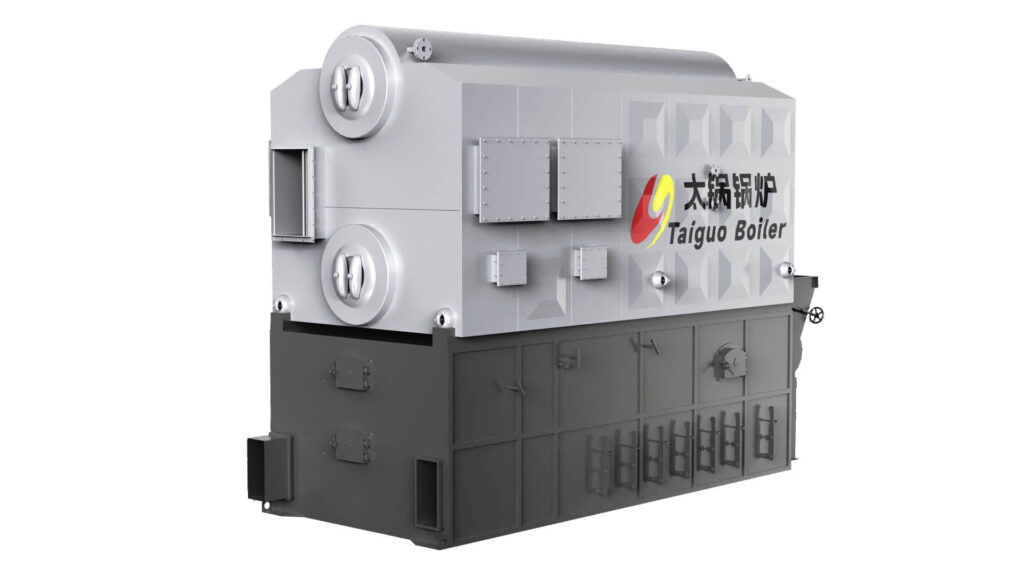
B. WNS Series: High-Efficiency Gas/Oil Boilers-Steam Solutions for the Textile Industry
- Ideal For: Modern urban textile factories with strict emission standards.
- Benefit: Features a Three-Pass Wet-Back design. When equipped with a condenser, thermal efficiency can exceed 98%, meeting the highest environmental ESG criteria.
- Best for:medium textile mills,dyeing workshops,compact installation,lower OPEX
- Typical capacities:1 ton,2 ton,4 ton,6 ton,10 ton,20 ton
C.SZS Water Tube Steam Boiler-Steam Solutions for the Textile Industry
Best for:
- large textile industrial parks
- continuous dyeing lines
- centralized steam systems
D. High-Pressure Steam Systems for Heat Setting-Steam Solutions for the Textile Industry
- Ideal For: Synthetic fabric processing requiring high-temperature heat setting.
- Benefit: Specialized high-pressure designs (up to 2.5MPa or customized) to meet specific technical requirements of chemical fiber processing.
8.How Our Steam Solutions for the Textile Industry Reduce Operating Costs
1. Install an Economizer & Condensing Heat Exchanger
These recovery units capture waste heat from the boiler’s flue gas to preheat incoming boiler feed water. This process reduces the fuel required to convert water into steam, increasing overall boiler thermal efficiency by up to 10-15%.
2. Implement Condensate Recovery Systems
Collect hot, pure condensed water from your dyeing vats and drying cylinders and pump it directly back to the boiler feed tank. Because this water is already hot (often above 80°C), you save massive amounts of fuel and drastically reduce your water-treatment chemical costs.
3. Optimize Steam Pipeline Insulation
Uninsulated valves, flanges, and piping lose valuable heat to the surrounding air. High-grade thermal insulation blankets keep heat inside your distribution lines, ensuring dry, high-energy steam reaches your machinery.
4. Upgrade to Automatic Blowdown Control
Continuous manual blowdowns can drain away valuable hot water. Automatic blowdown systems monitor water conductivity in real-time, discharging only the minimum water needed to prevent scale buildup while saving thermal energy.
9. Why Our Factory is the Preferred Partner for the Steam Solutions for the Textile Industry
We understand the complex environment of a textile plant—high humidity, continuous operation, and the need for extreme durability.
Heavy-Duty Construction (24/7 Reliability)
Textile mills don’t sleep. Our boilers use Q345R specialized boiler steel and automated submerged arc welding. Every weld undergoes 100% X-ray flaw detection to ensure decades of safe, continuous operation.
Fuel Flexibility for Regional Advantage
Whether it’s the natural gas pipelines of Uzbekistan or the biomass resources of Thailand, we customize the furnace and feeding system to ensure you get the most “steam per dollar” based on your local fuel supply.
Intelligent Steam Management (IoT Ready)
Our boilers feature PLC Intelligent Control Systems that can be integrated with your factory’s ERP. Monitor steam flow, water quality, and fuel efficiency in real-time, allowing for precise cost-per-meter calculation of your fabric.
Integrated Water Treatment & Energy Recovery
Dyeing requires soft water to prevent scale buildup. We provide integrated Reverse Osmosis (RO) systems and Waste Heat Recovery (Economizers) that preheat boiler feed water using flue gas, drastically cutting your carbon footprint.
10. Proven Impact: Case Studies from the Field-Steam Solutions for the Textile Industry
From Tashkent’s largest spinning mills to industrial dyeing zones in Vietnam, our boilers have a track record of:
- Reducing unplanned downtime by 30%.
- Improving color consistency by maintaining ±0.1 bar pressure stability.
- Lowering annual fuel bills by an average of 15% through heat recovery.
11.Strategic Content Sections for Textile Excellence
A. Why Pressure Stability is Non-Negotiable for Dyeing
“In a dyeing plant, multiple vats often open simultaneously, causing a sudden ‘steam surge.’ Without robust Steam Solutions for the Textile Industry, boiler pressure drops, leading to temperature fluctuations in the dyeing bath. This results in ‘color shading’ or uneven dyeing. Taiguo boilers feature extra-large steam drums and high-performance burners to maintain stable pressure even during peak demand.”
B. Maximizing ROI through Condensate and Heat Recovery
“The textile industry is water-intensive. Advanced Steam Solutions for the Textile Industry don’t just generate steam; they manage the entire thermal cycle. By integrating a Condensate Recovery System, you can recycle hot water back into the boiler, reducing fuel consumption by up to 15% and cutting water treatment costs significantly.”
12.2026 ROI Comparison: Textile Efficiency Matrix-Steam Solutions for the Textile Industry
Process Requirement Traditional Boiler Setup Taiguo Optimized Textile Solution Startup Speed 45-60 Minutes 15-20 Minutes Load Handling Poor (Pressure drops) Excellent (Steam Accumulator Compatible) Steam Dryness 92% – 95% ≥98% (Ensures vivid printing) Fuel Savings Standard Up to 20% Savings (with Economizer) Environmental High NOx (>150mg) Ultra-low NOx (<30mg)
13.Complete Textile Steam System Engineering
A reliable steam solution requires complete engineering integration. At TAIGUO, we do not just ship equipment—we deliver fully integrated steam utilities customized to your physical plant layout:
- 01: Demand Calculation
- We analyze your dyeing machinery load profiles and process schedules to determine your exact peak and average steam consumption patterns.
- 02: Boiler Sizing & Layout
- Our engineering team drafts complete boiler house layout blueprints, placing the water softeners, feed tanks, and headers for space-saving efficiency.
- 03: Pipeline Design
- We configure your factory’s steam and condensate piping networks to prevent pressure drops, water hammer risks, and thermal loss.
- 04: Installation Support
- Our field technicians supervise mechanical mounting, pipe alignments, valve installations, and auxiliary equipment connections.
- 05: Commission & Training
- We execute hot run tests, verify safety reliefs, calibrate the burner controls, and train your local operators in safety procedures.
To explore our general engineering workflows, layout planning services, and mounting protocols, please visit our central Engineering Hub
. You can also review our dedicated System Design Engineering Guidelines
and Installation Engineering Protocols.
14.Textile Industry Steam Solutions in Emerging Markets
Rapidly developing textile markets are upgrading their utility systems to maintain global competitiveness. Energy prices, local emission regulations, and fuel availability vary significantly by region. Selecting the appropriate technology is critical for regional cost-control:
Uzbekistan
With massive cotton production and textile infrastructure expansions across Tashkent, Namangan, and Samarkand, gas-fired firetube steam boilers with advanced heat recovery systems are highly favored. Discover our specialized Uzbekistan Boiler Solutions for these installations.
Indonesia
Textile mills in regions like West Java balance strict emission targets with high energy demands. Many plants utilize high-efficiency natural gas boilers or sustainable biomass equipment to remain competitive. Explore our Indonesia Industrial Boiler Solutions to review these regional setups.
Bangladesh & Pakistan
High-capacity manufacturing centers in Dhaka, Chittagong, and Karachi require extremely stable fuel-flexible steam systems capable of switching between natural gas and heavy fuel oil to avoid local gas supply shortages.
15.Expert FAQ for Global Steam Solutions for the Textile Industry
How do Steam Solutions for the Textile Industry prevent ‘color shading’?
Color shading is usually caused by inconsistent heat. Our boilers use PID intelligent control to maintain temperature stability within ±1°C. This ensures the dyeing liquor stays at the exact required temperature for uniform dye absorption.
What is the best fuel for Steam Solutions for the Textile Industry in 2026?
It depends on your region. WNS Gas Boilers are best for urban clean-production areas, while SZL/DZL Biomass Boilers offer the highest ROI for plants in regions with cheap wood or agricultural waste.
Can your boilers support high-temperature stenter frames?
Yes. For stenter frames requiring temperatures up to 200°C – 250°C, we often recommend our High-Precision Thermal Oil Heaters alongside our steam solutions for a complete textile thermal plant.
What boiler capacity is suitable for a textile dyeing factory?
Steam Solutions for the Textile Industry depends on:
daily fabric output
dyeing machine quantity
steam pressure requirement
working shifts
Typical range: 2–20 tons.
Gas or biomass boiler for textile factories in Uzbekistan?
Gas is usually better due to:
stable fuel supply
easier automation
lower labor costs
cleaner steam quality
How much gas does a 10 ton textile steam boiler consume?
Normally around:
700–750 Nm³/h
depending on pressure and load.
How long is the delivery time?
Usually:
7–15 working days
for standard models.
What type of boiler is used in textile dyeing factories?
Common choices include gas steam boilers, biomass boilers and electric steam
boilers depending on fuel availability and production requirements.
Why is steam important in textile production?
Steam provides the heat required for dyeing, drying, washing and finishing
processes.
How can textile factories reduce boiler operating costs?
Through efficient boiler selection, heat recovery, automation and proper
maintenance.
What steam capacity does a textile factory need?
It depends on production scale, dyeing equipment quantity and process
requirements.
16.Textile Boiler Project Approach
Every successful steam installation requires a fully customized approach. We design our textile heating solutions around your specific fabric processing volumes, local fuel availability, and factory layout constraints.
By partnering with TAIGUO, you ensure a reliable, highly efficient utility setup that protects your delicate fabric chemistry, minimizes fuel waste, and keeps your production lines running on schedule.
Get a Custom Steam Boiler Proposal for Your Textile Plant
Tell us your:
- fabric output
- dyeing machine quantity
- gas pressure
- working hours
- installation space
We will provide:
✅ Boiler model recommendation
✅ Gas consumption sheet
✅ ROI calculation
✅ Uzbekistan shipping plan
✅ Installation support
Balance sudden processing peak steam load shocks using our insights industrial boiler applications by industry directory.
Review heat recovery condensate tracking layouts within High-Efficiency Steam Boiler for Paper & Packaging Industry: 2026 Optimization Guide.
Compare localized multi-stage drying line configurations via Steam Boiler Solutions for Textile Industry in Indonesia: Maximizing Efficiency in Dyeing & Finishing.