
Steam Boiler for Textile Dyeing: Capacity & Steam Demand Guide
Textile dyeing and finishing facilities rely on steam as their primary thermal utility. Selecting a steam boiler for textile dyeing requires analyzing dyeing processes, batch schedules, and machine peak loads. Many plant owners calculate boiler size simply by summing the nameplate steam ratings of every machine. Consequently, they purchase oversized boilers that run inefficiently, or […]
Get Instant Quote
Technical Specifications
Textile dyeing and finishing facilities rely on steam as their primary thermal utility. Selecting a steam boiler for textile dyeing requires analyzing dyeing processes, batch schedules, and machine peak loads.
Many plant owners calculate boiler size simply by summing the nameplate steam ratings of every machine. Consequently, they purchase oversized boilers that run inefficiently, or undersized systems that trigger severe pressure drops during batch heating.
Textile wet processing involves dynamic, non-continuous steam loads. A jet dyeing vessel draws immense steam volume to ramp bath temperatures from 40°C to 130°C. Once the bath reaches holding temperature, its steam demand drops by up to 80%.
Sizing an steam boiler for textile dyeing requires mapping this transient load profile across all machines. This engineering guide explains how to calculate textile steam demand, select working pressures, compare fuels, and configure an efficient steam system.
Why Steam Is Important in Textile Dyeing
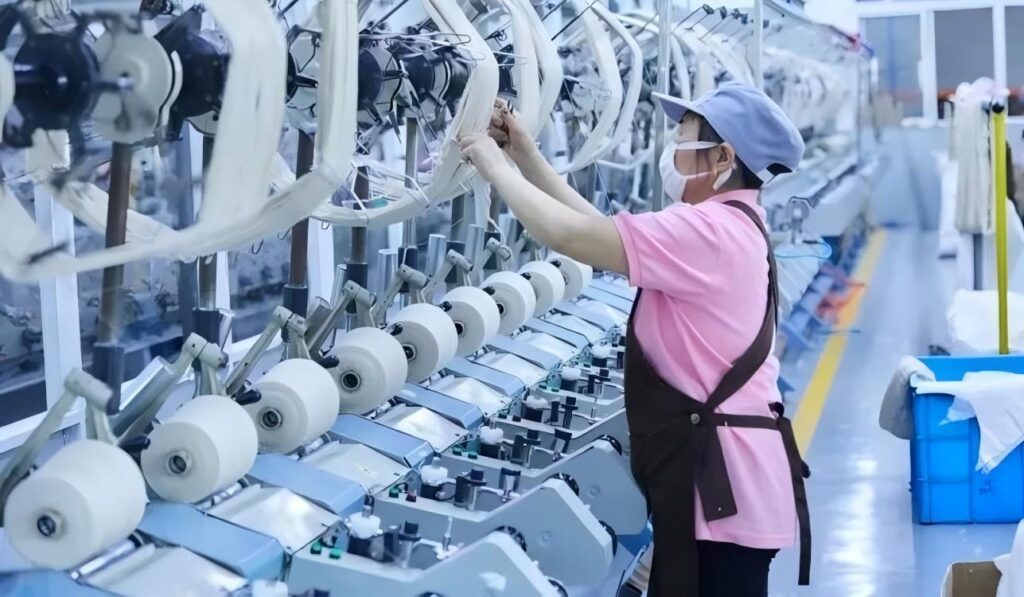
Steam provides indirect and direct thermal energy across every phase of wet processing. Wet textile processing requires rapid, uniform, and controllable heating to ensure consistent color yield.
Textile mills consume industrial process steam across several primary operations:
- Dyeing Machines: Heating dye baths for polyester, cotton, and blended fabrics.
- Fabric Preparation: Desizing, scouring, and bleaching processes.
- Fabric Washing and Rinsing: Supplying continuous hot water to multi-compartment wash boxes.
- Drying and Heat Setting: Supplying high-temperature steam to stenter frames, cylinder dryers, and loop dryers.
- Finishing Treatments: Steam conditioning, compacting, and calender heating.
- Bulk Hot Water Generation: Rapidly preheating process water for dyehouse liquor preparation.
Textile dyeing plants often have fluctuating steam demand because different machines operate in batches rather than continuously. When multiple operators start batch heating cycles simultaneously, steam demand spikes violently. Your boiler plant must absorb these load swings without compromising header pressure.
How Much Steam Does Textile Dyeing Require?
Steam consumption varies significantly between factories. Fabric type, liquor ratio, machine technology, batch weight, and target temperature dictate hourly thermal demand.
Natural fibers like cotton require atmospheric dyeing near 98°C. Synthetic fibers like polyester require high-pressure, high-temperature (HTHP) jet dyeing up to 130°C–135°C. Lower liquor ratios (such as 1:5 instead of 1:10) drastically reduce the water volume heated, cutting steam consumption per kilogram of fabric.
1. Identify All Steam-Using Equipment
Accurately determining steam consumption in textile dyeing begins with an equipment audit.
| Dyehouse Equipment | Operating Process | Typical Steam Use Profile |
|---|---|---|
| HTHP Jet Dyeing Machine | High-pressure heating up to 130°C | Severe Spike High initial peak heating; low holding demand |
| Winch / Atmospheric Dyeing | Atmospheric batch heating to 98°C | Moderate Spike Moderate heating spike; steady low hold |
| Jigger Dyeing Machine | Open-width atmospheric dyeing baths | Low-Moderate Intermittent low to moderate steam draw |
| Continuous Washing Range | Fabric rinsing and chemical scouring | Continuous Continuous, steady hot water heating load |
| Stenter Frame Dryer | Hot air fabric drying and curing | High Baseload Continuous, high baseload steam demand |
| Multi-Cylinder (Can) Dryer | Contact cylinder fabric drying | Continuous Continuous, steady surface steam consumption |
| Central Hot Water Storage | Bulk process water preheating | Buffer Draw Semi-continuous or scheduled off-peak draw |
To understand how baseline factory metrics compare across industries, explore our fundamental guide on industrial boiler capacity calculation.
Textile Dyeing Steam Demand Depends on the Production Process
A dyehouse does not operate like a continuous chemical refinery. Steam demand curves fluctuate based on production machine scheduling.
Batch Dyeing
Batch dyeing machines (such as overflow jets, beam, and package dyeing vessels) follow cyclical recipes:
- Water fill and fabric loading (Zero steam)
- Initial ramp heating (Maximum peak steam demand)
- Temperature holding and dye exhaustion (Low maintenance steam demand)
- Drain, rinse, and refill (Zero direct steam, high hot water draw)
- Secondary ramp heating for soaping or reduction clearing (Secondary steam spike)
Because ramp heating typically takes 20 to 45 minutes, steam consumption surges sharply during step 2.
Continuous Dyeing and Finishing
Continuous dyeing, padding ranges, and drying stenters operate steadily. Once production lines start, their steam draw remains constant for hours. Combining continuous lines with batch vessels helps stabilize baseline boiler load.
Multiple Dyeing Machines Running Simultaneously
If a plant operates four jet dyeing machines, each requiring 600 kg/h during ramp-up, the combined maximum draw equals 2,400 kg/h.
However, sizing a boiler does not mean simply adding machine nameplates together. In practical operation, all four machines rarely ramp up from cold water at the exact same minute.
Engineers apply a diversity factor (simultaneous operation coefficient):
- Diversity Factor (Kd): A multiplier ranging from 0.65 to 0.85 depending on batch scheduling discipline.
- Peak Demand Buffering: Proper scheduling prevents all machines from opening steam valves concurrently.
- Startup Margins: Factoring cold morning line heating prevents line pressure drops.
How to Calculate Capacity Of Steam Boiler for Textile Dyeing
Calculating Capacity Of Steam Boiler for Textile Dyeing requires combining process math with operational diversity factors.
Follow this step-by-step engineering calculation:
Multiply total combined batch peak demand by your facility’s operational diversity factor (Kd = 0.70 – 0.85). Staggering machine start times effectively trims simultaneous spike draw across multiple jet dyeing lines.
Apply a distribution safety margin (Mpiping = 10% – 15%) to compensate for steam transmission radiation losses, valve and flange heat loss, steam trap cycling, and soot blowing.
Add a planned capacity expansion margin (Mfuture = 15% – 25%) if your plant intends to integrate additional dyeing vessels, stenters, or printing machines within the next three years.
Illustrative Calculation: Sizing a Dyehouse Boiler
Consider a medium-sized textile dyeing facility with the following production machines:
- Two 500-kg HTHP Jet Dyeing Machines: Peak steam draw of 750 kg/h each during ramp-up (Total: 1,500 kg/h).
- Two 300-kg Atmospheric Dyeing Winches: Peak steam draw of 450 kg/h each (Total: 900 kg/h).
- One Continuous Stenter Frame: Steady drying consumption of 1,200 kg/h.
- Central Hot Water Preheating Tank: Heat exchanger consuming 800 kg/h.
Engineered Recommendation: Sizing for roughly 4,800 kg/h indicates selecting a 5.0 t/h industrial steam boiler or configuring two 2.5 t/h to 3.0 t/h modular boilers operating in parallel.
(Note: This represents an illustrative engineering example. Actual sizing requires verified machine consumption curves and specific water inlet temperatures).
What Steam Pressure Does Textile Dyeing Require?
Steam pressure dictates temperature saturation. The boiler operating pressure must exceed your hottest production process plus distribution friction losses.
Why Steam Pressure Matters in Dyeing
Heat transfer across internal heat exchanger coils requires an adequate temperature differential .
To heat a polyester dye bath to 130°C within 30 minutes, heat exchanger steam must remain at least 155°C to 165°C. Saturated steam at 7.0 bar gauge corresponds to 170.5°C, providing the necessary thermal driving head. Supplying low-pressure steam (such as 3 bar / 143°C) extends ramp-up cycles, reduces production throughput, and harms dye uniformity.
Recommended Plant Pressure Architecture
- Boiler Design Pressure: 10.0 to 12.5 bar (1.0 to 1.25 MPa).
- Main Header Distribution Pressure: 8.0 to 10.0 bar. Distributing at higher pressure permits smaller steam pipe diameters and reduces heat loss.
- Point-of-Use Regulated Pressure:
- High-temperature stenters and HTHP jets: 7.0 to 8.0 bar.
- Atmospheric dye vats, open tanks, and washing ranges: Stepped down to 2.5 to 4.0 bar via pressure-reducing valve (PRV) stations.
Never choose boiler pressure based solely on catalog availability. Select operating pressure to satisfy your hottest machine plus line losses.
What Type of Steam Boiler Is Suitable for Textile Dyeing?
Choosing the right boiler type requires evaluating fuel reliability, automation, space, and local environmental standards.
Gas-Fired Steam Boilers
Gas boilers feature fully modulating burners, compact footprints, and rapid thermal ramping.
- Operational Suitability: Ideal for urban dyehouses requiring automated load following and strict NOx compliance.
- Dynamic Response: Ramps from 30% to 100% firing within minutes when batch machines open steam valves.
- Engineering Review: For equipment specifications, consult our guide on gas steam boiler selection.
Biomass-Fired Steam Boilers
Biomass boilers burn wood chips, rice husks, palm residues, and pressed briquettes on mechanical moving grates.
- Operational Suitability: Highly attractive for rural textile facilities seeking to slash recurring utility bills.
- Load Management: Biomass fuel beds respond slower to sudden load swings. Dyehouses utilizing biomass boilers often incorporate a steam accumulator or install modular multi-boiler configurations.
- Engineering Review: To evaluate fuel moisture, grates, and ash handling, read our guide on biomass boiler selection.
Electric Steam Generators
Electric generators utilize immersion resistance elements to convert power directly into saturated steam.
- Operational Suitability: Suited for small sampling dye labs, pilot production lines, and cleanroom garment finishing.
- Limitation: High power tariffs make large-scale electric dyeing steam cost-prohibitive.
To weigh energy economics across these technologies, read our comparative analysis to compare gas, biomass, and electric steam boilers and review real-world steam boiler fuel cost formulas.
Boiler System Configuration for a Textile Dyeing Factory
An efficient textile boiler plant requires properly coordinated auxiliary equipment.
Essential System Components:
- Modulating Steam Header: Equalizes pressure swings before steam enters distribution branch lines.
- Automated Water Treatment & Deaeration: Textile boilers run continuous cycles. Softeners and thermal deaerators remove scale-forming minerals and dissolved oxygen.
- Steam Accumulator (Thermal Buffer): Highly recommended for dyehouses with severe batch spikes. Accumulators store excess steam during holding cycles and discharge instantly during concurrent ramp-ups.
- Closed-Loop Condensate Return: Collects pure, high-temperature water from non-contaminated heat exchanger coils, routing it back to the boiler.
For detailed piping, valve, and contractor budgeting guidelines, consult our breakdown on steam boiler installation cost.
How to Reduce Steam Consumption in Textile Dyeing
Sizing a boiler correctly also involves eliminating steam waste across production departments. Implementing these six thermal optimization measures lowers necessary boiler capacity:
- Install Exhaust Heat Exchangers on Jet Machines: Capture residual hot drain liquor (90°C–120°C) to preheat incoming fresh process water.
- Implement Closed-Loop Condensate Recovery: Returning hot condensate at 85°C–95°C reduces water treatment costs and cuts boiler fuel consumption by up to 15%.
- Insulate All Valves, Headers, and Dye Vats: Uninsulated pipes and open dyeing vessels radiate continuous heat into the workspace. Removable thermal jackets pay for themselves within months.
- Optimize Liquor Ratios: Upgrading older machines to modern low-liquor ratio equipment (e.g., 1:5 vs. 1:10) cuts the water volume heated by half.
- Coordinate Dyehouse Batch Scheduling: Stagger ramp-up sequences using automated PLC scheduling to prevent concurrent morning load spikes.
- Eliminate Steam Trap Leakage: Faulty steam traps blow live steam directly into condensate tanks. Establish ultrasonic trap inspection routines every six months.
Oversized vs. Undersized Boiler for Textile Dyeing
Selecting the wrong capacity compromises plant profitability and process stability.
The engineering objective is not to buy the largest boiler on the market. The goal is to balance total boiler capacity, firing turn-down ratio, and thermal buffering to match your dyehouse’s actual operational profile.
Steam Boiler for Textile Dyeing Selection Checklist
Gather these specific technical parameters before requesting engineering bids from boiler manufacturers:
| Facility Parameter | Required Information | Engineering Impact |
|---|---|---|
| Dyeing Machines | Quantity, type (HTHP vs. Atmospheric), and fabric capacities | Dictates peak and holding steam loads |
| Liquor Ratio | Operating liquor ratios (e.g., 1:5, 1:8, 1:10) | Establishes exact water mass heated per batch |
| Dyehouse Schedule | Operating hours per day, shifts, and batch cycle times | Determines daily load factor and fuel volume |
| Simultaneous Batches | Maximum number of machines ramping simultaneously | Establishes true system peak capacity Kd |
| Process Temperatures | Maximum required process temperature (e.g., 130°C–135°C) | Determines necessary working steam pressure |
| Auxiliary Steam Loads | Stenters, can dryers, and hot water tanks | Defines continuous baseline steam draw |
| Condensate Return | Estimated percentage of clean condensate returned | Influences feedwater temperature and fuel use |
| Primary Fuel Source | Piped gas, biomass residues, heavy oil, or electricity | Dictates furnace, grate, and emission design |
| Future Expansion | Equipment planned over the next 2 to 3 years | Establishes reserve capacity margins |
Frequently Asked Questions For Steam Boiler for Textile Dyeing (FAQ)
What size steam boiler does a textile dyeing factory need?
Boiler capacity depends on the number of dyeing vessels, machine liquor ratios, and batch ramp-up schedules. Small dyehouses with 2 to 3 atmospheric machines typically require 1.0 to 2.0 t/h boilers. Medium facilities with multiple HTHP jet dyeing vessels and continuous stenters generally require 4.0 to 10.0 t/h steam boiler systems.
What is the ideal steam pressure for textile dyeing machines?
High-temperature, high-pressure (HTHP) jet dyeing machines require steam pressure between 7.0 and 8.0 bar at the machine heat exchanger to heat polyester baths to 130°C efficiently. The central steam boiler is typically operated at 10.0 to 12.5 bar to compensate for distribution piping pressure losses.
How do batch dyeing spikes affect steam boiler operation?
When multiple dyeing machines start ramp-up cycles at the same time, steam demand surges sharply. If boiler capacity or burner turn-down is insufficient, steam header pressure drops. This prolongs batch heating times and causes inconsistent dye penetration. Adding steam accumulators or staggering batch start times resolves this problem.
Should a textile dyehouse choose a gas or biomass steam boiler?
Choose a gas steam boiler if your factory is located in an urban industrial park with access to piped natural gas, limited space, and strict $NO_x$ emission regulations. Choose a biomass steam boiler if your facility is located near economical supplies of wood chips, rice husks, or agricultural residues, provided your site accommodates fuel bunkers and dust filtration systems.
Can condensate from textile dyeing machines be returned to the boiler?
Yes. Condensate from closed heat exchanger coils inside jet dyeing machines and stenter frames is clean, unpolluted, and high in temperature (85°C–95°C). Returning this condensate reduces boiler water treatment expenses and cuts overall fuel consumption by up to 15%. Direct steam injection heating condensate cannot be recovered.
Need a Steam Boiler for Your Textile Dyeing Factory?
Engineering a reliable textile steam system requires matching process thermodynamics with dynamic plant operations. Generic equipment sizing formulas often overlook the violent batch peaks common in modern dyehouses.
Our engineering team specializes in industrial steam systems tailored to textile dyeing, finishing, and weaving operations. We evaluate your machine inventory, liquor ratios, batch schedules, and fuel availability to configure an optimized, energy-efficient boiler system.
Send our technical team your dyehouse parameters today:
- Machine quantities, capacities, and target dyeing temperatures
- Continuous drying and auxiliary steam requirements
- Available fuel sources and project location