
Low-rate Outer Circulating Fluidized Bed Boiler(CFB boiler)
Contents Hide 1 Introduction 2 Core Engineering Logic: Why Low-Rate Circulation CFB boiler? 2.1 Unmatched Fuel Flexibility and High Combustion Efficiency Of CFB boiler 2.2 Innovative Low-rate Outer Circulation for Reduced Wear Of CFB boiler 2.3 In-situ Desulfurization and Low NOx Emissions Of CFB boiler 2.4 Stable Operation and Fast Load Response Of CFB boiler […]
Get Instant Quote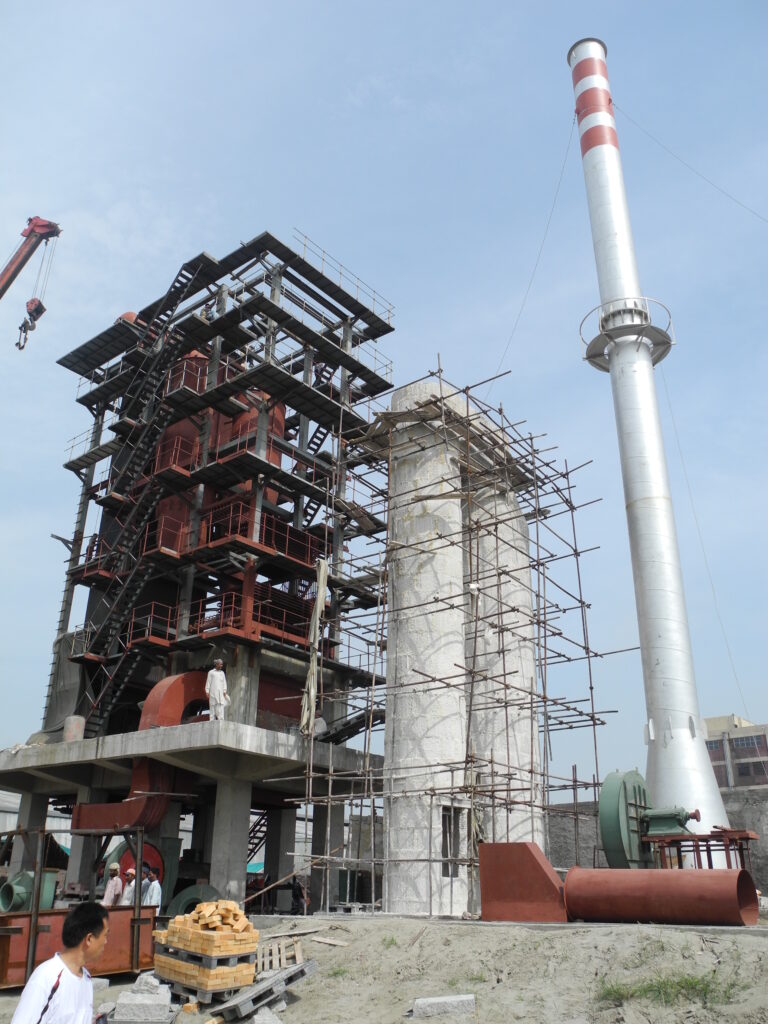
Technical Specifications
Introduction
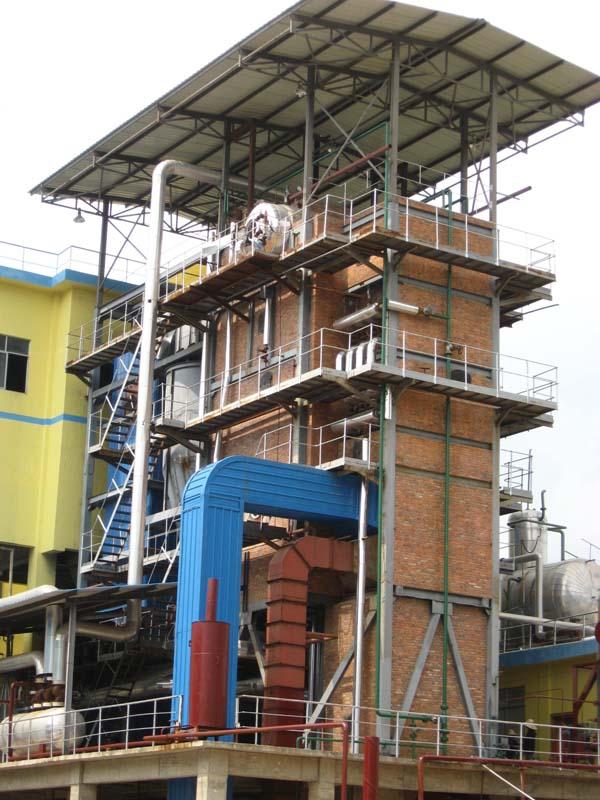
As global energy markets fluctuate, the ability to burn low-grade fuels without sacrificing efficiency is a critical competitive advantage. Consequently, the low-rate outer circulating fluidized bed (CFB) boiler has emerged as the premier solution for large-scale industrial steam and power generation. Henan Taiguo Boiler offers advanced CFB technology that combines high combustion efficiency with an innovative low-rate circulation design. This ensures reliable performance even when using the most challenging fuels.
Core Engineering Logic: Why Low-Rate Circulation CFB boiler?
Unmatched Fuel Flexibility and High Combustion Efficiency Of CFB boiler
The most significant advantage of a CFB boiler is its “fuel-blind” nature. The fluidized bed combustion process allows for the efficient burning of low-grade coal, coal gangue, biomass, and even industrial waste. Therefore, you are not dependent on expensive, high-quality anthracite. Moreover, the long residence time of particles in the furnace ensures a combustion efficiency of over 98%. Consequently, you can significantly reduce your fuel procurement costs while maintaining high steam output.
Innovative Low-rate Outer Circulation for Reduced Wear Of CFB boiler
Traditional high-velocity CFB boilers often suffer from severe erosion on the heating surfaces. To solve this, Taiguo utilizes a low-rate outer circulating design. By optimizing the circulation ratio and reducing the fluidization velocity, we minimize the impact of ash particles on the water wall tubes. Therefore, the wear rate is drastically reduced, leading to longer continuous operation cycles and lower maintenance costs. Furthermore, the high-efficiency cyclone separator ensures that unburnt carbon is returned to the furnace without causing excessive abrasion.
In-situ Desulfurization and Low NOx Emissions Of CFB boiler
We help your factory meet global emission standards through advanced in-furnace desulfurization.
- Low-Temperature Combustion: The bed temperature stays between 850°C and 900°C. This naturally inhibits the formation of thermal NOx.
- In-Furnace Desulfurization: We inject limestone directly into the combustion chamber. This achieves a sulfur removal rate of over 90% without external scrubbers.
- Staged Air Supply: We use primary and secondary air ports to control the combustion process. This reduces CO emissions and improves total boiler efficiency to over 89%.
Stable Operation and Fast Load Response Of CFB boiler
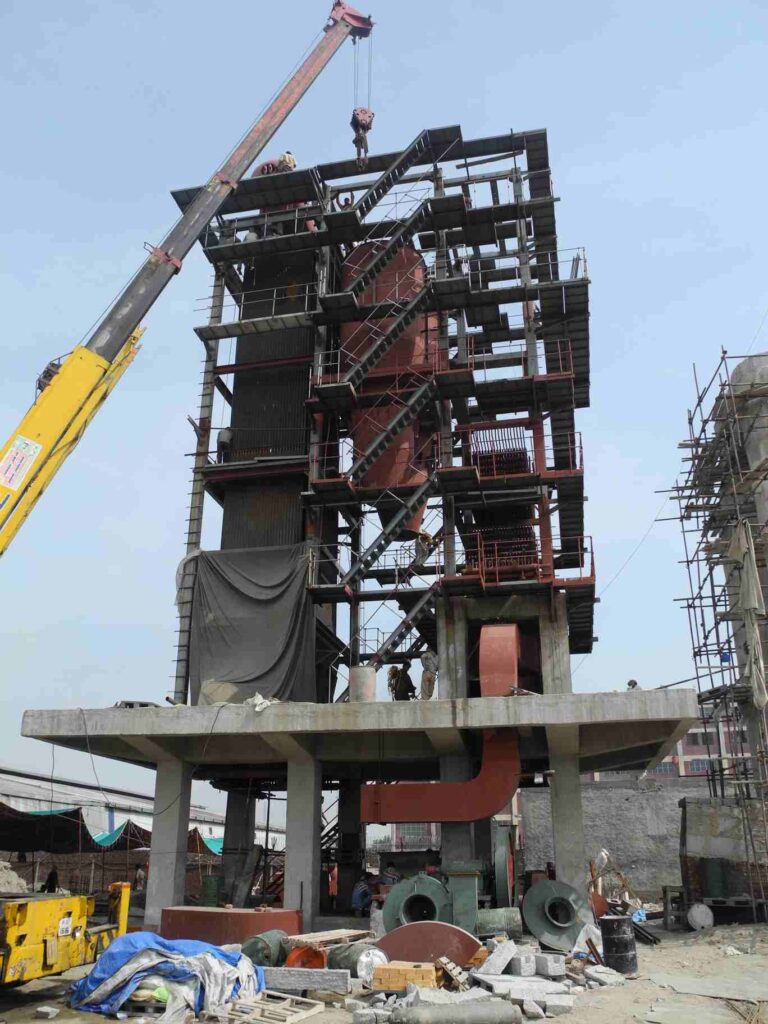
Large industrial processes require a steam supply that can adapt to changing demands. Our CFB boilers feature a large thermal inertia in the bed material, which provides excellent stability. Therefore, the boiler can handle rapid fluctuations in load without compromising steam quality. Furthermore, the AI-driven control system monitors the air-to-fuel ratio and bed temperature in real-time. Consequently, the entire system operates at peak efficiency 24/7, providing a reliable heartbeat for your factory or power plant.
Advanced In-furnace Desulfurization for High-Sulfur Coal Of CFB boiler
In regions with high-sulfur coal, external scrubbers are often too expensive. Our CFB boilers utilize In-furnace Limestone Injection to solve this. This technology achieves high desulfurization rates at a fraction of the cost.
1. The Chemistry of Calcium-to-Sulfur (Ca/S) Ratio
We optimize the chemical reaction between limestone and sulfur dioxide. This happens directly inside the combustion chamber at 850°C to 900°C.
- Calcination Process: The heat transforms limestone (CaC3) into highly reactive porous Lime (CaO).
- Sulfation Reaction: The CaO capturesSO2and oxygen to form solid Calcium Sulfate (CaSO4).
- Optimized Ca/S Ratio: We maintain a Calcium-to-Sulfur ratio between 2.0 and 2.5. This ensures a desulfurization efficiency of over 90% to 95%.
2. Strategic Advantages for High-Sulfur Coal Users
Using our integrated desulfurization system provides immediate financial and operational benefits.
- Zero External Power: You do not need large, power-hungry wet scrubbers. The boiler’s own airflow handles the limestone distribution.
- Dry By-product: The resulting ash is dry and easy to handle. Many factories sell this ash to cement plants for additional revenue.
- Corrosion Protection: By capturing sulfur inside the furnace, we prevent acid dew point corrosion in the tail flue. This extends the lifespan of your air preheater and bag filter.
Advanced Technical Features and Structural Integrity Of CFB boiler
Taiguo Boiler integrates specific metallurgical and aerodynamic features into every CFB unit.
- High-Efficiency Cyclone Separator Of CFB boiler: We use a specialized steam-cooled or water-cooled cyclone. It captures ultra-fine particles and returns them to the furnace.
- Directional Air Distributing Plate Of CFB boiler: Our “mushroom” type air nozzles prevent material backflow. This design ensures uniform fluidization across the entire bed surface.
- Membrane Water Wall Design Of CFB boiler: We utilize fully welded membrane walls for the combustion chamber. This ensures a gas-tight seal and maximizes heat absorption.
- Advanced Refractory Lining Of CFB boiler: We apply high-strength anti-abrasion castables in high-wear zones. This multi-layer lining handles extreme thermal shocks easily.
Technical Advantages for Global Industrial Buyers Of CFB boiler
Taiguo’s CFB boilers offer the best balance between initial investment and long-term ROI.
- 20-Year Design Life: We use specialized boiler-grade steel and thick-walled tubes. Every pressure component undergoes rigorous X-ray and ultrasonic testing.
- Automated PLC Management: Our Siemens-based control system monitors the bed temperature and pressure. It automatically adjusts fuel and air ratios for optimal performance.
- Minimal Maintenance Downtime: The low-velocity design reduces the frequency of tube replacements. This keeps your production line running with fewer interruptions.
FAQ: Essential 2026 Industrial Insights
Why is the Low-rate Outer Circulating CFB Boiler the Strategic choice for 2026?
As carbon taxes and fuel costs rise, the ability to switch between coal, biomass, and waste is Essential . This boiler provides Authoritative fuel flexibility and Validated emission performance, often eliminating the need for costly downstream flue gas treatment.
How does the “Low-rate” design improve the ROI?
Traditional CFBs often suffer from high maintenance costs due to tube erosion. The Superior Low-rate design minimizes mechanical wear, which is Validated to reduce annual maintenance CAPEX by 20% to 25%, resulting in a much faster total cost of ownership payback.
Does this boiler meet the strict 2026 “Clean Air Act” updates?
Yes. By operating at lower combustion temperatures (800–900°C) and utilizing in-bed limestone injection for sulfur capture, the boiler naturally minimizes NOx and SOx formation. It is the Reliable choice for meeting 2026 environmental audits.
How does low-rate circulation reduce tube erosion?
Erosion is proportional to the cube of the gas velocity. By reducing the circulation rate, we lower the particle impact speed. This exponentially increases the service life of the heating surfaces.
Can this boiler handle high-moisture biomass fuels?
Yes, the massive thermal inertia of the fluidized bed is ideal for wet fuels. The hot bed materials instantly dry and ignite the incoming biomass, ensuring stable steam output.
What is the startup time for a Taiguo CFB boiler?
Our optimized refractory design allows for faster thermal ramping. A cold start typically takes 3 to 5 hours, while a hot restart takes less than an hour.
Does the boiler require a high-grade coal supply?
No, the CFB technology thrives on low-grade fuel. You can burn coal gangue, lignite, or even high-ash coal while maintaining high thermal efficiency.
How much limestone does the boiler consume per ton of coal?
This depends on the coal’s sulfur content. For coal with 3% sulfur, you typically need 120kg to 150kg of limestone per ton. Our PLC system calculates this automatically based on your real-time emission readings.
Does limestone injection affect the boiler’s thermal efficiency?
The calcination reaction is endothermic, which absorbs a small amount of heat. However, the sulfation reaction is exothermic and releases heat back. The net impact on efficiency is less than 0.5%, which is negligible compared to the cost of external desulfurization.
What is the required limestone particle size for your CFB boiler?
We recommend a particle size of 0.1mm to 1.0mm. This range ensures a high surface area for rapid reaction while preventing the lime from escaping the cyclone separator too quickly.
Conclusion
The low-rate outer circulating fluidized bed boiler from Taiguo Boiler is a testament to 40 years of engineering excellence in high-capacity energy solutions. We help you turn low-cost fuels into high-value power. We combine the ruggedness of traditional CFB design with 2026’s smartest low-wear and low-emission innovations.
Contact our technical sales team today for a customized engineering proposal and discover how our CFB technology can empower your energy independence.
Looking for a complete AAC production line? Pair our CFB boiler with our High-Capacity Industrial Autoclaves for optimal steam curing efficiency.
Need a faster startup for smaller loads? Compare the CFB system with our WNS Series Gas Steam Boilers for flexible factory operations.
Audit complete ultra-large scale utility manufacturing benchmarks inside our boiler technology insights.
Evaluate smaller industrial-grade alternative combustion configurations via DZL Series Fully Automatic Chain Grate Coal Fired Steam Boiler.
Study complex high-temperature solid fuel desulfurization controls inside Coal or Biomass Fired Organic Heat Carrier Boiler: High-Temperature Power from Solid Fuel.