
Industrial Pressure Vessels & Autoclaves: The Definitive Guide to Advanced Thermal Processing
Contents Hide 1 Understanding Industrial Pressure Vessels & Autoclaves 2 What Is the Difference Between a Pressure Vessel and an Autoclave? 2.1 Industrial Pressure Vessel 2.2 Industrial Autoclave 3 How Does an Industrial Pressure Vessels & Autoclaves Work? 3.1 Material Loading 3.2 Steam Heating 3.3 Pressure Holding 3.4 Pressure Release 4 AAC Autoclave for Aerated […]
Get Instant Quote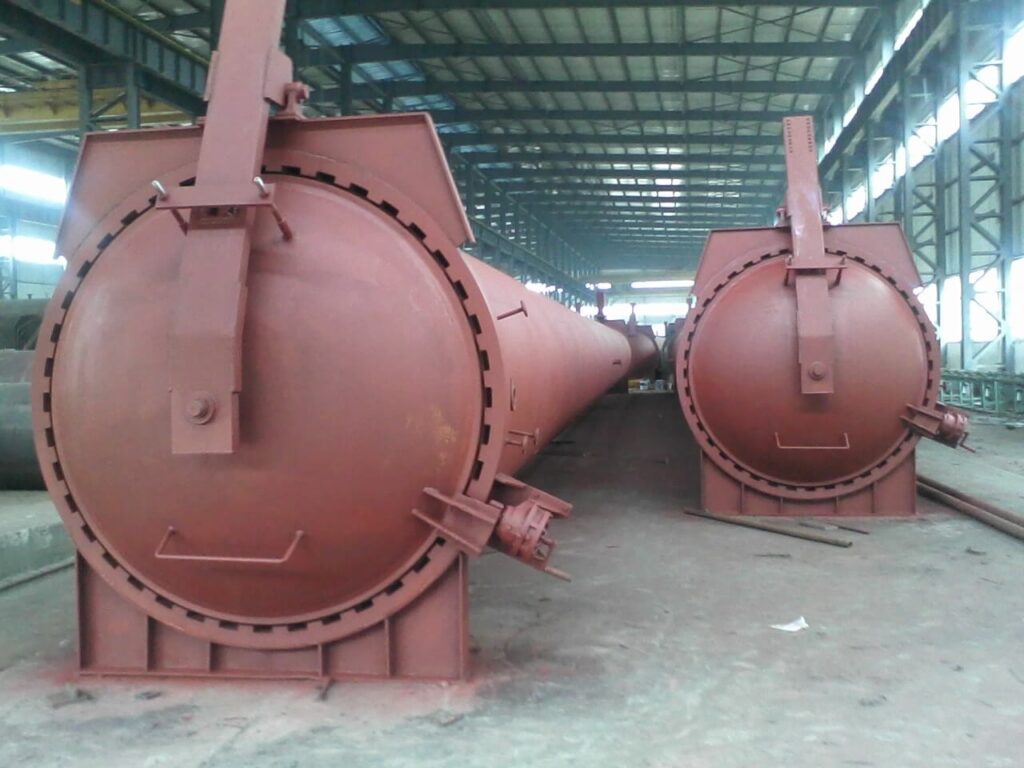
Technical Specifications
Understanding Industrial Pressure Vessels & Autoclaves
An industrial pressure vessel is a specially engineered system. It performs high-temperature thermal processing under strictly controlled pressure environments.
Unlike standard chemical storage tanks, these heavy-duty vessels safely withstand high internal forces and intense thermal stress.
An industrial autoclave uses high-pressure steam as the primary heating medium. It completes critical manufacturing processes like concrete curing, wood treatment, and rubber vulcanization.
Today, advanced manufacturing relies heavily on pressure-controlled thermal processing. Thus, high-quality pressure systems remain essential for modern plants worldwide.
What Is the Difference Between a Pressure Vessel and an Autoclave?
Although they share similar design principles, these two systems serve very different production purposes.
Industrial Pressure Vessel
A pressure vessel is designed simply to hold gases, liquids, or steam under pressure.
- Primary Function: Safe containment and storage.
- Common Types: Air receiver tanks, gas storage vessels, and heat exchangers.
- Internal Action: It generally does not feature door opening systems for material processing.
Industrial Autoclave
In contrast, an autoclave is a highly specialized pressure vessel built for physical or chemical thermal processing.
- Primary Function: Curing, sterilization, or chemical reactions.
- Common Types: AAC block autoclaves and wood impregnation cylinders.
- Internal Action: It combines steam heat, vacuum stages, and high pressure inside a sealable chamber.
How Does an Industrial Pressure Vessels & Autoclaves Work?
A professional autoclave completes thermal processing through precise, automated temperature and pressure cycles.
The complete working sequence includes:
Material Loading
First, operators transport raw products into the main chamber along heavy-duty rail tracks.
Steam Heating
Next, the steam boiler injects high-pressure steam to increase the internal chamber temperature.
Pressure Holding
Then, the automated system maintains the target pressure and temperature for a specified curing time.
Pressure Release
Finally, the exhaust valves safely release the pressure before operators open the doors.
AAC Autoclave for Aerated Concrete Production
An AAC autoclave is the most critical piece of equipment in autoclaved aerated concrete factories.
During the hydrothermal curing process, high-pressure steam triggers a chemical reaction between silica and lime.
This reaction creates a unique calcium silicate hydrate structure, which significantly improves:
- Ultimate block compressive strength.
- Long-term dimensional stability.
- Consistency across massive production batches.
To support complete plant operations, we deliver integrated systems:
- Central Equipment: Heavy-wall curing autoclaves with rapid-acting door locks.
- Logistics System: Specialized curing trolleys and steel rail transport tracks.
- Power Plant Integration: Customized high-efficiency steam boilers.
- Learn more about our turnkey installations: AAC Plant Solution
Wood Treatment Autoclave System
An industrial autoclave designed for timber processing utilizes advanced vacuum pressure technology. This process injects protective preservatives deep into wood cell walls.
The wood preservation process follows three critical stages:
- Vacuum Stage: High-performance vacuum pumps extract deep air and moisture from the wood fibers.
- Pressure Impregnation: The system floods the chamber with chemical preservatives under intensive hydraulic pressure.
- Final Vacuum: The system applies a final vacuum to remove excess chemicals from the timber surface.
This process is highly suitable for manufacturing durable railway sleepers, utility poles, and construction lumber.
Custom Industrial Pressure Vessel Manufacturing
Because they handle massive mechanical stress, custom pressure vessels require exceptional manufacturing precision.
At our heavy-fabrication facility, our quality control process focuses on:
- Material Integrity: We utilize certified Q345R pressure vessel steel and stainless steel linings.
- Welding Standards: All joints undergo strict Welding Procedure Qualification (WPQ) testing.
- Non-Destructive Testing (NDT): We run rigorous radiographic and ultrasonic inspections.
- Pressure Verification: Every completed vessel undergoes a hydrostatic test at 1.5 times the design pressure.
ASME Section VIII Pressure Vessel Compliance
For international industrial projects, global buyers demand strict engineering standards.
Our manufacturing facility delivers complete compliance with ASME Section VIII regulations:
- Engineering Calculations: We verify wall thickness and nozzle reinforcement designs.
- Material Traceability: Every steel plate features certified mill test reports (MTR).
- ASME Inspections: Certified inspectors witness critical fabrication steps.
- U-Stamp Certification: We provide fully stamped plates for seamless local customs entry.
How to Select an Industrial Autoclave?
Selecting the correct pressure equipment requires a careful balance of several operating factors:
1. Application Type
Your specific material, whether AAC blocks, timber, or composite carbon fiber, dictates the internal piping design.
2. Design Pressure & Temperature
The vessel wall thickness must safely match your peak process steam pressure requirements.
3. Chamber Dimensions
We customize the diameter and length to match your daily production capacity and handling layout.
4. Door Locking Mechanism
You can choose from manual swing, hydraulic rotating, or vertical lift quick-opening doors.
5. Regulatory Certification
We arrange the necessary ASME, CE, or local boiler inspector documentation prior to shipment.
Industrial Applications of Pressure Vessels and Autoclaves
Our pressure systems serve as the engineering foundation for several global industries:
| Industry Sector | Primary Equipment Used | Key Thermal Process |
| Building Materials | Heavy AAC Autoclaves | Hydrothermal block curing |
| Wood Preservation | Vacuum Treatment Cylinders | Chemical preservation impregnation |
| Rubber Manufacturing | Vulcanization Autoclaves | Polymer cross-linking under heat |
| Aerospace Composites | Precision Composite Autoclaves | High-pressure carbon fiber curing |
| Chemical Processing | Custom Pressure Vessels | High-pressure chemical reactions |
Complete Pressure Vessel Engineering Support
A successful industrial installation requires comprehensive design and installation capabilities.
Our factory team supports your business with complete life-cycle engineering services:
- Advanced thermal calculations and structural FEA analysis.
- Custom plant layout and pipe system integration.
- Fuel-saving steam condensate recovery designs.
- Professional foundation layout and installation supervision.
- On-site commissioning and operator safety training.
Proper engineering design ensures ultimate safety, high efficiency, and a long equipment service life.
- Explore our fabrication standards: Engineering Hub
- See our steel processing methods: Manufacturing Engineering
- Review our plant deployment services: Installation Engineering
FAQ: Expert Technical Insights for Industrial Pressure Vessels & Autoclaves
How do you determine the required wall thickness for a high-pressure autoclave?
Wall thickness is determined by the Maximum Allowable Working Pressure (MAWP), the diameter of the vessel, and the Corrosion Allowance. We use professional stress-analysis software to ensure the vessel meetsASME Section VIII Div 1 safety factors while optimizing material weight for shipping.
What is the lifespan of a wood treatment cylinder, and how can it be extended?
With proper maintenance and water-softening for the vacuum pumps, a cylinder can last 15-20 years. We recommend internal epoxy coatings to protect against the acidic nature of some preservation chemicals.
Can your autoclaves be integrated into an existing AAC production line?
Yes. We provide customized support saddles and piping interfaces to match your existing plant layout, along with automated rail-shunting systems for easy loading/unloading.
What is the difference between a standard tank and Industrial Pressure Vessels?
Standard tanks are for storage at atmospheric pressure. Industrial Pressure Vessels & Autoclaves are engineered to withstand internal or external pressures exceeding 15 psi. They require certified materials (like Q345R) and mandatory third-party inspections (like CCS or ASME).
How often should an Industrial Autoclave be inspected?
For high-temperature thermal processing, we recommend a monthly safety valve check and a comprehensive annual internal inspection. This ensures your Industrial Pressure Vessels & Autoclaves remain compliant with local safety regulations.
Can these vessels be customized for the chemical industry?
Yes. We provide specialized Industrial Pressure Vessels & Autoclaves with stainless steel lining or exotic alloys to handle corrosive chemical reactions, ensuring long-term durability in advanced thermal processing.
What is an industrial autoclave used for?
Industrial autoclaves are used for high-pressure thermal processing such as
AAC curing, wood preservation, rubber vulcanization and composite curing.
What is the difference between a tank and a pressure vessel?
A pressure vessel is specifically engineered to safely contain pressurized
media under regulated operating conditions.
What industries use industrial autoclaves?
Common industries include:
Construction materials
Wood processing
Rubber manufacturing
Composite production
Chemical processing
Are autoclaves customized?
Yes. Industrial autoclaves are normally designed according to product size,
pressure requirements and production processes.
6. Why Kim is Your Trusted Heavy-Equipment Partner
- Engineering-First Approach: We don’t just sell tanks; we provide thermal and pressure load calculations to ensure your project’s success.
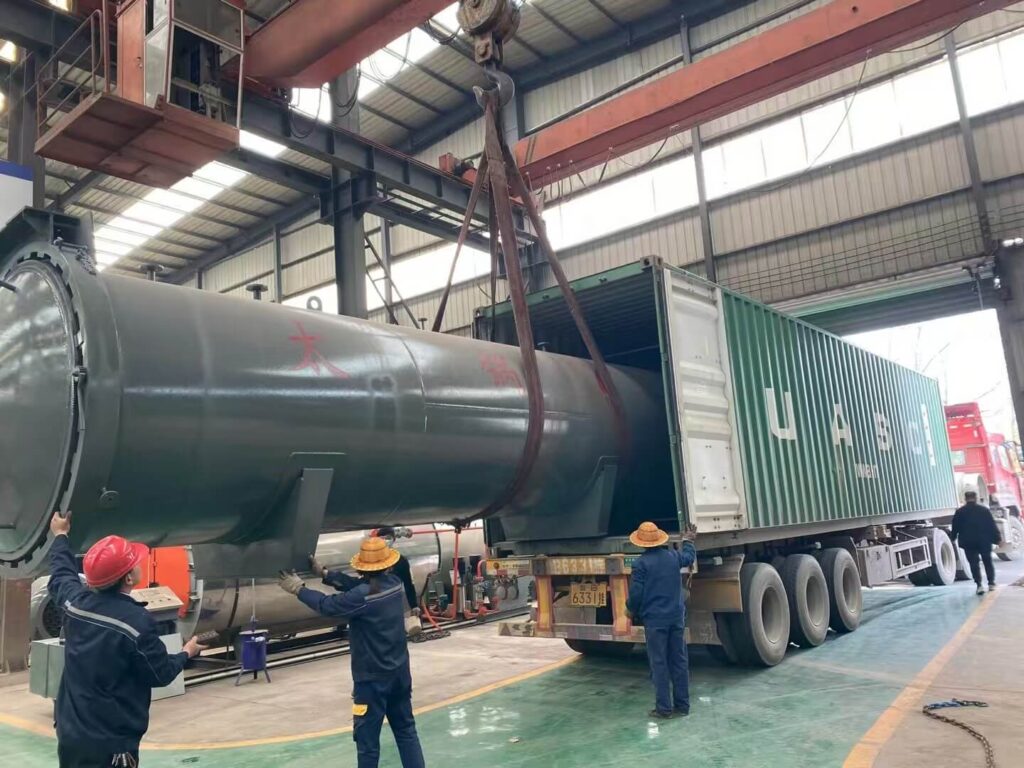
- Global Logistics Mastery: Specialized in handling Out-of-Gauge (OOG) cargo, ensuring your massive autoclave arrives safely at your site in the Philippines, Uzbekistan, or elsewhere.
- Compliance Certification: Full dossiers for DOLE Rule 1100, Uzstandard, or CE/PED compliance.
📩 Get a High-Performance Pressure Solution Quote Today
- WhatsApp: 8615093412637
- Email: kimjin2018@cnmiracletrade.com
The curing process determines the brick quality. We provide A1-class Industrial Autoclaves with advanced safety interlocks for AAC plants.
Review full international manufacturing safety benchmarks inside our corporate industrial boiler selection guide
Check safety limits for advanced curing cylinders inside our industrial autoclaves for composite blueprint.
Audit strict heavy-duty hydraulic door interlocking mechanisms via high-performance industrial autoclaves for aac