
Industrial Autoclave (AAC Autoclave) – High-Performance Pressure Vessel for Building Materials & Composite Manufacturing
Industrial manufacturing processes for advanced building materials and high-performance composites demand precise, repeatable thermal treatments under intense pressure. To achieve the required material density, strength, and structural integrity, modern factories rely on advanced hydrothermal and pressure processing. An industrial autoclave serves as the central pressure vessel system for these demanding operations. By combining high-temperature saturated […]
Get Instant Quote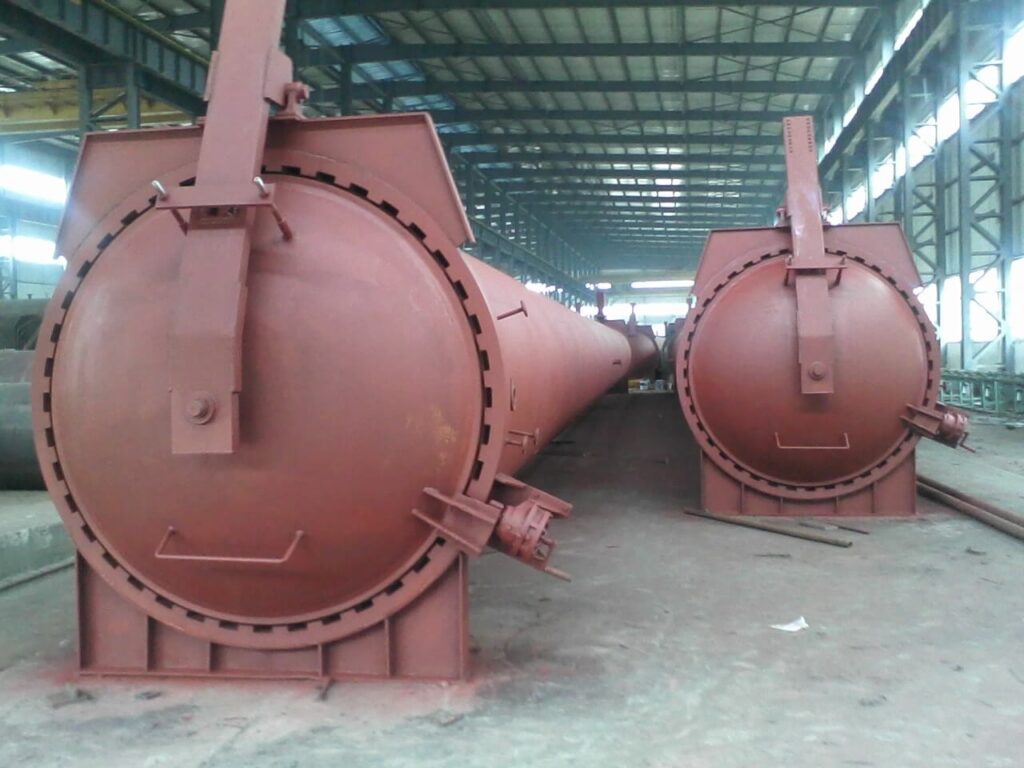
Technical Specifications
Industrial manufacturing processes for advanced building materials and high-performance composites demand precise, repeatable thermal treatments under intense pressure. To achieve the required material density, strength, and structural integrity, modern factories rely on advanced hydrothermal and pressure processing.
An industrial autoclave serves as the central pressure vessel system for these demanding operations. By combining high-temperature saturated steam with controlled mechanical pressure, these engineered systems facilitate essential chemical and physical phase transformations across multiple global industries.
What Is an Industrial Autoclave?
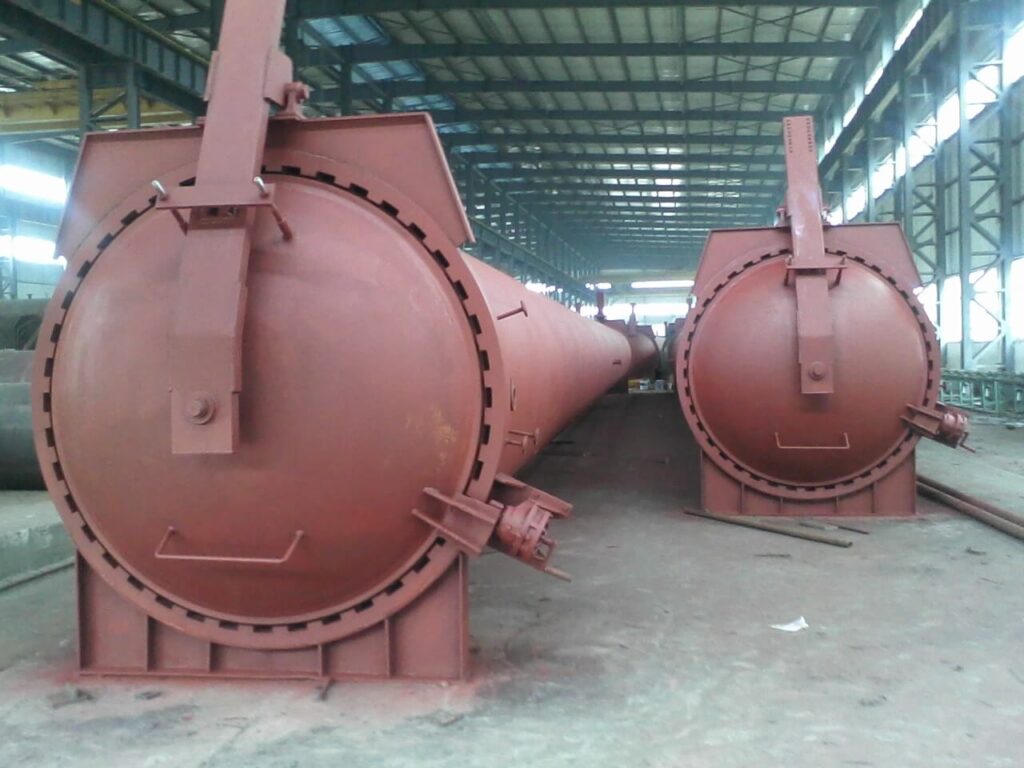
An industrial autoclave pressure vessel is a heavily engineered, sealed chamber designed to perform thermal processing at pressures far exceeding normal atmospheric levels. Unlike standard industrial drying ovens or heating chambers, autoclaves create a tightly sealed environment where saturated steam or heated gas directly interacts with materials under high pressure.
This controlled environment triggers a process known as hydrothermal synthesis. Inside the chamber, raw materials undergo chemical reactions—such as the formation of high-strength calcium silicate hydrates in building products—that are impossible to replicate under standard ambient pressures. This specialized process dramatically enhances the physical properties of the finished products:
- Material Strength: Accelerates molecular bonding to achieve maximum structural load capacity.
- Product Stability: Minimizes post-cure shrinkage, cracking, and moisture deformation.
- Structural Performance: Optimizes material density and resistance to harsh environmental conditions.
- Manufacturing Consistency: Ensures uniform density and quality throughout every production batch.
How Does an Industrial Autoclave Work?
The operational cycle of a high pressure autoclave system relies on a precise, multi-stage sequence. This process must be carefully managed to protect both product quality and operator safety:
Vessel Loading
Raw products, such as green-state AAC blocks or composite molds, are loaded onto specialized steel carts and rolled into the autoclave chamber on heavy-duty tracks.
Sealing & Air Evacuation
The heavy-duty autoclave door is closed and locked using a secure mechanical safety lock. An optional vacuum pump system then removes residual air to ensure pure steam penetration.
Steam & Pressurization
Saturated steam from a high-pressure boiler is injected into the chamber. This injection steadily raises both the internal temperature and the operating pressure to their target setpoints.
Constant Curing Cycle
The system maintains stable pressure and temperature levels (typically 1.0 to 1.6 MPa at 180°C to 200°C) for a set duration, allowing hydrothermal reactions to finish.
Exhaust & Unloading
The control system releases the steam safely through exhaust valves. Once pressure sensors confirm the vessel has returned to atmospheric levels (0 MPa), the door unlocks, and the cured products are removed.
Main Components of Industrial Autoclave Systems
To safely withstand decades of repetitive pressure cycles, an autoclave requires premium components, precision machining, and advanced safety backups:
Pressure Vessel Chamber
The main body of the autoclave is rolled from high-strength boiler-grade steel plate (typically Q345R or equivalent). It is welded using automated submerged-arc processes and undergoes extensive non-destructive testing (NDT) to guarantee structural integrity.
Quick-Opening Door & Safety Interlock
The critical structural interface. It features a rotating gear-ring locking mechanism that seals the door tight. A vital mechanical-electrical-hydraulic safety interlock system prevents the door from opening while the chamber is under pressure.
Steam Distribution & Condensate Drainage
Internal distribution manifolds run along the length of the chamber to ensure uniform steam circulation and prevent cold spots. At the bottom, a continuous condensate drainage system removes water to maintain a clean curing environment.
Automated Control System
A programmable logic controller (PLC) tracks temperature, pressure, and cure times. The system records real-time curing curves to ensure full batch traceability.
Safety Protection Systems
Redundant mechanical safety valves, analog and digital pressure gauges, overpressure alarms, and emergency release valves provide multiple layers of protection.
Why Choose Our Industrial Autoclave as AAC Autoclave?
✔ Robust Pressure Vessel Design
Engineered with high-strength steel plates, our autoclaves meet national and international pressure vessel standards. Each unit undergoes strict nondestructive testing (NDT) and hydrostatic pressure tests to ensure absolute safety and high durability.
✔ Optimized Steam Curing Performance
The advanced sealing system, uniform steam distribution, and precise pressure control guarantee stable curing quality for AAC blocks, composite panels, and other materials requiring controlled pressure and temperature.
✔ Energy-Efficient & Cost-Saving
The insulation design and optimized steam circulation help reduce energy loss, lowering operational costs while improving product output rates.
✔ Customizable Configurations
We provide AAC Autoclave in various specifications:
- Diameter: 1.6m – 3.2m
- Length: 10m – 60m
- Working Pressure: 1.0 – 1.6MPa
- Door Types: manual, pneumatic, or fully automatic
- Control System: semi-automatic or PLC intelligent control
Key Features of TAIGUO AAC Autoclave
Engineered for Absolute Safety: Triple Interlock Systems Of AAC autoclave
An industrial AAC autoclave operates under high pressure (typically 1.2 to 1.3 MPa) and high temperature. In 2026, safety compliance is non-negotiable. Taiguo’s autoclaves are equipped with a Triple Safety Interlock System: a manual safety handwheel, a pneumatic interlock, and a pressure-sensitive locking pin. This ensures the autoclave door cannot be opened until the internal pressure drops to zero. For factory managers in Central Asia or SE Asia, this design meets the most stringent ASME and Uzstandart safety audits, protecting your workforce and preventing catastrophic downtime.
Durable Autoclave Shell Of AAC autoclave
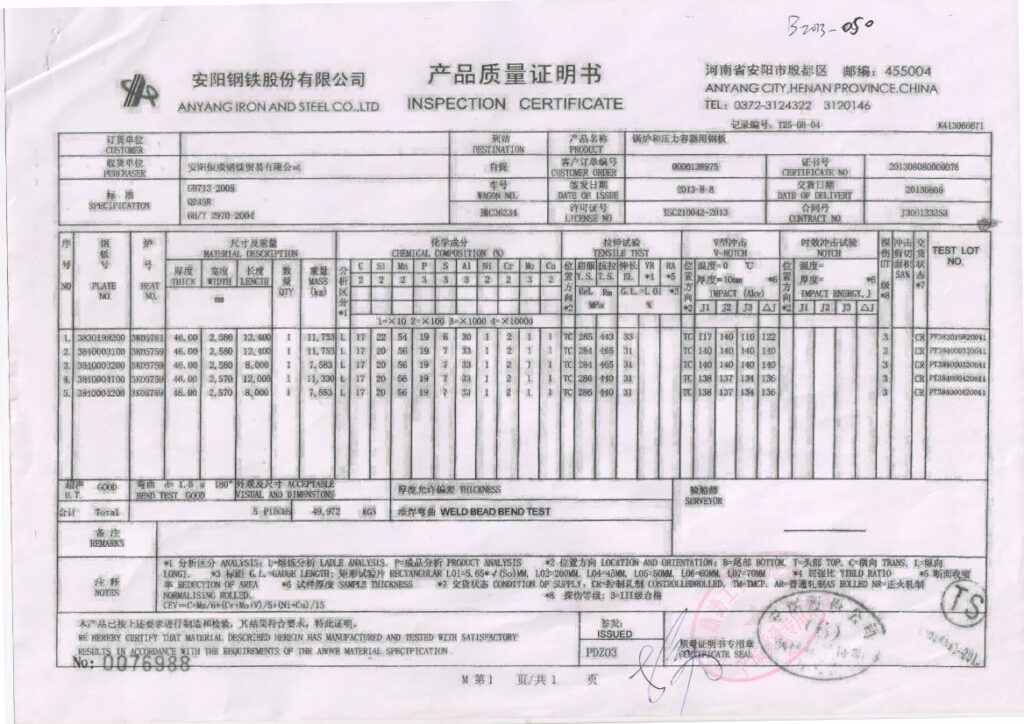
Manufactured with premium Q345R or Q245R boiler steel, offering excellent fatigue resistance and extended service life.
Reliable Rubber Sealing Of AAC autoclave
High-temperature-resistant rubber ensures airtight and safe pressure retention, reducing maintenance costs.
Advanced Safety Protection
- Pressure relief valve
- Over-temperature protection
- Emergency stop system
- Automatic pressure balancing
Mastering the Curing Cycle: Reducing Steam Consumption Of AAC autoclave
The AAC curing process is the most energy-intensive stage of brick production. Our 2026 models feature an optimized Steam Distribution Manifold that ensures uniform heat transfer across the entire length of the vessel. By precisely controlling the ‘Vacuum-Heating-Constant Temperature-Cooling’ phases, Taiguo autoclaves help plants reduce steam waste by up to 12%. For a standard AAC plant in Tashkent or Jakarta, this translates to a significant reduction in the ‘Cost-per-Cubic-Meter’ of finished blocks, directly impacting your market competitiveness.
Eliminating ‘Wet Spots’: Advanced Condensate Drainage Of AAC autoclave
Accumulated condensate water at the bottom of the autoclave can lead to uneven curing and ‘soft spots’ in the bottom row of AAC blocks. Taiguo’s pressure vessels are designed with a high-capacity, automatic drainage system that clears condensate in real-time. This maintains a dry, saturated steam environment inside the chamber, ensuring that every block—from the top to the bottom of the trolley—reaches the required compressive strength for Grade 4.0 or 5.0 high-quality construction materials.”
Diverse Applications of Taiguo Industrial Autoclaves: Precision & Power
In 2026, the versatility of our pressure vessels allows industries to achieve extreme material stability. Here is how our specialized autoclaves power global production lines:
1. AAC Block & Panel Production: The Foundation of Green Building
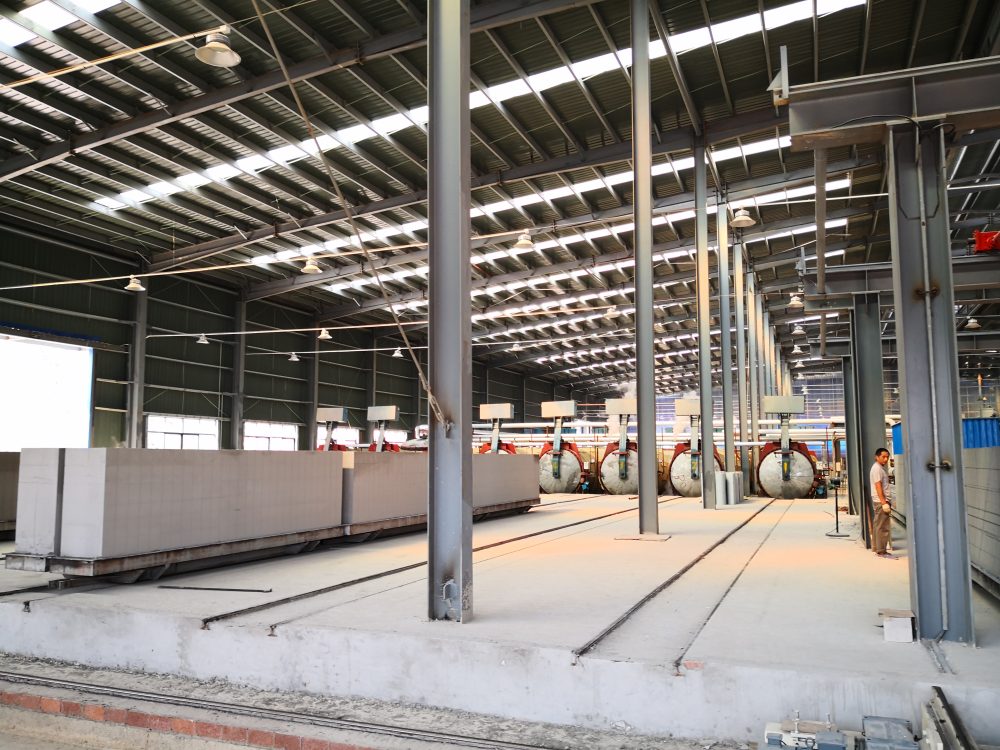
Our autoclaves are the “thermal engine” of Autoclaved Aerated Concrete (AAC) plants. To meet the 2026 demand for Grade 4.0 and 5.0 high-strength blocks in Uzbekistan and Indonesia, our vessels maintain a constant 1.3 MPa pressure environment.
- The Taiguo Advantage: We ensure a precise temperature-pressure curve that facilitates the chemical reaction between lime, silica, and aluminum. This results in the formation of Tobermorite crystals, which are responsible for the superior fire resistance and thermal insulation of the finished AAC panels.
2. Aerospace & Automotive Composites: Curing for Strength
The modern aerospace and defense sectors require zero-defect curing for Carbon Fiber Reinforced Polymers (CFRP) and advanced fiberglass components.
- The Taiguo Advantage: Our industrial autoclaves for composites feature high-precision PLC controls to manage complex “Ramp-and-Soak” heating cycles. This eliminates internal air pockets (voids) within the material, ensuring the composite parts meet the extreme stress-to-weight ratios required for aircraft wings and high-performance automotive chassis.
3. Large-Scale Rubber Vulcanization: Durability Under Pressure
From heavy-duty OTR tires to industrial conveyor belts and rubber liners, vulcanization is the key to chemical cross-linking.
- The Taiguo Advantage: We design our vulcanization autoclaves to withstand repeated rapid pressure changes. By providing a uniform steam-heated environment, we ensure that the rubber molecules link perfectly with sulfur additives, resulting in products with maximum elasticity and wear resistance for the mining and logistics sectors.
4. Timber Treatment & Laminated Timber (GLULAM): Protecting Natural Assets
With the 2026 global shift toward sustainable timber construction, industrial wood treatment is vital for structural integrity.
- The Taiguo Advantage: Our autoclaves facilitate Deep-Pressure Impregnation. We use a vacuum-pressure-vacuum cycle to force fire retardants and anti-fungal preservatives deep into the wood fibers. This process is essential for producing CLT (Cross-Laminated Timber) that can withstand harsh tropical climates or high-moisture industrial environments without rotting or warping.
5. Glass Lamination: Safety Through Thermal Bonding
Our autoclaves are also utilized in the production of high-safety laminated glass for architectural and automotive use.
The Taiguo Advantage: By combining heat and pressure, we bond the PVB (Polyvinyl Butyral) interlayer between glass sheets. This removes all trapped air, creating the optical clarity and impact resistance required for high-rise building facades and bullet-proof security glass.
6.Fiber Cement Board Production
Autoclaving improves the chemical stability of fiber cement sheets, siding, and backer boards. The high-pressure steam treatment prevents swelling and warping, making the finished building materials highly moisture-resistant and durable.
7.Composite Material Manufacturing
Advanced aerospace, military, and automotive components made of carbon fiber or fiberglass require high-pressure autoclaves to eliminate void spaces. The combination of heat and pressure cures the binding resins, resulting in exceptionally high strength-to-weight ratios.
How to Select the Right Industrial Autoclave?
Because an autoclave is a major capital investment, selecting the right model requires careful planning. Our application engineers recommend evaluating five key factors:
- Product Material Requirements: Define your target hydrothermal parameters. Lightweight concrete requires saturated steam, while aerospace composites need high-pressure hot air or inert gas systems.
- Target Production Capacity: Calculate the required vessel diameter (commonly 2.0m to 3.2m and clear length (up to 30 m or more) to meet your daily production volume targets.
- Operating Pressure Design: Ensure the vessel’s maximum allowable working pressure (MAWP) offers a safe margin above your actual processing needs.
- Steam Supply Integration: Confirm your boiler capacity can supply enough steam to quickly pressurize the autoclave, which minimizes cycle startup times.
- Automation Requirements: Choose between semi-automatic manual systems or fully automated PLC setups with remote monitoring and automated door controls.
Pressure Vessel Engineering and Manufacturing
Because industrial autoclaves operate under intense pressure and high temperatures, they must be engineered and manufactured to strict safety standards. Standard industrial welding is not sufficient for these systems.
Material Integrity & Fatigue Resistance
Since autoclaves undergo constant heating and cooling cycles, the steel shell experiences severe thermal and mechanical stress. We design our vessels with optimized wall thicknesses and reinforce all openings to prevent fatigue cracking over decades of operation.
Precision Welding & Quality Control
All longitudinal and circumferential welds are performed by certified pressure vessel welders using advanced automated equipment. We subject every structural weld to 100% X-ray radiographic testing to guarantee zero internal defects.
Hydraulic Testing & Safety Certification
Before leaving our factory, every autoclave undergoes a hydrostatic pressure test at 1.25 to 1.5 times its design pressure. We manufacture our vessels in strict compliance with international pressure vessel codes and customer requirements.
To learn more about our manufacturing standards, explore our dedicated pages on Pressure Vessel Engineering and Manufacturing Engineering.
Integrated Boiler and Autoclave Solutions
One of our greatest advantages is our ability to design and supply both the steam generation and the steam curing systems. An autoclave is only as reliable as the steam that feeds it.
By sourcing your entire thermal system from a single provider, you ensure seamless integration and optimal energy efficiency:
- Steam Match Optimization: We match our high-efficiency steam boilers with the exact volume demands of your autoclaves, preventing boiler water carryover and pressure drops during startup.
- Energy Recovery Integration: Our engineering teams design heat recovery systems that capture high-temperature exhaust steam from one autoclave to preheat a second chamber, cutting overall fuel consumption.
- Unified System Control: A single, integrated control interface manages both the steam boiler and the autoclave, simplifying plant operations and maintenance.
Discover how our complete systems can optimize your plant by visiting our Steam Boiler Solutions and Engineering Hub.
Why Manufacturers Worldwide Trust TAIGUO AAC Autoclave
With over 45 years of manufacturing experience, Henan Taiguo Boiler stands out in the pressure-vessel industry for:
- ISO, CE, and ASME quality assurance
- Professional R&D and engineering teams
- Fast delivery and strict quality inspection
- Full technical support and after-sales service
AAC Autoclave Technical & Compliance Checklist
Check 1: Forged Steel Door Ring vs. Cast Iron Of AAC autoclave
- Action: Verify if the door ring and flange are made of integrated high-strength forged steel.
- Technical Why: Cast iron components are prone to fatigue cracks under repeated thermal expansion. Taiguo uses 16MnII forged steel, extending the vessel’s fatigue life to over 20 years.
Check 2: Automatic Opening Mechanism (Hydraulic vs. Manual) Of AAC autoclave
- Action: Does your project budget allow for a hydraulic side-opening door?
- Technical Why: In 2026, labor efficiency is key. A hydraulic door reduces cycle changeover time by 15 minutes, allowing for more “turns” per vessel per day.
Check 3: NDT (Non-Destructive Testing) Certification Of AAC autoclave
- Action: Request the 100% X-ray weld inspection report and hydraulic pressure test certificate.
- Technical Why: As an A-Class pressure vessel manufacturer, Taiguo provides full traceability for every weld, ensuring your local government ‘Boiler & Pressure Vessel’ inspection (like the one in Uzbekistan) is passed on the first attempt.
FAQ: Essential 2026 Industrial Insights
Why is an Industrial Autoclave for AAC and Composite Manufacturing the Strategic choice for 2026?
In 2026, precision and speed define ROI. These Validated systems provide the Superior uniformity needed to reduce reject rates. For large-scale plants, this Essential reliability is the Reliable foundation for meeting Authoritative production targets.
How do Taiguo autoclaves comply with the new 2026 Energy Intensity Audits?
Our High-Performance Industrial Autoclaves feature Superior waste heat recovery. By capturing exhaust steam and re-injecting it into the heat cycle, we provide a Validated pathway to pass Authoritative green energy certifications.
What safety standards are Critical for these pressure vessels in 2026?
Every unit is manufactured to exceed ASME Section VIII and ISO 9001:2015. We also pre-integrate GOSSAN digital safety logs, which are Essential for the mandatory 2027 safety audits, ensuring your facility remains Superior and compliant.
Can this equipment be integrated into a fully automated AAC production line?
Absolutely. As part of our Strategic 2026 roadmap, the system includes Seamless digital interfaces for robotic loading and IIoT monitoring, making it the Essential choice for Industry 4.0 factories.
What is an industrial autoclave used for?
Industrial autoclaves are used for high-pressure steam curing and processing
of industrial materials.
Is an AAC autoclave a pressure vessel?
Yes. AAC autoclaves are specially designed pressure vessels used for
high-pressure steam curing.
What industries use industrial autoclaves?
Common applications include:
AAC production
Fiber cement board
Composite materials
Building materials
Can industrial autoclaves be customized?
Yes. Size, pressure rating and configuration can be customized according to
production requirements.
Request a Quote or Technical Specifications
Whether you need a standard autoclave or a fully customized solution, our engineering team can support your project from design to installation.
👉 Contact us today for a free quotation
👉 Email: kimjin2018@cnmiracletrade.com
👉Phone:86-15093412637
Check official international ASME pressure vessel certifications inside our industrial boiler selection guide.
Coordinate high-pressure thermal processing loops with our High-Performance Industrial Autoclaves for AAC, Composites & Steam Curing.
Study large-scale composite carbon fiber consolidation layouts using The Definitive Guide to Industrial Autoclaves: High-Capacity Steam Curing Solutions.