
High-Precision Industrial Boilers for the Chemical Industry: 2026 Thermal Solutions
In chemical processing, thermal energy is the catalyst for transformation. From large-scale petrochemical refining to specialized pharmaceutical synthesis, the precision and safety of your steam or thermal oil supply define your operational success. With 10 years of engineering expertise, we provide High-Precision Industrial Boilers systems designed to meet the rigorous safety and temperature control standards […]
Get Instant Quote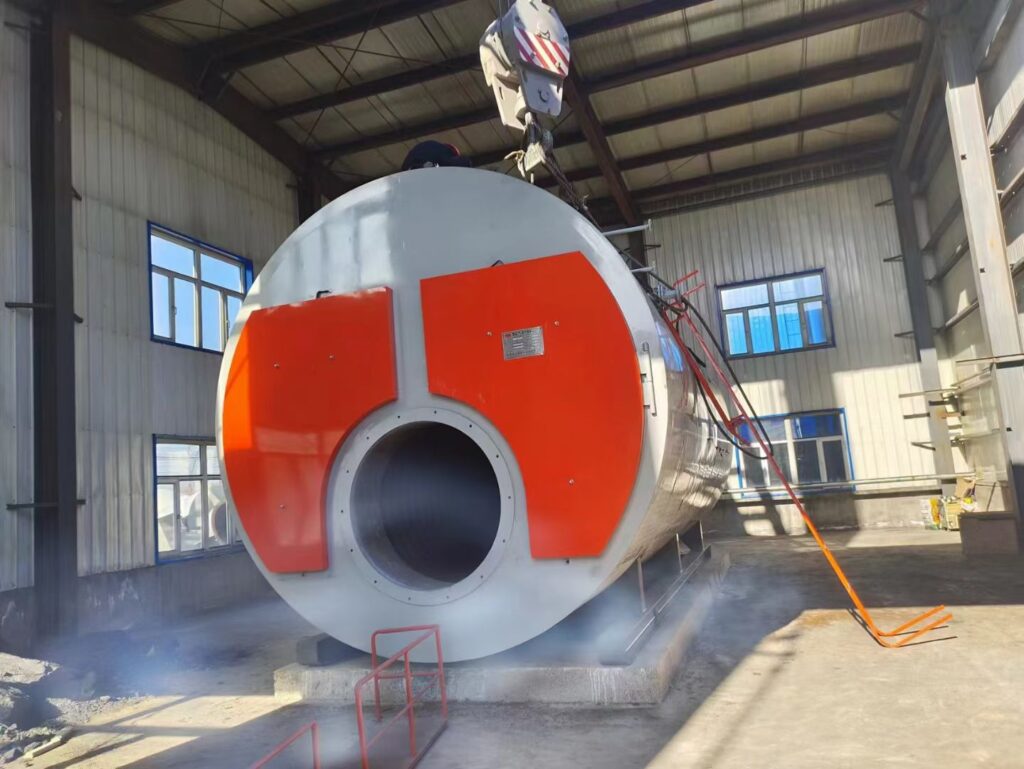
Technical Specifications
In chemical processing, thermal energy is the catalyst for transformation. From large-scale petrochemical refining to specialized pharmaceutical synthesis, the precision and safety of your steam or thermal oil supply define your operational success. With 10 years of engineering expertise, we provide High-Precision Industrial Boilers systems designed to meet the rigorous safety and temperature control standards of the global chemical sector.
Chemical manufacturing requires highly stable and controllable thermal energy systems. Modern chemical plants demand maximum accuracy to ensure both process safety and high product quality. Therefore, choosing the right high precision industrial boiler is a critical decision for your facility.
In this guide, we explore advanced chemical plant thermal solutions designed for the modern era. We focus on the latest technological trends, system engineering, and optimal equipment selection.
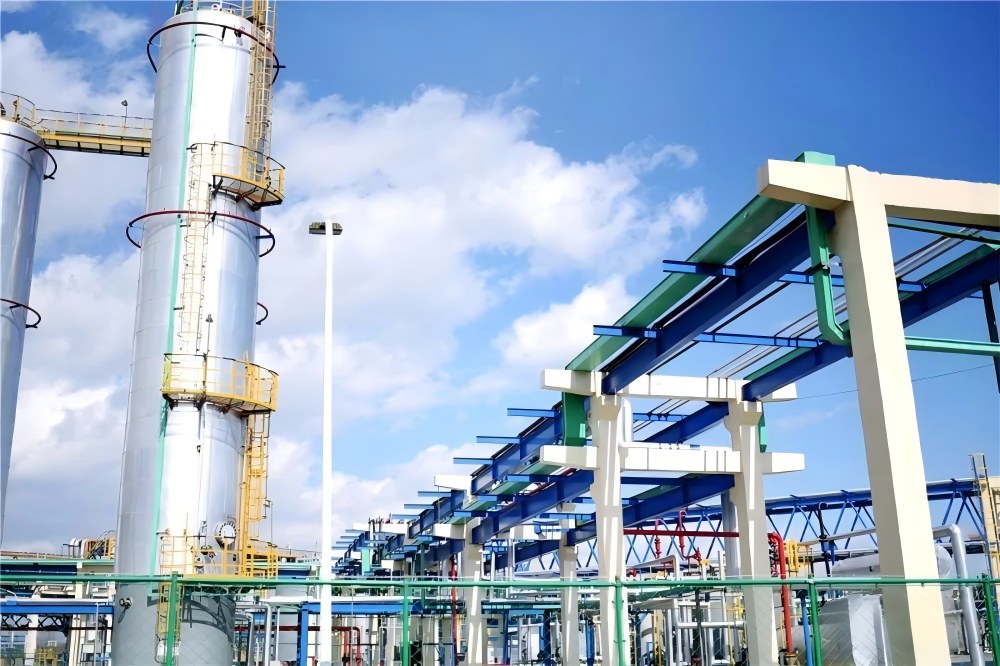
Why Chemical Plants Require High Precision Boiler Systems
Industrial chemical processing involves volatile materials, complex thermodynamic reactions, and continuous production cycles. Consequently, standard steam equipment often fails to meet strict process parameters. High-performance industrial boilers for the chemical industry must solve four major operational challenges:
Stable Steam Pressure
Pressure fluctuations can disrupt chemical reactions and ruin entire product batches. Therefore, high-precision systems maintain exact steam supply pressures under varying load demands.
Accurate Temperature Control
Many catalytic reactions require incredibly narrow temperature ranges. Modern chemical industry boiler solutions deliver heat within precise tolerances to keep processes stable.
Continuous Operation
Chemical factories usually run twenty-four hours a day. Because downtime is extremely expensive, your thermal system must offer exceptional mechanical reliability.
Energy Efficiency
Fuel consumption represents a major portion of plant operating costs. High-efficiency boiler designs help factories reduce emissions and lower their overall energy bills.
Industrial Boiler Applications in the Chemical Industry
Chemical manufacturers utilize thermal energy across a wide range of processing stages. Specifically, advanced boiler systems power several critical plant operations:
- Reaction Heating: Delivering controlled, indirect heat to jacketed reactors and material vessel systems.
- Distillation Systems: Supplying high-volume, stable steam to drive chemical separation and purification columns.
- Evaporation Processes: Supporting concentration, crystallizer operations, and final product drying applications.
- Storage Tank Heating: Maintaining precise temperatures for viscous liquid chemical materials during storage.
- Auxiliary Production Heating: Providing reliable, clean process steam for pipe tracing, cleaning, and sanitization.
What Makes a Boiler Suitable for the Chemical Industry?
A standard boiler cannot handle the rigorous demands of chemical manufacturing. Instead, plants require specialized technologies to achieve maximum precision and safety. We integrate four core technologies into our industrial heating equipment:
1. Intelligent Control Systems
Our modern control panels monitor steam pressure, temperature, water levels, and combustion states in real-time. This automation prevents human error and maintains optimal system balance.
2. High-Efficiency Heat Transfer Design
We optimize the boiler heating surfaces using threaded fire tubes or advanced water-tube configurations. This layout maximizes heat absorption and fuel utilization.
3. Automatic Combustion Adjustment
Our burner systems automatically adjust the air-to-fuel ratio based on actual load changes. This feature reduces fuel waste during low-demand periods.
4. Multi-Layered Safety Systems
Chemical boilers require robust safety backups. We install redundant water level sensors, overpressure cut-offs, and flame-out protection systems.
2026 Trends in Chemical Industry Thermal Systems
As we look at 2026, the global chemical sector is experiencing rapid technological evolution. Thermal engineering must adapt to meet new regulatory and economic benchmarks. Four key trends define this year’s projects:
Lower Carbon Production
Governments continue to tighten environmental emission standards. Consequently, factories are replacing outdated systems with low-NOx burners and clean fuel equipment.
Intelligent Operation
Plants are adopting IoT-enabled boilers. These smart systems collect diagnostic data, allowing engineers to predict maintenance needs before failures occur.
Advanced Energy Recovery
Flue gas condensation technology has become a industry standard. Modern systems capture waste heat from exhaust gases to preheat boiler feed water.
Fuel Flexibility
Fuel prices remain highly volatile worldwide. As a result, companies prefer dual-fuel boilers that can switch easily between natural gas and liquid fuels.
Selecting the Right Boiler Technology for Chemical Plants
Choosing the wrong boiler type can lead to high operating costs or insufficient thermal output. The table below compares the most reliable boiler types used in chemical processing:
| Boiler Type | Suitable Application | Primary Fuel Options | Key Benefit |
| WNS Gas Steam Boiler | Medium steam demand, clean operations, packaged plants | Natural Gas, Light Oil, LPG | Quick installation, highly automated control |
| SZS Water Tube Boiler | Large capacity chemical production, high pressure | Natural Gas, Heavy Oil | Excellent thermal efficiency, safe design |
| Thermal Oil Heater | High temperature process heating without high pressure | Gas, Oil, Biomass | Reaches 300°C+ temperatures at low pressure |
| Biomass Boiler | Solid waste utilization, rural or localized projects | Wood pellets, agricultural waste | Extremely low fuel cost, eco-friendly |
Your ideal thermal solution depends on your process temperature, steam capacity, and fuel availability.
Dynamic Thermal Response: Managing Exothermic Spikes
In fine chemical synthesis, particularly during polymerization, reactors can generate massive internal heat (exothermic reactions). An industrial boiler must not only provide heat but also respond instantly to load drops to prevent over-pressurization of the reactor jacket. Taiguo’s High-Precision Gas Boilers utilize a sophisticated Modulating Burner Control with a 1:5 or higher turndown ratio. This allows the system to scale back thermal output in seconds, maintaining a steam pressure variance of less than ±0.05 MPa. This precision is the ‘safety anchor’ for chemical plants in Uzbekistan and Vietnam, ensuring process stability and preventing product degradation.
Hardened for Chemical Environments: Anti-Corrosive Engineering
The atmosphere in a chemical park is often laden with trace corrosive gases that can rapidly degrade standard industrial equipment. Taiguo’s 2026 chemical-series boilers feature a Triple-Layer Protection Protocol:
- Epoxy-Phenolic External Coating: Specifically formulated to resist acid rain and chemical mist.
- Stainless Steel Cladding: Optional 304SS casing for the burner and control cabinet to prevent ‘pitting’ and electronics failure.
- Corrosion-Resistant Economizer Tubes: Utilizing ND Steel (09CrCuSb) to prevent low-temperature dew point corrosion, extending the flue gas recovery system’s lifespan even in aggressive industrial settings.
Optimizing Reactor Efficiency: High-Dryness Saturated Steam
In the chemical industry, the ‘Heat Transfer Coefficient (U-value)’ of your reactor depends on the quality of the steam inside the jacket. ‘Wet steam’ (steam with high water carryover) creates a water film that acts as an insulator, slowing down reaction times. Taiguo boilers integrate a Multi-Stage Internal Steam Separator, guaranteeing a steam dryness of 99% or higher. This ensures that the latent heat is transferred instantly to your chemical batch, reducing processing time and lowering the energy-cost-per-unit of finished chemicals like resins, detergents, or pharmaceuticals.”
Thermal Demands High-Precision Industrial Boilers in the Chemical Sector
Chemical manufacturing requires a versatile approach to heating:
| Chemical Process | Heating Media | Key Requirement |
| Reactor Heating | Thermal Oil or Steam | Rapid ramp-up and precise temperature hold. |
| Distillation & Evaporation | High-Pressure Steam | Constant heat flux to maintain separation purity. |
| Polymerization | Thermal Oil | High temperature 200°C-350°C at low operating pressure. |
| Storage & Tracing | Low-Pressure Steam | Preventing solidification of viscous chemicals in pipes. |
High-Precision Industrial Boilers for Chemical Plants
A.High-Precision Industrial Boilers: WNS Series Steam Boilers (Gas/Oil)
- Best For: Distillation columns and sterilization in pharmaceutical plants.
- Advantage: Fast steam generation and automated control. Our chemical-grade WNS boilers feature advanced burners with low-NOx technology to meet the strictest environmental regulations in industrial zones.
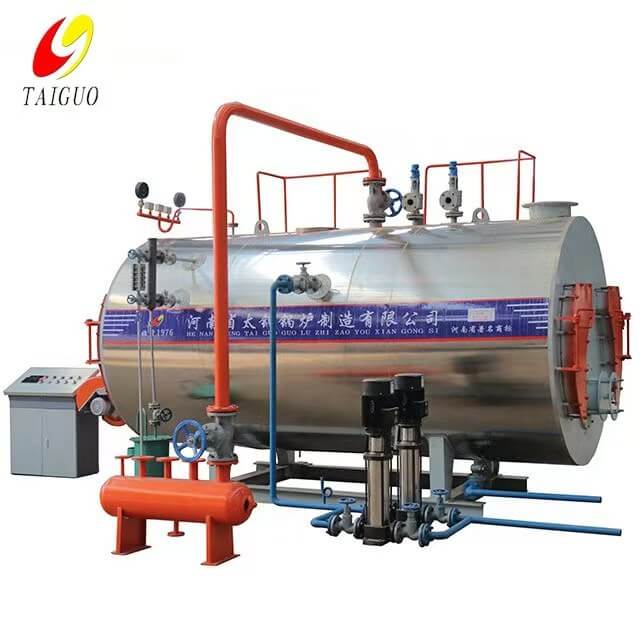
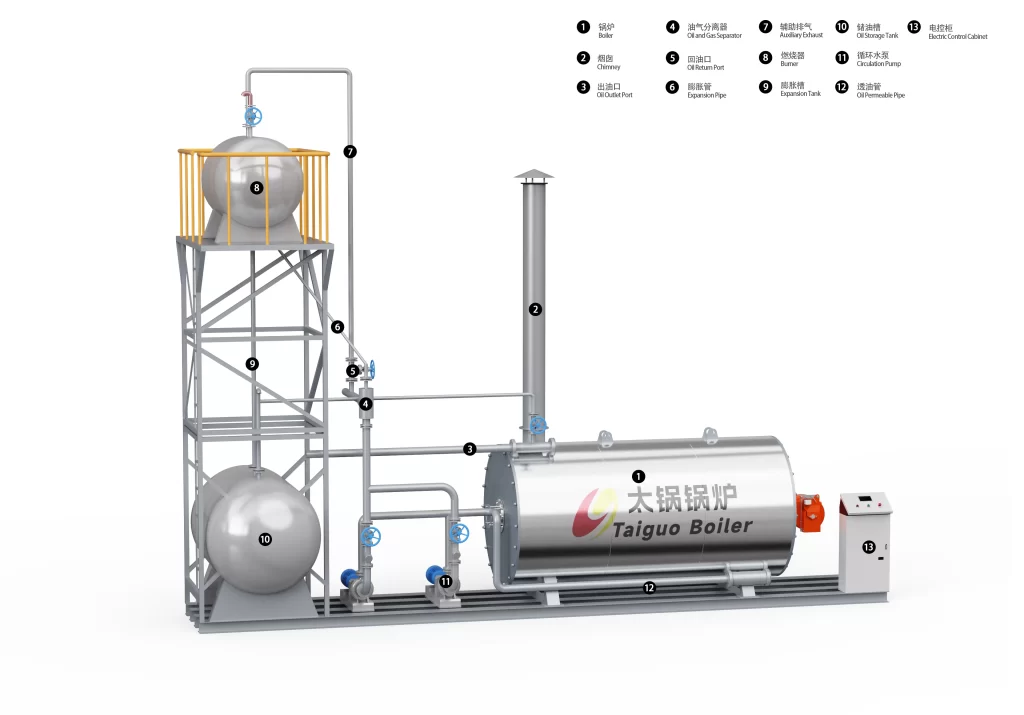
B.High-Precision Industrial Boilers: YLW/YYW Series Thermal Oil Heaters
- Best For: High-temperature reactors and resin production.
- Advantage: Unlike steam, thermal oil provides temperatures up to 350°C while maintaining almost atmospheric pressure, significantly reducing the cost of high-pressure piping and vessel certifications.
Safety First: Chemical-Grade Protection Of High-Precision Industrial Boilers
In a chemical environment, the boiler must be the safest part of the plant. We implement:
- Explosion-Proof Components: We can equip boilers with explosion-proof burners and control cabinets for plants handling volatile organic compounds (VOCs).
- Dual-Safety Interlocks: Redundant sensors for water level, pressure, and temperature to ensure immediate automatic shutdown in case of any process anomaly.
- Corrosion-Resistant Materials: For plants using corrosive feedwater or specialized chemicals, we offer stainless steel internal components to extend equipment life.
Maximizing Energy Efficiency in Chemical Loops
Chemical processes often generate waste heat. We help you create a closed-loop system:
- Flue Gas Heat Recovery: Using economizers to preheat boiler water or process fluids.
- Steam Condensate Recovery: Returning high-temperature condensate to the boiler saves up to 15% in fuel and reduces water treatment costs.
- Smart Automation: Integration with your plant’s DCS (Distributed Control System) for centralized thermal management.
Global Compliance & Documentation
We provide the “Technical Dossier” required for international chemical safety audits:
- ASME S & U Stamps: Compliance with international pressure vessel codes.
- Customs Facilitation: Providing Form E for ASEAN markets or Uzstandard documentation for Central Asian chemical clusters.
Strategic Content Sections for Chemical Industry
A. Why Precision is the “Safety Margin” in Chemicals
“In high-stakes chemical synthesis, a temperature fluctuation of even 2°C can trigger unwanted byproducts or dangerous pressure spikes. Our High-Precision Industrial Boilers utilize advanced PID controllers to maintain a steady heat supply within a ±1°C range. This precision is essential for delicate processes like polymer curing and resin production.”
B. Low Pressure, High Temperature: The Thermal Oil Advantage
“For chemical reactors requiring heat above 200°C, traditional steam systems often require dangerously high pressures. Our High-Precision Industrial Boilers (Thermal Oil variants) deliver up to 350°C while maintaining near-atmospheric pressure, significantly reducing the risk of equipment fatigue and ensuring a safer workspace.
Integrated Thermal Engineering for Chemical Plants
A reliable thermal system requires more than just high-quality equipment. It demands a comprehensive, fully engineered system design. We support your project from concept to commission:
System Selection & Sizing
We analyze your exact steam capacity, peak load demands, and local environmental regulations.
Thermal Plant Design
Our team designs the complete boiler room layout, including piping networks and auxiliary equipment.
Installation Guidance
We provide on-site technical support to ensure correct assembly, pipe welding, and valve alignment.
Commission & Training
Our engineers test the combustion controls, calibrate safety sensors, and train your local operators.
To explore our structural capabilities, visit our Engineering Hub or read about our System Design Engineering and Installation Engineering services.
Improving Chemical Plant Energy Efficiency
Energy optimization is the easiest way to improve your bottom line. We recommend five proven strategies to maximize your plant’s thermal efficiency:
- Install an Economizer: Recover heat from flue gas to preheat the boiler feed water. This step increases thermal efficiency by up to 15%.
- Implement Condensate Recovery: Collect hot condensed water from your reactors and return it to the feed tank. This saves both fuel and water treatment chemicals.
- Optimize Burner Calibration: Test and adjust your burners regularly to prevent incomplete combustion and fuel waste.
- Ensure Proper Insulation: Insulate all steam pipes, valves, and fittings to stop radiant heat loss.
- Perform Regular Blowdown Management: Clean dissolved solids from the boiler drum efficiently to maintain clean heat transfer surfaces.
Chemical Industry Boiler Precision Checklist (2026)
Check 1: Explosion-Proof (Ex) Component Integration
- Action: Verify if the burner, gas train, and PLC sensors are rated for the plant’s specific hazardous zone (e.g., Zone 1 or Zone 2).
- Technical Why: Safety compliance in 2026 is non-negotiable. We provide full ATEX or IECEx compliant componentry to ensure your boiler operates safely in volatile environments.
Check 2: Conductivity-Based Automatic Blowdown
- Action: Ensure the boiler includes a continuous blowdown system based on real-time TDS (Total Dissolved Solids) monitoring.
- Technical Why: For high-precision chemical processes, fluctuating water chemistry leads to unstable steam. Automated blowdown keeps the water quality consistent, preventing “priming” and ensuring steady steam output.
Check 3: Feed Water Thermal Deaeration
- Action: Confirm the use of a pressurized thermal deaerator.
- Technical Why: Dissolved oxygen is the #1 killer of chemical boilers. By heating feed water to 104°C, we remove oxygen to <0.02 mg/L, protecting the boiler tubes from internal oxygen pitting for over 20 years.
FAQ: Thermal Solutions for the Chemical & Pharmaceutical Industry
Why is precise temperature control critical for chemical reactors, and how does your boiler ensure it?
In chemical synthesis, even a 2°Cdeviation can lead to side reactions or batch failure. Our boilers and thermal oil heaters are equipped with PID (Proportional-Integral-Derivative) control systems and high-precision modulating burners. This setup allows for steamy/oil flow adjustment within 1°C, ensuring the perfect “catalyst environment” for your reactors.
How do I prevent thermal oil degradation (carbonization) in my heating system?
Thermal oil “cracking” or oxidation is a major concern. To prevent this, we design our heaters with an optimal furnace heat load to avoid localized overheating of the oil. Additionally, we recommend an expansion tank with a nitrogen blanket (N2 sealing) to prevent the oil from contacting oxygen, extending the fluid’s life by up to 50%.
Can your boilers be installed in hazardous “Zone 1” or “Zone 2” explosion-proof areas?
Yes. For chemical plants handling volatile solvents, we provide specialized Explosion-Proof (Ex-rated) configurations. This includes spark-resistant burners, flame-proof control panels (IP65 or higher), and armored cabling. We ensure the entire thermal unit complies with international safety standards for hazardous environments.
What is the advantage of using a Thermal Oil Heater over a Steam Boiler for chemical resins?
For processes requiring temperatures above 200°C(like resin or polymer production), a steam boiler would require extremely high pressure (>20 bar), increasing equipment costs and risk. A Thermal Oil Heater can reach up to 350°C at near-atmospheric pressure, significantly simplifying your piping design and reducing the frequency of mandatory high-pressure vessel inspections.
How do you handle the corrosive nature of chemical plant environments?
Chemical facilities often have corrosive atmospheres that can degrade standard boiler shells. We offer stainless steel (SS304/SS316) cladding for the boiler body and specialized anti-corrosion coatings for the external casing. For the internal heat exchanger, we use high-grade carbon steel or alloy tubes that meet ASME corrosion-allowance specifications.
Can High-Precision Industrial Boilers be integrated with my factory’s DCS?
Absolutely. Our 2026 models feature open-protocol PLC systems (Modbus/Profibus), allowing seamless integration into your Distributed Control System (DCS) for centralized monitoring and real-time data logging.
What safety features are mandatory for chemical-grade boilers?
Every High-Precision Industrial Boiler for the chemical industry should be equipped with explosion-proof burners, dual-redundant safety valves, and automatic flame-out protection to comply with ASME Section VIII standards.
How do these boilers improve ROI in chemical plants?
By providing superior thermal stability, our boilers reduce “batch waste” caused by overheating and lower fuel consumption through high-efficiency heat recovery auxiliaries, typically resulting in an ROI within 14 months.
What type of boiler is best for chemical industry?
The choice depends on steam demand, process requirements, fuel availability
and operating conditions.
Why is boiler precision important in chemical production?
Stable temperature and pressure help maintain consistent manufacturing
quality.
Can industrial boilers reduce chemical production costs?
Efficient boiler design and optimized operation can reduce energy consumption.
What thermal systems are used besides steam boilers?
Chemical plants may also use thermal oil heaters for high-temperature
process heating.
📩 Request a Specialized Chemical Thermal Audit from Kim
- WhatsApp Kim: 8615093412637
- Expert Consultation: kimjin2018@cnmiracletrade.com
Track strict plant safety boundary parameters inside our insights industrial boiler applications by industry catalog.
Evaluate zero-pressure organic heat carrier fluid system performance within Thermal Oil Heating Solutions for Wood Panel & Timber Industry: 2026 ROI Guide.
Analyze specialized clean steam processing variations via Steam Boiler for Chemical & Pharmaceutical Factory in Uzbekistan: Precise, Safe & High-Efficiency Steam Solutions.