
Biomass Boiler for Palm Oil Industry in Indonesia: Turning Waste into High-Value Steam
Palm oil mills generate substantial solid by-products during processing. In Indonesia, integrating a robust biomass steam boiler transforms agricultural waste into thermal energy. This circular process powers heavy milling machinery, provides process steam, and reduces reliance on purchased fossil fuels. Contents Hide 1 Why Palm Oil Mills in Indonesia Need Biomass Steam Boilers 2 Biomass […]
Get Instant Quote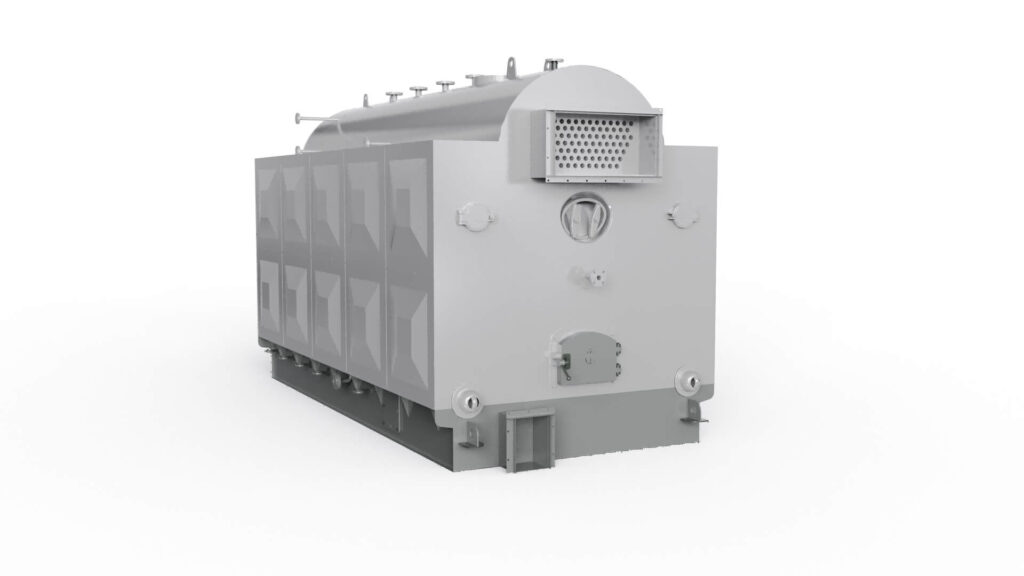
Technical Specifications
Palm oil mills generate substantial solid by-products during processing. In Indonesia, integrating a robust biomass steam boiler transforms agricultural waste into thermal energy. This circular process powers heavy milling machinery, provides process steam, and reduces reliance on purchased fossil fuels.
Why Palm Oil Mills in Indonesia Need Biomass Steam Boilers
Indonesian palm oil operations face volatile energy prices, strict environmental mandates, and remote logistics challenges. Biomass Boiler for Palm Oil Industry in Indonesia address these operational hurdles directly:
- Resource Optimization: Mills convert internal solid residues into continuous process energy.
- Operating Cost Stability: Replacing fossil fuels with captive palm residues insulates facilities from global fuel market fluctuations.
- Grid Independence: Steam-driven cogeneration provides primary electrical power in remote plantation areas.
- Environmental Stewardship: Utilizing biomass residues lowers net carbon footprints and complies with evolving national emissions rules.
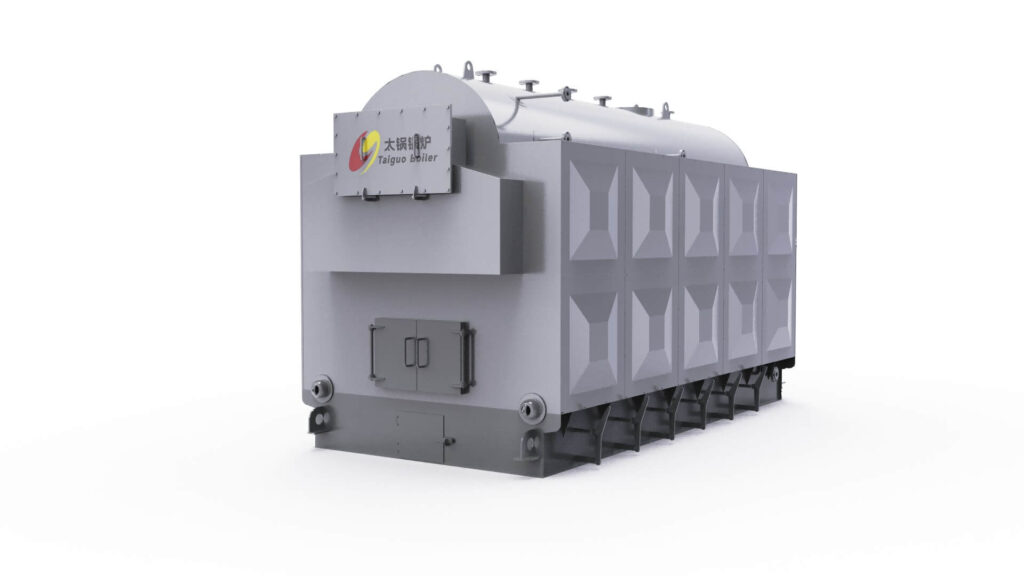
Biomass Boiler for Palm Oil Industry in Indonesia Core Applications
CN MIRACLE &Taiguo biomass boilers provide the thermal heart for every stage of palm oil production. We optimize each process to ensure maximum Crude Palm Oil (CPO) recovery and operational efficiency.
1. Advanced Sterilization Units (FFB Sterilization)
Sterilization is the first and most critical stage. We deliver high-pressure saturated steam to process Fresh Fruit Bunches (FFB) effectively.
- Enzymatic Deactivation: Our steam quickly stops the activity of lipase enzymes. This prevents the Free Fatty Acid (FFA) levels from rising, ensuring premium oil quality.
- Fruit Loosening: The thermal energy softens the fruit stalks. This facilitates the rapid separation of fruits from the bunches in the threshing drum.
- Moisture Pre-conditioning: Our boilers maintain the precise pressure needed to loosen the nut from the shell. This prepares the kernels for the subsequent crushing stage.
2. High-Precision Extraction & Clarification
Maximizing oil recovery requires steady, controllable heat. We provide the thermal stability needed for complex separation processes.
- Digestion Heating: We supply steam to the digester tanks to break down the fruit oil cells. This reduces the viscosity of the oil, allowing for easier pressing.
- Clarification Efficiency: Our boilers provide constant heat for the clarification tanks (60°C – 90°C). This accelerates the separation of oil from water and solids, reducing total oil loss.
- Centrifuging Optimization: We ensure the sludge remains at the optimal temperature for centrifuging. This maximizes the recovery of residual oil from the waste stream.
3. Integrated Kernel Crushing Plants (KCP)
The value of the kernel depends on the drying and pressing precision. We supply the thermal energy required to protect these high-value outputs.
- Kernel Drying & Conditioning: Our boilers power the silos to reduce kernel moisture content. This prevents mold growth and ensures a longer shelf life for the kernels.
- Steam-Jacketed Pressing: We provide heat for the screw press jackets. This improves the flow of Palm Kernel Oil (PKO) and increases the total extraction yield.
- Fiber & Shell Separation: We provide the thermal energy for the winnowing system. This ensures clean separation, providing high-quality fuel for the boiler itself.
4. High-Pressure Steam Power Generation (Cogeneration)
For large-scale mills, our boilers act as a private power plant. We turn biomass waste into free, sustainable electricity.
Combined Heat and Power (CHP): After generating electricity, the exhaust steam is diverted back to the sterilization line. This dual-use strategy achieves over 80% total thermal efficiency.
Driving Steam Turbines: Our high-pressure biomass boilers (up to 3.82MPa or higher) drive back-pressure turbines. This generates sufficient electricity for the entire milling facility.
Factory-Wide Energy Autonomy: We provide surplus power for staff housing, workshops, and street lighting. This eliminates your reliance on the unstable local power grid.
Harnessing Local Biomass: PKS, Fiber, and EFB
Our boilers are engineered with specialized furnace designs to handle the unique combustion characteristics of Indonesian palm waste:
- Palm Kernel Shell (PKS): A high-calorific fuel that offers stable heat output and low ash content.
- Mesocarp Fiber: Lightweight and fast-burning, ideal for maintaining rapid steam responses.
- Empty Fruit Bunches (EFB): While challenging due to high moisture, our advanced EFB combustion technology involves shredding and drying to unlock its massive energy potential.Solving the EFB & Palm Shell Disposal Challenge
In 2026, Indonesian palm oil mills face increasing environmental pressure to manage biomass waste. Our Biomass Boiler for Palm Oil Industry in Indonesia is specifically engineered to combust high-moisture Empty Fruit Bunches (EFB) and abrasive Palm Shells. By utilizing a reciprocating grate or fluidized bed system, we transform these low-cost waste products into high-pressure steam, powering your sterilization and oil extraction processes at near-zero fuel cost.
Recommended Biomass Boiler for Palm Oil Industry in Indonesia Structures & Capacities
We tailor our biomass boiler structures to match the specific processing capacity of Indonesian palm oil mills. Whether you operate a 30T/h or 60T/h FFB factory, we provide the optimal engineering fit.
1. DZH Series: Hand-Fired & Flexible Solution
The DZH Horizontal Biomass Boiler is ideal for small to medium mills requiring simplified operation.
- Manual & Semi-Auto Feeding: This series handles oversized or irregularly shaped biomass fuel easily.
- Wing-Type Flue Design: We utilize specialized wing-shaped flues. This minimizes tube plate temperature and prevents heat stress cracks.
- Compact Foundation: The DZH series requires minimal installation space. This reduces your initial civil engineering costs significantly.
2. DZL Series: High-Efficiency Single-Drum Design
The DZL Traveling Grate Boiler is a highly popular choice for standardized palm oil factories.
- Threaded Fire Tubes: We integrate specialized threaded tubes. These increase thermal efficiency and reduce the overall size of the boiler.
- Reinforced Chain Grates: We reinforce the grate bars to withstand the abrasive nature of palm ash. This design ensures long-term reliability and zero clinker formation.
- Single-Drum Compactness: The single-drum structure provides a fast startup time. This is perfect for mills with flexible production schedules.
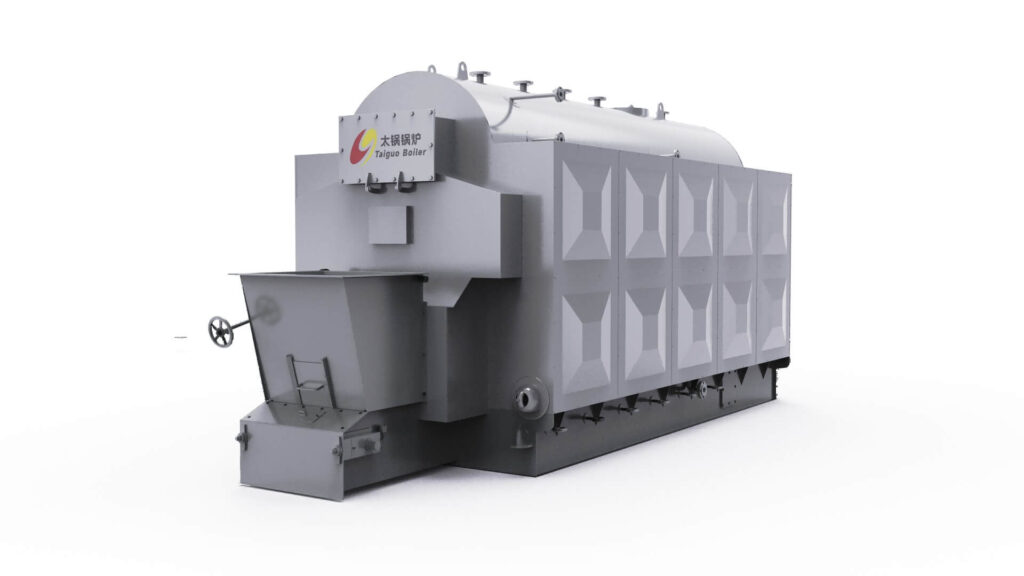
3. SZL Series: Double-Drum Water Tube Powerhouse
For high-capacity mills (10 to 40 Tons/h), the SZL Series delivers the ultimate thermal performance.
- Large Combustion Chamber: The double-drum water tube structure provides a massive furnace volume. It ensures 100% carbon burnout even for high-moisture EFB.
- Z-Type Air Flow: We utilize a “Z” shaped air distribution logic. This maximizes the residence time of gas and particles, raising efficiency to over 88%.
- Membrane Water Wall: Fully welded membrane walls prevent smoke leakage. They also provide a larger radiant heating area to handle peak steam loads.
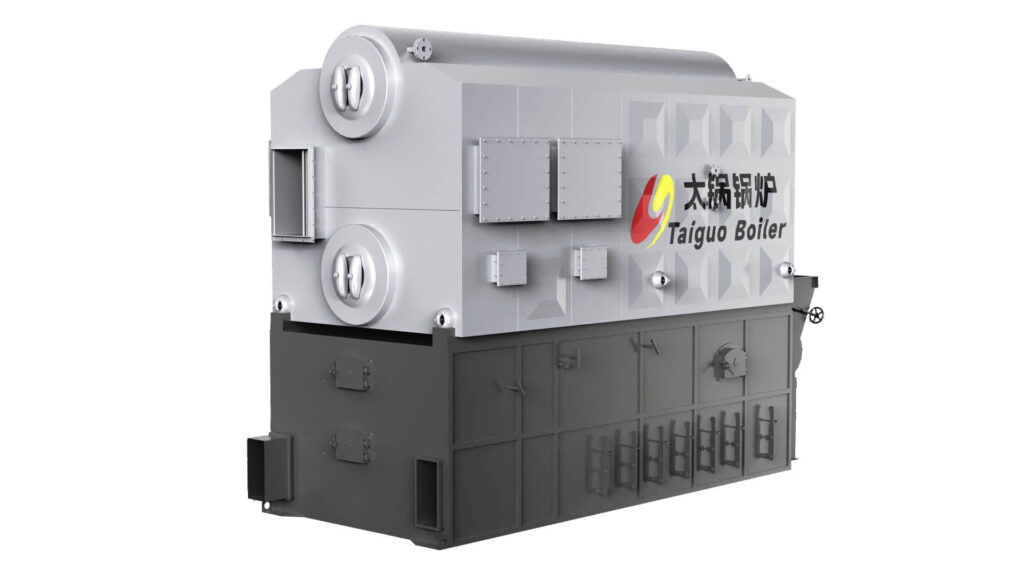
How to Select a Biomass Boiler for Palm Oil Industry in Indonesia
Selecting the right boiler requires matching physical processing metrics with accurate thermal ratings:
- Mill Processing Capacity: Standard mills (30, 45, 60, or 90 tons FFB/hour) typically require 0.5 to 0.7 tons of steam per ton of FFB processed.
- Required Steam Capacity: Calculate aggregate steam demand across sterilization, extraction, clarification, and turbine reserves.
- Fuel Moisture & Calorific Value: Adjust furnace volume and primary air pre-heating based on the blend ratio of wet EFB and dry PKS.
- Operating Steam Pressure: Select low-pressure units for purely thermal loads, or 2.5–3.82 MPa (25–38 bar) designs for cogeneration turbines.
- Cogeneration Matching: Size boiler capacity to deliver adequate superheated steam for back-pressure or condensing-extraction steam turbines.
- Emission Control Systems: Equip multi-cyclone dust collectors, wet scrubbers, or electrostatic precipitators (ESP) to meet local air standards.
PKS and EFB Combustion Challenges
Burning oil palm by-products introduces aggressive chemical and physical challenges inside the furnace:
- High-Moisture EFB Combustion: Wet EFB lowers furnace temperatures. Boilers require refractory-lined arches and heated air injection to maintain ignition stability.
- High Ash & Silica Abrasiveness: PKS contains abrasive sand and silica. Pressure parts require protective erosion shields and thicker tube walls.
- Alkali Slagging & Fouling: Potassium and sodium in palm residues lower ash melting points. Boilers need wide tube spacing and automatic soot blowers.
- Fuel Feeding Stability: Fibrous materials tend to bridge in hoppers. Screw feeders with variable frequency drives prevent fuel blockages.
Biomass Boiler Efficiency and Operating Economics
Boiler thermal efficiency depends heavily on fuel moisture, excess air ratios, combustion design, and waste-heat recovery. Incorporating air preheaters and flue gas economizers captures residual heat, boosting overall thermal efficiency.
Using internally generated palm residues significantly reduces purchased energy expenditures compared to diesel or coal systems, lowering processing costs per ton of crude palm oil (CPO).
Indonesian Boiler Safety and Environmental Requirements
Biomass boiler installations in Indonesia must comply with applicable safety, environmental, and engineering regulations:
- K3 Safety Compliance: Vessels require safety equipment and design verification consistent with Indonesian Ministry of Manpower (Kemnaker) workplace standards.
- SNI Standards & Material Testing: Pressure parts and welding procedures must satisfy relevant national and international manufacturing norms.
- Emissions Monitoring: Flue gas output must satisfy particulate matter, sulfur dioxide, and nitrogen oxide limits through staged dust extraction and wet scrubbing.
- Technical Documentation: Projects require complete calculation sheets, mill test certificates, and inspection blueprints for local regulatory permits.
Advanced Localized Engineering for Indonesia
Humidity and fuel variability are the primary enemies of thermal efficiency. We solve this through our dual-stage air pre-heating system.
- PLC Intelligent Monitoring : Our Siemens PLC systems monitor steam dryness and pressure 24/7. This automation reduces manual labor and prevents human error in the boiler room.mill’s bottom line.
- Handling 50% Moisture : This system dries high-moisture EFB and Fiber instantly upon entry. It ensures clean, stable combustion without the need for external fuel drying.
- 15% Fuel Reduction: Our localized engineering approach reduces fuel consumption by 15% compared to legacy boilers. This directly boosts your Mill Extraction Rate (OER) by maintaining steady sterilization temperatures.
- Anti-Corrosion Design : We utilize low-temperature corrosion-resistant materials for the tail heating surfaces. This extends the service life in the humid climates of Sumatra and Kalimantan.
- Low-Velocity Grate Technology : We utilize a reciprocating or traveling grate with adjustable speeds. This controls the fuel residence time and ensures total carbon conversion.
- Optimized Air Distribution : We integrate primary and secondary air stages. This precise control maintains the furnace temperature below the ash fusion point. It effectively prevents slagging on the tube walls.
- Abrasion-Resistant Tubes : We use thick-walled boiler tubes in high-wear zones. This design handles the abrasive nature of biomass ash, extending the equipment life to over 20 years.
Key Advantages for Indonesian Mill Owners
We build our boilers for the rugged environments of Sumatra and Kalimantan.
- Zero Fuel Cost: You eliminate expensive coal or diesel purchases. You turn your waste disposal headache into a high-value energy asset.
- 98% Steam Dryness: Our internal multi-stage separators guarantee high-purity steam. This protects your sterilization equipment from corrosion and water hammer.
- Automated Ash Removal: We integrate a fully automatic ash handling system. This reduces manual labor and ensures a clean, safe working environment.
- PLC Intelligent Control: Our Siemens-based controllers monitor oxygen levels in real-time. The system adjusts fuel intake automatically to ensure peak efficiency.
Proven Success: Our Indonesian CPO Projects
Our portfolio global cases includes multiple high-performance installations in North Sumatra and Riau. One of our flagship 25-ton biomass units recently helped a client reduce their auxiliary diesel consumption by 90%, proving the power of specialized engineering.
Technical Checklist for Biomass Boiler Buyers
Verify these critical engineering details before investing:
- Grate Type : Does the boiler use a specialized grate for high-moisture EFB?
- Heating Surface : Is the radiant heating area large enough to prevent localized overheating?
- Emission Control : Does the system include a Multi-cyclone or Bag Filter to meet Indonesian environmental laws?
- Service Support : Does the supplier offer on-site commissioning and localized spare parts in Indonesia?
FAQ
Can this boiler handle the high silica content in palm waste?
Yes. Our Biomass Boiler for Palm Oil Industry in Indonesia uses specialized alloy steel for the grate and furnace walls to resist erosion from silica and prevent slagging, which is common in low-quality biomass units.
What is the ROI for switching to a Taiguo Biomass Boiler?
Most mills in Sumatra and Kalimantan see a full ROI within 14–18 months due to the total elimination of fossil fuel costs and reduced waste disposal fees.
Do you offer local maintenance in remote areas of Sulawesi or Papua?
We provide 24/7 Remote Technical Support via IoT monitoring. For physical maintenance, our Indonesian service partners provide rapid response and stocked spare parts in major industrial hubs.
How does the boiler handle high-moisture EFB and Fiber?
Palm oil waste often has moisture levels exceeding 50%. We utilize a reciprocating grate system with a multi-stage air preheater. The high-temperature primary air dries the fuel instantly upon entry. This ensures stable combustion and maintains constant steam pressure regardless of seasonal fuel moisture changes.
How do you prevent slagging when burning PKS and EFB?
Potassium and sodium in palm waste cause severe slagging on standard boiler tubes. We design our furnaces with a large combustion volume. This lowers the volumetric heat load. We maintain the furnace temperature below the ash fusion point. This engineering prevents molten ash from sticking to the heating surfaces.
Can a biomass boiler burn 100% palm kernel shell (PKS)?
Yes. Boilers configured with heavy-duty grates and anti-slagging secondary air can fire 100% PKS. However, blending PKS with mesocarp fiber often improves combustion dynamics.
Is the boiler capable of 24/7 continuous operation in remote areas?
Yes, we engineer our boilers for heavy-duty industrial cycles. We use thick-walled Q345R steel and high-grade anti-abrasion castables. Our Siemens PLC system monitors all critical parameters. It provides early warnings to prevent unplanned downtime. This is crucial for mills in Kalimantan and Sumatra.
How do you handle the abrasive nature of biomass ash?
Biomass ash contains silica, which acts like sandpaper on boiler tubes. We install anti-abrasion shields and use high-chromium alloy materials in high-velocity zones. This structural reinforcement prevents tube thinning. It extends the service life of the convection bank to over 20 years.
Do your boilers meet Indonesian environmental standards (KLHK)?
Yes, we equip our systems with high-efficiency Multi-cyclone dust collectors or Bag Filters. These systems capture fine particulates from biomass combustion. We ensure your emissions stay well below the limits set by the Indonesian Ministry of Environment.
Can we use the boiler for both steam and power generation?
Absolutely. We provide high-pressure biomass boiler systems designed to drive steam turbines. This allows your mill to generate its own electricity while using the exhaust steam for sterilization. This “Cogeneration” setup maximizes your total energy efficiency.
What type of boiler is most suitable for a 60 TPH palm oil mill?
An SZL series double-drum water tube boiler or specialized corner-tube biomass boiler provides the necessary steam stability, pressure rating, and fuel flexibility.
How much steam does a palm oil mill need per ton of FFB?
Most commercial mills consume approximately 500 kg to 700 kg of steam per metric ton of processed Fresh Fruit Bunches.
Can a palm oil mill biomass boiler generate electricity?
Yes. High-pressure biomass boilers supply superheated steam to drive back-pressure or extraction steam turbines, meeting the mill’s power requirements.
How do you prevent slagging when burning PKS and EFB?
Slagging is managed by optimizing furnace air distribution, lowering furnace volumetric heat release rates, maintaining adequate tube pitch, and using automated soot blowers.
What emission control system is required for biomass combustion in Indonesia?
Most facilities deploy multi-cyclone dust collectors paired with water-film wet scrubbers to comply with Indonesian particulate emission standards.
How can a biomass boiler improve mill economics?
The economic benefit depends on biomass availability, boiler efficiency, and operating hours. Using captive PKS and fiber eliminates purchased fuel costs and resolves solid waste disposal issues.
Power Your Mill with Kim’s Expertise
Ready to turn your palm waste into a powerhouse?need Biomass Boiler for Palm Oil Industry in Indonesia Contact Kim for a technical consultation and a customized ROI analysis for your mill.
- WhatsApp Kim: 8615093412637
- View CPO Case Studies: cnmiracletrade.com
Slashed processing plant energy dependencies utilizing our centralized insights industrial boiler applications by industry handbook.
Audit strict food-grade packaging heat injection rules across Advanced Steam Solutions for the Global Food & Beverage Industry: Efficiency, Hygiene, and Reliability.
Check regional Southeast Asian manufacturing infrastructure trends within Steam Boiler Solutions for Textile Industry in Indonesia: Maximizing Efficiency in Dyeing & Finishing.