
The Definitive Guide to Industrial Autoclaves: High-Capacity Steam Curing Solutions
Contents Hide 1 Introduction of Industrial Autoclave 2 Strategic Applications Of Industrial Autoclave: From Construction to Aerospace 2.1 1. Building Materials: The Heart of AAC Curing Systems With Industrial Autoclave 2.2 2. Industrial Processing: Rubber, Wood, and Glass Fiber With Industrial Autoclave 2.3 3. Advanced Manufacturing: Aerospace and High-Tech Sectors With Industrial Autoclave 3 Key […]
Get Instant Quote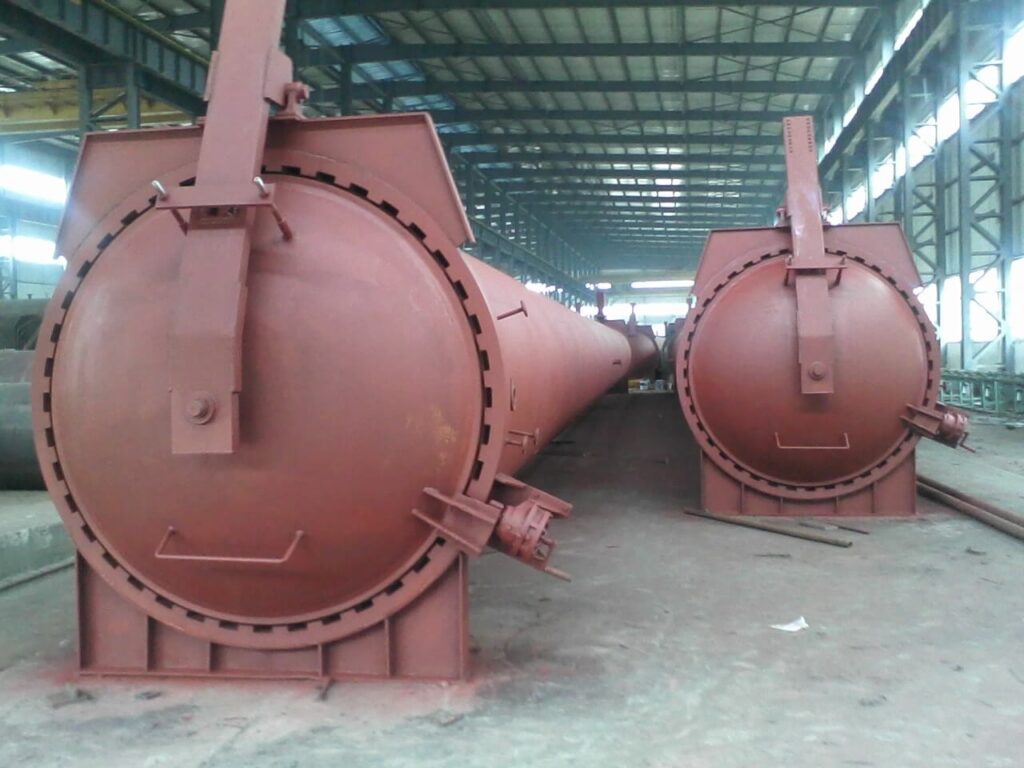
Technical Specifications
Introduction of Industrial Autoclave
In modern heavy industry, achieving material strength and durability requires more than just heat; it requires a controlled, high-pressure environment. Consequently, the industrial autoclave for steam curing—also known as a pressure steam oven—has become the heart of large-scale production lines. As a specialized Class-I or Class-II pressure vessel, these systems are essential for the hydrothermal reactions needed in building materials and chemical processing.
Strategic Applications Of Industrial Autoclave: From Construction to Aerospace
Taiguo’s industrial autoclaves provide the extreme thermal environments required for advanced material synthesis. We engineer these systems to sustain stable temperatures (up to 200°C) and high pressures (up to 1.3MPa or more). This precision ensures consistent product quality across multiple industrial sectors.
1. Building Materials: The Heart of AAC Curing Systems With Industrial Autoclave
The autoclave is the most critical component in an AAC (Autoclaved Aerated Concrete) plant. It does more than just heat the blocks; it facilitates a complex chemical synthesis.
- Hydrothermal Reaction: Our vessels maintain the exact pressure needed for the CaO—SiO₂—H₂O reaction. This transforms raw mixtures into high-strength Tobermorite crystals.
- Structural Components: We provide specialized curing solutions for PHC pipe piles and calcium silicate boards. These high-pressure environments ensure superior load-bearing capacity and seismic resistance.
- Dimension Stability: Precise steam distribution prevents internal stress in the concrete. This ensures that every AAC block maintains its exact dimensions after cooling.
2. Industrial Processing: Rubber, Wood, and Glass Fiber With Industrial Autoclave
Reliability in continuous production defines our industrial processing solutions. We focus on batch consistency and operational speed.
- Rubber Vulcanization: We integrate precise temperature ramping controls for tire and hose manufacturing. This ensures uniform cross-linking of sulfur molecules for maximum durability.
- Wood Treatment: Our autoclaves facilitate deep penetration of anti-corrosion agents into timber pores. This extends the service life of industrial wood products in harsh outdoor environments.
- Laminated Glass Curing: We provide the high-pressure environment required for zero-bubble glass bonding. This creates high-safety architectural and automotive glass panels.
3. Advanced Manufacturing: Aerospace and High-Tech Sectors With Industrial Autoclave
For high-stakes manufacturing, Taiguo Boiler delivers the precision required for mission-critical parts.
- Carbon Fiber Composites: We support the aerospace industry with specialized composite curing autoclaves. These units manage complex vacuum and pressure cycles to create lightweight, high-strength aircraft components.
- Heavy Metal Smelting: Our high-pressure vessels serve critical roles in hydrometallurgical processes. They facilitate the leaching of precious metals under extreme chemical conditions.
- Food and Medical Sterilization: We manufacture large-scale sterilization chambers for the medical and food sectors. These units utilize high-temperature saturated steam to eliminate all microbial life at an industrial scale.
Key Structural Components of a Taiguo Industrial Autoclave
To ensure 24/7 reliability, our autoclaves are built with a focus on structural integrity:
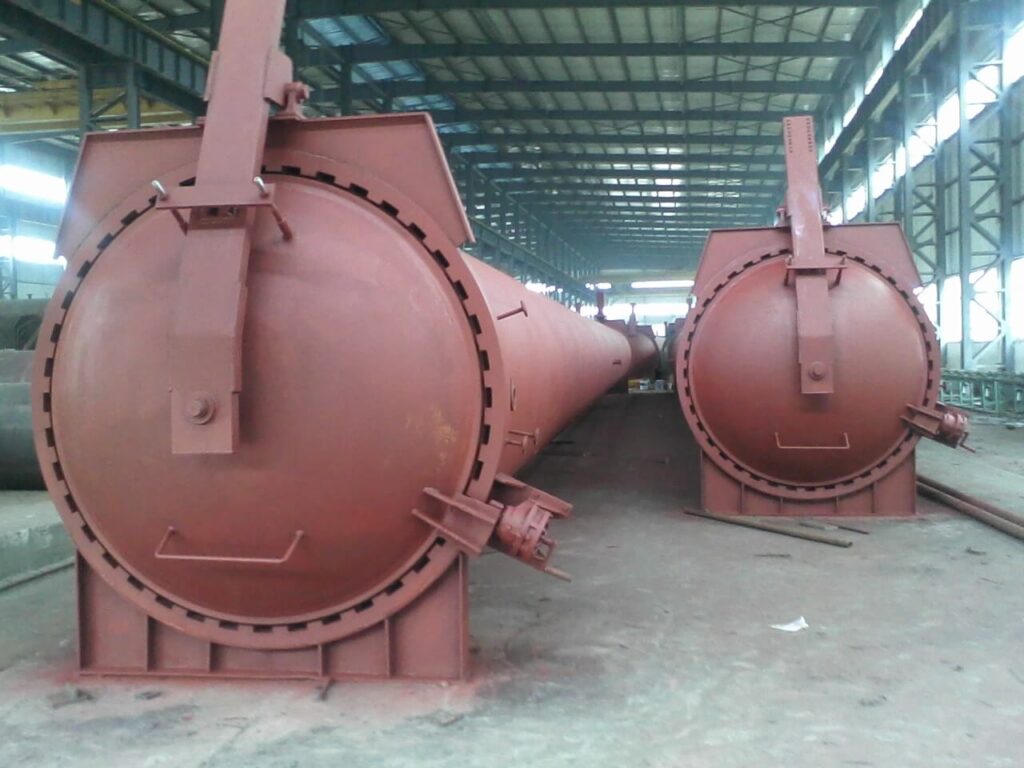
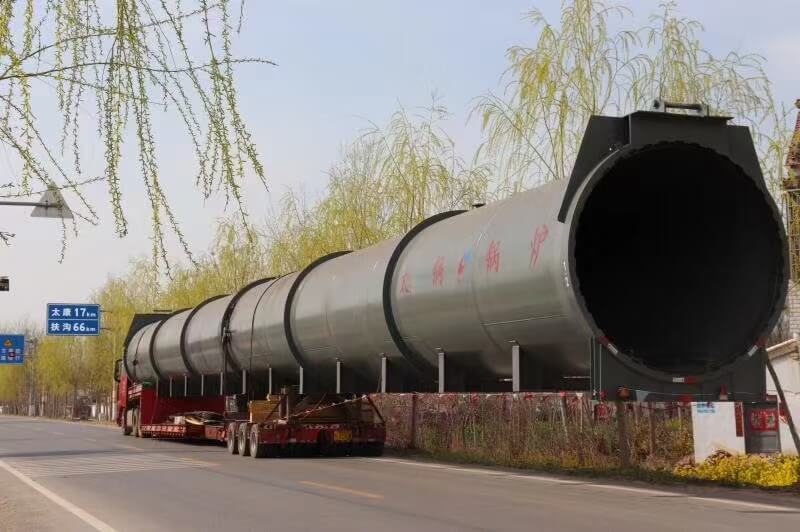
- Vessel Body Assembly Of Industrial Autoclave: The cylinder is welded using high-strength 16MnR steel. The bottom features integrated tracks for curing trolleys, while the top includes precision interfaces for temperature and pressure sensors.
- Quick-Opening Door (Kettle Cover) Of Industrial Autoclave: Fabricated from a single 16MnR plate, the door uses gear meshing for a perfect seal. We offer manual, electric, pneumatic, and hydraulic drive systems to fit your plant’s automation level.
- Advanced Sealing & Safety Of Industrial Autoclave: We utilize specialized EPDM or nitrile rubber rings that achieve self-sealing through internal steam pressure. Safety is guaranteed by a triple interlock system (electronic, manual, and mechanical) and precision safety valves to prevent overpressure risks.
- Optimized Support System Of Industrial Autoclave: Our vessels use a combination of fixed and movable supports. This allows for free thermal expansion, preventing deformation during high-temperature cycles
- Vacuum Pressure Impregnation (VPI) Mastery Of Industrial Autoclave.The 2026 series utilizes a Superior VPI cycle, extracting air from materials before injecting preservatives or resins under high pressure. This ensures Seamless penetration, which is Critical for utility poles, railway sleepers, and carbon fiber components requiring a Validated service life of 40+ years.
- AI-Driven Thermal Uniformity.Thermal Mapping Of Industrial Autoclave: The system ensures that the temperature variance within the chamber is less than ±0.5°C, preventing “cold spots” that compromise structural integrity.
- Predictive Door Safety Of Industrial Autoclave: AI-Link monitors hydraulic pressure and seal wear in real-time to prevent Critical pressure leaks.
- Rapid Cooling & Energy Recovery Of Industrial Autoclave.By integrating a Superior internal heat exchanger, our autoclaves reduce cooling times by 25%. In 2026, this captured heat can be Seamessly redirected to pre-heat feedwater, significantly accelerating your equipment ROI and lowering carbon intensity.
Performance Features: Why Choose Taiguo Industrial Autoclave?
- Strict Manufacturing Standards Of Industrial Autoclave: All pressure-bearing parts undergo 100% X-ray radiography inspection (JB/T4730.3-2005). Our flanges meet Grade II standards, ensuring the highest welding quality.
- Energy Efficiency Of Industrial Autoclave: We use premium insulation materials and optimized steam distribution pipes. Consequently, heat loss is minimized, and steam is distributed uniformly for consistent material quality.
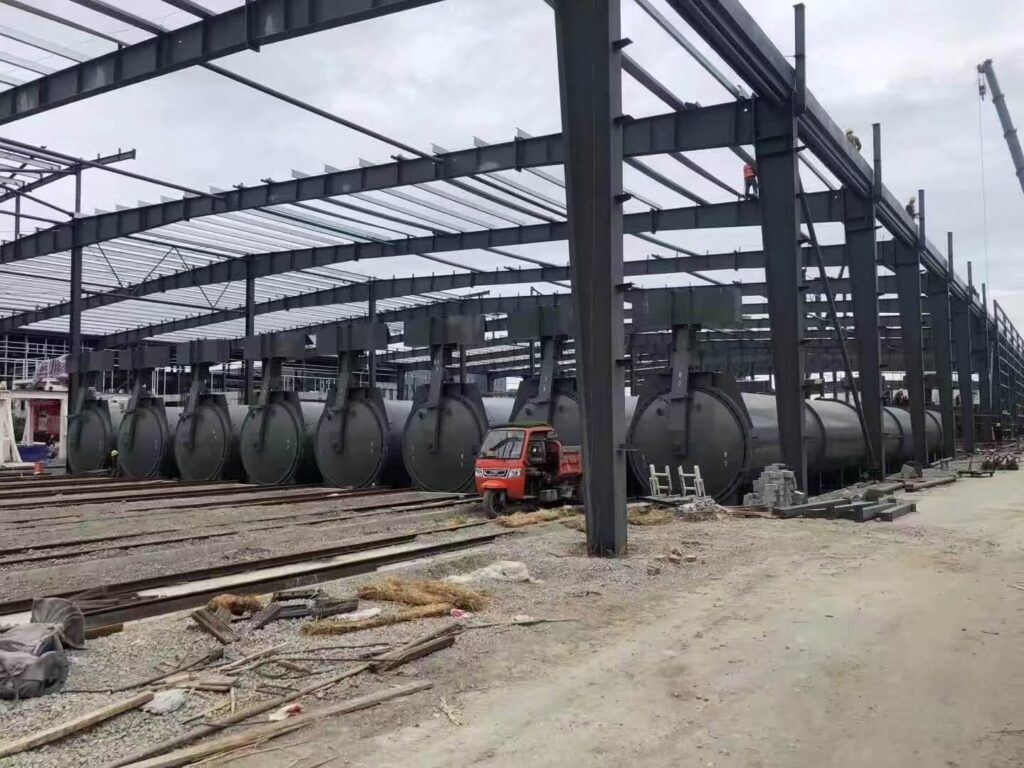
- High Adaptability Of Industrial Autoclave: From DIA2*21M to DIA2*31, we provide various specifications. Whether you need to cure 20,000 bricks or 39 cubic meters of AAC blocks, we have a custom-sized solution.
The success of an AAC plant or rubber factory depends on one critical factor: vessel integrity. A cheap autoclave is a ticking time bomb and a profit killer. At Taiguo Boiler, we design high-capacity steam curing solutions that prioritize extreme safety and thermal precision.
1. Choosing the Right Autoclave for Your Production Scale
Don’t just buy the biggest unit. Buy the one that matches your peak cycle time.
For AAC Block production, the diameter is your bottleneck. We recommend a 2.0m to 3.2m diameter to maximize trolley throughput. If you handle rubber vulcanization, focus on temperature uniformity. Our specialized internal fans prevent “cold spots” that ruin rubber batches. We tailor the length—up to 30 meters or more—to fit your existing factory footprint perfectly.
2. Engineering Safety into Every Weld
In this business, safety is not a marketing buzzword. It is a legal and operational necessity.
We use Q345R specialized pressure vessel steel. We don’t just weld it; we use automated submerged arc welding for deep penetration. Every single millimeter of the longitudinal and circumferential welds undergoes 100% X-ray non-destructive testing. We provide the test reports with every shipment. Our safety interlocks are redundant. The door simply cannot open if even 0.001 MPa of pressure remains inside.
3. Minimizing Thermal Loss to Protect Your Margins
Steam is expensive. Every minute your autoclave leaks heat, you lose money.
Our autoclaves feature a dual-layer insulation system. We wrap the vessel in 120mm of high-density rock wool. We then seal it with a precision-fitted galvanized jacket. This prevents the “chimney effect” where heat escapes through gaps. For Uzbekistan and other cold regions, this design reduces steam consumption by 10% per cycle. We also offer residual heat recovery systems. You can flash the exhaust steam to pre-heat the next batch.
4. Solving the “Door Sealing” Nightmare
The most common complaint from operators is the door seal failing after three months.
We solved this by using imported Y-shaped EPDM seals. Unlike flat gaskets, our seals use the internal pressure to tighten the fit. The higher the pressure, the better the seal. We also integrate a cooling water channel around the door ring. This keeps the rubber cool and extends the seal life to over 2,000 cycles. This eliminates weekly maintenance shutdowns and keeps your line moving.
5.The Working Principle: A 4-Stage Process of Industrial Autoclave
Understanding the operation is key to efficiency:
- Feeding: Materials are loaded via trolleys and the door is sealed.
- Heating & Pressurization: Saturated steam is injected. Temperature rises to 190-200°C as pressure stabilizes at 1.3MPa.
- Constant Curing: This stage lasts 6-12 hours, allowing the hydrothermal reaction to fully develop the material’s strength.
- Depressurization & Cooling: Steam is slowly exhausted, and the door is opened once atmospheric pressure is reached.
Technical Checklist for Professional Buyers
Stop looking at the price tag and start looking at these specs:
- Total Weight: Compare the weight of our unit to competitors. Heavier means thicker steel and longer life.
- Opening Time: Our hydraulic opening system takes less than 2 minutes. Faster cycles mean more batches per day.
- Steam Distribution: Ask about our internal perforated spray pipes. They ensure the top blocks cure at the same rate as the bottom ones.
- Certification: Does the factory provide a genuine pressure vessel certificate (SAMP) or ISO equivalent? We do.
FAQ: Essential 2026 Industrial Insights
Why is an ASME Certified Autoclave the Strategic choice for 2026?
With the 2026 global shift toward mandatory safety auditing, an ASME Stamp is the Authoritative mark of quality. It ensures the vessel can withstand repeated high-pressure cycles without fatigue, which is Essential for passing international insurance and safety audits.
How does IoT integration improve the curing ROI?
Digitalization is Essential for 2026 operations. IoT-enabled autoclaves provide Validated batch transparency, allowing production managers to optimize curing times based on material moisture levels, reducing energy waste by up to 20%.
Can these autoclaves handle both wood preservation and composite curing?
While the structural principles are similar, the control systems are Strategically different. We offer dual-purpose systems with Reliable software profiles for both chemical timber treatment and high-temperature resin curing.
What safety certifications do Taiguo autoclaves carry?
Safety is our absolute priority for high-pressure vessels. We manufacture every autoclave according to ISO 9001 and ASME standards. Each unit undergoes 100% X-ray weld inspection and a 1.5x hydraulic pressure test before shipment. We provide the full manufacturing data report and safety certificates to ensure seamless local inspection in your country.
How do you solve the door sealing failure problem?
Standard gaskets often leak after a few hundred cycles. We use imported Y-shaped EPDM self-tightening seals. These seals utilize internal steam pressure to reinforce the airtight bond. Additionally, we integrate a water-cooling ring around the door flange. This prevents heat degradation of the rubber and extends the seal life to over 2,000 cycles.
Can your autoclaves handle fluctuating steam pressures?
Yes, we design our vessels with a significant safety buffer. Our automated PLC control system monitors internal pressure in real-time. If the incoming steam pressure fluctuates, the system adjusts the intake valves to maintain a constant curing environment. This precision prevents “half-cured” batches and ensures consistent product strength.
What is the typical installation time for a 30-meter autoclave?
We minimize on-site work through modular engineering. We pre-assemble the heavy-duty saddle supports and door-opening mechanisms at our factory. A standard 30-meter unit typically requires 10 to 15 days for on-site positioning and piping. We provide detailed foundation blueprints and can send engineers for on-site commissioning guidance.
How much energy can the residual heat recovery system save?
Our heat recovery system can reduce total steam consumption by 12% to 18%. By flashing the exhaust steam from one autoclave to pre-heat another, you utilize energy that is normally wasted. For a high-capacity AAC plant, this translates to thousands of dollars in fuel savings every month.
What maintenance is required to ensure a 20-year lifespan?
Structural longevity depends on corrosion control. You must perform daily condensate drainage to prevent acidic buildup. We also recommend an annual ultrasonic thickness test on the vessel walls. Our use of Q345R specialized steel provides superior fatigue resistance, ensuring the unit survives decades of rapid heating and cooling cycles.
Conclusion
Investing in a Taiguo industrial autoclave for steam curing is an investment in safety and production scale. We combine 40 years of manufacturing excellence with 2026’s smartest safety innovations. Empower your production line with the most reliable pressure vessels on the market.
Contact our technical team today for a customized quote and a detailed plant layout proposal.
Establish secure factory operational safety standards via our comprehensive industrial boiler selection guide.
Inspect custom layout footprint specifications through Industrial Autoclave (AAC Autoclave) – High-Performance Pressure Vessel.
Review actual large-capacity block factory cost tracking inside TAIGUO Autoclave Successfully Applied in a 300,000 m³/Year AAC Block Production Line.