
Gas Steam Boiler vs Biomass Boiler: Cost Comparison for Emerging Markets
Contents Hide 1 Introduction 2 Steam Demand and Operating Conditions in Emerging Markets 3 Overview of Gas Steam Boiler and Biomass Boiler 3.1 Gas Steam Boiler 3.2 Biomass Boiler 4 Initial Investment Cost Comparison 4.1 Gas Steam Boiler Investment-boiler cost comparison 4.2 Biomass Boiler Investment-boiler cost comparison 5 Fuel Cost Comparison-boiler cost comparison 5.1 Gas […]
Get Instant Quote
Technical Specifications
Introduction
For factories in Southeast Asia, Central Asia, Africa, and the Middle East, choosing the right steam boiler is not only a technical decision, but also a long-term cost decision. Among all options, gas steam boilers and biomass boilers are the two most commonly considered solutions in emerging markets.
Many factory owners ask the same question:
Which boiler has lower operating cost? Gas or biomass?how to make boiler cost comparison?
The answer depends on fuel availability, operating conditions, investment budget, and local infrastructure. In this article, we provide a practical boiler cost comparison between gas steam boilers and biomass boilers based on real project experience in emerging markets.
The 2026 Energy Context in Emerging Markets
Entering 2026, energy resilience has become a top priority for industrial operators. In markets like Uzbekistan, while domestic natural gas production remains a pillar of the economy, price fluctuations in imported gas have led many factories to diversify their thermal sources. Concurrently, the 37% surge in renewable energy output in early 2026 has catalyzed new subsidies for biomass-fired systems. Choosing between gas and biomass is no longer just about today’s fuel price; it’s about securing a 15-year ‘energy hedge’ against global fossil fuel volatility.”
Steam Demand and Operating Conditions in Emerging Markets
Factories in emerging markets typically share several characteristics:
- High sensitivity to fuel cost
- Unstable or limited energy supply
- Growing production demand
- Limited local technical support
Steam is widely used in food processing, textile, agriculture, chemical, and light manufacturing industries. Because steam systems usually operate for many hours every day, fuel choice directly determines long-term operating cost.
Overview of Gas Steam Boiler and Biomass Boiler
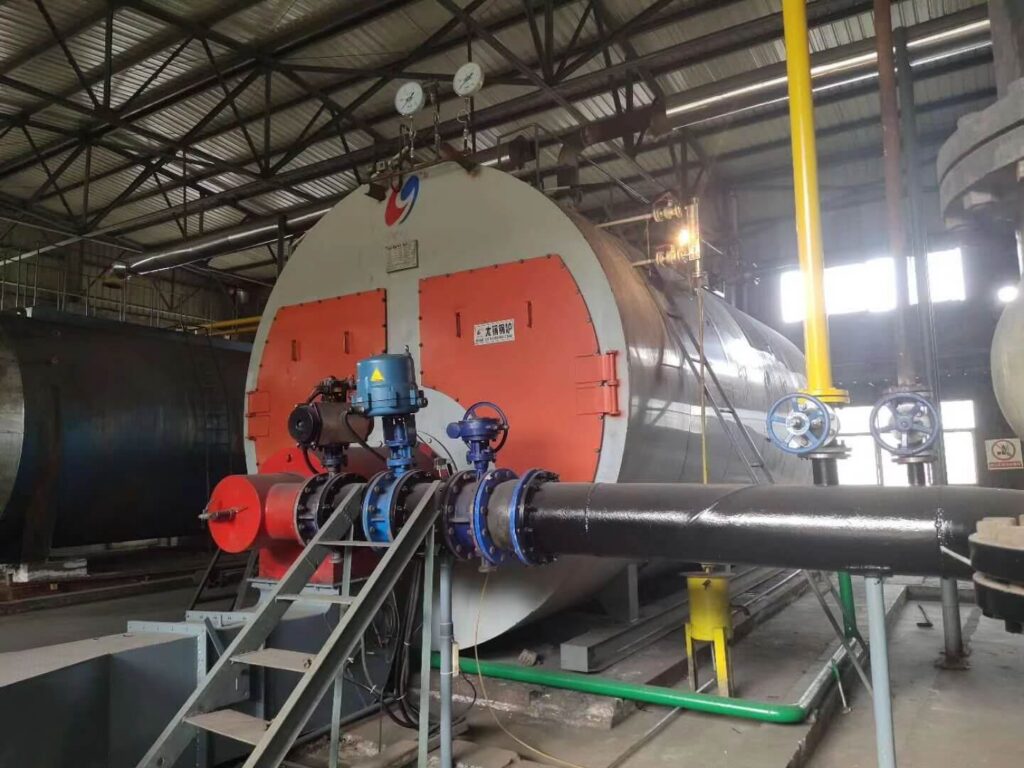
Gas Steam Boiler
A gas steam boiler uses natural gas or LPG as fuel and is known for:
- Clean combustion
- High thermal efficiency
- Fully automatic operation
- Fast startup and shutdown
Gas boilers are widely used in regions with stable gas supply infrastructure.
Biomass Boiler
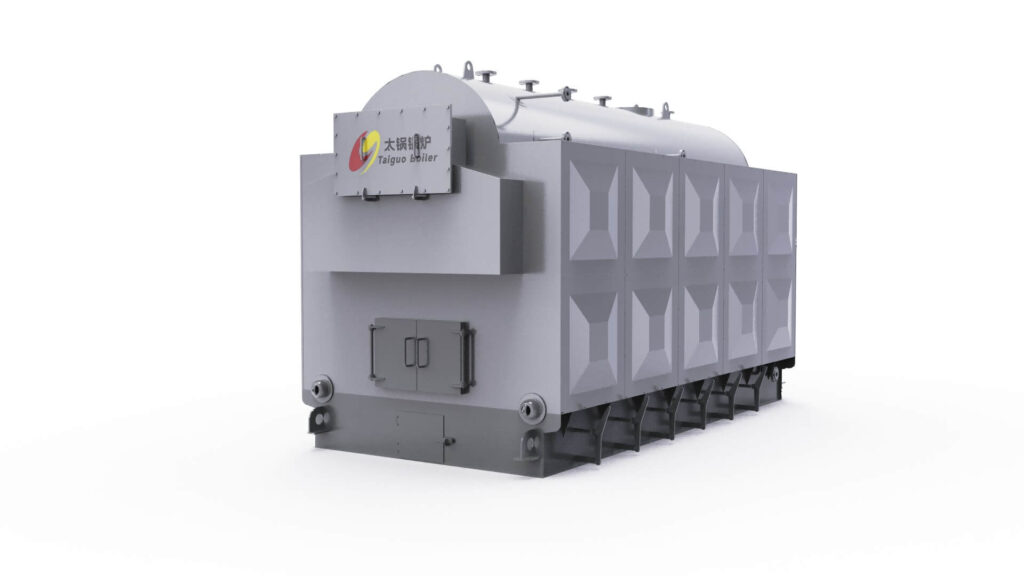
A biomass boiler uses renewable fuels such as:
- Rice husk
- Palm shell
- Wood chips
- Agricultural waste
Biomass boilers are popular in agricultural regions where biomass fuel is locally available at low cost.
Initial Investment Cost Comparison
Gas Steam Boiler Investment-boiler cost comparison
Gas steam boilers generally require:
- Boiler body
- Imported or high-quality burner
- Gas supply and safety system
Initial investment is usually lower compared to biomass boilers of the same capacity, especially for small and medium-sized steam demand.
Biomass Boiler Investment-boiler cost comparison
Biomass boilers require additional systems, such as:
- Fuel feeding system
- Ash removal system
- Larger furnace and auxiliary equipment
As a result, initial investment is usually higher, and installation takes more time and space.
Fuel Cost Comparison-boiler cost comparison
Gas Fuel Cost -boiler cost comparison
Gas fuel cost depends on:
- Local gas price
- Boiler efficiency
- Daily operating hours
In some Middle Eastern and Central Asian countries, gas prices are relatively low, making gas steam boilers very economical to operate.
However, in regions with expensive or unstable gas supply, fuel cost can become a burden.
Biomass Fuel Cost-boiler cost comparison
Biomass fuel is often:
- Locally sourced
- Lower in price
- Less affected by international energy markets
In countries like Indonesia, Malaysia, Vietnam, and parts of Africa, biomass fuel cost can be significantly lower than gas, resulting in much lower long-term operating expenses.
Operating and Maintenance Cost-boiler cost comparison
Gas Steam Boiler Operation-boiler cost comparison
Gas steam boilers offer:
- Fully automatic control
- Low labor cost
- Clean operation with minimal ash
Maintenance is relatively simple, making them ideal for factories with limited manpower.
Biomass Boiler Operation-boiler cost comparison
Biomass boilers usually require:
- Manual or semi-automatic fuel handling
- Regular ash cleaning
- More operator involvement
Although fuel cost is lower, labor and maintenance cost are higher compared to gas boilers.
Efficiency and Steam Stability-boiler cost comparison
Gas steam boilers typically achieve higher thermal efficiency and provide:
- Stable steam pressure
- Precise temperature control
- Consistent steam quality
Biomass boilers can also deliver stable steam when properly designed, but fuel quality variations may affect combustion efficiency if not well managed.
Environmental and Regulatory Considerations-boiler cost comparison
- Gas steam boilers produce lower emissions and are easier to meet environmental regulations.
- Biomass boilers are considered renewable energy systems, but may require dust collectors or emission control devices depending on local regulations.
Understanding local environmental policies is essential when choosing between the two options.
Boiler cost comparison Beyond the Sticker Price: Hidden OPEX Factors
While a 2-ton WNS Gas Boiler offers a lower initial investment (averaging $8,800 – $14,500 in 2026), its long-term cost is tied to the national gas grid. In contrast, a 2-ton SZL Biomass Boiler requires a higher upfront cost for fuel storage and automated ash handling systems. However, for factories in agricultural hubs like the Fergana Valley, the ‘Zero-Fuel’ potential of using local rice husks or wood chips can lead to a complete ROI within 14 to 18 months. When factoring in the 2026 carbon emission taxes being piloted in several emerging zones, biomass systems often emerge as the superior long-term financial choice.
Which System Fits Your 2026 Expansion Plan?
- Small to Mid-Sized Plants (1-4 Tons): The WNS Gas Boiler remains the ‘efficiency king’ due to its compact footprint and minimal labor requirements. It is ideal for urban food processing or laundry services where space is a premium.
- Large Industrial Hubs (6-20+ Tons): For textile mills and chemical plants with stable biomass supply chains, the SZL or DZL series offers massive economies of scale. In 2026, we are seeing a trend where large plants install a ‘Dual-Source’ system—using biomass for base-load steam and gas for rapid-response peak demand.
2026 Boiler ROI Calculation Checklist: Gas vs. Biomass
Before finalizing your boiler purchase in 2026, use this Taiguo-engineered checklist to calculate the Total Cost of Ownership (TCO) and determine your actual Return on Investment (ROI).
- Factor 1: Direct Fuel Cost Differential (Local Tariff Analysis)
- Action: Compare your local natural gas price per cubic meter ($/m³) against the cost per ton of biomass pellets ($/ton), including final-mile delivery.
- Why: In 2026, gas prices in industrial zones are fluctuating. Biomass can offer a 30-50% saving on raw fuel costs, but only if your plant is within a 200km radius of a stable agricultural waste source. Transport costs can quickly erode biomass savings.
- Factor 2: 2026 Green Energy Subsidies & Carbon Credits
- Action: Consult with local authorities regarding 2026 carbon tax exemptions or “Green Factory” subsidies.
- Why: Many emerging markets are piloting carbon credit systems this year. A biomass-fired system may qualify for renewable energy rebates, effectively lowering your initial capital expenditure (CAPEX). Conversely, gas boilers with low NOx burners may avoid upcoming “Environmental Impact Fees.”
- Factor 3: Operational Labor & Automation Levels
- Action: Estimate the annual salary for 2-3 shifts of operators.
- Why: Gas boilers are nearly 100% automated, requiring only periodic supervision. Traditional biomass systems require manual feeding and ash removal. Unless you invest in Taiguo’s fully automated screw-feeding and ash-handling system, the increased labor cost of biomass could outweigh the fuel savings within 3 years.
- Factor 4: Maintenance & Consumable Lifespan
- Action: Factor in the cost of grate maintenance for biomass vs. burner servicing for gas.
- Why: Biomass combustion is more abrasive on the boiler furnace. In 2026, we estimate that biomass maintenance costs are roughly 1.5x higher than gas. However, with our high-grade refractory materials, Taiguo boilers extend this maintenance interval by 25%.
Project Experience in Emerging Markets
Southeast Asia – Biomass Boiler Advantage
In agricultural regions of Southeast Asia, many food and agricultural processing factories choose biomass boilers due to abundant rice husk and palm shell supply, achieving significant fuel cost savings.
Middle East & Central Asia – Gas Boiler Advantage
In regions with stable and affordable gas supply, gas steam boilers remain the preferred solution due to low labor cost, clean operation, and high automation.
Which Boiler Is More Cost-Effective?-boiler cost comparison
There is no universal answer. The best choice depends on:
- Local fuel availability and price
- Factory operating hours
- Labor cost
- Environmental requirements
- Long-term expansion plans
A proper cost comparison should always be based on a complete steam boiler solution, not only fuel price.
FAQ: 2026 Global Sourcing Insights
Is biomass fuel availability a major risk in emerging markets?
Yes, fuel logistics is the #1 cost driver. If your factory is more than 80km away from a stable biomass source (rice mill, sawmill, etc.), the transport cost can increase the fuel price by up to 70%, potentially neutralizing the savings over gas.
How does the 2027 RoHS extension affect my boiler purchase in 2026?
Most emerging markets have postponed mandatory RoHS electronic compliance to February 2027. This provides an Essential 12-month window to purchase high-performance 2026 models with advanced AI controls without facing immediate regulatory fines, while still being “future-proofed” for next year.
Can I run a biomass boiler without a dedicated stoker?
In 2026, many Superior small-tonnage (0.5T – 4T) biomass boilers are fully automated. However, unlike gas boilers, they still require Validated weekly maintenance for ash removal and fuel silo checks. It is no longer a manual job, but it does require “Thermal Intelligence” supervision.
Conclusion
When making boiler cost comparison in emerging markets, both options have clear advantages and limitations. Gas steam boilers offer simplicity, cleanliness, and automation, while biomass boilers provide fuel cost savings and renewable energy benefits.
The most cost-effective solution is achieved by selecting the right boiler type based on local conditions and factory needs, make the boiler cost comparison combined with proper system design and technical support.
👉 Get a Free Boiler Cost Comparison & Steam Solution
If you are considering a gas steam boiler or biomass boiler for your factory, contact us to receive a free boiler cost comparison analysis and customized steam boiler solution based on your fuel conditions and production requirements.
See more about WNS series oil gas fired steam boiler
Match your infrastructure budget with correct parameters using our master industrial boiler selection guide.
Verify strict manufacturing pressure boundary constraints through What Size Steam Boiler Do You Need? Complete Calculation Guide.
Track local energy distribution network variations within How Choose a Gas Steam Boiler for Small and Medium Factories.