
Steam Boiler for Food Processing: Capacity, Fuel & System Selection
Steam plays a central role across modern food and beverage manufacturing. Food plants rely heavily on industrial steam for batch cooking, retort sterilization, blanching, vacuum evaporation, pasteurization, and Clean-in-Place (CIP) sanitation. Choosing the right food processing steam boiler, however, involves much more than simply matching boiler output to daily finished product volume. A reliable thermal […]
Get Instant Quote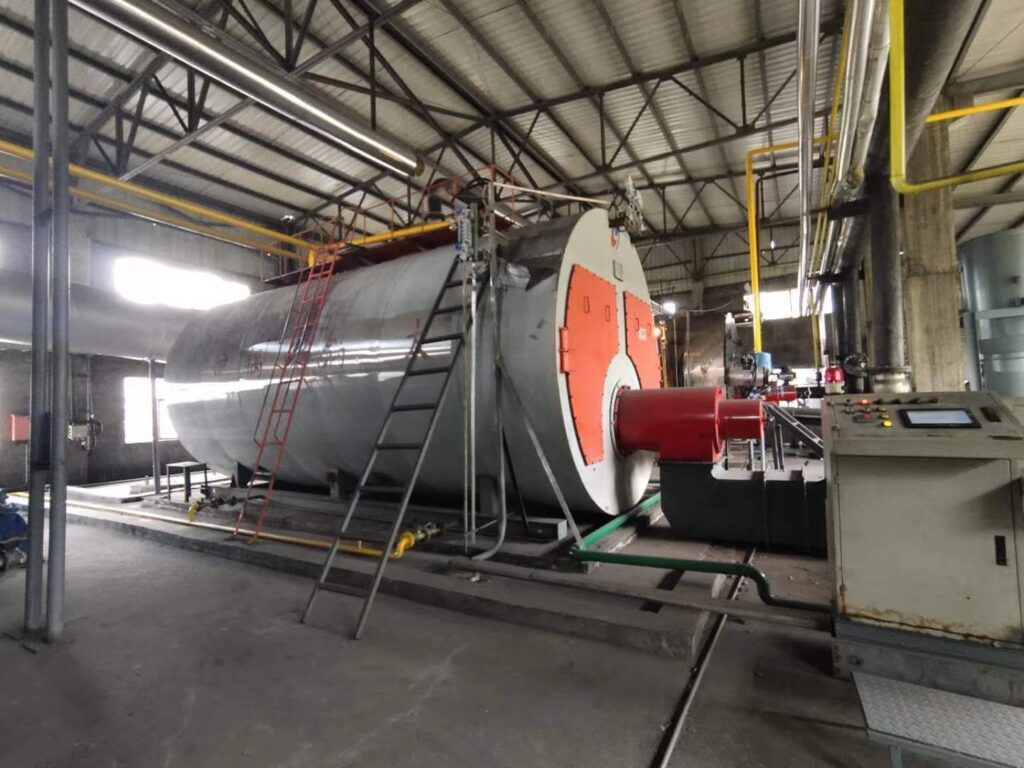
Technical Specifications
Steam plays a central role across modern food and beverage manufacturing. Food plants rely heavily on industrial steam for batch cooking, retort sterilization, blanching, vacuum evaporation, pasteurization, and Clean-in-Place (CIP) sanitation. Choosing the right food processing steam boiler, however, involves much more than simply matching boiler output to daily finished product volume.
A reliable thermal utility installation must address true peak steam demands, fluctuating thermal loads, hygienic steam requirements, regional fuel economics, and condensate heat recovery. Sizing your system incorrectly disrupts critical production. An undersized unit causes sudden header pressure drops, compromising sterilization temperatures and risking costly product spoilage. Conversely, an oversized boiler short-cycles, squanders fuel, and increases lifetime operating costs.
This engineering guide explains how to choose an industrial food processing steam boiler. We examine process-by-process steam demands, boiler capacity calculations, operating pressure strategies, fuel selections, and complete balance-of-plant system configurations.
Where Is Steam Used in Food Processing?
Thermal energy in a food factory does not follow a flat, continuous line. Different food preparation steps demand specific heat transfer profiles, temperatures, and steam flow rates.
Cooking and Kettle Heating With Food Processing Steam Boiler
Industrial cooking kettles, braising pans, and sauce cookers use steam jackets to transfer heat evenly into food. Products like tomato pastes, gravies, meat stews, and ready-to-eat meals require rapid initial heating to prevent bacterial proliferation. Indirect heating via steam jackets prevents food contact while maintaining high heat transfer rates across stainless steel surfaces.
Retort Sterilization and Autoclaving With Food Processing Steam Boiler
Canneries and pouch packaging plants rely on pressurized retort vessels to eliminate bacterial spores, including Clostridium botulinum. Retort cycles require massive volumes of dry saturated steam to displace air and elevate vessel pressures to 1.5–2.5 barg (121°C–135°C). Maintaining temperature without fluctuations is critical for food safety compliance.
Pasteurization Systems With Food Processing Steam Boiler
Dairy plants, breweries, juice processors, and liquid egg facilities utilize plate or tubular heat exchangers. Saturated steam indirectly heats water loops to pasteurize liquids between 72°C and 85°C. These systems demand tightly modulated, low-pressure steam to avoid burning heat-sensitive dairy and beverage sugars.
Blanching Operations With Food Processing Steam Boiler
Vegetable, fruit, and potato processing plants utilize steam blanchers before freezing or canning. Direct steam injection or heated water baths deactivate plant enzymes, fix colors, and soften tissues. Blanchers require continuous steam flows that modulate based on conveyor line speeds.
Vacuum Evaporation and Concentration With Food Processing Steam Boiler
Concentrated juices, dairy powders, and condensed syrups employ single or multiple-effect vacuum evaporators. Steam boils water off products at reduced temperatures to preserve flavors and nutritional content. Evaporators demand consistent, dry saturated steam to maintain thermal equilibrium across heat-transfer tubes.
CIP Cleaning and Sanitization With Food Processing Steam Boiler
Hygiene is mandatory in food manufacturing. Clean-in-Place (CIP) systems flush process pipework, tanks, and fillers with acid, caustic, and hot sanitizing rinses. Steam injection systems heat wash water to 80°C–85°C. Direct steam often sterilizes aseptic filler heads at 121°C before packaging runs begin.
How Much Steam Does a Food Processing Factory Need?
Determining the steam demand for a food processing plant requires a detailed thermal audit of each process stage. Avoid sizing boilers solely on daily finished output.
1. Production Capacity vs. Thermal Energy
A facility producing 30 tons of canned fruit per day has vastly different energy needs than a plant producing 30 tons of cheese. The canned fruit plant draws enormous steam spikes during batch retort venting. The cheese plant draws stable, lower-temperature heat for curd vats and milk pasteurization. Fabric tonnage does not dictate boiler sizing; equipment thermodynamics do.
2. Process Steam Consumption Patterns
Different food manufacturing equipment draws steam in contrasting ways:
| Processing Equipment | Heat Transfer Type | Typical Demand Profile | Steam Pressure |
|---|---|---|---|
| Jacketed Kettles (500L–2000L) | Indirect Steam Jacket | High initial spike during heat-up; low holding load | 2.5 – 4.0 barg |
| Batch Retorts / Autoclaves | Direct/Indirect Injection | Massive peak spike during air venting & purge | 3.0 – 5.0 barg |
| Plate Heat Exchangers | Indirect via Hot Water Loop | Steady, continuously modulating flow | 2.0 – 3.5 barg |
| Continuous Belt Blanchers | Direct Steam Infiltration | Constant base-load modulated by speed | 1.5 – 3.0 barg |
| Multi-Effect Evaporators | Indirect Shell-and-Tube | Continuous constant demand, high mass volume | 4.0 – 8.0 barg |
| CIP Washing Skids | Direct/Shell Steam Loop | Intermittent, scheduled batch sanitizing | 3.0 – 5.0 barg |
3. Understanding Peak vs. Average Steam Demand
Many food factories make the error of averaging their daily steam consumption over an 8-, 16-, or 24-hour shift. If a food plant consumes 24,000 kg of steam across a 12-hour day, its mathematical average is 2,000 kg/h (2 TPH).
However, food production operates in synchronized batches. At 08:00 AM, five cooking kettles may call for heat while two CIP sets sanitize lines simultaneously. During this 45-minute window, true steam demand can spike to 3,800 kg/h. If management installed a 2.0 or 2.5 TPH boiler, steam pressure would collapse across the facility. Production would stall, retorts would trip on low temperature, and product quality would suffer.
How to Choose the Right Food Processing Steam Boiler Capacity
Boiler sizing requires calculating simultaneous peak demands and adding operational buffers.
The Diversity Factor (Simultaneous Coincidence)
Not every steam-consuming machine runs at 100% capacity concurrently. Engineers apply a diversity factor (typically 0.65 to 0.85 in food plants) to prevent extreme oversizing. The diversity factor estimates the maximum number of machines that will draw peak heat-up steam at the exact same moment.
Sizing Rules for Food Operations
- Average Load: Establishes fuel purchasing requirements, feedwater makeup demand, and baseline chemical consumption.
- Peak Load: Establishes the absolute minimum instantaneous capacity the boiler must deliver without dropping header pressure.
- Standby and Redundancy: Food plants processing perishable ingredients cannot afford downtime. Spoiled dairy or meat batches caused by utility failures cost tens of thousands of dollars. Plants often split capacity across two boilers (e.g., two 3 TPH boilers instead of one 6 TPH boiler) to ensure 50% backup during maintenance.
- Safety Margin: Always add a 15% to 20% safety margin to accommodate cold morning startups, pipe losses, and future process expansions
What Steam Pressure Does a Food Processing Factory Need?
Never select boiler operating pressure based strictly on the rated maximum pressure listed on the boiler’s nameplate. Boiler working pressure must be determined by the highest-pressure consumer on your process floor plus distribution pressure drop.
Connected: Retorts, Evaporators, Industrial Dryers
Connected: Jacketed Kettles, CIP Skids, Plate Exchangers
High Header Pressure for Distribution Efficiency
Steam generated at higher pressures (8.0 to 10.0 barg) is significantly denser than low-pressure steam. Denser steam travels through smaller pipe diameters, drastically lowering initial mechanical installation costs and cutting pipe surface heat radiation losses.
Low Operating Pressure at the Equipment
Most food equipment operates more efficiently with lower-pressure steam (1.5 to 4.0 barg). Lower-pressure saturated steam offers distinct thermodynamic advantages:
- Higher Latent Heat Enthalpy: Saturated steam at 2.0 barg releases 2,163 kJ/kg of latent heat upon condensing. Steam at 10.0 barg releases only 1,999 kJ/kg. Low pressure delivers more usable heat per kilogram of steam.
- Lower Saturation Temperature: Steam at 2.0 barg condenses at 133.5℃. Steam at 10.0 barg condenses at 184.1℃. Lower saturation temperatures prevent scorching and caramelization of food products on jacket walls.
Use local Pressure Reducing Valve (PRV) stations directly upstream of processing units to drop main header pressure (e.g., 9 barg) down to precise process pressures (e.g., 2.5 barg).
Food Processing Steam Boiler Fuel Selection: Gas vs. Biomass vs. Electric
Fuel costs account for over 70% to 80% of an industrial boiler’s lifecycle expenses. Selecting the right fuel depends on your plant location, environmental regulations, grid infrastructure, and local fuel availability.
| Comparison Metric | Natural Gas / LPG (WNS) ↗ | Biomass Pellets (SZL/DZL) ↗ | Electric Boiler (WDR) ↗ |
|---|---|---|---|
| Combustion Hygiene | Extremely clean; zero particulate ash | Requires particulate filtration & ash collection | Absolute zero on-site emissions; cleanroom-ready |
| Automation Level | Fully automated; zero manual fuel handling | Automated feeding; regular ash disposal required | Fully automated push-button control |
| Thermal Efficiency | 92% to 98% (with condensing economizer) | 82% to 88% (with multicyclone & economizer) | 98% to 99% direct electrical conversion |
| Load Response Time | Rapid (burner modulates 20% to 100%) | Moderate (combustion grates respond slower) | Instantaneous element staging |
| Floor Space Footprint | Compact mechanical footprint | Large footprint (requires fuel yard & silos) | Minimal space; requires no fuel storage |
| Operating Cost | Moderate to low (where pipeline gas is piped) | Lowest operating cost in agricultural zones | High (costly unless power is subsidized) |
| Best Regional Fit | Urban food industrial zones, city bakeries | Southeast Asia, Central Asia, agro-rich regions | High-tech cleanrooms, labs, pilot food plants |
Which Fuel Is Best for Your Food Plant?
Factory operators must evaluate their unique regional constraints when selecting a fuel source.
1. Gas-Fired Food Processing Steam Boiler (WNS Three-Pass Firetube)
Gas-fired boilers remain the premier standard for commercial food manufacturing facilities worldwide.
- Why it fits food plants: Piped natural gas burns with no particulate matter, soot, or sulfur buildup. Modulating burners ramp firing rates up and down quickly, tracking rapid retort and kettle steam demand swings without pressure drops.
- Best applications: Breweries, large-scale canneries, dairy processors, and food parks located in industrial zones with established natural gas grids.
2. Biomass-Fired Food Processing Steam Boiler (SZL Water-Fire Tube / DZL Wing-Flue)
Biomass boilers utilize agricultural residues such as rice husks, wood pellets, palm kernel shells (PKS), and coconut shells.
- Why it fits food plants: Many agro-food factories generate their own combustible waste during processing. Rice mills, palm oil refineries, and coffee processing plants turn agricultural byproducts into cheap process steam.
- Best applications: Rural food processors throughout Southeast Asia, Central Asia, and Latin America. Biomass cuts operating costs by 40% to 60% compared to fossil fuels, delivering significant ROI despite larger fuel storage footprints.
3. Electric Food Processing Steam Boiler
Electric boilers convert power into saturated steam via immersion elements or electrodes.
- Why it fits food plants: Electric units require zero flue stacks, generate no exhaust emissions, and operate silently.
- Best applications: Boutique pilot plants, university food testing centers, specialized cleanroom bakeries, and urban kitchens where local zoning laws prohibit fossil fuel combustion and gas storage.
What Does a Complete Food Processing Steam Boiler System Include?
A boiler never operates in isolation. Safe, food-grade steam production requires a fully integrated balance-of-plant system.
1. Feedwater Pre-Treatment (Softening & RO)
Boiler feedwater must be stripped of calcium and magnesium ions. Hard water causes rapid scale accumulation inside boiler firetubes. A mere 1 mm of limescale reduces heat transfer efficiency by 5%, increasing fuel consumption and causing metal tube overheating. Food plants use automatic twin-alternating water softeners, often paired with Reverse Osmosis (RO) systems.
2. Thermal Deaerator Systems
Oxygen and carbon dioxide dissolved in feedwater cause aggressive pitting corrosion across carbon steel boiler internals and steam lines. Thermal deaerators heat incoming makeup water to 105°C, stripping out non-condensable gases before water enters the pressure vessel.
3. Modulating Feedwater Pumping Skids
Food production creates sudden load variations. Boilers must use variable-frequency drive (VFD) modulating feed pumps rather than simple on/off pump controls. Continuous modulation matches water input to instantaneous evaporation rates, keeping steam output temperatures and pressures constant.
4. Steam Distribution Headers and Moisture Separators
The steam distribution manifold acts as a buffer between the boiler and the processing floor. Equipping headers with high-efficiency cyclone moisture separators guarantees delivery of 98%+ dry saturated steam. Wet steam reduces heat exchanger efficiency and damages precision control valves.
5. Automatic Surface and Bottom Blowdown Controls
As water boils into steam, dissolved solids concentrate within the boiler drum. Automated Total Dissolved Solids (TDS) surface blowdown systems monitor electrical conductivity continuously. They purge small amounts of concentrated water to prevent foaming and water carryover into the steam distribution lines.
Clean Steam vs. Plant Steam in Food Safety
Food manufacturing demands careful management of steam quality. Engineers categorize steam into three distinct grades based on the level of product contact:
Never allow standard plant steam with toxic amine-based corrosion inhibitors to contact consumable food products. Always specify culinary filtration or secondary clean steam generators where direct food contact occurs.
Why Condensate Recovery Matters in Food Processing
Discarding condensate wastes enormous amounts of heat and expensive, purified water. Once steam releases its latent heat within a jacketed kettle or heat exchanger, it reverts into hot, distilled water known as condensate.
The Economic Physics of Condensate Return
- Fuel Conservation: Condensate returns to the boiler room at 80°C to 95°C. Raising cold makeup water from 20°C to 90°C requires burning substantial fuel. Recovering condensate provides a direct 1% fuel savings for every 6°C rise in boiler feedwater temperature. Returning 70% of hot condensate saves a factory between 10% and 14% on its annual fuel bills.
- Chemical Treatment Savings: Condensate is pure, distilled water containing zero hardness minerals and zero dissolved solids. Maximizing condensate return drastically reduces the volume of water treatment chemicals needed.
- Reduced Boiler Blowdown: Cleaner feedwater means lower TDS levels inside the boiler shell. This cuts costly hot water blowdown losses by half.
Practical Example: Selecting a Boiler for a 30-Ton/Day Canning Plant
To understand how capacity, pressure, and fuel come together, review this sizing calculation for a fruit canning facility.
Plant Operational Parameters
- Daily Finished Output: 30 metric tons per day
- Operating Schedule: 16 hours per day (two 8-hour production shifts)
- Core Machinery: 4 batch cooking kettles, 3 batch retorts, 1 continuous can washer
- Process Steam Pressures: Kettles operate at 3.0 barg; Retorts require 3.5 barg
- Fuel Selection: Natural gas (pipeline availability confirmed on site)
| Consumer Line | Operating Units / State | Peak Unit | Coincident Load |
|---|---|---|---|
| RampCooking Kettles (1,000L) | 2 units ramping up concurrently | 600 kg/h each | 1,200 kg/h |
| HoldCooking Kettles (Holding) | 2 units maintaining temperature | 100 kg/h each | 200 kg/h |
| VentCanning Retorts (Air Venting) | 1 unit in rapid heating stage | 1,100 kg/h | 1,100 kg/h |
| HoldCanning Retorts (Sterilize) | 2 units holding sterilization temp | 200 kg/h each | 400 kg/h |
| Cont.Can Cleaning Washer | 1 line operating continuously | 350 kg/h | 350 kg/h |
| Net Instantaneous Process Peak | 3,250 kg/h | ||
How to Choose a Steam Boiler for Specific Food Industries
Different food manufacturing sub-sectors feature unique thermal processing signatures.
| Manufacturing Sector | Dominant Applications | Engineering Requirement | Recommended Boiler Type |
|---|---|---|---|
| Dairy Processing | Milk pasteurization, CIP loops, milk powder evaporation | Precise temperature control; rapid modulation | WNS Gas Boiler ↗ with Low-NOx Burner |
| Meat & Poultry | Scalding tanks, cooking kettles, casing peeling, CIP | High hot water volume; severe sanitation loads | Gas or Biomass Boiler with High Condensate Return |
| Fruit & Canning | Blanching, cooking vats, high-pressure retort cycles | Handles sudden, severe steam spikes | Three-Pass Firetube Boiler with Large Steam Space |
| Beverage & Brewery | Wort boiling, bottle washing, CIP, pasteurization | High intermittent boiling loads; clean steam | Automated WNS Gas or Biomass Boiler |
| Edible Oil Refining | Deodorization, bleaching, neutralization | High process temperatures (180°C–250°C) | High-Pressure Steam Boiler or Thermal Oil Heater |
| Bakery & Confectionery | Oven steam injection, proofing boxes, chocolate melting | Low-moisture dry steam; precise pressure | Compact Gas or Electric Steam Boiler |
| Starch & Sugar Mills | Juice evaporation, vacuum crystallizers, drying lines | Massive continuous baseloads | High-Capacity SZL Biomass Boiler ↗ |
Seven Common Mistakes When Choosing a Food Processing Boiler
Avoiding these common engineering pitfalls will prevent unexpected downtime and budget overruns:
Remedy: Size based on instantaneous peak draw, not daily averages.
Remedy: Account for concurrent retort/kettle heating spikes (diversity factor).
Remedy: Audit regional pipeline gas tariffs vs local biomass/waste reliability.
Remedy: Return 85°C+ condensate to capture up to 15% fuel energy savings.
Remedy: Generate high (8–10 barg) for transport; step down locally via PRVs.
Remedy: Install deaerators and softeners to eliminate scale and oxygen pitting.
Remedy: Fuel and power represent ~85% of total lifecycle cost; prioritize 95%+ high thermal efficiency packages.
- Sizing Solely by Tonnage Output: Total finished food weight does not correlate directly with boiler horsepower. Calculate actual equipment heat demands.
- Ignoring Instantaneous Peak Loads: Failing to account for simultaneous machine ramp-ups causes severe header pressure drops during peak operations.
- Overlooking Local Fuel Infrastructure: Never choose a boiler before confirming local utility gas supply lines, gas pressure, or regional biomass supply chains.
- Neglecting Condensate Return: Discarding hot condensate wastes 10% to 15% of your fuel budget and increases chemical treatment costs.
- Operating at Excessively Low Boiler Pressure: Generating steam at 3 barg instead of 10 barg requires oversized distribution pipes and delivers wet steam to equipment.
- Underestimating Water Quality: Untreated feedwater creates scale on heat-transfer surfaces, causing premature tube failure and wasted fuel.
- Focusing on Capex over Opex: Operating fuel costs exceed initial boiler purchase prices within 12 to 18 months of continuous production. Buy for fuel efficiency.
What Information Should You Provide to a Boiler Manufacturer?
To obtain an accurate technical proposal and budget quotation from an industrial boiler manufacturer, prepare the following project specifications:
- Food Product Type: Process description (e.g., canned vegetables, dairy, ready meals, brewery).
- Production Capacity: Output in kilograms or metric tons per day, along with shift schedules.
- Equipment Schedule: Complete list of kettles, retorts, pasteurizers, CIP stations, and dryers.
- Steam Operating Pressure: Maximum pressure required by processing machinery and desired distribution pressure.
- Available Fuels: Natural gas pipeline pressure, LPG, light diesel, or available biomass (rice husk, wood pellets).
- Feedwater Parameters: Raw water hardness, ambient temperature, and expected condensate recovery percentage.
- Building and Site Constraints: Boiler room layout dimensions, chimney height regulations, and local exhaust emission standards.
- Future Expansion Plans: Projected additional equipment lines over the next 3 to 5 years.
Frequently Asked Questions For Food Processing Steam Boiler
What size steam boiler does an average food processing plant need?
Most small to mid-sized food processing plants operate with steam boilers rated between 1.0 and 6.0 TPH (metric tons per hour). Large canneries, dairy processors, and sugar mills often require multi-boiler configurations exceeding 10 to 20 TPH.
Can I use the same steam boiler for food cooking and plant heating?
Yes, provided the boiler has sufficient capacity to handle combined peak loads. However, if steam contacts food directly (culinary steam), the feedwater treatment must comply strictly with FDA guidelines, or you must install a secondary clean steam heat exchanger.
Why is dry saturated steam critical for food processing?
Wet steam carries entrained water droplets that reduce heat exchanger efficiency, cause pipe water hammer, and leave mineral spots on food packaging. High-efficiency internal steam separators ensure delivery of 98%+ dry saturated steam.
What is the advantage of using two smaller boilers instead of one large boiler?
A dual-boiler installation (e.g., two 2 TPH boilers instead of one 4 TPH unit) provides built-in redundancy. If one boiler undergoes routine servicing or inspection, the factory can continue running critical food lines at half capacity without shutting down.
How much fuel can an economizer save in a food processing factory?
Installing a flue gas condensing economizer recovers waste heat from boiler exhaust gases to preheat boiler feedwater. This lowers exhaust temperatures and increases overall thermal efficiency by 5% to 8%, reducing annual fuel expenditures.
Need a Steam Boiler for Your Food Processing Factory?
Choosing the right boiler requires more than knowing your factory’s production capacity. Steam demand, peak load, operating pressure, fuel availability and condensate recovery all affect the final boiler and system configuration.
CN MIRACLE can help you make a preliminary assessment of your food processing steam system and recommend a suitable boiler configuration.
Send us:
- Food product: ___
- Production capacity: ___ tons/day
- Steam-consuming equipment: ___
- Required steam capacity: ___ tons/hour
- Required steam pressure: ___ bar
- Working hours: ___ hours/day
- Available fuel: gas / biomass / electric / other
- Project location: ___
- Future expansion plans: ___
You don’t need to know the exact boiler size before contacting us. Send us the information you have, and we can help you work out a preliminary solution.