Boiler Import Regulations in Indonesia: Documents, Customs, K3 & Installation Requirements
Importing an industrial boiler into Indonesia involves more than arranging international shipping. Boiler import regulations in Indonesia may involve commercial documents, customs clearance, technical documentation, local occupational safety requirements, installation procedures, and operating approvals. For international boiler buyers, the most important question is not simply “Can this boiler be shipped to Indonesia?” but rather: “Can […]
Get Instant QuoteTechnical Specifications
Importing an industrial boiler into Indonesia involves more than arranging international shipping. Boiler import regulations in Indonesia may involve commercial documents, customs clearance, technical documentation, local occupational safety requirements, installation procedures, and operating approvals.
For international boiler buyers, the most important question is not simply “Can this boiler be shipped to Indonesia?” but rather:
“Can the boiler pass customs clearance, local technical inspection, and the required approval process before it enters operation?”
This guide explains the key considerations involved in importing an industrial boiler into Indonesia, including import documentation, HS code verification, technical compliance, K3 requirements, local inspection, and the responsibilities of the importer and boiler manufacturer.
Indonesia Boiler Import Compliance Process at a Glance
Navigating boiler import regulations in Indonesia requires a step-by-step approach from pre-procurement to commercial operation.
- Step 1: Confirm Importer Eligibility
- The importer confirms their business identification number (NIB), relevant business licensing status, import authorization requirements, and project-specific permits through the Online Single Submission Risk-Based Approach (OSS-RBA) system.
- Step 2: Confirm Technical and Commercial Documents
- The exporter and importer prepare shipping records alongside detailed engineering files, material certificates, and quality inspection reports.
- Step 3: Verify HS Code and Customs Requirements
- The parties verify the tariff classification, duty rates, and applicable trade agreement preferences before cargo dispatch.
- Step 4: Customs Clearance
- The shipment undergoes import declaration, document review, customs valuation, and potential physical inspection at the port of entry.
- Step 5: Installation and Local Safety Compliance
- Following delivery, the boiler undergoes site assembly, pressure testing, technical inspection, operator qualification, and operating approval where applicable.
Essential Documents for Importing an Industrial Boiler into Indonesia
Accurate documentation is critical for preventing customs holds and satisfying local safety inspection requirements. Technical documents must align with commercial shipping records.
| Document Name | Primary Purpose in Import Process |
| Commercial Invoice | Declares transaction value, terms, and equipment descriptions for customs valuation. |
| Packing List | Identifies specific packages, dimensions, gross/net weights, and component lists. |
| Bill of Lading (B/L) | Confirms international carriage, cargo ownership, and shipment routing. |
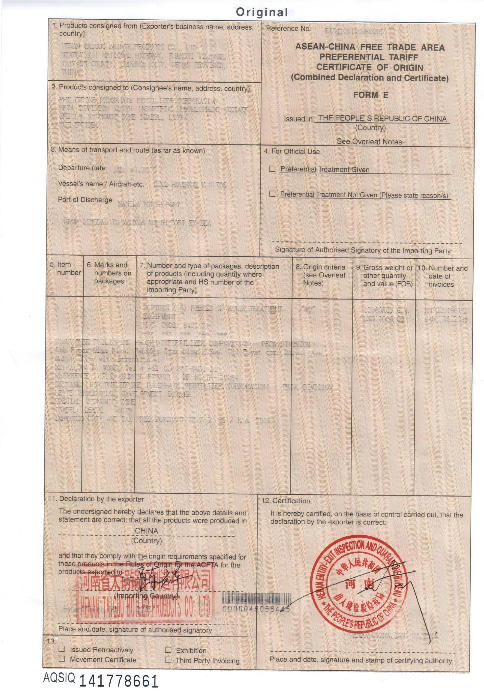
| Certificate of Origin (Form E) | Supports origin verification and possible preferential tariff claims under ACFTA. |
| Technical Data Sheet | Defines boiler operating parameters, design pressure, temperature, and fuel type. |
| General Arrangement (GA) Drawing | Supports civil foundation planning, technical review, and installation layout. |
| Pressure Part Drawings | Provides detailed engineering schematics for pressure vessel inspection. |
| Material Certificates | Ensures material traceability for steel plates, tubes, and pressure-retaining parts. |
| Hydrostatic Test Report | Documents factory pressure testing verified prior to export dispatch. |
| Manufacturer’s Data Report | Supports technical review where required by project or local safety parties. |
| Operation & Maintenance Manual | Provides guidelines for safe installation, commissioning, and operator training. |
HS Code Classification and Import Duty Verification
Industrial steam boilers are generally classified within HS heading 8402. However, the final tariff classification should be verified according to the exact boiler type, capacity, fuel configuration, and the current Indonesian customs tariff schedule (Buku Tarif Kepabeanan Indonesia).
Watertube boilers, steam production > 45 tonnes/hour
Watertube boilers, steam production ≤ 45 tonnes/hour
Determines Applicable Base Duty Rates & Import Taxes
Importers should work with a qualified customs broker to confirm the correct 8-digit or 10-digit national sub-item code. Incorrect classification can lead to duty readjustments, fines, or delayed customs release.
Certificate of Origin and Preferential Tariff Considerations
Where the shipment qualifies under applicable ASEAN-China Free Trade Area (ACFTA) rules of origin and tariff schedules, a Form E Certificate of Origin may support a preferential tariff claim.
- ACFTA Eligibility: Preferential tariff treatment depends on the specific HS classification and rules of origin in force at the time of importation.
- Document Matching: The product description, HS code (first 6 digits), vessel details, and consignee name must match shipping documents exactly.
- Broker Verification: The importer should confirm eligibility and current preferential duty rates with their Indonesian customs broker before shipment dispatch.
ASME Standards and Indonesian Boiler Project Requirements
Many industrial boiler projects in Indonesia specify internationally recognized design and manufacturing standards, such as ASME Section I. However, ASME compliance alone does not automatically replace local regulatory, inspection, licensing, or project-specific requirements.
Before manufacturing begins, applicable technical standards, inspection protocols, documentation requirements, and local approval pathways should be aligned between the buyer, project consultant, customs broker, and relevant inspection parties.
Customs Clearance Process for Imported Boilers in Indonesia
The Indonesian Directorate General of Customs and Excise (Bea Cukai) processes imported machinery through established clearance channels.
Import Declaration (PIB)
Next ➔Document & Valuation Review
Customs Release Order (SPPB)
Passed ✔Physical Inspection (If Selected)
◄ FlowIf customs selects the shipment for physical inspection, equipment descriptions, serial numbers, shipping marks, and declared values will be verified against the import documentation. Ensuring all shipping marks match the packing list prevents port storage delays.
Boiler Import Regulations in Indonesia:K3 and Local Boiler Safety Requirements in Indonesia
Occupational safety and health requirements represent a critical part of boiler compliance in Indonesia.
The primary regulatory framework governing power and production equipment safety is Minister of Manpower Regulation No. 38 of 2016 (Peraturan Menteri Ketenagakerjaan No. 38 Tahun 2016), which covers occupational safety and health (K3) standards for pressure vessels and boilers.
Depending on equipment configuration and project scope, K3 compliance may involve:
- Engineering data review and technical documentation verification.
- Verification of safety accessories (relief valves, pressure gauges, water level indicators).
- Qualification standards for local boiler operators (Operator K3 Pesawat Uap).
Installation, Technical Inspection and Operating Approval
After arrival and installation, an industrial boiler must undergo technical inspection before being authorized for commercial operation.
- Site Assembly & Piping: Installation must follow approved civil and mechanical engineering drawings.
- Non-Destructive Testing (NDT) & Pressure Test: On-site welds and connection piping are inspected and hydrostatically tested.
- PJK3 Inspection Coordination: Depending on project requirements, the equipment owner may work with an authorized Occupational Safety and Health Service Company (PJK3) to inspect the installation.
- Disnaker Certification: Local manpower authorities (Disnaker) review inspection reports to grant necessary operating clearances (Surat Keterangan / Permission to Operate).
Boiler Import Regulations in Indonesia:NIB, Import Licensing and OSS-RBA Requirements
Indonesian importers generally need to maintain appropriate business identification and licensing status through the Online Single Submission Risk-Based Approach (OSS-RBA) system.
- NIB (Nomor Induk Berusaha): Serves as the primary business identification number and basic import identity.
- Risk-Based Licensing: Specific import authorization requirements depend on the importer’s business activities, product classification, and project scope. Importers should confirm their active licensing status prior to finalizing purchase contracts.
When TKDN May Affect Industrial Boiler Procurement-Boiler Import Regulations in Indonesia
Domestic Component Level (TKDN – Tingkat Komponen Dalam Negeri) requirements are particularly relevant for government procurement, state-owned enterprise (BUMN) projects, and strategic industrial initiatives in Indonesia.
Whether a specific boiler project is subject to TKDN rules depends on the project’s ownership and procurement framework:
- Direct Import Projects: Private sector projects often import complete boiler packages directly.
- High-TKDN Projects: Projects requiring high local content may import core high-pressure boiler bodies while sourcing auxiliary equipment, piping, structural steel, and control systems from local Indonesian suppliers.
Third-Party Inspection and Quality Documentation-Boiler Import Regulations in Indonesia
To support smooth local review, boiler manufacturers should supply complete manufacturing records. A comprehensive quality dossier includes:
- Mill test certificates for pressure-retaining materials.
- Welding Procedure Specifications (WPS) and Welder Performance Qualifications (WPQ).
- Non-Destructive Examination (NDE/NDT) reports (Radiographic/Ultrasonic testing).
- Factory Hydrostatic Test Certificates stamped by quality inspectors.
Boiler Import Regulations in Indonesia Checklist
Use this checklist to structure your boiler procurement process:
Before Signing the Purchase Contract
- [ ] Confirm boiler capacity, design pressure, fuel type, and steam parameters.
- [ ] Confirm applicable HS code classification with a local customs broker.
- [ ] Verify the importer’s active NIB and import licensing status in OSS-RBA.
- [ ] Identify required factory technical documentation and design codes.
- [ ] Clarify project TKDN requirements (if applicable).
Before Shipment
- [ ] Verify Commercial Invoice and Packing List accuracy.
- [ ] Check Bill of Lading details against export filings.
- [ ] Apply for Form E Certificate of Origin (confirm matching HS code).
- [ ] Complete factory testing and assemble the complete technical documentation package.
- [ ] Ensure shipping marks on packages match technical documentation exactly.
After Arrival in Indonesia
- [ ] Complete customs clearance and pay applicable duties/taxes.
- [ ] Coordinate inland transport to the installation site.
- [ ] Complete mechanical assembly, piping, and electrical installation.
- [ ] Conduct site hydrostatic testing and commissioning.
- [ ] Coordinate technical inspection with authorized K3 parties/Disnaker.
- [ ] Obtain required operating permits before commercial operation.
How Taiguo Supports Industrial Boiler Projects in Indonesia
Navigating boiler import regulations in Indonesia requires clear communication between technical engineers, trade specialists, and local project teams.
As the dedicated export division of Taiguo Boiler Group, CNMIRACLE helps international buyers prepare technical documentation, manufacturing records, and engineering coordination required for successful project execution.
Our Project Support Services:
- Customized Engineering Dossiers: We supply comprehensive technical drawings, GA layouts, and data sheets aligned with project requirements.
- Full Material Traceability: We provide factory test reports, material certificates, and hydrostatic test records to support local inspection.
- Export Documentation Handling: We coordinate Form E origin filing, packing lists, and commercial documentation to support smooth customs processing.
- Auxiliary Integration Flexibility: We adapt scope supply to meet local content (TKDN) goals or technical preferences.
Frequently Asked Questions (FAQ)For Boiler Import Regulations in Indonesia
Do I need SNI certification for industrial boilers based on Boiler Import Regulations in Indonesia?
While many consumer goods require Boiler SNI certification, industrial-scale high-pressure boilers are primarily governed by Disnaker safety permits and international manufacturing codes like ASME.
How long does the import process take?
Sea freight and customs typically take 3-5 weeks. We coordinate the production timeline to match your factory’s readiness.
Do I need an Indonesian local representative for SNI certification?
Yes. Under current Boiler Import Regulations in Indonesia, foreign manufacturers must appoint a local representative (Agent or PT PMA) to hold the SNI certificate and handle the LSPro (Product Certification Body) audits on their behalf.
What are the emission standards for boilers in Indonesia for 2026?
New industrial boilers must comply with Ministry of Environment Regulation (Permen LHK) No. 11/2021. For 2026, stricter limits on Particulate Matter (PM),SO2, and NOx are being enforced, often necessitating a Two-stage Dust Collection System for biomass-fired units.
Can I get an import duty exemption for “Green” boilers?
Yes. Under the Green Investment Scheme, boilers that demonstrate high energy efficiency (e.g., condensing gas boilers) or utilize biomass waste may qualify for Tax Allowances and duty-free import of specialized components not yet produced in Indonesia.
Which Indonesian agency oversees boiler safety compliance?
Boiler occupational safety and health standards fall under the Ministry of Manpower (Kementerian Ketenagakerjaan / Kemnaker) and regional Manpower Services (Disnaker), guided by regulations such as Permenaker No. 38 of 2016.
Is an ASME stamp mandatory for importing a boiler into Indonesia?
ASME design standards are widely recognized in industrial specifications, but ASME certification alone does not replace Indonesian customs clearance or local K3 inspection requirements. Always confirm required standards with project consultants.
Can Form E eliminate import duties on Chinese boilers entering Indonesia?
Where the specific HS classification qualifies under ACFTA rules and valid Form E documentation is submitted, importers may receive preferential tariff rates. Eligibility should be verified with a customs broker prior to shipping.
Simplify Your Import with Kim’s Expertise
Don’t let regulations slow down your factory upgrade. Contact Kim today for a stress-free import plan and a compliant technical proposal for the Indonesian market.
- WhatsApp Kim: 8615093412637
Prevent critical custom clearance delays by checking our updated industrial boiler market regional insights.
Validate valid zero-tariff trade certificate application paths using [The Ultimate Guide: How to Use Form E to Save Import Duties on Chinese Boilers.
Compare alternative maritime machinery landing certification frameworks against Boiler Regulations in Philippines: Navigating DOLE Rule 1160 & Import Compliance.