
Biomass Steam Boiler for Uzbekistan: Rice Husk, Wood & Cotton Waste Solutions
Contents Hide 1 Introduction: Why Biomass Steam Boilers Are Gaining Attention in Uzbekistan 1.1 The 2026 Biomass Advantage 1.1.1 The “White Gold” Waste Recovery Strategy 1.1.2 Rice Husk and Wood: Solving the Regional Energy Gap 1.2 Navigating 2026 GOSSAN, RoHS, and AI Regulations 2 What Is a Biomass Steam Boiler? 3 Biomass Fuel Types Available […]
Get Instant Quote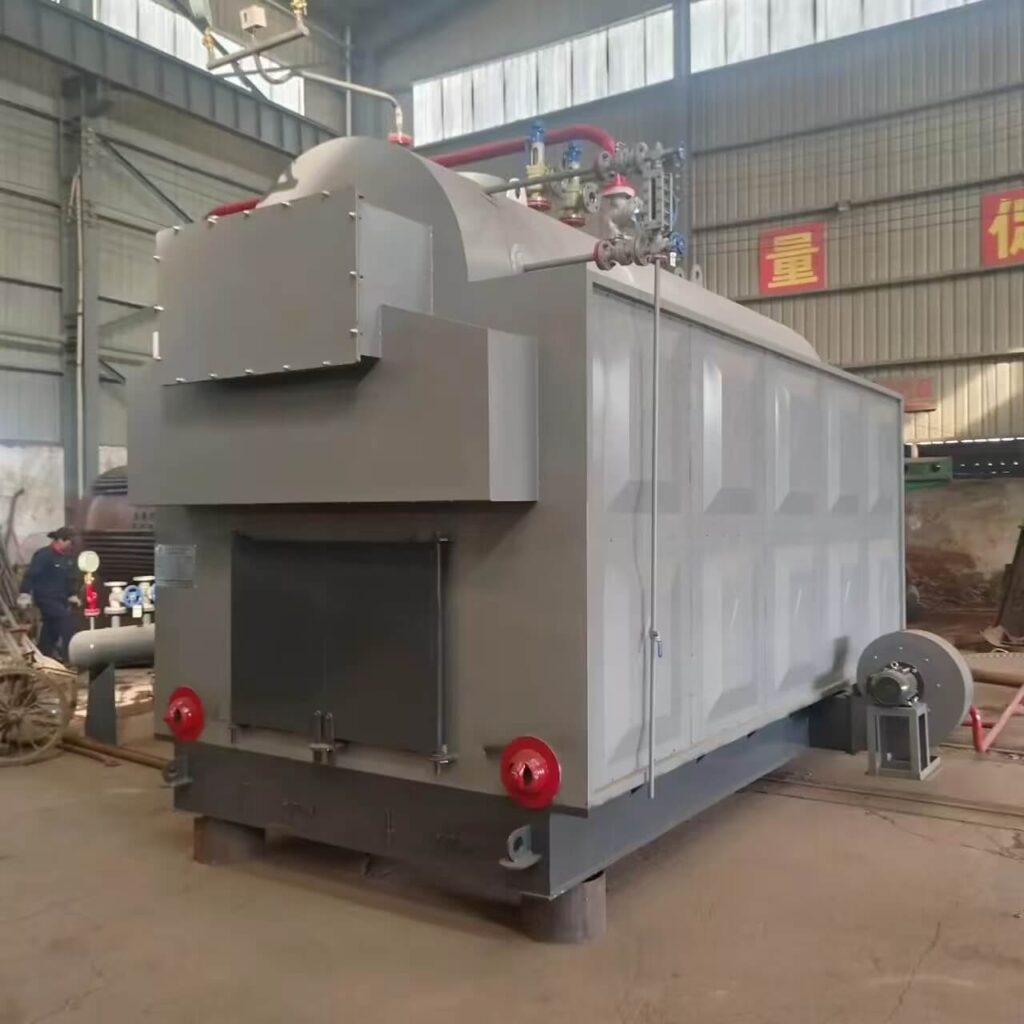
Technical Specifications
Introduction: Why Biomass Steam Boilers Are Gaining Attention in Uzbekistan
While natural gas remains the main fuel in Uzbekistan, many factories face gas supply limits, seasonal pressure drops, or rising industrial tariffs. At the same time, Uzbekistan is a major agricultural country, generating large volumes of biomass waste every year.
Biomass steam boiler Uzbekistan offer factories a way to:
- Turn waste into energy
- Reduce dependence on natural gas
- Stabilize long-term steam costs
- Improve sustainability credentials
For many industrial users, biomass boilers are not a replacement, but a strategic alternative or backup to gas-fired systems.
The 2026 Biomass Advantage
The “White Gold” Waste Recovery Strategy
Uzbekistan is currently scaling its automated cotton harvesting to 70% in 2026. This surge in mechanization has created a Superior and highly organized supply of cotton stalks and ginning by-products. For textile factories, a Biomass Steam Boiler Uzbekistan project allows for the direct conversion of this “White Gold” waste into high-pressure steam. With a calorific value of approximately 17.40 MJ/kg, cotton waste provides an Essential and low-cost fuel that is Validated to reduce annual energy overhead by up to 55%.
Rice Husk and Wood: Solving the Regional Energy Gap
In regions like the Fergana Valley and Khorezm, rice husk and wood processing residues are becoming Critical industrial assets. Our Superior biomass boilers utilize Fluidized Bed or Reciprocating Grate technology, specifically engineered to handle the high ash content of rice husks (up to 20%). This ensures Seamless operation and prevents the slagging issues common in legacy systems. By 2026, these Authoritative solutions have become the Essential hedge against the winter natural gas pressure drops reported across the national grid.
Safety and environmental compliance have reached a new Authoritative peak in 2026.
- GOSSAN & AI: Effective January 21, 2026, Uzbekistan’s new AI Regulation Law mandates that high-risk industrial systems, including high-pressure boilers, integrate Essential human-in-the-loop AI monitoring for accident prevention.
- RoHS Compliance: The Uzbek RoHS (Resolution No. 517) is now in full force. Every Biomass Steam Boiler Uzbekistan must feature electronic components—including sensors and PLCs—that bear the OZS Conformity Mark.
- Incentives (Resolution No. 85): As of March 3, 2026, the government offers a 70% refund on environmental compensation payments for enterprises that install Validated dust and gas cleaning equipment, making the transition to biomass even more Cost-Efficient.
What Is a Biomass Steam Boiler?
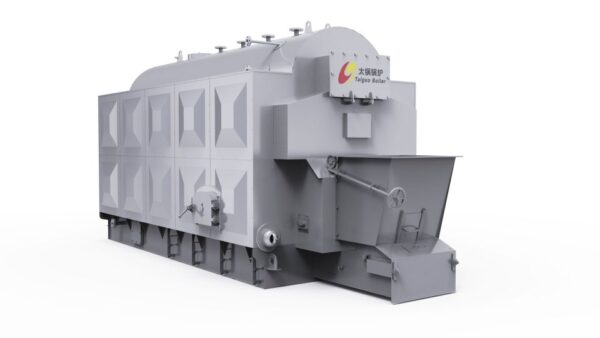
A Biomass Steam Boiler Uzbekistan uses renewable organic fuels instead of fossil fuels to produce steam. These fuels are typically local agricultural or wood-processing waste, making them cost-effective and environmentally friendly.
In Uzbekistan, the most practical biomass fuels include:
- Rice husk
- Wood chips / wood waste
- Cotton stalks & cotton waste
Biomass Fuel Types Available in Uzbekistan
Rice Husk Biomass steam boiler Uzbekistan
Rice is widely cultivated in regions such as Khorezm and Karakalpakstan, producing large amounts of rice husk as a by-product.
Advantages of rice husk fuel:
- High availability near rice mills
- Stable calorific value
- Low fuel cost or even free disposal fuel
Best for:
Rice mills, food processing plants, textile factories near agricultural zones.
Wood-Fired Biomass steam boiler Uzbekistan
Wood chips, sawdust, and wood waste come from:
- Furniture factories
- Sawmills
- Construction wood processing
Advantages:
- Stable combustion
- Easy storage
- Suitable for automatic feeding systems
Best for:
Industrial parks, food factories, construction material plants.
Cotton Waste & Cotton Stalk Biomass steam boiler Uzbekistan (Key Advantage for Uzbekistan)
Uzbekistan is one of the world’s largest cotton producers, generating enormous quantities of:
- Cotton stalks
- Cotton ginning waste
- Cotton dust and fibers
This is a major advantage unique to Uzbekistan.
Benefits of cotton waste fuel:
- Extremely low cost
- Local availability
- Solves agricultural waste disposal issues
Best for:
Textile mills, cotton ginning plants, garment factories.
Key Advantages of Biomass Steam Boiler Uzbekistan Industries
1. Significant Fuel Cost Reduction
Compared to gas or diesel, biomass fuel can reduce:
- Fuel costs by 30–60%
- Long-term energy price volatility
Factories using their own waste achieve the lowest operating cost.
2. Energy Independence & Supply Stability
Biomass boilers:
- Do not rely on gas pipeline pressure
- Avoid seasonal gas restrictions
- Provide stable steam even during peak demand periods
This is critical for textile and food factories with continuous production.
3. Environmental & Policy Advantages
Biomass boilers:
- Use renewable fuels
- Reduce landfill and open-field burning
- Support carbon reduction initiatives
They help factories improve:
- ESG image
- Local government relations
- Export compliance standards
4. Flexible Fuel Adaptation
Modern biomass boilers are designed to burn:
- Single fuel types
- Mixed biomass fuels
This allows factories to switch fuels based on availability and price.
Cracking Central Asian Crop Waste Dynamics: Silica Sintering & Alkali Metal Mitigation
Operating profitable agricultural deep-processing networks across specific Central Asian industrial zones requires continuous thermal utility engineering loops flawlessly. Sourcing a certified [biomass steam boiler uzbekistan] matrix determines your ultimate processing plant fuel independence and monthly operational budget margins. Taiguo configures specialized, heavy-duty multi-fuel solid heating hardware assemblies to transform volatile regional crops into cheap saturated steam streams smoothly.
Raw unrefined rice hulls, loose cotton stalks, and irregular wood shavings present highly volatile chemical combustion behaviors continuously. Agricultural rice remnants carry immense fractions of structural silica compounds that erode boiler convection steel tubes like intense sandblasting actions entirely. Concurrently, unrefined cotton plant extraction wastes house dangerous concentrations of reactive alkali metals that trigger severe melting ash accumulations. Our advanced thermodynamic design division expands internal radiant furnace dimensions to drop localized gas temperatures beneath critical mineral sintering limits safely.
- Wide-Pitch Anti-Erosion Convection Banks Of Biomass steam boiler Uzbekistan: > We widen internal tube pitches systematically and restrict gas velocities below safe industrial parameters across our convection heating banks. This low-kinetic engineering layout reduces silica fly ash abrasive friction impacts by 70% to guarantee long pressure vessel lifespans.
- Aggressive Air-Staged Secondary Turbulence Manifolds Of Biomass steam boiler Uzbekistan : > High-pressure secondary blowers inject strategic oxygen streams straight into the high-temperature flaming core zones to balance high-volatile cotton dust burnouts. This active pneumatic staging turbulence suppresses dark chimney smoke generation completely while maintaining uniform furnace heat distributions reliably.
- Dual-Compatible Mechanical Fuel Transport Options Of Biomass steam boiler Uzbekistan: > We deliver fully automated SZL traveling chain grates for uniform pellet cargoes alongside rugged DZH hand-fired moving grate frameworks. This multi-stoker flexibility allows operators to feed un-shredded wood log scraps manually without experiencing mechanical stoker jamming breakdowns entirely.
Heavy-Duty Multi-Pass Boiler Architectures Custom-Engineered for Uzbek Agribusinesses
Sustaining twenty-four-hour continuous factory processing schedules demands deploying resilient, fully certified industrial pressure vessel profiles capable of managing high ash loadings. Variable fuel moisture metrics across rural agricultural zones generate sudden combustion variations that threaten standard single-drum boiler water lines entirely. Taiguo delivers premium horizontal fire-tube and longitudinal double-drum water-tube solid fuel structures to secure your long-term manufacturing output targets perfectly:
- SZL Longitudinal Double-Drum Water-Tube Boilers (4 t/h to 35 t/h): This heavy-duty configuration fits centralized textile dyeing industrial parks and massive multi-line cotton processing groups perfectly. The expanded upper and lower fluid cylinders house a generous internal water capacity to function as a rock-solid thermal battery buffer. This structural volume balances line steam pressures flawlessly despite experiencing rapid, unpredictable automated stoking load variations.
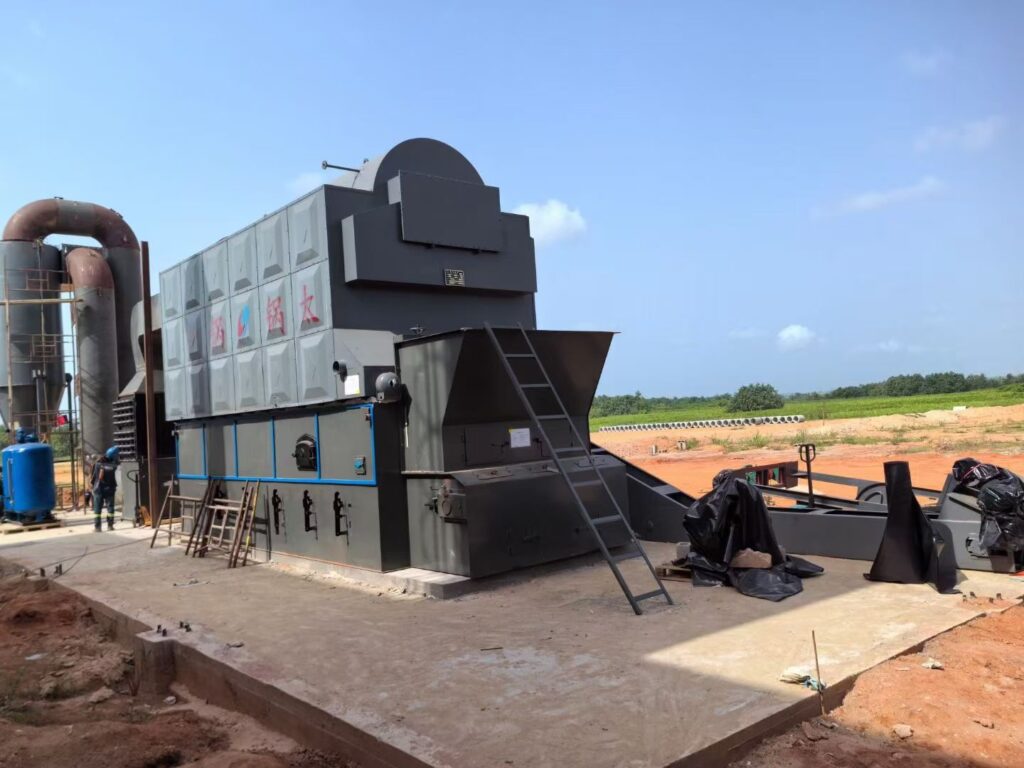
- DZH Rugged Moving Grate Hand-Fired Boilers (1 t/h to 6 t/h): This highly reliable packaged layout serves localized decentralized sawmills and seasonal agricultural milling startups smoothly. The extra-large front loading door allows operators to feed bulky loose biomass remnants manually without purchasing expensive chipping machinery.
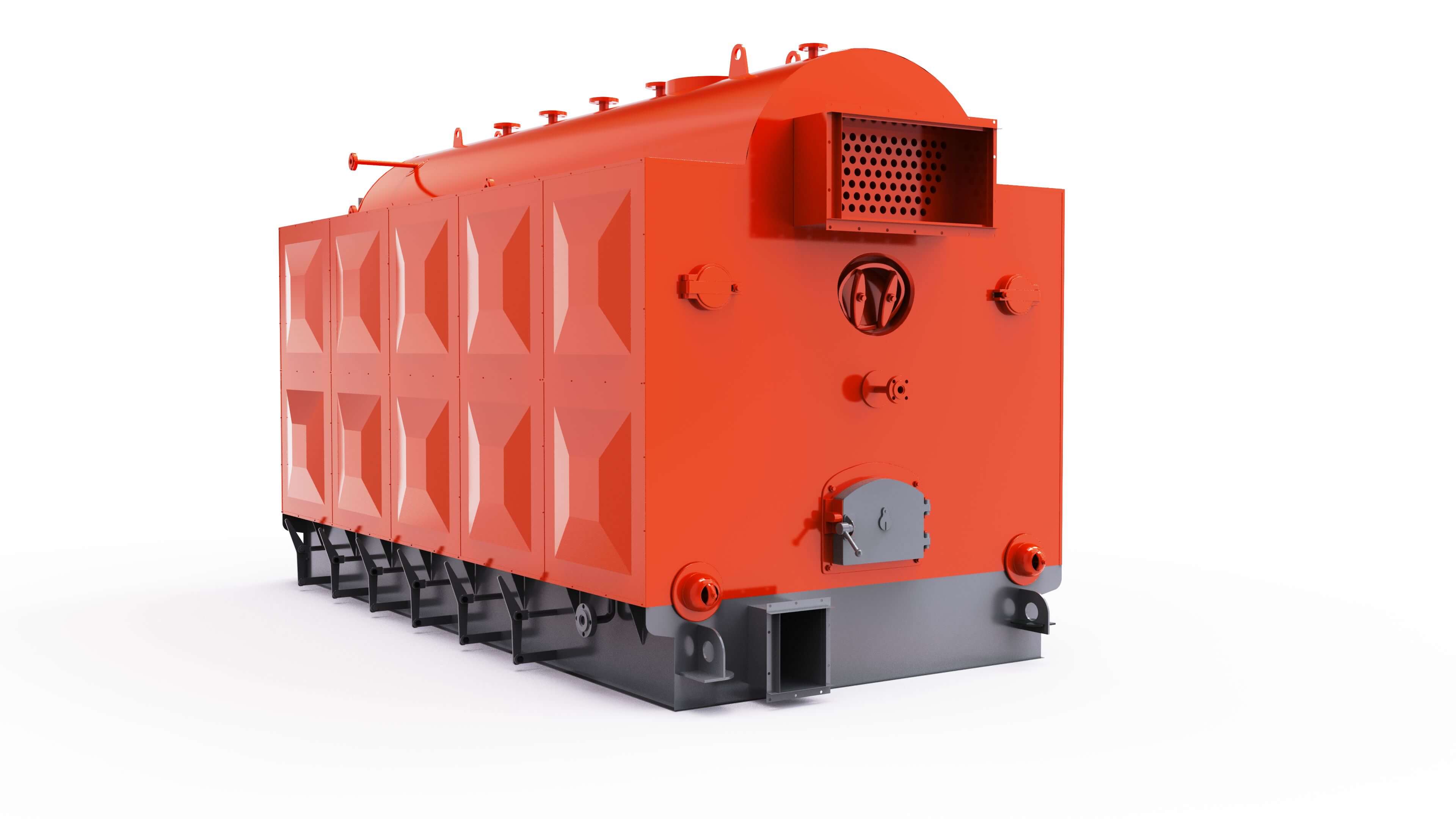
Typical Biomass Steam Boiler Uzbekistan capacities
| Capacity | Suitable Industries |
|---|---|
| 1–2 TPH | Small food & textile factories |
| 4–6 TPH | Medium textile & processing plants |
| 8–10 TPH | Large industrial users & industrial parks |
Common boiler types include:
- Chain grate biomass steam boiler
- Water tube biomass boiler
- Customized multi-fuel systems
Closed-Loop Heat Recovery Systems & Dual-Stage Particle Interception Infrastructures
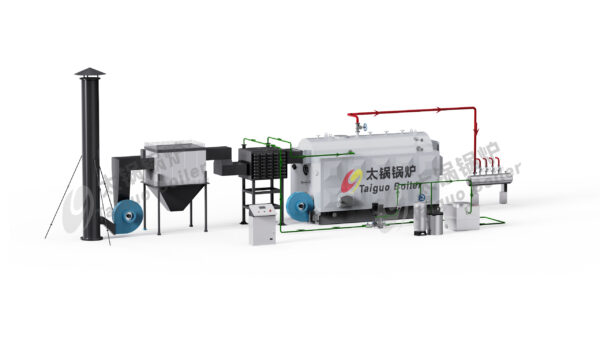
Optimizing the annual capital efficiency metrics of your [biomass steam boiler uzbekistan] investment requires comprehensive tail-end waste energy recycling networks. Burning light agricultural hulls and fibrous cotton husks yields massive volumes of fine suspended fly ash soot residues consistently. Taiguo installs integrated high-capacity multi-cyclone inertial particle separators paired with automated pulse-jet baghouse filtration housings systematically.
This heavy environmental array traps 99.9% of abrasive particulate matters before stack exhaust entries to clear strict regional air safety audits easily. Following emission filtering, the clean hot gas passes through an elite finned-tube feed-water economizer bank smoothly. This multi-stage heat absorption setup drives total boiler thermal efficiency beyond 88% to compress your monthly alternative fuel weight expenditures. Reusing this captured chimney heat preheats incoming raw softened water lines up to 105°C naturally to prevent internal thermal shocks.
- Water-Sealed Automatic Screw Slag Conveyors For Biomass steam boiler Uzbekistan : Discharges hot ash residues continuously without releasing airborne dust particles across your factory floor workspace.
- Premium Aluminum Silicate Insulation Shell Blankets For Biomass steam boiler Uzbekistan : Wraps the entire pressure vessel hull in thick high-density insulation to eliminate external radiant room cooling losses.
Biomass Boiler vs Gas Boiler: When Biomass Makes More Sense
Choose aBiomass Steam Boiler Uzbekistan if:
- Gas supply is unstable or limited
- You have access to rice husk, wood, or cotton waste
- Long-term fuel cost reduction is a priority
- You want energy independence
Many Uzbekistan factories adopt a hybrid system:
Gas boiler for peak load + Biomass boiler for base load
Key Considerations Before Choosing a Biomass Steam Boiler
Fuel Supply Assessment
- Quantity per month
- Moisture content
- Storage space
Ash Handling & Maintenance
- Biomass produces ash (unlike gas)
- Automatic ash removal systems reduce labor
Operator Training
- Slightly higher skill requirement
- Fully automated systems minimize complexity
Shift-Change Maintenance Checklist for Multi-Fuel Biomass Boiler Operators
Central Asian agricultural manufacturing plant supervisors must enforce strict hourly control room inspection schedules to maintain continuous steam outputs safely. Instruct your local technical maintenance crews to execute our verified field engineering checklist across every active shift change:”
- Audit Under-Grate Plenum Blast Pressures: Adjust individual air zone dampers to match the specific fluidization densities of active rice husk or cotton beds.
- Check Automated Sonic Soot Blower Cycles: Verify acoustic wave generators cycle regularly to shatter sticky alkali ash deposits from convection walls.
- Monitor Multi-Cyclone Lower Dust Hoppers: Empty collected silica particulate collections periodically to stop upper gas bypass chokings completely.
- Verify Water-Seal Slag Submersion Depths: Confirm sealing water flow rates stay stable to block cold ambient air bypass leak paths.
- Test Dual Redundant Level Sensing Columns: Flush out water gauge sight pathways to verify true internal liquid boundaries instantly.
Why Choose Biomass Boilers from China?
Chinese biomass boilers are widely used across Central Asia because they offer:
- Proven technology for agricultural fuels
- Competitive pricing
- Customization for local fuels
- Strong export experience to Uzbekistan
When properly designed, they offer long service life and reliable performance.
Conclusion: Biomass Steam Boilers—A Strategic Choice for Uzbekistan
Biomass steam boilers are not just an alternative—they are a strategic energy solution for Uzbekistan’s agricultural and industrial economy.
✔ Turn waste into energy
✔ Lower fuel cost
✔ Stable steam supply
✔ Support sustainability goals
For many factories, biomass boilers deliver the best long-term ROI.
FAQ: Essential 2026 Biomass Insights
Can one boiler handle rice husk, wood, and cotton waste simultaneously?
Yes. Our Superior multi-fuel Biomass steam boiler Uzbekistan are designed with Validated fuel-feeding logic that adjusts combustion parameters based on the fuel mix. This is Essential for factories that experience seasonal variations in agricultural waste availability.
How do the 2026 RoHS regulations affect my boiler purchase?
Every Biomass Steam Boiler Uzbekistan project must demonstrate that all electronic controls comply with the February 17, 2026 RoHS mandates. We provide Authoritative certification for every component, ensuring Seamless customs clearance and GOSSAN approval.
Are there state subsidies for biomass boilers in 2026?
Absolutely. Uzbekistan has attracted $264 million in international financing for energy efficiency. Enterprises implementing Superior biomass solutions can access Essential low-interest “Green Loans” (often 8% subsidized) and benefit from Validated 50-70% environmental tax refunds under Resolution No. 85.
How does burning cotton stalk waste create different furnace slagging challenges than generic timber wood pellets?
Wood pellets consist of refined cellulose fibers that release minimal amounts of soft, non-reactive calcium-based ash compounds during burn runs cleanly. Conversely, loose cotton stalks and cotton seed hulls absorb massive amounts of volatile potassium and sodium minerals from agricultural soils during growth. When burning inside narrow standard furnaces, these alkali elements melt into sticky liquid glasses that coat boiler tubes rapidly. Sourcing our specialized Biomass steam boiler Uzbekistan architecture featuring expanded furnace volumes keeps core combustion spaces below critical chemical fusing thresholds safely.
Why does Taiguo mandate designing low-velocity convection gas routing paths specifically for rice husk processing plants?
Rice hulls carry a dense mineral weight containing over 90% hard crystalline silica fractions that behave like heavy abrasive sandblasting mediums during transit. Standard tightly packed convection tube banks accelerate internal smoke velocities, causing abrasive particles to blow carbon steel pipe walls thin within months. Taiguo overcomes this severe wear hazard by implementing wide-pitch convection tube alignments and engineered low-velocity gas paths systematically. This geometric layout drops particle kinetic erosion forces by over 70% to secure multi-decade pressure vessel lifespans without experiencing pipe ruptures.
What document package does Taiguo provide to ensure immediate Gospromtekhnadzor installation approvals inside Uzbekistan?
Local safety inspection bureaus enforce exceptionally strict engineering codes on high-pressure solid-fuel machinery rooms operating inside industrial zones. Taiguo holds elite international A-class pressure vessel manufacturing licenses to back your long-term capital equipment investments with absolute legal compliance. We deliver a comprehensive, factory-certified technical documentation package containing non-destructive x-ray weld testing records and fully translated translated structural blueprint dossiers. This rigorous validation guarantees immediate administrative installation approvals smoothly without requiring expensive field modifications.
Can a local mill operator integrate Taiguo’s biomass boiler PLC panel with existing European factory automation loops?
Yes, we build our centralized microprocessor control networks utilizing standard, native Modbus-RTU industrial digital communication interfaces seamlessly. This digital integration permits our heavy equipment panels to broadcast real-time temperature, water level, and fuel consumption trends over existing plant DCS loops. Your central control room technicians can supervise thermal outputs and balance dynamic multi-autoclave or processing line load profiles from a single centralized desktop workstation smoothly.
Conquer Your Energy Budgets with Taiguo Agro-Thermal Engineering
Are you searching for a highly resilient, zero-slagging multi-fuel thermal system capable of transforming your factory crop wastes into free steam power? Contact premium Central Asian equipment author Taiguo today to secure custom plant layout blueprints and highly competitive factory-direct quotes rapidly.
Explore Our Full Catalog of High-Efficiency Biomass Steam Boilers for Uzbekistan
Audit corporate emission rating compliance records inside our master industrial boiler selection guide
Analyze localized cotton waste ash melting indicators inside is biomass boiler suitable for uzbekistan factories.
Optimize large-capacity wood-fired thermal grid projects using our 15-ton automatic chain grate biomass boiler.